Daniel Kahneman on Judgment & Intuition
Kahneman sees judgment as a constant interplay between fast intuition and slow reasoning: intuition is indispensable and sometimes expert, but it is trustworthy only under the right conditions and should not be confused with confidence.
- Fast intuition is automatic, powerful, and always active, but it can produce confident mistakes.
- Slow thinking can check intuition, yet it is effortful and often not fully engaged.
- Intuition deserves trust mainly where patterns are regular and feedback is clear enough for real learning.
- Confidence is a feeling of coherence, not strong evidence that a judgment is right.
- Better judgment comes from delaying intuition, structuring assessments, and using rules or algorithms when possible.
Judgment begins with two kinds of thinking
Kahneman’s basic picture is that human judgment runs through two modes. One is fast, automatic, associative, and intuitive; the other is slower, deliberate, and effortful. The fast mode is not a flaw in the mind but a necessity, because a creature that had to reason step by step for everything would not function well in the world.1234
This is why intuition feels immediate: it often arrives before deliberate thought has really started. Kahneman describes the mind as quick to settle on an answer, with System 1 delivering impressions and System 2 sometimes monitoring or correcting them. Much of ordinary life depends on that fast mode working smoothly.67
“System one is the intuitive one.”Talks at Google, 2011 · full transcript →
Intuition is real expertise only in the right environment
Kahneman does not reject intuition. He tries to separate genuine expert intuition from impressions that merely feel expert. His key test is whether the world has enough regularity for patterns to be learnable, and whether the person gets feedback that is rapid and clear enough to improve recognition over time.9
That view explains why some intuitions deserve trust and others do not. Recognition can be highly skilled when the environment teaches reliable cues, but in domains that are noisy or hard to predict, people may still feel sure without having learned anything valid. In those settings, intuition is often only pattern-matching plus a strong feeling of knowing.1011
Most judgment errors come from fast coherence, not careful evidence
A central reason intuition misleads is that the mind quickly builds a coherent story. Once a story hangs together, ambiguity gets suppressed and the judgment feels right. Kahneman emphasizes that this machinery is built to produce sense, not to protect us from every mistake.121314
He also argues that people often answer an easier question than the one they were asked, without noticing the substitution. That is one reason intuitive judgment under uncertainty can go wrong: the mind supplies a nearby answer that is simpler, more fluent, and more compelling than the hard question actually requires.151617
The classic bat-and-ball puzzle illustrates the point. An answer comes to mind immediately, and the speed and ease of that answer make it feel plausible even when it is false. For Kahneman, the important fact is not just that people err, but that the error arrives naturally and confidently.1819
Confidence feels like evidence, but usually isn’t
Kahneman’s most practical warning is that confidence should not be treated as proof of accuracy. He says confidence is a feeling, and it often reflects how coherent a story seems rather than how well supported it is. A persuasive narrative can generate certainty even when the underlying judgment is weak.20112113
This helps explain why overconfident experts remain influential. People are drawn to decisiveness and bold explanation, especially in uncertain domains. But a strong sense of conviction may say more about the smoothness of a mental story than about whether the world is actually predictable.1011
Better judgment comes from delaying intuition and adding structure
Kahneman’s advice is not to eliminate intuition but to postpone it. Instead of reaching a global impression too soon, break a problem into dimensions, evaluate the parts separately, and let intuition come after the relevant information has been gathered. That produces a better final judgment than the usual rush to a first impression.232425
He is especially forceful about rules and algorithms. Because human judgment varies from person to person and from moment to moment, organizations should use structured procedures, shared scales, and simple statistical rules whenever possible. Consistency alone often gives rules an advantage over informal judgment.262728293031
Still, he does leave room for informed intuition at the end of a disciplined process. In one of his own examples, a structured interview improved prediction, and a final intuitive judgment added some value once separate trait ratings had already been completed. His position is not anti-intuition; it is anti-early, unstructured intuition.3225
Kahneman on judgment & intuition, in his own words
“What comes to mind automatically is sometimes marvelous, sometimes flawed, and always automatic, and you have no control over it.”
“…confidence is not a guide to accuracy…”
Where to watch
 Daniel Kahneman on Judgment and Noise: Delay Intuition2021 · 67 min · full transcriptBest for Kahneman’s practical advice on improving judgment: delay intuition, break decisions into parts, and use rules when possible.
 Daniel Kahneman on System 1 and System 2: intuition, bias, and confidence2011 · 62 min · full transcriptA clear overview of System 1 and System 2, with classic examples of intuition, bias, and misplaced confidence.
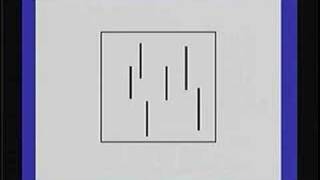 Daniel Kahneman on Intuition and Bias: System One, System Two2007 · 56 min · full transcriptStrong on when expert intuition is valid and when the mind’s jump-to-conclusions machinery goes wrong.
 Daniel Kahneman on System One and System Two: Thinking, Fast and Slow2012 · 63 min · full transcriptUseful for understanding why confidence is a poor signal of accuracy and why experts struggle in unpredictable domains.
 Daniel Kahneman on Noise and Judgment2021 · 61 min · full transcriptBest for the link between judgment, noise, and the need for organizational procedures that reduce inconsistency.
 Daniel Kahneman on Negotiation and Judgment: Trusting Intuition Wisely2020 · 88 min · full transcriptShows how these ideas apply in negotiation, where first impressions and concession aversion can distort judgment.
Questions people ask
- How does Daniel Kahneman distinguish noise from bias?
- What did Daniel Kahneman find when he combined structured ratings with intuition?
- What did Daniel Kahneman say about algorithms versus human judgment?
- What did Daniel Kahneman say about delaying intuition when making decisions?
- What did Daniel Kahneman say about how people answer hard questions?
- What did Daniel Kahneman say about improving decision making?
Sources
Every quote above, word for word from the transcripts. Numbers match the text.
“System one is the intuitive one.”
“System two is the effortful one, the one that's the deliberate one.”
“System one is the fast one. System two is the slow one.”
“System two useful. If we if we're dependent on system two for survival, we wouldn't survive very long because it's very slow.”
“…the mind as a machine for jumping to conclusions…”
“What comes to mind automatically is sometimes marvelous, sometimes flawed, and always automatic, and you have no control over it.”
“…when it's important, you should inform your gut and then trust…”
“The world is probably not predictable.”
“…confidence is not a guide to accuracy…”
“The way the system works, it suppresses ambiguity.”
“Your thinking flows along causal lines. This happens intuitively and it's not... And one of these feels okay. It feels more coherent. And the coherence that we experience can be turned into a judgment of probability. That is the confidence that we experience is a judgment of probability. Now I'm going to skip the other example. And I said earlier that people have intuitions that are not necessarily true and that people are confident in judgments that are not necessarily true. And I would like to sort of present a tentative theory about how that happens.”
“Now this system guides interpretations. So let me show you how this works. Now you can read that silently, and you know what that is. And you can read that, and you know what that is. And, of course, the b and the 13 are physically identical. I mean, it's the same object, but you were not aware of this. The context determined how you read the words, and you were not aware that there was ambiguity. You were not aware that you had suppressed the ambiguity. You were not aware that there was another way of seeing what you saw. The way the system works, it suppresses ambiguity. Doubt and ambiguity is mostly a function of system two. System one doesn't have much doubts. It makes choices, and it delivers to our conscious experience the choices that it has made, and we're not aware of having made the choice.”
“People jump to conclusions by answering the wrong question.”
“And the general idea is very straightforward. When we're asked a question that we cannot answer, typically, System one is going to come up with the answer to a related question that is easier and it's going to use that answer to the wrong question, to the question that hasn't been asked in place of the question that was asked. We call that a mechanism of substitution, It's substituting an easier question for a hard one. It happens automatically. People are not aware that it happens. And it is the source of many intuitions that don't come from expertise and they are much less likely to be correct than the intuition that do come from expertise, but they come with equal confidence or just about.”
“Well, yes. I mean, what we studied was intuitive thinking in the domain of judgment under uncertainty versus how we started, that is how do people assess the probability of events and how do they forecast the future intuitively. And our idea was that people use heuristics, are basically shortcuts. And in in my lecture, it's a phrase I coined this week, but I'm going to use it. Mhmm. I I did speak of the mind as a machine for jumping to conclusions. And And we figured out some other ways that this is done. I think the most important one that we studied in the first years of our work was something that I now call substitution. That is you... You're asked a difficult question, you cannot answer it, but another answer comes to mind, and it's an answer to a related question which is simpler.”
“A bat and a ball together cost a dollar 10. The bat cost a dollar more than the ball. How much does the ball cost? Now let me make a prediction. Every one of you, I would think, has thought of the number, and the number is 10¢. That's been in everybody's mind. Now that makes the problem interesting because 10¢ is false. You know? If if it were 10¢ and you... And then the bat would be a dollar more, it would be a dollar 10, and the dollar 10 and 10¢ would be a dollar 20. So 10¢ is not the answer. But now what is interesting is when you put that question to Princeton students, half of them say 10¢. Now... And they do even when you give them time.”
“The point about this riddle is that the number came to your mind. And the number is $0.10 And everybody, just I think, maybe here, maybe there are exceptions, very few exceptions.”
“Confidence is a feeling. It is not really a judgment.”
“Subjective confidence is not a good indicator.”
“Don't try to form an intuition quickly, which is what we normally do.”
“…you want to resist forming an intuition too quickly…”
“So, actually, I have same idea, really, that when you are making decisions, you should think of options as if they were candidates. So you should break break it up into dimensions, evaluate each dimension separately, then look at the profile, and and the key is delay your intuition. Don't try to form an intuition quickly, which is what we normally do. Focus on the separate points. And then when you have the whole profile, then you can have an intuition, and it's going to be better. Because people make form intuitions too quickly, and the rapid intuitions are not particularly good. So if you delay intuition until you have more information, it's going to be better.”
“If you really want to improve the quality of decision making, use algorithms.”
“Wherever there is judgment, there is noise and more of it than you think.”
“…whenever there is judgment, there is noise…”
“Noise is a characteristic of a set of judgments, it's a statistical concept…”
“That is, when you apply an algorithm or a rule to the same case on different occasions, you are going to come up with exactly the same answer. That's noise free. It turns out there is so much noise in human judgment that for that reason alone rules tend to be superior in many cases to human judgment and in some cases vastly superior. Now, that's even - that was true even before artificial intelligence. It was true applying simple statistical rules and even imperfect statistical rules just applied consistently will do better than people.”
“Absolutely. And altogether - I mean, this is the orientation that I have in general, and I had it I think even in the previous book, that organisations - it's much easier to improve the thinking and the decision making of organisations than to improve the thinking and the decision making of individuals. Organisations think slowly, they have procedures, you can intervene in the procedures, you can standardise procedures, and there is a chance of improving things that really doesn't exist when you're trying to improve your own thinking.”
“So I compromised and my compromise was I told them, "Well, you do things the way I told you, you get those six scores, but once you have completed the six scores, close your eyes and make a judgment, an intuitive judgment, how good a soldier would that person be." Now, a few months later we had the results of that study and the results were that we were doing a lot better than in the unstructured interview. Today that's not a surprise at all. But what was surprising to me then was that the final intuitive judgment, close your eyes and make a judgment, was highly valid and it added content, it added validity beyond the six traits that had been evaluated.”
How this guide was made: drafted with AI from the full transcripts of the recordings cited, then checked: every quotation must match a transcript word for word and be the speaker's own words, and an independent review gates accuracy. Methodology and corrections.