Daniel Kahneman on Cognitive Biases
Kahneman sees cognitive biases as predictable errors that arise because fast intuitive thinking builds coherent stories quickly, while slower checking is effortful and often too weak to correct them.
- Biases are systematic, not random: they follow from how intuitive thought works.
- Most judgment starts in fast, automatic System 1, while System 2 can check it but often does not.
- Confidence is a poor guide to accuracy because it tracks coherence and fluency more than truth.
- Many errors come from substituting easy questions for hard ones and treating what is immediately available as the whole picture.
- Important recurring biases include loss aversion, narrow framing, overconfidence, base-rate neglect, and attribution errors in conflict.
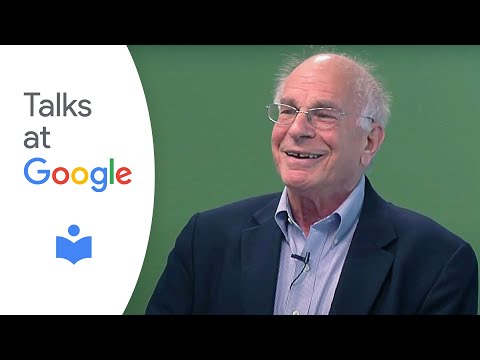
“And the general idea is very straightforward. When we're asked a question that we cannot answer, typically, System one is going to come up with the answer to a related question that is easier and it's going to use that answer to the wrong question, to the question that hasn't been asked in place of the question that was asked. We call that a mechanism of substitution, It's substituting an easier question for a hard one. It happens automatically. People are not aware that it happens. And it is the source of many intuitions that don't come from expertise and they are much less likely to be correct than the intuition that do come from expertise, but they come with equal confidence or just about.”Talks at Google, 2011 · 37:55
Bias begins with fast intuition, not careful reasoning
Kahneman’s starting point is that human judgment is largely driven by fast, automatic intuition. He describes System 1 as the source of most mental activity, while System 2 is the slower, effortful mode that can reason, monitor, and correct. Because much of thought arrives automatically, biases are not weird exceptions to thinking; they are a normal byproduct of how thought usually works.12345
This matters because fast thinking does not wait for full evidence. It delivers impressions, interpretations, and inclinations before deliberate analysis begins. Slow thinking can intervene, but effort is limited, and the mind follows a general tendency to conserve effort, so many intuitive answers go unchallenged.567
Kahneman also treats intuition as real and sometimes highly skilled. He argues that it becomes trustworthy mainly in environments with stable regularities and clear feedback, where people can learn valid patterns; outside those conditions, intuitive confidence can be deeply misleading.910
Biases happen because the mind prefers coherence over validity
A central theme in Kahneman’s account is that people believe what fits into a coherent story. Associative memory quickly produces an interpretation that feels internally consistent, and that feeling of coherence often gets mistaken for truth, probability, or understanding. This is why a simple, fluent account can feel more convincing than a complicated but better-supported one.111213
That is also why confidence is so unreliable. Kahneman argues that confidence is a feeling, not a dependable measure of accuracy, and that it often reflects how well the pieces of a story fit together rather than whether the judgment is actually correct. In his view, people frequently trust judgments that feel right even when predictive validity is poor.14151016
He repeatedly emphasizes that the mind accepts what is available and coherent as if it were the whole case. When people treat the evidence in front of them as sufficient, they stop searching for what is missing, and that opens the door to overconfidence and error.1718
Many classic biases come from substitution and jumping to conclusions
Kahneman explains many cognitive biases through one mechanism: when asked a hard question, people often answer an easier one instead without noticing the swap. The process is automatic, and the resulting intuition can feel just as compelling as a judgment grounded in expertise. This helps explain why people make confident probability judgments or forecasts with very weak foundations.2021
His simple puzzles are meant to show that the first answer that comes to mind is not always a checked answer. System 1 generates a candidate response immediately, and unless System 2 actively inspects it, people accept it. In everyday life, that same pattern appears in forecasting, evaluating evidence, judging risks, and interpreting other people’s motives.23246
The result is a mind that is highly efficient but prone to premature closure. Kahneman describes people as quick to form impressions and stories, which is useful for navigating daily life, but it also means that judgment under uncertainty is often shaped by shortcuts rather than by disciplined reasoning.18
“And the general idea is very straightforward. When we're asked a question that we cannot answer, typically, System one is going to come up with the answer to a related question that is easier and it's going to use that answer to the wrong question, to the question that hasn't been asked in place of the question that was asked. We call that a mechanism of substitution, It's substituting an easier question for a hard one. It happens automatically. People are not aware that it happens. And it is the source of many intuitions that don't come from expertise and they are much less likely to be correct than the intuition that do come from expertise, but they come with equal confidence or just about.”Talks at Google, 2011 · full transcript →
Some of the most important biases are overconfidence, narrow framing, and loss aversion
For Kahneman, overconfidence is one of the most consequential biases. People underestimate uncertainty and luck, exaggerate how much they understand, and trust strong conviction more than statistics. He argues that subjective confidence can remain high even when the world is not very predictable and even when forecasters perform poorly.91525
He also stresses narrow framing: people often evaluate choices one at a time instead of as part of a broader set. His practical recommendation is to broaden the frame, because isolated decisions can make risks and losses loom too large. Narrow framing feeds avoidable caution in some cases and reckless inconsistency in others.27
Loss aversion is another core bias in his work. People are especially sensitive to losses relative to gains, which helps explain risk aversion in gains, risk seeking in losses, and resistance to change. Because the disadvantages of moving away from the current state stand out so strongly, loss aversion also creates a bias toward the status quo.282930
Bias distorts forecasting, projects, and conflict unless you use the outside view
Kahneman’s examples of failed predictions and overoptimistic plans show how bias operates in real decisions. People focus on the unique details of their case and ignore base rates from similar cases, even when those outside comparisons are more informative. He later called this contrast the inside view versus the outside view.3132
The practical lesson is that individuals and organizations should rely less on how a case feels from the inside and more on reference classes, historical outcomes, and simple comparative evidence. Kahneman’s own stories underline that vivid understanding of a project can coexist with terrible prediction. The feeling of insight does not guarantee validity.161015
In conflict, he says several biases make aggressive positions sound more persuasive than they should. Overconfidence, illusion of control, and attribution errors can all push people toward interpreting opponents as driven by bad character rather than by situation, while hawkish rhetoric gains an unfair persuasive edge.3334
Kahneman on cognitive biases, in his own words
“Subjective confidence is not a good indicator.”
Where to watch
 Daniel Kahneman on System 1 and System 2: Fast Thinking, Flawed Confidence2013 · 56 min · full transcriptBest single overview of how fast thinking creates confident mistakes through substitution, coherence, and flawed confidence.
 Daniel Kahneman on System 1 and System 2: Why We Misjudge2012 · 31 min · full transcriptShows how bias affects real forecasting through the inside view, outside view, and illusion of validity.
 Daniel Kahneman on Thinking Fast and Slow2012 · 67 min · full transcriptConnects the two-systems framework to narrow framing, loss aversion, and optimistic overconfidence.
 Daniel Kahneman on System 1 and System 2: Fast and Slow Thinking2018 · 78 min · full transcriptStrong explanation of why people accept intuitive answers, believe coherent stories, and miss missing information.
 Daniel Kahneman on Bounded Rationality: Maps of Judgment and Choice2002 · 37 min · full transcriptBest for understanding the deeper map of bounded rationality, loss aversion, and why judgment tracks changes over states.
 Daniel Kahneman on Biases in Conflict: Why Hawks Sound Right2009 · 93 min · full transcriptApplies biases to conflict and explains why hawkish arguments can sound more compelling than they deserve.
Questions people ask
- What did Daniel Kahneman say about how people answer hard questions?
- What did Daniel Kahneman say about intuition and judgment under uncertainty?
- What did Daniel Kahneman say about intuition and when you can trust it?
- What did Daniel Kahneman say about loss aversion and the status quo?
- What did Daniel Kahneman say about luck and overconfidence?
- What did Daniel Kahneman say about personality versus situation?
Sources
Every quote above, word for word from the transcripts. Numbers match the text.
“Most of what happens in our mind is really system 1.”
“System One is the origin of our mental life.”
“System one is the intuitive one.”
“System two is the effortful one, the one that's the deliberate one.”
“…fast thinking is something that happens to you primarily, and slow thinking is something that you do…”
“The law of least effort is really a fundamental psychological principle.”
“System one is the fast one. System two is the slow one.”
“The world is probably not predictable.”
“…confidence is not a guide to accuracy…”
“What is characteristic of the way associative memory works is that it produces an interpretation of the world that is coherent.”
“Your thinking flows along causal lines. This happens intuitively and it's not... And one of these feels okay. It feels more coherent. And the coherence that we experience can be turned into a judgment of probability. That is the confidence that we experience is a judgment of probability. Now I'm going to skip the other example. And I said earlier that people have intuitions that are not necessarily true and that people are confident in judgments that are not necessarily true. And I would like to sort of present a tentative theory about how that happens.”
“System 1 can be identified with associative memory…”
“Confidence is a feeling. It is not really a judgment.”
“Subjective confidence is not a good indicator.”
“The correlation between our predictions and what actually happened was essentially zero.”
“…we believe what we see. We believe what we think.”
“What you see is all there is…”
“People jump to conclusions by answering the wrong question.”
“And the general idea is very straightforward. When we're asked a question that we cannot answer, typically, System one is going to come up with the answer to a related question that is easier and it's going to use that answer to the wrong question, to the question that hasn't been asked in place of the question that was asked. We call that a mechanism of substitution, It's substituting an easier question for a hard one. It happens automatically. People are not aware that it happens. And it is the source of many intuitions that don't come from expertise and they are much less likely to be correct than the intuition that do come from expertise, but they come with equal confidence or just about.”
“The point about this riddle is that the number came to your mind. And the number is $0.10 And everybody, just I think, maybe here, maybe there are exceptions, very few exceptions.”
“What comes to mind automatically is sometimes marvelous, sometimes flawed, and always automatic, and you have no control over it.”
“Among other things. But go ahead. I mean, we tend—and there is good psychological reasons for that—we tend to underestimate the role of luck in human affairs. We tend to think that people are responsible for outcomes when, in fact, they have limited control over outcomes. And we’re built that way, and it's good that we're built that way because, you know, we want to extract as much variance as possible from what is regular in the world. But, in fact, it leads us to underestimate consistently the role of uncertainty, the role of luck, and it causes us to be overconfident. To close a loop that you started earlier. Mhm, mhm. Well, and part of it is that we—…”
“…the basic move for improving the reasonableness of choice. It's just broaden the frame, broaden the frame.”
“…people will be risk seeking in the domain of losses, that is when facing choices that are negative, whereas they are risk averse in the domain of gains.”
“Indifference curves show very pronounced kink at the reference point. And loss aversion that we discussed earlier induces a very strong bias in favor of the status quo in changes between remaining where you are or changing from where you are. Indeed, loss aversion turns out to be one of the major contributors to stability in human decision making that once we are in a situation moving away from it, the losses and disadvantages are more salient than the advantages.”
“…people are much more sensitive to changes and not to final states.”
“We call one of them the inside view much later, and the other the outside view.”
“They didn't all succeed in writing a book.”
“…the hawkish position more persuasive than it should be…”
“…the rhetorical advantage belongs to the hawk…”
How this guide was made: drafted with AI from the full transcripts of the recordings cited, then checked: every quotation must match a transcript word for word and be the speaker's own words, and an independent review gates accuracy. Methodology and corrections.