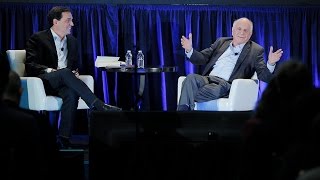
Daniel Kahneman on Decision Hygiene
Kahneman treats decision hygiene as a practical way to cut the hidden variability in judgment by structuring assessments, keeping inputs independent, and delaying intuition until the end.
- Decision hygiene is about reducing noise: unwanted variability in judgments that should be similar.
- Kahneman thinks people underestimate noise and focus too much on bias alone.
- His core method is to break judgments into dimensions, score them separately, and delay overall intuition.
- Independent judgments and aggregation reduce noise, while rules and algorithms often do even better.
- The goal is not perfection but fewer preventable errors in important decisions.
“So that's the concept of noise. It's completely different from the concept of bias. Bias is a concept within individual psychology. That is, we think of bias as a psychological process and we detect or identify bias sometimes in a particular error in a particular judgment, but we cannot identify noise in a particular judgment. Noise is a characteristic of a set of judgments, it's a statistical concept, and in that way it's very different from bias.”UNSW in conversation, 2021 · 19:21
Decision hygiene starts from a simple problem: judgment is noisy
Kahneman’s starting point is that many bad decisions come not only from bias but from noise: unwanted variability in judgments that ought to be the same12. He returns to the same claim repeatedly: whenever judgment is involved, noise is present, and usually in larger amounts than people expect345.
This matters because noise is not a quirky side issue. In his view, it is a major source of error in professional judgment, from hiring to forecasting to other organizational decisions where consistency is expected but often absent67.
Why Kahneman thinks noise is overlooked
Kahneman draws a sharp distinction between bias and noise. Bias is about average error and can often be understood as a psychological tendency, while noise is variability across judgments and is visible only when you look at a set of cases or judges rather than one decision at a time891011.
Because people search for causes in individual minds, they notice bias more easily than noise. Kahneman argues that this has led people to overemphasize bias and underestimate the damage done by inconsistency itself128.
He also links the problem to overconfidence and to underestimating luck and uncertainty. People trust their own judgments more than they should, and that makes them less likely to build safeguards against inconsistency1314.
“So that's the concept of noise. It's completely different from the concept of bias. Bias is a concept within individual psychology. That is, we think of bias as a psychological process and we detect or identify bias sometimes in a particular error in a particular judgment, but we cannot identify noise in a particular judgment. Noise is a characteristic of a set of judgments, it's a statistical concept, and in that way it's very different from bias.”UNSW in conversation, 2021 · full transcript →
The core rule: delay intuition and judge the parts first
Kahneman’s most practical advice is to resist forming a quick overall impression. He says people normally leap to intuition too early, and that early global impressions are often weaker than they feel1516.
Instead, he recommends breaking a judgment into dimensions, evaluating each dimension separately, and only then looking at the full profile. Once the separate assessments are done, intuition can still have a role, but it comes later and is better informed18.
This is the heart of decision hygiene as he describes it: not trying to become a perfect thinker, but changing the process so hidden influences have less room to distort the result1920.
Independence is essential because groups can spread noise
For Kahneman, judgments should be made as independently as possible before they are combined. If people influence one another too early, the process can import social pressure, shared blind spots, and premature consensus instead of useful information197.
When assessments are genuinely independent, averaging them can remove noise. He says the wisdom of the crowd works by eliminating noise, even though it does not remove bias21.
This is why structured hiring, performance review, forecasting, and similar processes should avoid free-form discussion at the start. You get better results when each person first produces separate judgments on common dimensions, using the same scale, and only later aggregates them20.

“The wisdom of the crowd eliminates noise. It does not eliminate bias…”Talking Feds interview, 2021 · full transcript →
Why rules and algorithms often beat experts
Kahneman is unusually blunt on this point: if you can replace judgment with rules or algorithms, you usually should. His reason is not mysterious brilliance by machines but simple consistency: a rule applied twice to the same case gives the same answer, while humans vary from one occasion to another and from one person to another2223.
He says that even simple statistical rules, applied consistently, often outperform human judgment for that reason alone. Rules are more accurate than people in many settings because they are noise free in a way human judgment is not2324.
He also recognizes limits. Not every domain can be fully routinized, and eliminating all noise is costly. So his practical ranking is: use algorithms where possible; where not possible, slow judgment down and impose structure2526.
How to apply decision hygiene in real decisions
In practice, Kahneman’s approach is procedural. Standardize how information is collected, break the decision into component judgments, use common scales, keep assessments independent, and delay the final holistic view until the end2019.
He also favors tools that force a more disciplined process around uncertainty. One example he highlights is the premortem: imagine the decision has led to disaster and write the history of that failure in advance, which helps surface risks that confidence and momentum might hide27.
This way of working fits organizations especially well. Kahneman argues that organizations are easier to improve than individuals because they can adopt procedures, standardize them, and think more slowly than a lone person relying on momentary impression20.

“Well, I think one of the ideas that people like the most is an idea by Gary Klein that he calls the premortem, and that's that's a universal winner. People really like that idea. And this is that when you're about to make a decision, a group, not quite because if you've made it, it's too late, but you're approaching it. And then you you get people in a room who can be the people are making the decision. And you said, suppose it's two years from now, and we made the decision that we're contemplating, and it turned out to be a disaster. Now you have a page in front of you. Write the history of that disaster in bullet points. That's the premortal. And and it's beautiful as an idea.”The Knowledge Project podcast interview, 2021 · full transcript →
Kahneman on decision hygiene, in his own words
“The wisdom of the crowd eliminates noise. It does not eliminate bias…”
Where to watch
 Daniel Kahneman on Noise and Decision Hygiene2021 · 58 min · full transcriptBest concise overview of decision hygiene itself: independence, delayed intuition, comparative judgment, and why noise matters.
 Daniel Kahneman on Judgment and Noise: Delay Intuition2021 · 67 min · full transcriptMost practical discussion of how to delay intuition, break decisions into dimensions, and use algorithms when possible.
 Daniel Kahneman on Noise In Judgment: Decision Hygiene and Fairness2021 · 44 min · full transcriptStrong explanation of decision hygiene as a fairness and consistency tool in judgments that affect people’s lives.
 Daniel Kahneman on Noise and Judgment2021 · 61 min · full transcriptUseful for understanding the difference between bias and noise, and why intuition should not lead the process.
 Daniel Kahneman on Human Judgment Variability: Noise Everywhere2021 · 44 min · full transcriptBest for grasping why independent judgments and aggregation reduce noise, but not bias.
Questions people ask
- How does Daniel Kahneman distinguish noise from bias?
- What did Daniel Kahneman find when he combined structured ratings with intuition?
- What did Daniel Kahneman say about algorithms versus human judgment?
- What did Daniel Kahneman say about delaying intuition when making decisions?
- What did Daniel Kahneman say about improving decision making?
- What did Daniel Kahneman say about the premortem?
Sources
Every quote above, word for word from the transcripts. Numbers match the text.
“…noise is unwanted variability in judgments that should be identical…”
“…a lot of the errors that people make is simply noise…”
“Wherever there is judgment, there is noise and more of it than you think.”
“…whenever there is judgment, there is noise…”
“…wherever there is judgment there is noise, and there is more of it than you think.”
“Wherever there is judgment, there is noise…”
“…wherever there is judgment, there is noise…”
“So that's the concept of noise. It's completely different from the concept of bias. Bias is a concept within individual psychology. That is, we think of bias as a psychological process and we detect or identify bias sometimes in a particular error in a particular judgment, but we cannot identify noise in a particular judgment. Noise is a characteristic of a set of judgments, it's a statistical concept, and in that way it's very different from bias.”
“Noise is a characteristic of a set of judgments, it's a statistical concept…”
“…bias is the average. Nor is it the standard deviation.”
“…noise is the standard deviation of judgments and of errors.”
“…bias has been overestimated at the expense of noise.”
“…the core reason why we make these mistakes is the perniciousness of overconfidence…”
“Among other things. But go ahead. I mean, we tend—and there is good psychological reasons for that—we tend to underestimate the role of luck in human affairs. We tend to think that people are responsible for outcomes when, in fact, they have limited control over outcomes. And we’re built that way, and it's good that we're built that way because, you know, we want to extract as much variance as possible from what is regular in the world. But, in fact, it leads us to underestimate consistently the role of uncertainty, the role of luck, and it causes us to be overconfident. To close a loop that you started earlier. Mhm, mhm. Well, and part of it is that we—…”
“Don't try to form an intuition quickly, which is what we normally do.”
“…you want to resist forming an intuition too quickly…”
“So I compromised and my compromise was I told them, "Well, you do things the way I told you, you get those six scores, but once you have completed the six scores, close your eyes and make a judgment, an intuitive judgment, how good a soldier would that person be." Now, a few months later we had the results of that study and the results were that we were doing a lot better than in the unstructured interview. Today that's not a surprise at all. But what was surprising to me then was that the final intuitive judgment, close your eyes and make a judgment, was highly valid and it added content, it added validity beyond the six traits that had been evaluated.”
“…decision hygiene will prevent unseen forces from introducing variability in your decisions…”
“Absolutely. And altogether - I mean, this is the orientation that I have in general, and I had it I think even in the previous book, that organisations - it's much easier to improve the thinking and the decision making of organisations than to improve the thinking and the decision making of individuals. Organisations think slowly, they have procedures, you can intervene in the procedures, you can standardise procedures, and there is a chance of improving things that really doesn't exist when you're trying to improve your own thinking.”
“The wisdom of the crowd eliminates noise. It does not eliminate bias…”
“If you really want to improve the quality of decision making, use algorithms.”
“That is, when you apply an algorithm or a rule to the same case on different occasions, you are going to come up with exactly the same answer. That's noise free. It turns out there is so much noise in human judgment that for that reason alone rules tend to be superior in many cases to human judgment and in some cases vastly superior. Now, that's even - that was true even before artificial intelligence. It was true applying simple statistical rules and even imperfect statistical rules just applied consistently will do better than people.”
“…rules are more accurate than people…”
“If you really want to improve the quality of decision making, use algorithms. I mean, when... Wherever you can. If you can replace judgments by by rules and algorithms, they'll do better. There... There's big social costs to trusting, allowing algorithm to make decisions, but but the decisions will likely to be better. So that's one thing. If you can't use algorithms, then you slow yourself down. And then there are things that you can do for certain types of problems, and there are different types of problems. So one class of problems like forecasting problems, our friend Phil Tetlock, you know, has that book on super forecasters where he identifies with people who are good at forecasting the future, what they do that makes them good, and, you know, he tries to train people and they can improve people.”
“We think that eliminating noise completely is costly…”
“Well, I think one of the ideas that people like the most is an idea by Gary Klein that he calls the premortem, and that's that's a universal winner. People really like that idea. And this is that when you're about to make a decision, a group, not quite because if you've made it, it's too late, but you're approaching it. And then you you get people in a room who can be the people are making the decision. And you said, suppose it's two years from now, and we made the decision that we're contemplating, and it turned out to be a disaster. Now you have a page in front of you. Write the history of that disaster in bullet points. That's the premortal. And and it's beautiful as an idea.”
How this guide was made: drafted with AI from the full transcripts of the recordings cited, then checked: every quotation must match a transcript word for word and be the speaker's own words, and an independent review gates accuracy. Methodology and corrections.