Daniel Kahneman on Judgment and Noise: Delay Intuition
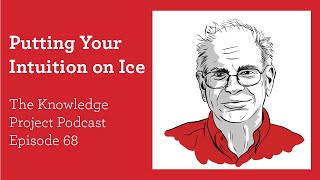

What Kahneman talks about
Daniel Kahneman spoke on The Knowledge Project in 2021 about delaying intuition, reducing noise in judgment, and using structured decision-making to improve accuracy.
Also known as: The Knowledge Project podcast interview; Daniel Kahneman on Judgment and Noise: Delay Intuition.
Daniel Kahneman discusses how people form judgments too quickly, why intuition should often be delayed, and how breaking decisions into separate dimensions improves accuracy. He uses examples from the Israeli army, hiring, investing, and negotiation to show how structured judgment can outperform snap impressions.
He also revisits his distinctions between happiness and life satisfaction, argues that changing behavior is hard, and explains why situations shape behavior more than personality alone. Along the way, he highlights the importance of reducing noise, protecting dissent, and using algorithms whenever possible.
Toward the end, Kahneman reflects on the replication crisis in psychology and says he has become more cautious about spectacular findings. The conversation shows how his thinking has evolved while keeping the same core concern: how to make human judgment more reliable.
Shane Parrish interviews Kahneman throughout the episode.
In his words
“Delay your intuition.”
“Don't try to form an intuition quickly, which is what we normally do.”
“If you really want to improve the quality of decision making, use algorithms.”
“Wherever there is judgment, there is noise and more of it than you think.”
“I blame myself for having been a bit gullible.”
Key points
- Delay intuition until you have evaluated the separate parts of a problem.
- Use rules and algorithms when possible; they usually beat informal judgment.
- Noise is useless variability in judgment and can be reduced by shared scales and structured procedures.
- Behavior is strongly shaped by situation, not just personality.
- Happiness and life satisfaction are different: one is emotional, the other is evaluative and tied more to status and success.
- Changing behavior is very hard; reducing restraining forces works better than simply pushing harder.
- The replication crisis has made him more cautious about remarkable psychology findings.
Full transcript: Daniel Kahneman, The Knowledge Project #68 (2021)
Daniel KahnemanDelay your intuition. Don't try to form an intuition quickly, which is what we normally do. Focus on the separate points. And then when you have the whole profile, then you can have an intuition, and it's going to be better.
Shane ParrishHello, and welcome. I'm Shane Parrish, and this is the knowledge project, podcast exploring the ideas, methods, and mental models that help you master the best of what other people have already figured out. To learn more and stay up to date on new episodes, go to fs.blog/podcast. I also put together a weekly newsletter that I think you'll love. It's called Brain Food, and it comes out every Sunday. Much like this podcast, it's high signal, low noise, it's timeless, and mind expanding. Read what you're missing at fs.blog/newsletter. Today, I'm speaking with Daniel Kahneman, Emeritus Professor of Psychology at Princeton who received the Nobel Prize in Economics in 2002 for the work he did on decision making with Amos Tversky. Danny is the most influential living psychologist, a true legend in his field, and this conversation was a great honor.
Publicly, he's probably best known for his book, Thinking Fast and Slow, and his work on drawing attention to our cognitive biases. Our conversation revolves around how to make better decisions, our intuitions, what, if anything, we can do to reduce our cognitive biases, and how rules make great defaults. It's time to listen and learn. The knowledge project is sponsored by MetaLab. For a decade, MetaLab has helped some of the world's top companies and entrepreneurs build products that millions of people use every day. You probably didn't realize that at the time, but odds are you've used an app that they've helped design or build. Apps like Slack, Coinbase, Facebook Messenger, Oculus, Lonely Planet, and many more. MetaLab wants to bring their unique design philosophy to your project.
Let them take your brainstorm and turn it into the next billion dollar app from ideas sketched on the back of a napkin to a final ship product. Check them out at metalab.co. That's metalab.co. And And when you get in touch, tell them Shane sent you. Daniel, I'm so happy to get the chance to talk to you.
Daniel KahnemanWell, I'm happy to have you here.
Shane ParrishWhat was your childhood like? What were you like as a child?
Daniel KahnemanOh my god. That was a long time ago. I was I was a nerdy child, as you might expect, I suppose. I was... I thought I'd be a professor when I was, like, three or four years old because people told me I would be because I probably spoke with long words and stuff like that. So... And then the rest of my childhood, I mean, I was five when World War two began. So... And I was a Jew in France, so I've had a difficult childhood, but from that point on. But but I was was I like, yeah, I was a I was a nerdy child. I was quite inept physically. Very fortunately for me, when I finally moved to Israel at age 12, they held me up a grade and then and then it was alright, but that's that's what I was like.
Shane ParrishAre there any particular lessons or memories that stand out for you?
Daniel KahnemanThere are two of them that I speak about. So one is that I was I was a psychologist very early on. It was it was very clear. I I wrote an essay before I was 11. I remember where because it was it was a German counterattack, and it was during that period. We were in Paris. And I wrote an essay about faith and religion, and it was a very pompous essay. I had a little book that was that was titled what I what I write about what I think, something pompous like that. But the essay started with another pompous thing that I quoted Pascal. My my sister had passed her exams, and I had read... You know, she had studied some Pascal, and I had read it.
And Pascal had said that faith is God made sensible to the heart. And, you know, little me, I said, how true. That's what my essay said. And then... But then I said, but faith is really hard to get. You don't sense god all the time. So that's what religious pomp is for. Cathedrals, organ music, they give you, and I call that osat's face, sort of a substitute face because it's a it's a similar feeling. It's got to do with god, and that's what you must do with. That's that's a psychologist. So it... It's clear that, you know, that was my calling. And so that's one significant memory of my childhood.
Shane ParrishSo you were born to be a psychologist?
Daniel KahnemanI think so. I think so. I mean, I... You know, it's always had that point of view that later as a teenager, I was, you know, interested in all the philosophical issues like, you know, does god exist and what's good and bad and stuff like that, and why shouldn't we masturbate, you know, serious questions. But but I discovered that, actually, I was less interested in the question of whether or not god exists than in why do people believe that he exists. That I thought was interesting. And I wasn't particularly interested in the question of what's good or bad, but I was really interested in what makes people angry and indignant. So, you know, I've had the psychological point of view since... Turns out since my childhood.
Shane ParrishWas there anybody that sort of influenced you to go on to study this? I mean, it's one thing to have these dreams as like a 12, 13, 14 year old boy. It's another to turn this into, you know, probably the most eminent career that's ever happened for a psychologist.
Daniel KahnemanNo. Not the most eminent career. You know? And I wasn't sure, actually, that I would do psychology in my... When I took a vocational exam to tell me what I was good at. And psychology and economics turned out, but, you know, that was unexpected. Was... And then I took psychology as an undergraduate and mathematics at which I was not particularly good. So... And, no, it's not that I knew at the time that, you know, I had that calling to be a psychologist. Didn't occur to me. I thought, you know, I thought I'd be a professor in one thing or another. I mean, that's... I thought I'd be an academic, but not psychology specifically.
Shane ParrishYou worked for a... With Amos Tversky for a long time. Are there any particular stories that you remember about working with him that bring a smile to your face?
Daniel KahnemanAlmost everything about working with him brings a smile to my face. You know, he was a very unusual person. Most people who knew him thought that he was the smartest person they've ever met. And in fact, famous psychologist Nick Nesbitt said that it's sort of an intelligence test when he said that when you are with him, how long does it take you to figure out that he's smarter than you are? And the faster you figure that out, the smarter you are. So, yeah, he was he was super bright and very, very funny. He joked a lot. He laughed a lot at his own jokes, and that was infectious. When I was with him, I was very funny too. More than half of my... The laughs of my laugh... Of my lifetime I've had during the ten years I I worked with him.
Shane ParrishYou have an interesting distinction between happiness and satisfaction. Can you walk us through that?
Daniel KahnemanYeah. Sure. I mean, the word happiness is so ambiguous, and it means so many things to many people. But one sensible interpretation of it is that it's got to do with your emotions, with how you feel, with the emotional tone of your life, whether it's a happy life, know, it's pleasant to be you. Life satisfaction is a completely different thing. I mean, life satisfaction is how you feel about your life when you think about your life. And most of the time, you don't think about your life. You just live. But, you know, sometimes sort of look, and and that's that's when you determine how satisfied you are. That's life satisfaction. It's not satisfaction. It's life satisfaction.
Shane ParrishShould we balance the two, or how would you think about them? Should we be more happy when we're younger, more satisfied when we're older?
Daniel KahnemanThat thought had never occurred to me when I began to work on this. So I started out thinking that happiness in that sense of how you feel when you live, that that was reality and that life satisfaction was just stories that people tell themselves, and the the important thing was to be happy in real time. But later, when we did more research, it turned out that the circumstances that make people happy and the circumstances that make them satisfied with their life are not the same. So happiness is mostly social. It's, you know, it's being with people you love who love you back. That's that's a lot of what happiness is. Life satisfaction is much more conventional is to be successful.
And, you know, so it's money, education, prestige, that sort of thing is what life satisfaction is about. So those are two very different things. I thought that life satisfaction is irrelevant. Know, that's how I began. And we we had a research program where we were we were trying to, you know, to show that this is the case. But then after a few years, I realized that what people really want in their life is they don't seem to care about how happy they'll be. They seem to want to be satisfied with their life. They seem to want to have a good story about their life. And then I was in the position of saying that to define well-being in a way that people didn't seem to care particularly about, so that was not a tenable position.
So I I dropped back into saying that I had no idea how to deal with it.
Shane ParrishWas this the result of the research? You did some research that was... I think it said above 70,000, you don't become happier, but you become more satisfied?
Daniel KahnemanNo. The research I did with Angus Deaton at Princeton, famous economist, we showed that in terms of happiness, in terms of emotional tone, positive and negative, having a lot of money doesn't make you happier, but being poor makes you miserable. So that's above the threshold that was, like, $70,000 approximately in The US. Then extra money didn't make you emotionally happier. But with life satisfaction, it was a different story. With life satisfaction, that doesn't satiate. So it's always good to have more because, basically, I think money is a proxy for success, and it's a proxy for subjective success in many cases.
Shane ParrishSo So it's not necessarily about spending it or doing something with it. It's just a measure.
Daniel KahnemanJust getting it. I mean, you know, you look at all those people, all those billionaires working their heads off, and they clearly are not doing this because they need more money. They're trying to get more money. They're trying to get more money because that would be an indication that they're good at what they do. I think mostly it's a proxy.
Shane ParrishDo either of those variables correlate to longer living, happiness, or satisfaction?
Daniel KahnemanBoth, apparently. But, you know, it's it's hard to separate. And I haven't been followed, you know, shortly after this... Deciding that I didn't know what well-being was, I sort of stopped doing research on this, so I haven't been following. But I think there's clear evidence that being effectively happy, you know, is really good for you. And you do live live longer and you live better and so on. And life satisfaction works in the same direction. Whether it's separable, which of them, you know, isn't more important, that I don't.
Shane ParrishLet's switch gears a little bit and talk about behavior. And I'd love your insight or expansion upon the idea of we can change behavior and how do we go about changing our behavior.
Daniel KahnemanWell, you know, I'm not sure by the premise. I think changing behavior is extremely difficult. The... There are a few tips and, you know, few guidelines about how to do that, but anybody who is very optimistic about changing behavior is just deluded. It's it's hard to change other people's behavior, it's very hard to change your own, not simple.
Shane ParrishThis is what marriage is all about. Right?
Daniel KahnemanAmong other things, you know, people When when, you know, married people try to change each other's behavior
Shane ParrishThere's a lot of dissatisfaction.
Daniel KahnemanAre not on their way to a good marriage, I think.
Shane ParrishWe'd all be happier with lower expectations.
Daniel KahnemanYes. I mean... And and even if you have expectation, don't try to change because, you know, it's very unlikely to work in a significant way.
Shane ParrishI can think of the common ways that we would sort of go about behavior change, and it would be, you know, making good behaviors more easy or negative behaviors harder.
Daniel KahnemanI think that's the main the main insights. You know, when you want to influence somebody's behavior, that's a very big insight. I've always thought that this is the best psychological idea ever, you know, so far as I'm concerned. But it's that when you want somebody to move from a to b in terms of their behavior, you can think of it that there are two ways of doing it. You can push them, or you can ask the question, why aren't they doing b already? Which is an unusual question, but, you know, why... So then when you ask why why not, why aren't they doing b as they ought to, as they think they ought to? Then you get the list of what's going to win. That's the psychologist who... My guru on this, my hero, and many people's hero.
He spoke of restraining forces. I mean, so there are reasons why they're not where you want them to be. So he spoke of behavior as an equilibrium. The forces that are pushing you one way, forces that pushing you the other way. So how loud you speak, how fast you drive, it's easy to think of it as as an equilibrium. And what we tend to do when we want to move people from a to b is we push them. We add to the driving forces. And Kurt Lewin's insight was that this is not what you should do. You should actually work on the restraining forces and try to make them weaker. And that's a beautiful point. And he showed, he had that image that, you know, I've had since I was an undergraduate.
And I'm not sure actually whether it was his image or something that I drew from reading him, but it's like you have a plank and it's being held by two sets of springs. You know, you want it to move one direction. And so you could add another spring that would push it that way or could remove one of the springs that are holding it back. And the interesting thing, and that's the striking outcome, is when it moves, if it moves because of the driving force, you've added to the driving force, then at equilibrium, it will be in a higher state of tension than it was originally. That is because you've compressed web spring and so it's pushing back harder. But if you remove a restraining force at equilibrium, there'll be less tension on the system.
It must have been 20 years old. I thought that's just so beautiful.
Shane ParrishWhat do you wish that everybody knew about psychology that you don't think that they do? If that was class one, what's class two?
Daniel KahnemanYou know, class two, which is the development from class one, you know, it's it's the same idea extended. Class two is that behaviors don't necessarily reflect the personality, but behaviors have a lot to do with the situation. And so if people behave in strange ways, look at the situation they're in and what are the pressures in the situation that make them act this way. So there is a bias that the social psychologist, well known social psychologist, call the fundamental attribution error. And that means that when you see people acting in some way, you think that it's because of their personality that they do it. That may not be the case. It's quite likely that the situation is making them good. I'd like people to know that motivation is complex and that people do good things for a mixture of good and bad reasons, and they do bad things for a mixture of good and bad reasons.
And I I think that if there is a point to educating people in psychology is to make them less judgmental. Just have more empathy and more patience, and being judgmental doesn't get you anywhere.
Shane ParrishWhen you talk about situational, one of the things that comes to mind is it's so easy for us to give our friends advice, but if we were in that situation, we might not necessarily see it. Why is that the case? Why is it so much easier to give other people advice?
Daniel KahnemanI mean, feelings get in the way of clear thinking. There is a phenomenon that that we call the endowment effect, which is that when I'd ask for more money to sell you my sandwich than I'd pay to get it, I mean, that's essentially the endowment effect. And our explanation of it, there are many explanations, but the story I like to tell about it is that it's more painful to give something up than to get something. But there is an interesting result that if you have an agent making decisions on somebody's behalf, that agent doesn't have loss aversion. So that agent sells and buys at the same price, which is the economically rational thing to do. Where this goes into policy and governments and really important things, that governments are like agents or people who who think about the good of society.
And agents, they take the economic view. They take the view of what things will be like at the end. They don't figure out that there are some people who going to be losing because of the reform that they make. And it turns out that you can really expect losers, potential losers to fight a lot harder than potential winners, And that's the reason that reforms are frequently fair, and that when they succeed, they are almost always way more expensive than anticipated. And they are more expensive because you have to compensate the losers, and and that frequently is not anticipated. So that's an example of a story about... That incorporates behavior change and and the difference between perspective, between being, you know, in the situation feeling the pain of giving up the sandwich and not feeling the pain of giving up the sandwich.
Shane ParrishThat would have huge public policy sort of implications too, right, that we don't tend to think about or discuss. It's a really interesting angle there. I wanna come back to sort of situational decision making based on sort of, like, what we see is all there is, and we have these feelings that we can't sort of disassociate with. How does environment play a role, like, physical environment in sort of what we decide, or does it?
Daniel KahnemanI mean, you know, there are sort of obvious thing that we know. People are are hot and bothered and distracted and and there is a lot of noise and so on, then they'll think as well and that we know. That's... But even there, there are puzzles. I mean, many people think and work a lot better in cafes, you know, where there is actually ambient noise and activity around them, and it helps them concentrate better. So this is a very simple story of the environment. But, certainly, you can make the environment tough enough so that people won't be able to think properly. That's that's feasible.
Shane ParrishAre there things that we could do to, I guess, push the environment to be more conducive to clearer thinking, the physical environment in this case?
Daniel KahnemanOh, there are all sorts of, you know, odd findings. You know, the color of the color of the room. The... Some colors are better than others, and you would expect that. Some colors are more calming than others. And So you wouldn't want to be in a in a red room.
Shane ParrishMaking decisions. Making making decisions.
Daniel KahnemanBut, you know, those are extreme and minor effects.
Shane ParrishI wanna come to intuition and noise later. Is there anything else that stands out that gets in the way of clear thinking that we can sort of bring to the surface now?
Daniel KahnemanWell, you know, what what gets in the way of clear thinking is that we have we have intuitive views of almost everything. So as soon as you present a problem to me, I have, you know, I have some ready made answer. And what gets in the way of clear thinking are those ready made answers, and we can't help but help them. So that's one thing that gets in the way. Emotions get in the way. I would say that independent clear thinking is the first approximation impossible, I mean, in the sense that, you know, we believe in things most of the time, not because we have good reasons to believe them. If you ask me for reasons, I'll explain you. I'll I'll always find a reason, but the reasons are not the causes of our beliefs. We have beliefs because mostly we believe in some people, and we trust them, and we adopt their beliefs.
So we don't reach our beliefs by clear thinking, something, you know, unless you're a scientist or doing something like that.
Shane ParrishBut even then, it's probably a very narrow
Daniel KahnemanThat's very narrow, and there is a fair amount of emotion in neuroscientists as well that gets in the way of clear thinking, You know, commitments to your previous views, being insulted that somebody thinks he's smarter than you are. I mean, lots of things get in the way even when you're a scientist. So I'd say there is less clear thinking than people like to think.
Shane ParrishIs there anything that we can do at the belief formation stage? Like, it sounds almost as though when you say that we're reading a newspaper, we read this op ed, and it's well constructed and fits with our view of the world. Therefore, we adopt that opinion, and we forget the context that we didn't learn it through our own experience or reflection. We learned it sort of from somebody else, so we don't know when it... It's sort of likely to work or not work, but we just proffer that as our opinion is there.
Daniel KahnemanThat's how I believe in climate change. You know? I believe in the people who tell me there is climate change, and the people who don't believe in climate change, they believe in other people.
Shane ParrishSo But similarly, there's, like, fake news and all this other stuff that we we would have the same reaction to.
Daniel KahnemanYou know, but but I'm much more likely to believe fake news on my side than the fake news on on the other side. I mean, it's true that there is an... A huge degradation in in public discourse in in the recent ten, fifteen years of The United States. I mean, there used to be an idea that facts matter.
Shane ParrishWhat would be your hypothesis as to why that that is playing it? Were they getting into politics? Because I don't wanna talk politics, but, like, why is that?
Daniel KahnemanWell, I mean, it's hard to it's hard to answer that question without without politics because it's a general political polarization has had a very big effect and the fact that people can choose the sources of information.
Shane ParrishLet's switch gears a little bit and talk about intuition. I think one of the the things that strikes me the most about some of the work that you've done is the cases where we're likely to trust our intuition and when we're not. And so if I'm... Correct me if I'm I'm getting this wrong. So it's sort of like a stable environment, repeated attempts, and rapid feedback. It strikes me that most decisions made in organizations do not fit that environment, and yet we're making a lot of these decisions on judgment or experience. What are the ways that we can sort of make better decisions with that in the context?
Daniel KahnemanWell, in the first place, I think, you know, you shouldn't expect too much.
Shane ParrishBack to low expectations.
Daniel KahnemanThink through... Yeah. Should have low expectations about improving decisions. I mean, there is, you know, one basic rule is slow down, especially if you if you have the immediate conviction, slow down. There are procedures, you know, there are ways of reaching better better decisions, but reaching better judgments, and we can talk about them.
Shane ParrishI would love to.
Daniel KahnemanIf you really want to improve the quality of decision making, use algorithms. I mean, when... Wherever you can. If you can replace judgments by by rules and algorithms, they'll do better. There... There's big social costs to trusting, allowing algorithm to make decisions, but but the decisions will likely to be better. So that's one thing. If you can't use algorithms, then you slow yourself down. And then there are things that you can do for certain types of problems, and there are different types of problems. So one class of problems like forecasting problems, our friend Phil Tetlock, you know, has that book on super forecasters where he identifies with people who are good at forecasting the future, what they do that makes them good, and, you know, he tries to train people and they can improve people.
So that's one class of problem. I'm interested specifically in another kind of problem, judgment problems, where basically you're considering options or you're evaluating a situation, and you're trying to give it a score. There there there is advice, I think, on how to do it. For me, it goes back to something I did in the Israeli army when I was, like, 22 years old. So that's a long time ago, like sixty three years ago. I was a psychologist in the Israeli army, and I was assigned the job of setting up an interviewing system for for the army. It's ridiculous, but, you know, this was the beginning of the state of Israel, so people were improvising all over the place. So I had a BA, and I was... I think I were the best trained psychologist in the army.
My my boss was a chemist. Brilliant. But, anyway... And the the existing system was one where people would interview and try to form an intuitive global image of how well is that recruit would do as a combat soldier, which was the objective of the object of the interview. And because I had read a book by Paul Neal, I took a different tack. And the different tack was I identified six traits that I sort of made up, and I had them ask questions and evaluate each of these traits independently and score it and write down the score then go on to the next trait. And they had to do it for all six traits, and that was... That's all I asked them to do. And the interviewers who were about one year younger than I, all recruits, but very, very smart, selected for being good at it, they were furious with me.
And they were furious with me because they wanted to exercise their intuition. And I still remember that one of them said you're turning us into robots. So I compromised with them, and I said, okay. You you do it my way. And I told them, you try to be reliable, not valid. You know? I'm in charge of validity. You be reliable, which was pretty arrogant, but that's that's how I presented it. But then when you're done, close your eyes and just put down a number of how good a soldier is that guy going to be. And when we validated the results that they interviewed, it was a big improvement on what had gone on before. But the other surprise was that the final intuitive judgments added it was good.
It was as good as the average of the six traits and not the same. It added information. So, actually, we ended up with a score that was half... Was determined by the specific ratings, and the intuition got half the weight. And and that, by the way, stayed in the Israeli army for well over fifty years. I don't know whether it's... I think it probably some version of it was still being forced, but around fifteen years ago, I visited my old base, and and the commanding officer of the research unit was telling me how they run the interview, and and then she said... And then we tell them close your eyes. So that that had stayed for fifty years. Now the close your eyes and that whole idea is now the basis of the books that I'm writing.
So, actually, I have same idea, really, that when you are making decisions, you should think of options as if they were candidates. So you should break break it up into dimensions, evaluate each dimension separately, then look at the profile, and and the key is delay your intuition. Don't try to form an intuition quickly, which is what we normally do. Focus on the separate points. And then when you have the whole profile, then you can have an intuition, and it's going to be better. Because people make form intuitions too quickly, and the rapid intuitions are not particularly good. So if you delay intuition until you have more information, it's going to be better.
Shane ParrishI'm curious how we delay intuition.
Daniel KahnemanYou delay intuition by focusing on the separate problems. So our advice is that if you have, you know, the board of directors making decisions about an investment, we tell them you do it that way. Take the separate dimensions and really think about each dimension separately and independently, and don't allow, you know, if you're the chair, don't allow people to give their final judgment. So we wait until we cover the whole thing. I mean, if you find a deal breaker, then you stop. But if you haven't found a deal breaker, wait to the end and look at the profile, and then your decision is almost certainly going to be better.
Shane ParrishDoes that include weighting the different aspects of the problem differently, or do you highlight that in advance, or do
Daniel Kahnemanyou see I mean, it makes you see the trade offs more clearly. Otherwise, when we don't follow that discipline, there is a way in which people form impressions. Very quickly, you form an impression, and then you spend most of your time confirming it instead of collecting evidence. And so if accidentally your impression was in the wrong direction, you're going to confirm it and you don't give yourself a chance to correct it. Independence is the key because otherwise, when you don't take those precautions, it's like having a bunch of witnesses to some crime and allowing those witnesses to talk to each other. They're going to be less valuable if you're interested in the truth than keeping them rigidly separate and collecting what they have to say.
Shane ParrishWhat have you seen work in a repeatable way, It may be a particular organization or across organizations to not only reliably surface disconfirming evidence, but then place a value on what is surface instead of being dismissive. Is is there a framework for that? Is there
Daniel KahnemanWell, yeah, there are many. You know, there there are many procedures like red team, blue team, devil's advocate. I mean, there's... There have been, you know, many attempts. In in general, you know, if you are if you are the head of the group that makes decisions, one of your missions would be to protect the dissenters because they're very valuable, and you should make it painless to to dissent or as painless as possible. Because it's hard to dissent. It's painful and costly, so protecting dissenters is important.
Shane ParrishI'm curious about the distinction between intuition and judgment. You you had mentioned intuition, judgment, intuitive judgments. Can can you walk me through some of, like, how those differ?
Daniel KahnemanIt's a bit hard to separate. And judgment is is what you do when you integrate a lot of information informally into a score of some kind. I... We speak, we being my coauthors and I in the book we're writing, we speak of judgment as measurement, but it's measurement where the measuring instrument is your mind. But you do it informally, and because you do it informally, people are going... Are not necessarily going to agree. So wherever we say it's a matter for judgment, we're allowing for differences, for variability. Now judgment can be more or less slow, more or less systematic. So at one end, you have pure intuition where you allow the judgment to go very quickly and so on.
And at the other end, you try to delay intuition, but ultimately, if you're making it by judgment, you're going to have a judgment, and it's going to be like an intuition, and you're going to go with it. So the more or less deliberate judgment, intuition is always involved at one point or another.
Shane ParrishYou're either sort of like listening to it or fending it off.
Daniel KahnemanYeah. And our recommendation is fending off.
Shane ParrishAre there ways to judge the quality of somebody's judgment? Yeah. Sure. I mean, some of them would be unique to the actual scenario, but what are the sort of other ways that we could
Daniel KahnemanWell, when you you may require people to explain their judgments and evaluating the quality of the explanation is, you know, whether it's logical, whether it uses the evidence, whether it uses all the evidence, whether it is strongly influenced by wishes, whether the conclusion was reached before the judgment supposedly is made. You know, there are there are lots of there are lots of ways for judgment to fail that can be recognized. So it's harder to recognize very good judgment, but it's really easy to see, you know, what goes wrong, and there are quite a few ways for judgment to go wrong.
Shane ParrishAnd I think some of those ways are the cognitive biases, like overconfidence and sort of using small or extrapolating from small sample sizes. And one of the interesting things that I've heard you say in interviews before, so correct me if I'm I'm off here, is that you... You've studied cognitive biases effectively your whole life, and you're no better at avoiding them than anybody else.
Daniel KahnemanYeah. Certainly not much better. No. What hope do the rest of us have? Not much. I mean, I never... You know, I I think, you know, the quality of people's judgment is affected by by education. But so in general, you know, more educated people make better judgments, think, on average. But people decide I'm going to make better judgments. I don't think that's very hopeful. I'm much more hopeful about organizations because organizations think more slowly, and they have procedures for thinking. And so you can control the procedures. Individual judgment is really hard to fix. Not impossible.
Shane ParrishOne of the things that I see people do in response to cognitive biases and trying to account for them is to sort of make a list of them, almost like a checklist, and then go through that checklist and explain or rationalize why those things don't apply in this situation. It also strikes me that the more intelligent you are, the more stories you'd be able to conjure up about why why you're avoiding this.
Daniel KahnemanI really think that's not very hopeful because there are so many biases, and the biases work in different directions anyway. So sometimes you can recognize a situation as one in which you're you're likely to be wrong in a particular way. So that's like illusions. If you if you recognize a particular pattern as something that gives rise to visual illusion, then you don't trust your eyes. You know, you do something else. And the same thing happens when you recognize this is a situation where I'm likely to make an error. So sometimes you can recognize the importance, for example, of what we've called an anchor. So you're going to negotiate a price with somebody, they start very high, and that has an effect.
So you know or you should know that the person who moves first in a negotiation has an advantage because it... The first number changes everybody's view of what is considered plausible. So it moves things in that direction. That's that's a phenomenon. People can learn that, and they can learn to resist it. So when I was teaching negotiations, I would say somebody does that to you, comes up with a number that's absurd, I would say lose your temper, make a scene, say, I will not start the conversation from that number. It's an absurd number. I don't want to... Let's erase that number. So that's something that, you know, you can improve if you recognize it.
I think people are aware of the fact that you shouldn't make a decision about road safety within a short interval of a terrible accident. You know? So you should allow things to settle down and cool down. There is a more subtle error and harder harder to fix, but that the best prediction, the best guess is always less extreme than your impression. Intuitive prediction is, as we say, not regressive. It doesn't recognize regression to the mean. But statistics is is statistics. And in statistics, things are less extreme. Should I give you my favorite example of advice?
Shane ParrishYeah. Please.
Daniel KahnemanOkay. I have been unable to think of a better one. But the story is about Julie. That's that's part of the story. That's her name. She is a graduating senior at university, and I'll tell you one fact about her that she read fluently when she was four. What's her GPA? And and the interesting thing here is that everybody has a number. As soon as I told you that thing, the number came to mind. Now we know where that number came from. We really... That's one of the few things that I'm reasonably sure I understand perfectly. And this is that when you hear she read fluently at age four, you get an impression of how smart she is, of how precautious she was at age four. And you could put that in percentiles. You know, whether that put her on a percentile for sort of aptitude, ability, and it's high.
It's not... You know, if she had read fluently at age 2.5, could be more extreme, but age four is pretty high. So say at the ninetieth percentile. And and then the GPA that comes to your mind is around the ninetieth percentile in the distribution of GPA. So you pick something, your prediction is as extreme as your impression. Mhmm. And it's idiotic, statistically, completely stupid because, clearly, the age at which a child learn to read is not all that diagnostic with respect to GPA. So it's better than nothing. If you didn't know anything, you would predict the mean GPA, whatever it is, 3.1, 3.2. Now she's bright, so probably a little higher, but not 3.7.
You don't want to... So that's called... That's a bias. That's nonregressive prediction, and that's very hard to resist. Sometimes, I'm able to resist it, but never when it's important. You know, when I'm really involved in something, I don't think about it, but sometimes I will recommend, oh, you know, that's a situation. I should moderate my prediction.
Shane ParrishAnd if you're conscious of it, that's an example of one you can sort of talk yourself
Daniel Kahnemanout of? Yeah. You can talk yourself into. Although, you know, you you usually will find a way to cheat and end up Right. With your intuition. It's it's remarkable, you know, you know, when you've been in academic life a long time, so you've been at... In many situations where people discuss a job candidate. And absurdities of that kind are very common. So somebody... A job candidate gives a talk, and people evaluate the talk. And this is something happened, you know, at Berkeley when I was teaching there, that somebody gave a talk. Wasn't a very good talk. Stammered a bit. Now that person had teaching prizes, and yet what was said about him in the discussion, he can't teach.
You know? We we heard the talk. So that's a mistake. But the funny thing is you can point out to people that that's a mistake. They still don't want to hire him because he gave a lousy talk. So it's hard to resist.
Shane ParrishIt's interesting. One of the... I think one of the ways I probably got my job is using psychology in the interview, which is asking why I was there and then reinforcing those beliefs throughout the interview. I wanna come back just one second to the the immediacy of sort of having a stimulus and then making a decision. So we use the example of roads and a tragic accident happens, and you're rethinking sort of policy or laws around the roads. How much of that do you think is social pressure? And I'm I'm wondering if we could even extrapolate that a little more to we're taught to answer questions on a test right away. Right? So we see this question, then we answer it. We're taught that we... Or maybe it's reinforced. Taught is probably the wrong word, that politicians need to have a respond...
An immediate response to... And and even if they know the best thing to do is, like, okay. Like, let this settle. Take some time. It's... Society writ large seems to demand it. Like, the environment is not conducive.
Daniel KahnemanI think it's pretty clear that people prefer leaders who are intuitive and who are overconfident. Leaders who deliberate too much are viewed with suspicion, you know. So I think Obama was at a certain disadvantage relative to George Bush, you know.
Shane ParrishBecause he'd be seen as more deliberate.
Daniel KahnemanYeah. He was more deliberate. And then when you're very deliberate, you look as if you don't know what you're doing. But when you act with confidence... So people want leaders who are intuitive, I think, by and large, provided they agree with it.
Shane ParrishJust working my way back through some of these rabbit holes that we've gone down. You you taught negotiations. I'm curious what would be in your your sort of syllabus for negotiations that everybody should learn about negotiations when it comes to your work in psychology.
Daniel KahnemanWell, you know, the... That goes back to a theme that we started with, the essence of teaching negotiations, that negotiations is not about trying to convince the other guy. It's about trying to understand them. So, it's slowing yourself down. It's not doing what comes naturally because trying to convince them is applying pressure. Arguments, promises, and threats are always applying pressure. And what you really want is understand, you know, what you can do to make it easy for them to move your way. It's very nonintuitive. That's a surprising thing when you teach negotiation. It's not obvious. You know, we are we are taught to apply pressure and socialize that way.
Shane ParrishYou'd mentioned that there was procedures for thinking in organizations. Are there any that stand out in your mind that we could use to elevate thinking, and if not elevate, but give feedback on the quality of thinking to improve it?
Daniel KahnemanWell, I think one of the ideas that people like the most is an idea by Gary Klein that he calls the premortem, and that's that's a universal winner. People really like that idea. And this is that when you're about to make a decision, a group, not quite because if you've made it, it's too late, but you're approaching it. And then you you get people in a room who can be the people are making the decision. And you said, suppose it's two years from now, and we made the decision that we're contemplating, and it turned out to be a disaster. Now you have a page in front of you. Write the history of that disaster in bullet points. That's the premortal. And and it's beautiful as an idea. It's beautiful because when people are coming close to a decision, it becomes difficult to raise doubts or to raise questions.
People who are slowing the group down when the group is nearing a decision A procedure is really, you know, delicious, annoying. You know, there's... You want to get rid of them. And the premortem legitimizes that sort of dissent and that sort of doubts. Not only legitimizes it, you know, it rewards it. And so that's a very good idea. I don't, you know, I don't think that it's going to prevent people from making mistakes, big mistakes, but it could... Certainly, it will alert people to possible loopholes to to things that they ought to do to make a safer decision. So that's a that's a good procedure. And there are many others.
Shane ParrishWhat comes to mind?
Daniel KahnemanI mean, what comes to mind is is to make intelligence in the collection of of information independent of the decision maker's wishes. And you really want to protect the independence of the people collecting the evidence. And I would add to, you know, procedure that really people don't like, but if it were possible to implement it, I think would be good. And that's that when you're going to be discussing a topic and it's known in advance and people in sense of material to think about the topic, that you may want them to write down their decision... The decision they are in favor of before the discussion starts. That has many advantages.
It's going to give you a broader diversity of points of view because people tend to converge very quickly in a in a group discussion. And it forces people to be better prepared. It's... Except people don't want this. So I I don't know whether it's even possible to implement it. But clearly, if you could, would be a good idea.
Shane ParrishWhat are the reasons people don't want it? It's too much work. Right. Forces you to do
Daniel Kahnemana whole bunch of...
Shane ParrishRather than the signaling you can sort of get away with
Daniel KahnemanYeah. And then, you know, there's somebody who's going to prepare the case, and so I glance at the material and then, you know, so a lot of meetings are tremendous to sink for wasted time. Oh. And improving the quality of meetings would be a big thing.
Shane ParrishDo you have any insights on how to do that?
Daniel KahnemanKeeping them short. You know, I'm not a professional at at fixing meetings, so I I have I have a few ideas, but not a complete view. The the question of structuring the meetings to be discussing topics one at a time, that I think is is really useful. I'll give you an example. I mean, it's something that I suggested when I was consulting, but for some reason, people didn't buy that suggestion. So you... When an investment is being discussed, say, by by an investment firm, some staff people, if it's a big investment, staff people will prepare a briefing book The chapters, now our recommendation would be that the staff should end each chapter with a score.
How does that chapter taken on its own independently of anything else affects the likely decision. And then you could structure the meeting, the discuss of this, meeting of the board, say, to discuss these scores one at a time. That has the effect that I was talking about earlier, making the decision, making the judgments about the dimensions. We call them mediating assessments is a jargon too. The mediating assessments come first, and then you have a profile of them, and then you make a global judgment. And you can structure it. So if the staff has presented a score and you discuss in the board, do we accept their score? You're forcing people to have a look at the evidence.
Shane ParrishAnd think about why they would accept or reject, and then they they feel like they have to construct an argument that might be less intuitive.
Daniel KahnemanThat's it. So, you know, there are ways of doing this, but if you're going to be too rigid about it, it won't work either. So
Shane ParrishI'm curious what other advice you gave as a consultant that nobody followed.
Daniel KahnemanOh, I mean, virtually, all the advice I give, people don't follow. I mean, you know, I think that's that's not... You shouldn't... You know, you're not going to be a consultant if you expect your advice to be taken. You have to give the best advice you can.
Shane ParrishWhat what would be other examples of something you think could be widely applicable that you would you would have advised people and you just sort of, like, saw them drop the ball?
Daniel KahnemanWell, I mean, you know, I would advise people who make a lot of decisions to keep track their decisions and of how they turned out so that later you can come and and evaluate your procedures and and and see whether there is anything that is in common with those decisions that turned out well and then not so well and so on. People hate doing this.
Shane ParrishWhy do you think people hate doing it?
Daniel KahnemanOh, because because retrospectively, they may look foolish, some of them or all of them or, in particular, the leader. So they really don't like keeping track. I mean, there are exceptions. Ray Dalio and his firm and where everything is explicit. Bridgewater. Bridgewater. But in general, in my ex... I haven't consulted with Bridgewater. They don't need me. But but in general, when I suggested that, never went anywhere.
Shane ParrishWhat are the variables that you would recommend people keep track of? Like, what would your decision journal look like?
Daniel KahnemanOh, I mean, I... My my decision journal would be a mess. I mean, I'm not I'm not I'm not putting myself as an example. But
Shane ParrishSo, obviously, the outcome, but you gotta do that post
Daniel Kahnemanafter Yeah. But... No. No. You you would want to say what were the main arguments, pro and con. What were the alternative that were considered? And it doesn't have to be very detailed, but it should be enough so that you can come later and debrief yourself.
Shane ParrishShould you have a calibration? Like what degree of confidence you are?
Daniel KahnemanThat would be good. Then, you know, it would depend on something that you could evaluate late.
Shane ParrishIt strikes me that decision journals and premortems are a way to identify people that are sort of perhaps suppressed by their manager, where you have somebody who's actually a better better at exercising judgment than the person that is... You know, that they're working for, and this would be a pain free sort of way to calibrate that score over time and identify the quality of judgment in a consistent way.
Daniel KahnemanOh, yeah. I mean
Shane ParrishThat strikes me as worth a lot of money to an organization.
Daniel KahnemanYeah. But but also very costly. And you you will see that certainly anything that threatens the leader is not going to be adopted, and and leaders may not want something that threatens their subordinates either. People are really very worried about embarrassment.
Shane ParrishYou're writing a book now on noise. Yeah. Tell me about noise in decision making. Can you explain the concept?
Daniel KahnemanYeah. I can really explain it by saying what, you know, was the the beginning of it, which was a consulting assignment in an insurance company where we... I have the idea of of running a test to see whether people in a given role who are supposed to be interchangeable agreed with each other. So, you know, when you come to an insurance company and an underwriter gives you a premium, the underwriter speaks for the company and sort of it's... You expect that any underwriter that it doesn't matter which underwriter you get to for the premium. And the company has that expectation. It shouldn't make much difference. So we tested that and they constructed some cases and then we had some, like, 50 underwriters assess the premium for the case.
Shane ParrishWith the same information.
Daniel KahnemanMhmm. Yeah. With the really very realistic. We didn't construct it. They constructed the case. So... And they conducted the experiment. But now the interesting question is, how much variation do you expect there to be? So we asked the executives the following question. Suppose you take two underwriters of random, by what percentage should they differ? I mean, you look at the difference between their premium, divide that by the average premium, what number do you get? And people expect 10%. By the way, it's not only the executives in that company. For some reason, people expect 10%. And it was roughly 50%, five zero. So that's, you know, that's what made me curious about Moist. That and the fact that the company was completely unaware that it had Moist.
It took them completely by surprise. So now we're writing a book because there's a lot of noise. So wherever... Our rule is that wherever there is judgment, there is noise and more of it than you think. So that's the pattern.
Shane ParrishAre there procedures to reduce noise? And conversely, noise... Strikes me that the variation would be good, but maybe only in an evolutionary concept.
Daniel KahnemanWell, we call that noise as useless variability. And variability can be very useful if you have a selection mechanism and some feedback. So evolution is built on variability, but... And, of course, it's useful. But noise among underwriters is useless. There's nothing. Nothing gets learned. There's no feedback. It's just noise, and it's costly. The first advice, of course, would be algorithms, as I said earlier. So algorithm are better than people than judgments. That's not intuitive, but it's really it's really true. And and after that, then, you know, the procedure that I mentioned earlier for making decisions in an orderly way by breaking it up into assessments, and that's the best that we can do.
And and there is one very important aspect that I haven't mentioned, but... And this is training people in what the scale is. So there is one piece of advice that you'd have for underwriters that they should always compare the case to other cases. And if possible, if you can have them share the same frame of reference with other underwriters, we're going to cut down on the on the noise. Oh, that's a clever idea. Yeah. Controlling the scale, and that exists in in human resources where performance evaluation, which is one of the scandals of modern commerce, how difficult it is, but performance evaluation, they have a thing that's called frame of reference training, which is teaching people, you know, how to use the scale.
There's a lot of variability in the scale. And a part of what the super forecasters do, they make judgments in probability units, and they teach them to use the probability scale. So learning the scale is a very important aspect of reducing noise. I know we're we're coming out to the end of
Shane Parrishour time here. What have you changed your mind on in the past ten years? Oh, a lot. Anything big?
Daniel KahnemanYeah. There's been a replication crisis in psychology, and some of the stuff that I really believed in when I wrote Thinking Fast and Slow, some of that evidence has been discredited. So I've had to change my mind.
Shane ParrishWhat are the... What's the big
Daniel KahnemanSome of the sexiest stuff, priming and unconscious priming, and so just hasn't held up in replication. And I believed it, and I wrote it as if it were true because, you know, the evidence suggested it. And in fact, I thought that you have to accept it because that was published evidence. And and I should have... I blame myself for having been a bit gullible. That as I should have known that you can publish things even if they're not true, but I just didn't think that through. So I I changed my mind. I'm now much more cautious about spectacular findings. I mean, very recently, come... I think I have a theory about why psychologists are prone or social scientists generally are prone to exaggerate the...
To be overconfident about their hypotheses. So done quite a bit of learning. What's what's the theory? The theory... One element of the theory is that all these hypotheses are true. In what sense? That, you know, if I... There's a famous study that you mentioned wrinkles to people, and then you measure the speed at which they walk and they walk more slowly. Turns out that hasn't held up in replication, which is very painful. It's one of the favorite studies. But actually, you know that if you mentioned wrinkle, and it's going to have any effect on on the speed of walking, it's not breaking to make... It's not going to make people faster. It has any influence. It's going to make them slower. So directionally, all these hypotheses are true. But what there is is what people don't see is that the huge number of factors that determine the speed at which individuals walk and the differences in the speed of walking between individuals.
And that's noise, and people neglect noise. And then there is something else, which is touches on both philosophy and and psychology. When you have intuitions about things, though clear intuitions and they're strong intuitions, another say. So clear intuition is if I offer you a trip to Rome or a trip to Rome and an ice cream cone, you know what you prefer. It's easy. But it's very weak, of course. I mean, the amount of money you would pay to get a trip to Rome and a trip to Rome and an ice cream cone, nothing. But when you are a philosopher, and I should add one thing, to see the clear intuitions, you have to be in this kind of situation that psychologists call within subject, that you have both you have both with with the ice cream cone and without the ice cone.
So in a within subject situation, that's an easy problem. In a between subject situation, it's an impossible problem. But now if you're a philosopher, you're always in a within subject situation, And... But people live in a between subject situation. They live, you know, in one's condition. And the same thing is true for psychologists. So psychologists live in a... When they hook up their hypotheses, they're in a... Within subject situation, but then they make guesses about what will happen between subject, and they're completely lost between clear intuitions and strong intuition. We have no way of calibrating ourselves. So that makes us wildly overconfident about what we know and reluctant to accept that we may be wrong.
Shane ParrishThat's That's a great place to end this conversation, Danny. Thank you so much. The Knowledge Project is produced in collaboration with Jason Oberholzer and the team at Charts and Leisure. You can find show notes on this episode as well as every other episode at fs.blog/podcast. If you find this episode valuable, share it on social media and leave a review. To support the podcast, go to fs.blog/membership and join our learning community. You'll get hand edited transcripts of all the podcasts and so much more. Thank you for listening.
Transcribed from the audio by speech recognition (Deepgram); speaker labels are automatic. Timestamps link to the video above. Errors are possible.
Cite this recording
Daniel Kahneman, “The Knowledge Project #68 (2021)”, 2021. Transcript and video: Thinkers Archive, https://thinkersarchive.com/daniel-kahneman/judgment-noise-knowledge-project-2021/
Quoting a passage? Link to its exact moment: every timestamp above has its own anchor (for example https://thinkersarchive.com/daniel-kahneman/judgment-noise-knowledge-project-2021/#t-133).