Daniel Kahneman on Nudges & Policy
Kahneman sees nudges as useful tools for making policies easier to understand and follow, but he argues that lasting change often comes from redesigning situations, rules, and decision procedures rather than trying to persuade people one by one.
- Nudges help, but they are not enough for major social problems.
- Behavior is shaped strongly by situations, so policy should change environments and barriers.
- People make predictable mistakes, which justifies protective choice design in areas like contracts and savings.
- Better policy also means better procedures: slower judgment, structured evaluation, and sometimes algorithms.
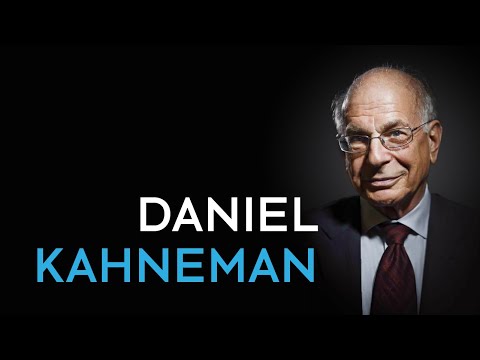
“So behavioural economics is not going to solve climate change. If anything is going to solve climate change it's going to be society with all its might changing rules, imposing rules, and coercion is certainly going to have to be involved. So nudging by itself is not going to solve the major problems. Nudging can in some cases solve particular problems and in all cases make it easier and smoother to apply any policies, by making it easier for people to understand it, by making it - by compelling bureaucrats to explain themselves in a language that people can understand, and by taking into account what will evoke resistance and what will not evoke resistance.”UNSW in conversation, 2021 · 58:02
Nudges are useful, but they are not the main engine of policy
Kahneman treats nudges as real and valuable, but limited. He argues that they can make policies easier to understand, smoother to implement, and less likely to trigger resistance, yet they are not a substitute for stronger collective action when problems are large1.
His clearest policy point is that behaviorally informed design improves how rules land on people. Good nudging helps citizens navigate policies, and it also pressures institutions to explain themselves clearly instead of hiding behind confusing language or burdensome procedures1.
“So behavioural economics is not going to solve climate change. If anything is going to solve climate change it's going to be society with all its might changing rules, imposing rules, and coercion is certainly going to have to be involved. So nudging by itself is not going to solve the major problems. Nudging can in some cases solve particular problems and in all cases make it easier and smoother to apply any policies, by making it easier for people to understand it, by making it - by compelling bureaucrats to explain themselves in a language that people can understand, and by taking into account what will evoke resistance and what will not evoke resistance.”UNSW in conversation, 2021 · full transcript →
Changing behavior often means changing the situation, not the person
A core theme in Kahneman’s thinking is that behavior depends heavily on context. When people act badly or strangely, the first question should not be what is wrong with them, but what pressures, frictions, and cues in the situation are shaping what they do2.
That is why he is drawn to changing the choice environment. Instead of assuming that better arguments or stronger motivation will fix behavior, he points toward altering the surrounding force field: reduce barriers, reshape defaults, and redesign the setting in which decisions happen32.
This view also pushes against a moralizing style of policy. If situations are powerful, then effective policy is less about blaming individuals and more about building environments in which better choices are easier and worse choices are harder2.
Policy should protect people from predictable mistakes
Kahneman’s broader case for nudges and policy intervention comes from systematic errors in judgment. People do not simply weigh gains and losses in a neutral way, and that means markets and contracts cannot be assumed to produce good outcomes on their own for everyone all the time56.
He is especially interested in predictable mistakes rather than random blunders. Because these mistakes recur, institutions can anticipate them and build protections into savings plans, insurance choices, disclosures, and other high-stakes decisions56.
His style is not to divide people into rational and irrational camps. Instead, he emphasizes that human judgment has regular patterns, and policy should be designed with those patterns in mind rather than pretending they do not exist6.
Better policy uses structure, rules, and sometimes algorithms
Kahneman does not think improvement comes only from clever messaging or subtle framing. He repeatedly argues that when judgment matters, quality rises when intuition is slowed down and choices are broken into separate dimensions instead of being decided in one quick global impression78.
For institutions, this means good policy is often procedural. Shared scales, orderly assessment, and explicit rules reduce noise, the useless variability that makes similar cases come out differently for no good reason910.
He goes further: when possible, algorithms often outperform human judgment. That makes his policy outlook broader than nudge alone, because he wants organizations to redesign decision processes themselves, not merely steer end users at the last moment111210.
What this means in practice: design for real human experience
Kahneman’s work on memory and attention matters for policy because people do not respond to life as a continuous sum of experiences. They are influenced by what they notice, what they remember, and how episodes end, which means policy effects can differ from how people later evaluate them141516.
That is one reason simple assumptions about welfare can mislead. People often exaggerate the importance of whatever is currently salient, and they can mispredict what will improve their lives, so policy should be cautious about taking stated expectations at face value1718.
In practice, that pushes toward two tests. First, does a policy improve lived experience, especially by reducing time spent in misery. Second, is it communicated and structured in a way people can actually navigate without confusion or avoidable friction191.
Kahneman on nudges & policy, in his own words
“So behavioural economics is not going to solve climate change. If anything is going to solve climate change it's going to be society with all its might changing rules, imposing rules, and coercion is certainly going to have to be involved. So nudging by itself is not going to solve the major problems. Nudging can in some cases solve particular problems and in all cases make it easier and smoother to apply any policies, by making it easier for people to understand it, by making it - by compelling bureaucrats to explain themselves in a language that people can understand, and by taking into account what will evoke resistance and what will not evoke resistance.”
“You know, class two, which is the development from class one, you know, it's it's the same idea extended. Class two is that behaviors don't necessarily reflect the personality, but behaviors have a lot to do with the situation. And so if people behave in strange ways, look at the situation they're in and what are the pressures in the situation that make them act this way. So there is a bias that the social psychologist, well known social psychologist, call the fundamental attribution error. And that means that when you see people acting in some way, you think that it's because of their personality that they do it. That may not be the case. It's quite likely that the situation is making them good. I'd like people to know that motivation is complex and that people do good things for a mixture of good and bad reasons, and they do bad things for a mixture of good and bad reasons.”
Where to watch
 Daniel Kahneman on Behavioral Economics: System 1, Bias, and Nudge2016 · 68 min · full transcriptBest for seeing how Kahneman connects behavioral economics to choice architecture and the idea that better decisions can come from changing environments.
 Daniel Kahneman on Decision Making and Rationality: Beyond the Rational Agent2008 · 105 min · full transcriptBest for his deeper view that behavior is shaped by situational forces and that changing barriers can matter more than argument.
 Daniel Kahneman on Judgment and Noise: Delay Intuition2021 · 67 min · full transcriptBest for the institutional side of policy: delay intuition, reduce noise, and use rules or algorithms when possible.
 Daniel Kahneman on Thinking Fast and Slow: Systems, Bias, Well-Being2012 · 80 min · full transcriptBest for the background case that standard rational-agent assumptions miss predictable human mistakes relevant to policy.
 Daniel Kahneman on Well-Being: Living and Thinking About It2008 · 59 min · full transcriptBest for understanding why policy should care about lived experience, memory, and the limits of what people predict will help them.
Questions people ask
- What did Daniel Kahneman say about delaying intuition when making decisions?
- What did Daniel Kahneman say about how to measure suffering and well-being?
- What did Daniel Kahneman say about improving decision making?
- What did Daniel Kahneman say about the difference between living and remembering?
- What did Daniel Kahneman say is the best way to reduce noise?
- What did Daniel Kahneman say about personality versus situation?
Sources
Every quote above, word for word from the transcripts. Numbers match the text.
“So behavioural economics is not going to solve climate change. If anything is going to solve climate change it's going to be society with all its might changing rules, imposing rules, and coercion is certainly going to have to be involved. So nudging by itself is not going to solve the major problems. Nudging can in some cases solve particular problems and in all cases make it easier and smoother to apply any policies, by making it easier for people to understand it, by making it - by compelling bureaucrats to explain themselves in a language that people can understand, and by taking into account what will evoke resistance and what will not evoke resistance.”
“You know, class two, which is the development from class one, you know, it's it's the same idea extended. Class two is that behaviors don't necessarily reflect the personality, but behaviors have a lot to do with the situation. And so if people behave in strange ways, look at the situation they're in and what are the pressures in the situation that make them act this way. So there is a bias that the social psychologist, well known social psychologist, call the fundamental attribution error. And that means that when you see people acting in some way, you think that it's because of their personality that they do it. That may not be the case. It's quite likely that the situation is making them good. I'd like people to know that motivation is complex and that people do good things for a mixture of good and bad reasons, and they do bad things for a mixture of good and bad reasons.”
“I should try to change the force field.”
“Gaining a hundred and losing a hundred are not the same thing.”
“I don't like the word rational and I certainly don't like the word irrational.”
“Don't try to form an intuition quickly, which is what we normally do.”
“So, actually, I have same idea, really, that when you are making decisions, you should think of options as if they were candidates. So you should break break it up into dimensions, evaluate each dimension separately, then look at the profile, and and the key is delay your intuition. Don't try to form an intuition quickly, which is what we normally do. Focus on the separate points. And then when you have the whole profile, then you can have an intuition, and it's going to be better. Because people make form intuitions too quickly, and the rapid intuitions are not particularly good. So if you delay intuition until you have more information, it's going to be better.”
“Wherever there is judgment, there is noise and more of it than you think.”
“Well, we call that noise as useless variability. And variability can be very useful if you have a selection mechanism and some feedback. So evolution is built on variability, but... And, of course, it's useful. But noise among underwriters is useless. There's nothing. Nothing gets learned. There's no feedback. It's just noise, and it's costly. The first advice, of course, would be algorithms, as I said earlier. So algorithm are better than people than judgments. That's not intuitive, but it's really it's really true. And and after that, then, you know, the procedure that I mentioned earlier for making decisions in an orderly way by breaking it up into assessments, and that's the best that we can do.”
“If you really want to improve the quality of decision making, use algorithms.”
“If you really want to improve the quality of decision making, use algorithms. I mean, when... Wherever you can. If you can replace judgments by by rules and algorithms, they'll do better. There... There's big social costs to trusting, allowing algorithm to make decisions, but but the decisions will likely to be better. So that's one thing. If you can't use algorithms, then you slow yourself down. And then there are things that you can do for certain types of problems, and there are different types of problems. So one class of problems like forecasting problems, our friend Phil Tetlock, you know, has that book on super forecasters where he identifies with people who are good at forecasting the future, what they do that makes them good, and, you know, he tries to train people and they can improve people.”
“…what gets stored is an average of the pain that was experienced…”
“…the memory they stored is worse when the experience ended at a high level of pain…”
“This is telling us that there is a difference between living and thinking about it or between living and remembering it. Because if you think about the experience, clearly the longer experience is worse. But if you think of the memory that people keep, then the longer experience is actually better. It is not as bad. And notice that the choices that people make are guided by their memory. They're not guided by the reality of the experience. They are guided, in this case, by what I would describe as an inaccurate memory of what actually happened to them. So, there have been many experiments of that kind, and that's the background, actually, for my interest in the study of well-being.”
“Nothing in life matters quite as much as you think it does while you are thinking about it.”
“For example, you know, a large refrigerator, a large car, a large house, et cetera. Those are goods that people think are going to make a very large difference in their life. We call that a focusing illusion. People exaggerate the importance that this is going to have in their life. Now what's happening here is the following. There are different kinds of consumption goods. There are consumption goods such as a refrigerator that you're completely unaware of unless, you know, something happens to it and it stops functioning.”
“That is, what are the sources of intense misery? This is something that you get to because that U Index is actually an interesting measure, that is has some metric properties, that it makes sense to say that we have reduced the time that people spend suffering by five percent or 10 percent. If we achieved that change, we have achieved something for the population. That is, I think, quite meaningful.”
How this guide was made: drafted with AI from the full transcripts of the recordings cited, then checked: every quotation must match a transcript word for word and be the speaker's own words, and an independent review gates accuracy. Methodology and corrections.
