Daniel Kahneman on Experts & Forecasting
Kahneman’s central rule is that expert intuition deserves trust only in regular environments with repeated practice and clear feedback, while forecasting in noisy, unpredictable domains calls for caution, structure, and often algorithms.
- Trust expert intuition only when the world is regular and feedback is clear and repeated.
- In forecasting, confidence is a poor guide because unpredictability and luck are larger than people admit.
- People jump to conclusions and answer easier questions instead of the hard forecasting question.
- Experts disagree more than they realize because judgment contains a lot of noise.
- When possible, improve forecasts and decisions with algorithms, structured judgment, and delayed intuition.
“There is really no difference between the physician recognizing a disease, a particular disease from a facial expression or something, a little trial learning pointing to something and saying doggy. The little trial has no idea what the clues are. But he just said, he just knows this is a dog without knowing why he knows. And once you think about it this way, this really demystifies intuition to a very considerable extent. And it also leads you to a sort of a solution to the problem that Gary Klein and I were trying to solve, when can you trust intuition and when can't you. And then it becomes an issue of in the world, regular enough so that you can learn to recognize things or and then did that particular individual have an opportunity to learn the regularities of the world.”Talks at Google, 2011 · 14:05
Kahneman’s rule for when expert intuition can be trusted
Kahneman does not reject expertise. He thinks intuition can be impressive and genuinely skilled, but only under specific conditions. The key question is whether the world is regular enough for patterns to be learned and whether the person gets the kind of feedback that allows learning to occur.12
This is why he treats intuition as pattern recognition rather than magic. Fast judgment can be valuable when cues are stable and practice teaches the mind what to notice, but that same feeling of knowing can become misleading when those conditions are absent.134
Forecasting is exactly where confidence outruns knowledge
Kahneman’s caution becomes sharpest in forecasting. He stresses that the world is often less predictable than people want to believe, so forecasters can sound certain without having a sound basis for certainty.56
For him, confidence is especially dangerous here because it feels like evidence even when it is only a feeling. People and audiences alike are drawn to certainty, but that attraction can reward the wrong experts and the wrong style of thinking.7
He also emphasizes that luck and uncertainty play a larger role in outcomes than people usually admit. When outcomes are noisy, it is easy to confuse a compelling story with genuine foresight.910
Why experts make bad forecasts: the mind jumps to conclusions
Kahneman’s broader explanation comes from his view of System 1 and System 2. Fast thinking automatically produces impressions, and those impressions often arrive before careful analysis has even started.3114
That fast system is built to form a coherent interpretation quickly. It suppresses ambiguity and pushes the mind toward a tidy answer, which is useful for action but risky for prediction.1213
In hard forecasting problems, people often answer an easier question than the one they were asked. Instead of estimating what will happen, they may judge how plausible a story feels, how much they like a leader, or how coherent a scenario seems.141516
Disagreement among experts is not just bias but noise
Kahneman argues that many failures of judgment come not only from bias but from noise: unwanted variability in judgments that should match. Two experts can look at similar cases and reach surprisingly different conclusions, not because one has a principled theory, but because human judgment is unstable.1718
That matters for forecasting because inconsistent judgment lowers reliability even before we ask whether a forecast is systematically biased. If the same kind of case produces different answers on different occasions or from different experts, the process itself is weak.1920
He thinks people usually underestimate this problem. Human judges assume their judgments are steadier than they really are, while rules at least give the same answer to the same case every time.2122
How to forecast and decide better: delay intuition and use structure
Kahneman’s practical advice is simple but demanding: do not rush to an intuition. Break the problem into separate dimensions, assess them one by one, and only then allow an overall judgment to form.2324
He is unusually direct about the value of algorithms. When a judgment can be replaced by a rule or model, he thinks the rule will often perform better because it is consistent and avoids a large share of human noise.252621
When rules cannot fully replace judgment, he still wants decisions made in an orderly way. Shared scales, independent assessments, and other structured procedures improve forecasting by slowing the leap from first impression to final verdict.2427
He also favors practices that force a group to imagine failure in advance. A premortem helps counter overconfidence by making people search for reasons a prediction or plan could go wrong before events prove it.29
Kahneman on experts & forecasting, in his own words
“There is really no difference between the physician recognizing a disease, a particular disease from a facial expression or something, a little trial learning pointing to something and saying doggy. The little trial has no idea what the clues are. But he just said, he just knows this is a dog without knowing why he knows. And once you think about it this way, this really demystifies intuition to a very considerable extent. And it also leads you to a sort of a solution to the problem that Gary Klein and I were trying to solve, when can you trust intuition and when can't you. And then it becomes an issue of in the world, regular enough so that you can learn to recognize things or and then did that particular individual have an opportunity to learn the regularities of the world.”
“Subjective confidence is not a good indicator.”
Where to watch
 Daniel Kahneman on Judgment and Noise: Delay Intuition2021 · 67 min · full transcriptBest practical guide to improving judgment: delay intuition, break problems into parts, and use algorithms when you can.
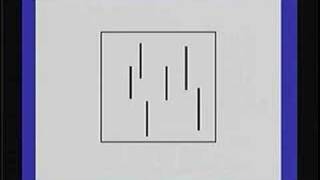 Daniel Kahneman on Intuition and Bias: System One, System Two2007 · 56 min · full transcriptStrong overview of when expert intuition works and when forecasting goes wrong.
 Daniel Kahneman on System 1 and System 2: intuition, bias, and confidence2011 · 62 min · full transcriptClear statement of the link between System 1, confidence, unpredictability, and the limits of expert judgment.
 Daniel Kahneman on Noise Reduction: Why Experts Disagree2016 · 53 min · full transcriptShows why expert disagreement is often noise, not insight, and why structured processes help.
 Daniel Kahneman on System One and System Two: Thinking, Fast and Slow2012 · 63 min · full transcriptUseful on why confidence should not be mistaken for accuracy, especially in expert prediction.
Questions people ask
- What did Daniel Kahneman say about algorithms versus human judgment?
- What did Daniel Kahneman say about delaying intuition when making decisions?
- What did Daniel Kahneman say about improving decision making?
- What did Daniel Kahneman say about intuition and when you can trust it?
- What did Daniel Kahneman say about the demand for overconfidence?
- What did Daniel Kahneman say about the premortem?
Sources
Every quote above, word for word from the transcripts. Numbers match the text.
“There is really no difference between the physician recognizing a disease, a particular disease from a facial expression or something, a little trial learning pointing to something and saying doggy. The little trial has no idea what the clues are. But he just said, he just knows this is a dog without knowing why he knows. And once you think about it this way, this really demystifies intuition to a very considerable extent. And it also leads you to a sort of a solution to the problem that Gary Klein and I were trying to solve, when can you trust intuition and when can't you. And then it becomes an issue of in the world, regular enough so that you can learn to recognize things or and then did that particular individual have an opportunity to learn the regularities of the world.”
“What comes to mind automatically is sometimes marvelous, sometimes flawed, and always automatic, and you have no control over it.”
“System one is the intuitive one.”
“System one is the fast one. System two is the slow one.”
“The world is probably not predictable.”
“…confidence is not a guide to accuracy…”
“Confidence is a feeling. It is not really a judgment.”
“Among other things. But go ahead. I mean, we tend—and there is good psychological reasons for that—we tend to underestimate the role of luck in human affairs. We tend to think that people are responsible for outcomes when, in fact, they have limited control over outcomes. And we’re built that way, and it's good that we're built that way because, you know, we want to extract as much variance as possible from what is regular in the world. But, in fact, it leads us to underestimate consistently the role of uncertainty, the role of luck, and it causes us to be overconfident. To close a loop that you started earlier. Mhm, mhm. Well, and part of it is that we—…”
“Subjective confidence is not a good indicator.”
“System two is the effortful one, the one that's the deliberate one.”
“The way the system works, it suppresses ambiguity.”
“Now this system guides interpretations. So let me show you how this works. Now you can read that silently, and you know what that is. And you can read that, and you know what that is. And, of course, the b and the 13 are physically identical. I mean, it's the same object, but you were not aware of this. The context determined how you read the words, and you were not aware that there was ambiguity. You were not aware that you had suppressed the ambiguity. You were not aware that there was another way of seeing what you saw. The way the system works, it suppresses ambiguity. Doubt and ambiguity is mostly a function of system two. System one doesn't have much doubts. It makes choices, and it delivers to our conscious experience the choices that it has made, and we're not aware of having made the choice.”
“People jump to conclusions by answering the wrong question.”
“And the general idea is very straightforward. When we're asked a question that we cannot answer, typically, System one is going to come up with the answer to a related question that is easier and it's going to use that answer to the wrong question, to the question that hasn't been asked in place of the question that was asked. We call that a mechanism of substitution, It's substituting an easier question for a hard one. It happens automatically. People are not aware that it happens. And it is the source of many intuitions that don't come from expertise and they are much less likely to be correct than the intuition that do come from expertise, but they come with equal confidence or just about.”
“…the mind as a machine for jumping to conclusions…”
“…noise is unwanted variability in judgments that should be identical…”
“Wherever there is judgment, there is noise and more of it than you think.”
“…wherever there is judgment, there is noise…”
“…a lot of the errors that people make is simply noise…”
“That is, when you apply an algorithm or a rule to the same case on different occasions, you are going to come up with exactly the same answer. That's noise free. It turns out there is so much noise in human judgment that for that reason alone rules tend to be superior in many cases to human judgment and in some cases vastly superior. Now, that's even - that was true even before artificial intelligence. It was true applying simple statistical rules and even imperfect statistical rules just applied consistently will do better than people.”
“We think that eliminating noise completely is costly…”
“Don't try to form an intuition quickly, which is what we normally do.”
“So, actually, I have same idea, really, that when you are making decisions, you should think of options as if they were candidates. So you should break break it up into dimensions, evaluate each dimension separately, then look at the profile, and and the key is delay your intuition. Don't try to form an intuition quickly, which is what we normally do. Focus on the separate points. And then when you have the whole profile, then you can have an intuition, and it's going to be better. Because people make form intuitions too quickly, and the rapid intuitions are not particularly good. So if you delay intuition until you have more information, it's going to be better.”
“If you really want to improve the quality of decision making, use algorithms.”
“If you really want to improve the quality of decision making, use algorithms. I mean, when... Wherever you can. If you can replace judgments by by rules and algorithms, they'll do better. There... There's big social costs to trusting, allowing algorithm to make decisions, but but the decisions will likely to be better. So that's one thing. If you can't use algorithms, then you slow yourself down. And then there are things that you can do for certain types of problems, and there are different types of problems. So one class of problems like forecasting problems, our friend Phil Tetlock, you know, has that book on super forecasters where he identifies with people who are good at forecasting the future, what they do that makes them good, and, you know, he tries to train people and they can improve people.”
“Well, we call that noise as useless variability. And variability can be very useful if you have a selection mechanism and some feedback. So evolution is built on variability, but... And, of course, it's useful. But noise among underwriters is useless. There's nothing. Nothing gets learned. There's no feedback. It's just noise, and it's costly. The first advice, of course, would be algorithms, as I said earlier. So algorithm are better than people than judgments. That's not intuitive, but it's really it's really true. And and after that, then, you know, the procedure that I mentioned earlier for making decisions in an orderly way by breaking it up into assessments, and that's the best that we can do.”
“…the core reason why we make these mistakes is the perniciousness of overconfidence…”
How this guide was made: drafted with AI from the full transcripts of the recordings cited, then checked: every quotation must match a transcript word for word and be the speaker's own words, and an independent review gates accuracy. Methodology and corrections.


