What did Daniel Kahneman say about intuition and when you can trust it?
Daniel Kahneman says intuition is basically recognition, not magic. You can trust it when the world is regular enough to learn patterns from it and when people get clear, immediate feedback that helps them learn those regularities. In chaotic environments without stable rules, intuition is much less reliable.
“There is really no difference between the physician recognizing a disease, a particular disease from a facial expression or something, a little trial learning pointing to something and saying doggy. The little trial has no idea what the clues are. But he just said, he just knows this is a dog without knowing why he knows. And once you think about it this way, this really demystifies intuition to a very considerable extent. And it also leads you to a sort of a solution to the problem that Gary Klein and I were trying to solve, when can you trust intuition and when can't you. And then it becomes an issue of in the world, regular enough so that you can learn to recognize things or and then did that particular individual have an opportunity to learn the regularities of the world.”
Key takeaways
- Trust intuition in domains with real patterns and quick feedback.
- Be skeptical of intuition in chaotic, low-predictability settings.
- Good intuition usually comes from long exposure, not mystery.
Context
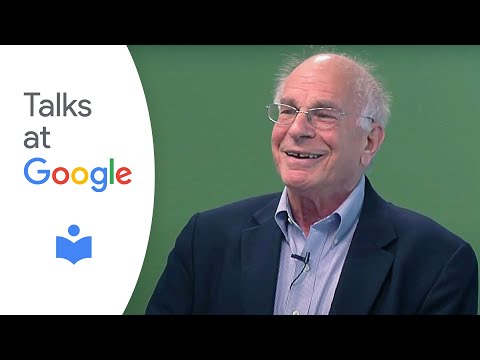
In his 2011 Talks at Google lecture on System 1 and System 2, Kahneman was explaining the boundary between reliable and unreliable intuition. The quote above is taken word for word from the recording's transcript.
In the transcript
…but I suspect that Malcolm Gladwell really did us a disservice by giving that sense that there is a magic to intuition. There really is no magic at all and we should understand how it works. Intuition and Herbert Simon, who was a psychologist then an economist and a political scientist and a Nobel Laureate, Herbert Simon gave a very good definition of what intuition is. It is simply recognition.
There is really no difference between the physician recognizing a disease, a particular disease from a facial expression or something, a little trial learning pointing to something and saying doggy. The little trial has no idea what the clues are. But he just said, he just knows this is a dog without knowing why he knows. And once you think about it this way, this really demystifies intuition to a very considerable extent. And it also leads you to a sort of a solution to the problem that Gary Klein and I were trying to solve, when can you trust intuition and when can't you. And then it becomes an issue of in the world, regular enough so that you can learn to recognize things or and then did that particular individual have an opportunity to learn the regularities of the world.
And so the world of chess players is highly regular. And statistically, even the world of poker players is regular, so there can be an element of chance. But there are rules. And the mind is so set that if there are rules in the environment and we're exposed to them for a long time and we get immediate feedback on what is right and wrong or fairly immediate feedback,…
Topics
More questions about Daniel Kahneman
- What did Daniel Kahneman say about confidence and probability?
- What did Daniel Kahneman say about the demand for overconfidence?
- What did Daniel Kahneman say about the bat and ball riddle?
- What did Daniel Kahneman say about political forecasting and stock picking?
- What did Daniel Kahneman say about how people answer hard questions?
- What did Daniel Kahneman say about expert judgment versus statistical models?
All Daniel Kahneman answers · All Daniel Kahneman recordings
How this answer was made: the quote is checked word for word against the transcript of the recording and confirmed as the speaker's own words; the summary above it was drafted with AI from that transcript and quality-checked. Methodology and corrections.