The Daniel Kahneman Course
After graduating, you will understand how Kahneman explained intuition, bias, choice, happiness, noise, and better judgment—and how to apply those ideas to real decisions.
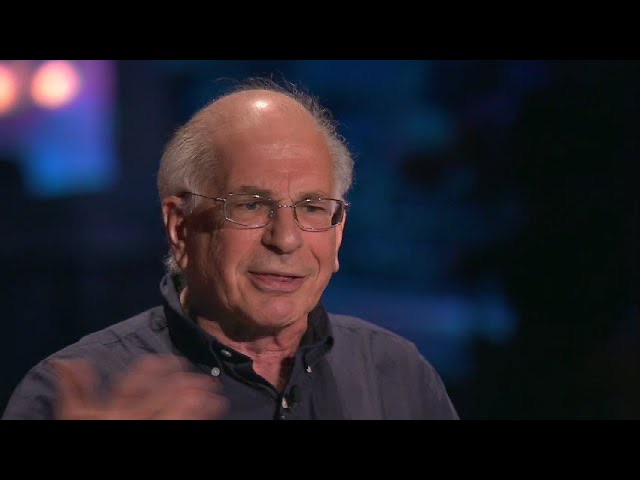
- 12 chapters
- 109 verbatim quotes
- 28 recordings

“We think we know what it means to know, but in fact the definition is contested…”Lecture, 2011 · 0:45
About this course
Daniel Kahneman was an Israeli-American psychologist, a Nobel Memorial Prize laureate in Economic Sciences, and one of the founders of behavioral economics. With Amos Tversky, he transformed how psychologists, economists, and policymakers think about judgment, uncertainty, risk, and human error.
Kahneman’s central lesson is not that people are foolish, but that the mind is beautifully efficient and predictably fallible. His work shows why intuition can be brilliant in some settings, dangerously confident in others, and improvable through structure, statistics, and humility.
This course uses real recordings of Kahneman in his own words. Each chapter pairs a small set of talks and interviews with answered questions so you can move from foundations to applications: thinking, bias, choice, well-being, organizations, negotiation, and AI.
Curriculum
- Life and MethodHow simple questions became a revolution in judgment.
- Two SystemsFast intuition, slow effort, and the mind’s division of labor.
- Heuristics Under UncertaintyHow anchors, prototypes, fluency, and easy-question substitution shape judgment.
- Trusting IntuitionWhen expert judgment is skill—and when it is illusion.
- Confidence and StoriesWhy coherent explanations can feel more valid than they are.
- The Outside ViewWhy plans fail when we focus on our own story and ignore the base rate.
- Gains and LossesProspect theory and the psychology of risk.
- Happiness and MemoryThe experiencing self, the remembering self, and what remains.
- Changing BehaviorFrom rational agents to choice architecture.
- Noise and HygieneThe overlooked error: unwanted variability in judgment.
- Conflict and NegotiationHow bias shapes bargaining, politics, and strategic conflict.
- AI and IntelligenceWhat machine learning shares with intuition—and what it lacks.
- GraduateFinish every chapter to earn your certificate.



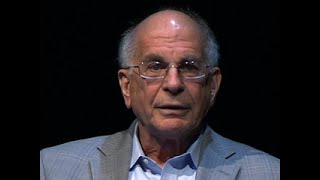





has graduated from The Daniel Kahneman Course, completing all 12 chapters on Daniel Kahneman's ideas, in his own words.
- Most thinking begins with automatic impressions; deliberate reasoning is effortful, limited, and often arrives late.
- Intuition is not magic: it is usually recognition, and it becomes trustworthy only in regular environments with extensive practice and clear feedback.
- Confidence is a poor test of accuracy because it often reflects the coherence of a story rather than the quality of evidence.
- People frequently answer an easier question than the one they were asked, producing fluent but biased judgments.
- Human choice is organized around reference points, gains, and losses, so losses loom larger than equivalent gains.
- The life we experience moment by moment is not the same as the life we remember, evaluate, and choose for.