Two Systems
Fast intuition, slow effort, and the mind’s division of labor.

“A bat and a ball together cost a dollar 10. The bat cost a dollar more than the ball. How much does the ball cost? Now let me make a prediction. Every one of you, I would think, has thought of the number, and the number is 10¢. That's been in everybody's mind. Now that makes the problem interesting because 10¢ is false. You know? If if it were 10¢ and you... And then the bat would be a dollar more, it would be a dollar 10, and the dollar 10 and 10¢ would be a dollar 20. So 10¢ is not the answer. But now what is interesting is when you put that question to Princeton students, half of them say 10¢. Now... And they do even when you give them time.”Hitchcock Lecture at UC Berkeley, 2007 · 33:13
The lesson
Kahneman’s basic distinction is between two modes of thought: one that is fast, automatic, and intuitive, and another that is slower, deliberate, and effortful. He presents these as System 1 and System 2, with System 1 producing much of what comes to mind automatically and System 2 doing the work that requires attention and control1234. A useful way to understand the contrast is that fast thinking mostly happens to us, while slow thinking is something we do5.
These labels are metaphors, not little agents in the head. The point is to organize familiar differences in mental life: automatic impressions, associations, and recognitions on one side; rule-following, calculation, and effortful checking on the other67. Kahneman stresses this framework because most of mental life begins with automatic processes, so if you want to understand judgment, you have to start with how impressions are generated before reasoning steps in89.
System 1 is powerful because it quickly builds a coherent interpretation from whatever is available, but that strength is also a source of error. We tend to believe what we see and what we think, and associative memory pushes toward a story that feels internally consistent even when it is incomplete1011. This is why Kahneman emphasizes that the mind often works with an impoverished picture of reality and treats what is at hand as if it were the whole case1213.
Automatic impressions become beliefs and choices partly because System 2 does not always intervene. The mind follows a principle of least effort, so unless there is a clear reason to check, people often accept the first answer that comes to mind14. In hard questions, System 1 may silently substitute an easier question, generating an intuitive answer that feels right; the bat-and-ball problem is memorable because the wrong answer arrives immediately and many people do not correct it151617.
This does not mean intuition is useless. Kahneman argues that intuition can be skillful when the environment has real regularities and gives clear feedback, because then recognition can be trained by experience18. But in noisy or unpredictable domains, confidence should not be trusted as a sign of accuracy, since confidence often reflects coherence and feeling rather than truth192021.
5 principles from Daniel Kahneman
Distinguish fast impressions from slow checking
When a judgment appears immediately, treat it as a System 1 output rather than as a finished conclusion. If the stakes are high or the problem is tricky, deliberately switch to slower checking.
“System one is the intuitive one.”
Treat System 1 and System 2 as useful metaphors
The labels help you notice two different kinds of mental processes: automatic association and effortful rule-governed thought. Use the terms to describe patterns in thinking, not as if they were literal homunculi making decisions.
“I call them along with others. It's not my term either, system one and system two. One of which, is the intuitive, rapid, associative, uncontrolled, automatic kind of thinking, and the other one is the rule governed. You know, that's the way you you fill your income tax form or compute seventeenth and 24 or read a map. And so we we are able to think in this way, but most of the time, we run on the software system one that is automatically and with little thought and by and love with remarkable success and accuracy.”
Question coherent first stories
A thought can feel convincing because it is coherent, not because it is well supported. Before acting, ask what important information is missing from the story you have built.
“What is characteristic of the way associative memory works is that it produces an interpretation of the world that is coherent.”
Watch for substitution of easy questions
If a hard question feels surprisingly easy, you may be answering a different question without noticing. Pause and restate the original question in explicit terms before deciding.
“And the general idea is very straightforward. When we're asked a question that we cannot answer, typically, System one is going to come up with the answer to a related question that is easier and it's going to use that answer to the wrong question, to the question that hasn't been asked in place of the question that was asked. We call that a mechanism of substitution, It's substituting an easier question for a hard one. It happens automatically. People are not aware that it happens. And it is the source of many intuitions that don't come from expertise and they are much less likely to be correct than the intuition that do come from expertise, but they come with equal confidence or just about.”
Do not equate confidence with accuracy
Strong confidence is a feeling, and it can arise from a good story rather than good evidence. In uncertain domains, ask about predictability and feedback instead of trusting certainty.
“…confidence is not a guide to accuracy…”
Moments to watch
In his own words
The quotes behind the lesson, word for word from the transcripts. Numbers match the lesson above.
“System one is the intuitive one.”
“System two is the effortful one, the one that's the deliberate one.”
“Most of what happens in our mind is really system 1.”
“System one is the fast one. System two is the slow one.”
“…fast thinking is something that happens to you primarily, and slow thinking is something that you do…”
“I call them along with others. It's not my term either, system one and system two. One of which, is the intuitive, rapid, associative, uncontrolled, automatic kind of thinking, and the other one is the rule governed. You know, that's the way you you fill your income tax form or compute seventeenth and 24 or read a map. And so we we are able to think in this way, but most of the time, we run on the software system one that is automatically and with little thought and by and love with remarkable success and accuracy.”
“What comes to mind automatically is sometimes marvelous, sometimes flawed, and always automatic, and you have no control over it.”
“System One is the origin of our mental life.”
“…the hero of the book is really System One…”
“…we believe what we see. We believe what we think.”
“What is characteristic of the way associative memory works is that it produces an interpretation of the world that is coherent.”
“…the world that we construct in our minds is much simpler than reality.”
“What you see is all there is…”
“The law of least effort is really a fundamental psychological principle.”
“And the general idea is very straightforward. When we're asked a question that we cannot answer, typically, System one is going to come up with the answer to a related question that is easier and it's going to use that answer to the wrong question, to the question that hasn't been asked in place of the question that was asked. We call that a mechanism of substitution, It's substituting an easier question for a hard one. It happens automatically. People are not aware that it happens. And it is the source of many intuitions that don't come from expertise and they are much less likely to be correct than the intuition that do come from expertise, but they come with equal confidence or just about.”
“A bat and a ball together cost a dollar 10. The bat cost a dollar more than the ball. How much does the ball cost? Now let me make a prediction. Every one of you, I would think, has thought of the number, and the number is 10¢. That's been in everybody's mind. Now that makes the problem interesting because 10¢ is false. You know? If if it were 10¢ and you... And then the bat would be a dollar more, it would be a dollar 10, and the dollar 10 and 10¢ would be a dollar 20. So 10¢ is not the answer. But now what is interesting is when you put that question to Princeton students, half of them say 10¢. Now... And they do even when you give them time.”
“The point about this riddle is that the number came to your mind. And the number is $0.10 And everybody, just I think, maybe here, maybe there are exceptions, very few exceptions.”
“There is really no difference between the physician recognizing a disease, a particular disease from a facial expression or something, a little trial learning pointing to something and saying doggy. The little trial has no idea what the clues are. But he just said, he just knows this is a dog without knowing why he knows. And once you think about it this way, this really demystifies intuition to a very considerable extent. And it also leads you to a sort of a solution to the problem that Gary Klein and I were trying to solve, when can you trust intuition and when can't you. And then it becomes an issue of in the world, regular enough so that you can learn to recognize things or and then did that particular individual have an opportunity to learn the regularities of the world.”
“Subjective confidence is not a good indicator.”
“…confidence is not a guide to accuracy…”
“Confidence is a feeling. It is not really a judgment.”
Reflect
- Think of a recent decision you made quickly. What was the first impression, and what would a more effortful System 2 check have looked like?
- Where in your work or life do you face hard questions that may get replaced by easier ones without your noticing?
- Name one area where you feel confident in your judgments. Does that area actually provide the regularity and feedback needed for reliable intuition?
Check your understanding
Go deeper
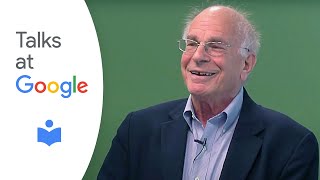 Daniel Kahneman on System 1 and System 2: intuition, bias, and confidence2011 · 62 min · full transcript
 Daniel Kahneman on Thinking Fast and Slow2012 · 67 min · full transcript
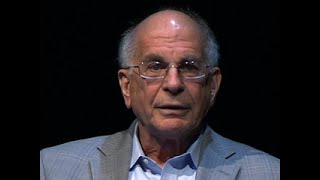 Daniel Kahneman on System 1 and System 2: Fast and Slow Thinking2018 · 78 min · full transcript
 Daniel Kahneman on Thinking Fast and Slow: Systems, Bias, Well-Being2012 · 80 min · full transcript
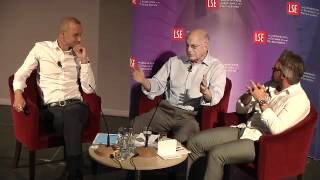 Daniel Kahneman on System One and System Two: Thinking, Fast and Slow2012 · 63 min · full transcript
 Daniel Kahneman on System 1 and System 2: Fast Thinking, Flawed Confidence2013 · 56 min · full transcript