Trusting Intuition
When expert judgment is skill—and when it is illusion.
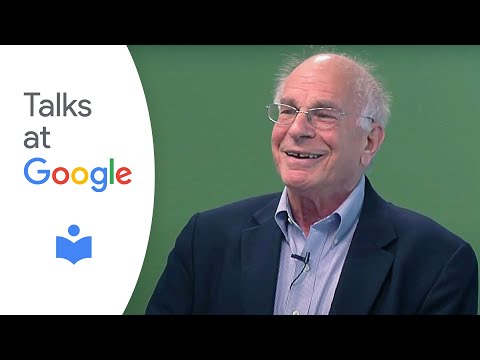
“There is really no difference between the physician recognizing a disease, a particular disease from a facial expression or something, a little trial learning pointing to something and saying doggy. The little trial has no idea what the clues are. But he just said, he just knows this is a dog without knowing why he knows. And once you think about it this way, this really demystifies intuition to a very considerable extent. And it also leads you to a sort of a solution to the problem that Gary Klein and I were trying to solve, when can you trust intuition and when can't you. And then it becomes an issue of in the world, regular enough so that you can learn to recognize things or and then did that particular individual have an opportunity to learn the regularities of the world.”Talks at Google, 2011 · 14:05
The lesson
Kahneman’s starting point is that intuition is real, fast, and automatic, but it is not automatically trustworthy. He contrasts intuitive System 1 with slower, effortful System 2, and the chapter’s main question is when System 1 deserves our trust rather than our suspicion123. His answer is not that intuition is generally good or generally bad, but that its quality depends on the kind of world it is learning from4.
Intuition becomes skilled when three conditions come together: the environment has stable regularities, the person gets repeated practice, and feedback is rapid and clear. In those settings, intuition is often a form of learned recognition rather than mysterious insight4. That is why some everyday expertise can be reliable: the mind picks up patterns and responds automatically before deliberate reasoning catches up5.
The problem is that people often extend that trust into domains where the conditions for skill are missing. Kahneman stresses that in unpredictable settings, especially long-range forecasting, confidence can remain high even when accuracy is poor67. His examples show that failure is often not the expert’s fault alone; sometimes the environment itself is too noisy or unstable to support genuine intuitive skill.
One reason bad intuition feels persuasive is that System 1 quickly creates coherent answers and suppresses ambiguity89. It also substitutes an easier question for a harder one, so we may feel we have judged the future, risk, or quality of evidence when we have really answered something simpler1011. This helps explain why confidence is such a weak guide: it reflects how well a story hangs together, not whether the judgment is valid1213.
So trusting intuition wisely means diagnosing the task before trusting the feeling. Ask whether this is a domain with regular cues, whether you have had enough practice, and whether feedback has been fast and unambiguous. If not, slow down, look for outside evidence, and consider simpler statistical or structured approaches instead of relying on the strength of your impression alone14.
5 principles from Daniel Kahneman
Trust intuition only in learnable environments
Intuition is most dependable when the world contains stable patterns that can actually be learned. Before relying on a gut judgment, ask whether the task has regular cues or is mostly noise.
“There is really no difference between the physician recognizing a disease, a particular disease from a facial expression or something, a little trial learning pointing to something and saying doggy. The little trial has no idea what the clues are. But he just said, he just knows this is a dog without knowing why he knows. And once you think about it this way, this really demystifies intuition to a very considerable extent. And it also leads you to a sort of a solution to the problem that Gary Klein and I were trying to solve, when can you trust intuition and when can't you. And then it becomes an issue of in the world, regular enough so that you can learn to recognize things or and then did that particular individual have an opportunity to learn the regularities of the world.”
Require practice and fast feedback
Repeated exposure is not enough by itself; you also need quick, clear information about whether you were right. Without that feedback loop, confidence can grow without real skill.
“…confidence is not a guide to accuracy…”
Do not treat confidence as proof
A strong feeling of certainty can come from a coherent story rather than accurate judgment. Use confidence as a psychological signal to inspect, not as evidence that the judgment is correct.
“Subjective confidence is not a good indicator.”
Watch for question substitution
When a problem is hard, the mind often answers an easier one without noticing the swap. In practice, restate the exact question you need to answer before acting on an intuitive response.
“People jump to conclusions by answering the wrong question.”
Use structure when intuition is weak
In noisy domains, unaided expert judgment is often inconsistent and can be outperformed by simple statistical rules. When feedback is poor or the task is unpredictable, add checklists, base rates, or simple models.
“We call one of them the inside view much later, and the other the outside view.”
In his own words
The quotes behind the lesson, word for word from the transcripts. Numbers match the lesson above.
“System one is the intuitive one.”
“System two is the effortful one, the one that's the deliberate one.”
“System one is the fast one. System two is the slow one.”
“There is really no difference between the physician recognizing a disease, a particular disease from a facial expression or something, a little trial learning pointing to something and saying doggy. The little trial has no idea what the clues are. But he just said, he just knows this is a dog without knowing why he knows. And once you think about it this way, this really demystifies intuition to a very considerable extent. And it also leads you to a sort of a solution to the problem that Gary Klein and I were trying to solve, when can you trust intuition and when can't you. And then it becomes an issue of in the world, regular enough so that you can learn to recognize things or and then did that particular individual have an opportunity to learn the regularities of the world.”
“I call them along with others. It's not my term either, system one and system two. One of which, is the intuitive, rapid, associative, uncontrolled, automatic kind of thinking, and the other one is the rule governed. You know, that's the way you you fill your income tax form or compute seventeenth and 24 or read a map. And so we we are able to think in this way, but most of the time, we run on the software system one that is automatically and with little thought and by and love with remarkable success and accuracy.”
“The world is probably not predictable.”
“…confidence is not a guide to accuracy…”
“The way the system works, it suppresses ambiguity.”
“Now this system guides interpretations. So let me show you how this works. Now you can read that silently, and you know what that is. And you can read that, and you know what that is. And, of course, the b and the 13 are physically identical. I mean, it's the same object, but you were not aware of this. The context determined how you read the words, and you were not aware that there was ambiguity. You were not aware that you had suppressed the ambiguity. You were not aware that there was another way of seeing what you saw. The way the system works, it suppresses ambiguity. Doubt and ambiguity is mostly a function of system two. System one doesn't have much doubts. It makes choices, and it delivers to our conscious experience the choices that it has made, and we're not aware of having made the choice.”
“People jump to conclusions by answering the wrong question.”
“And the general idea is very straightforward. When we're asked a question that we cannot answer, typically, System one is going to come up with the answer to a related question that is easier and it's going to use that answer to the wrong question, to the question that hasn't been asked in place of the question that was asked. We call that a mechanism of substitution, It's substituting an easier question for a hard one. It happens automatically. People are not aware that it happens. And it is the source of many intuitions that don't come from expertise and they are much less likely to be correct than the intuition that do come from expertise, but they come with equal confidence or just about.”
“Subjective confidence is not a good indicator.”
“Confidence is a feeling. It is not really a judgment.”
“We call one of them the inside view much later, and the other the outside view.”
Reflect
- Think of one area where you trust your intuition. Does it truly have regular patterns, repeated practice, and fast feedback, or are you borrowing confidence from a noisy environment?
- Where in your work do people sound most certain about long-term outcomes? What evidence would tell you whether that confidence reflects real skill or just a coherent story?
- Recall a recent hard judgment you made quickly. What easier question might your mind have substituted for the one you actually needed to answer?
Check your understanding
Go deeper
 Daniel Kahneman on Intuition and Bias: System One, System Two2007 · 56 min · full transcript
 Daniel Kahneman on Intuition and Rationality: Berkeley Interview2007 · 53 min · full transcript
 Daniel Kahneman on System 1 and System 2: Why We Misjudge2012 · 31 min · full transcript
 Daniel Kahneman on System One and System Two: Thinking, Fast and Slow2012 · 63 min · full transcript
 Daniel Kahneman on System 1 and System 2: Fast Thinking, Flawed Confidence2013 · 56 min · full transcript
 Daniel Kahneman on System 1 and System 2: intuition, bias, and confidence2011 · 62 min · full transcript