Heuristics Under Uncertainty
How anchors, prototypes, fluency, and easy-question substitution shape judgment.
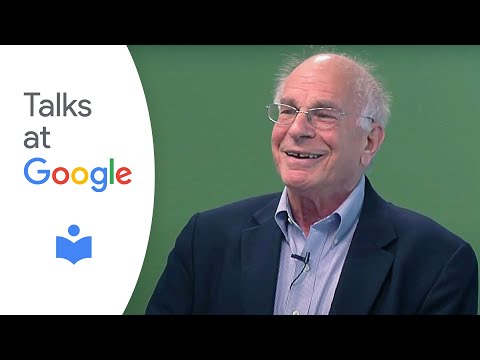
“And the general idea is very straightforward. When we're asked a question that we cannot answer, typically, System one is going to come up with the answer to a related question that is easier and it's going to use that answer to the wrong question, to the question that hasn't been asked in place of the question that was asked. We call that a mechanism of substitution, It's substituting an easier question for a hard one. It happens automatically. People are not aware that it happens. And it is the source of many intuitions that don't come from expertise and they are much less likely to be correct than the intuition that do come from expertise, but they come with equal confidence or just about.”Talks at Google, 2011 · 37:55
The lesson
Kahneman’s starting point is that judgment under uncertainty is not mainly a matter of careful calculation. Most of the time, fast thinking happens automatically, through association, while slower thinking requires effort and supervision123. Because the mind economizes on effort, it often accepts the first interpretation that comes to mind instead of checking it carefully4.
This makes intuitive judgment powerful, but also vulnerable to systematic error. Kahneman describes the mind as quick to reach conclusions, and he argues that when a hard question is difficult to answer, fast thinking often replaces it with an easier related one without our noticing567. That is why people can feel they have answered the original question, even when they have actually answered a simpler proxy.
A major reason this works so smoothly is that fast thinking is built to produce coherent interpretations. Associative memory connects what is present, fills gaps, and creates a story that feels consistent; once that story feels coherent, confidence rises with it89. Kahneman’s point is not that confidence proves accuracy, but almost the reverse: confidence often reflects how well the pieces fit together in your mind, not whether the judgment is true910.
This helps explain heuristics such as judging by prototypes, familiarity, or fluency. When something fits a recognizable pattern, feels easy to process, or comes from a trusted and familiar source, belief becomes more likely even if the logical basis is weak101112. Kahneman also emphasizes a broad perceptual analogy: intuitive judgment, like perception, is highly sensitive to changes and reference points, which helps explain why anchors and starting positions can shape later judgments so strongly131415.
The practical lesson is not to reject intuition altogether. Kahneman says intuition can be worth trusting, but especially after it has been informed and in contexts where judgment is supported by real regularities rather than by a smooth feeling alone16. When the stakes are high, the safer move is to slow down, ask what question you are actually answering, and check whether an anchor, an easy prototype, or the fluency of a story is doing the work for you617.
4 principles from Daniel Kahneman
Notice when an easy question replaces a hard one
When a judgment feels immediate, ask whether you answered the question you were given or a simpler one nearby. This is especially useful in forecasting, hiring, diagnosis, and any situation involving uncertainty.
“And the general idea is very straightforward. When we're asked a question that we cannot answer, typically, System one is going to come up with the answer to a related question that is easier and it's going to use that answer to the wrong question, to the question that hasn't been asked in place of the question that was asked. We call that a mechanism of substitution, It's substituting an easier question for a hard one. It happens automatically. People are not aware that it happens. And it is the source of many intuitions that don't come from expertise and they are much less likely to be correct than the intuition that do come from expertise, but they come with equal confidence or just about.”
Treat confidence as a feeling, not proof
A coherent story can create strong conviction even when the judgment is weak. Before acting on confidence, look for missing information and alternative interpretations.
“Your thinking flows along causal lines. This happens intuitively and it's not... And one of these feels okay. It feels more coherent. And the coherence that we experience can be turned into a judgment of probability. That is the confidence that we experience is a judgment of probability. Now I'm going to skip the other example. And I said earlier that people have intuitions that are not necessarily true and that people are confident in judgments that are not necessarily true. And I would like to sort of present a tentative theory about how that happens.”
Watch for belief driven by fluency and trust
Ideas that are familiar, easy to process, or delivered by trusted people often feel more true. Use that feeling as a cue to examine evidence, not as evidence itself.
“…we believe what we see. We believe what we think.”
Assume anchors and reference points will matter
Judgment is sensitive to starting points and perceived changes, not only to final states. In negotiation or estimation, deliberately test how much your answer depends on where you began.
“…people are much more sensitive to changes and not to final states.”
In his own words
The quotes behind the lesson, word for word from the transcripts. Numbers match the lesson above.
“System 1 can be identified with associative memory…”
“…fast thinking is something that happens to you primarily, and slow thinking is something that you do…”
“I call them along with others. It's not my term either, system one and system two. One of which, is the intuitive, rapid, associative, uncontrolled, automatic kind of thinking, and the other one is the rule governed. You know, that's the way you you fill your income tax form or compute seventeenth and 24 or read a map. And so we we are able to think in this way, but most of the time, we run on the software system one that is automatically and with little thought and by and love with remarkable success and accuracy.”
“The law of least effort is really a fundamental psychological principle.”
“…the mind as a machine for jumping to conclusions…”
“And the general idea is very straightforward. When we're asked a question that we cannot answer, typically, System one is going to come up with the answer to a related question that is easier and it's going to use that answer to the wrong question, to the question that hasn't been asked in place of the question that was asked. We call that a mechanism of substitution, It's substituting an easier question for a hard one. It happens automatically. People are not aware that it happens. And it is the source of many intuitions that don't come from expertise and they are much less likely to be correct than the intuition that do come from expertise, but they come with equal confidence or just about.”
“Well, yes. I mean, what we studied was intuitive thinking in the domain of judgment under uncertainty versus how we started, that is how do people assess the probability of events and how do they forecast the future intuitively. And our idea was that people use heuristics, are basically shortcuts. And in in my lecture, it's a phrase I coined this week, but I'm going to use it. Mhmm. I I did speak of the mind as a machine for jumping to conclusions. And And we figured out some other ways that this is done. I think the most important one that we studied in the first years of our work was something that I now call substitution. That is you... You're asked a difficult question, you cannot answer it, but another answer comes to mind, and it's an answer to a related question which is simpler.”
“What is characteristic of the way associative memory works is that it produces an interpretation of the world that is coherent.”
“Your thinking flows along causal lines. This happens intuitively and it's not... And one of these feels okay. It feels more coherent. And the coherence that we experience can be turned into a judgment of probability. That is the confidence that we experience is a judgment of probability. Now I'm going to skip the other example. And I said earlier that people have intuitions that are not necessarily true and that people are confident in judgments that are not necessarily true. And I would like to sort of present a tentative theory about how that happens.”
“…we believe what we see. We believe what we think.”
“We think we know what it means to know, but in fact the definition is contested…”
“For many people, for most people, is we (music) believe. We believe people. We believe people that we like and trust, and we believe what they say. And for most of us, most of our beliefs really come that way, and we don't like, if we don't like people and they say something, we do not feel that same degree of belief. It is not associatively and emotionally compatible, and that turns out to be extremely strong, this effect of trust...”
“Intuitive thinking as a mechanism that possibly evolved from the perceptual mechanism…”
“…people are much more sensitive to changes and not to final states.”
“You put one hand in the cold water, one in the hot water, and you leave them there for a while. And then when you put both hands into the middle bowl, they don't feel the same experience. You feel quite warm in one and quite cold in the other, because you have adapted and the adaptation level determines us sensory and perceptual response to any particular stimulus. Now if judgments and choice operate on representation that conform to the rule of perception, we expect changes to be salient and maintain states to be mostly ignored.”
“…when it's important, you should inform your gut and then trust…”
“What you see is all there is…”
Reflect
- Think of a recent judgment you made quickly about a person, plan, or risk. What was the hard question, and what easier question might you actually have answered?
- Where in your work are you most likely to trust a coherent story or a confident presenter more than the underlying evidence?
- Identify one setting where an anchor may be shaping your judgment now, such as price, salary, forecast, or performance evaluation. How would you test your view without that starting point?
Check your understanding
Go deeper
 Daniel Kahneman on Bounded Rationality: Maps of Judgment and Choice2002 · 37 min · full transcript
 Daniel Kahneman on Negotiation and Judgment: Trusting Intuition Wisely2020 · 88 min · full transcript
 Daniel Kahneman on Intuition and Rationality: Berkeley Interview2007 · 53 min · full transcript
 Daniel Kahneman on Intuition And Knowing: How System 1 Shapes Belief2011 · 47 min · full transcript
 Daniel Kahneman on System 1 and System 2: Fast and Slow Thinking2018 · 78 min · full transcript
 Daniel Kahneman on Thinking Fast and Slow: Systems, Bias, Well-Being2012 · 80 min · full transcript