Daniel Kahneman on System 1 and System 2: Fast and Slow Thinking

What Kahneman talks about
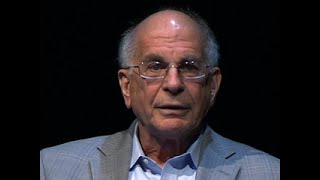
Daniel Kahneman gave this lecture for The Long Now Foundation in 2018 on the ideas behind Thinking, Fast and Slow, focusing on System 1, System 2, judgment, and belief.
Also known as: Thinking Fast and Slow; Thinking Fast and Slow | The Long Now Foundation; Long Now lecture on Thinking, Fast and Slow.
Daniel Kahneman explains the core distinction behind Thinking, Fast and Slow: fast, automatic System 1 and slower, effortful System 2. He shows how much of judgment, perception, and emotion is generated automatically before conscious reasoning even begins.
He uses classic puzzles and vivid examples to show how people substitute easy questions for hard ones, accept intuitive answers without checking, and build coherent beliefs from association rather than logic. The talk also explores why emotions, identity, and context shape beliefs about politics, religion, technology, and climate change.
Kahneman argues that slow thinking is valuable but limited, costly, and often unnecessary because System 1 usually works well. The discussion matters because it helps explain everyday errors in judgment and why changing minds on big issues is so difficult.
Alexander Rose and Stewart Brand introduce the event, then Kahneman gives the lecture and answers audience questions.
In his words
“Fast thinking is something that happens to you primarily, and slow thinking is something that you do”
“The law of least effort is really a fundamental psychological principle.”
“We believe what we see. We believe what we think.”
“What is characteristic of the way associative memory works is that it produces an interpretation of the world that is coherent.”
“What you see is all there is”
Key points
- System 1 is automatic, fast, and associative; System 2 is deliberate, effortful, and controlled.
- Effortful thinking is limited, so multitasking and self-control suffer when the mind is busy.
- People often accept the first intuitive answer and fail to check it, as in the bat-and-ball problem.
- Associative coherence shapes belief, emotion, and perception more than formal logic does.
- Context changes interpretation automatically, often without awareness of alternative meanings.
- The same mechanisms explain political and religious certainty, the halo effect, and the affect heuristic.
- Big problems like climate change require emotion and System 1 mobilization, not just argument.
Full transcript: Daniel Kahneman, Thinking, Fast and Slow lecture (2018)
Good evening. I'm Alexander Rose, the director here at Long Now. Uh, we don't have a long short tonight, but I thought I would take this opportunity to go over a little bit about where we've come from. It turns out that, uh, that this fall will be our 10th year of doing these seminars. And actually, could we get the house lights up just a little bit? House lights a little bit? 'Cause I actually want to see this. How many of you were at the very first Brian Eno seminar 10 years ago? Well, about maybe about 50. Nice, not bad. Uh, so as Paul Saffo, who's here tonight and is on our board,
has said, this is his favorite, uh, conference in that it's just been going for 10 years. Um, basically it's just a very long drawn-out single conference. Um, so this fall we'll be hitting somewhere around 120 talks. And, uh, about 7,500 people come to them annually, um, like tonight, but one thing that I think a lot of the people who come to these don't understand or don't see, uh, is the other half of our audience. In fact, the other 99% of our audience—we get about 500,000, uh, downloads or views of this through our podcast and the video every year. So
um, it's by far our largest outreach program with Long Now. The way that we pay for this, uh, has largely been through all of you members. So how many members are here tonight? So as you know, you don't purchase tickets to come in every night, but you do pay a monthly membership, and that's what, uh, that's what keeps this program going. We also have a series of individual sponsors, uh, most of whom are here tonight as well, who also pay for that. And that basically makes between those two things, that's, uh, over half of Long Now's operational budget. Uh, so thank you to all of you, our sponsors and our members, for making that happen. I really appreciate it. So the real question is, what are we
you know, where do we go from here? 10 years and, uh, 500,000 people at least, uh, listening and watching annually. And one of the main questions we often get is, you know, why don't you do X speaker who, you know, fill in the blank. And, uh, these talks cost us somewhere between 12 and 20,000 dollars to put on, uh, even with amazingly generous speakers who don't, uh, charge us to do their normal speaking fee or any speaking fee to come. So we can't just do every speaker. Uh, but what we are now embarking on doing is making our salon project, uh, which will allow us to do smaller events and much more impromptu events, uh, but we will still be able to webcast them and all of that. We are a
little bit past halfway in our fundraising for that. And we have, uh, just started demolition this week and we've started, and we'll be starting construction in the next couple weeks. And so thank you all for getting us to halfway, uh, and if, um, any of you are interested in helping to get us to the second halfway, um, we would be very appreciative of that as well. And the last thing I wanted to say is that this whole thing is done, um, with an amazingly small staff. Uh, I think there's on any given day there's only about four or five of us in the office, uh, and these events are expertly engineered and put together by Danielle Engelman and her crew and I really want to thank them for doing that. Thank you
very much. Good night. Good evening. I'm Stewart Brand from Long Now Foundation. Um, the idea of the salon is conversation plus fluids: coffee, tea, alcohol—all of them exotic and full of, uh, time in various respects. There's a bristlecone gin that we're going to be serving among other things. Um, our speaker sold this book to me three times because I'm listening to it in the car and then I go get the printed edition and mark the parts I really like. And then the Kindle version I take on the plane, and I come back from that and I mark the parts in the printed version
that I really like. And I have to do that because practically every problem I'm working on in various respects, including bringing back extinct species, has solutions buried in what our speaker has gotten into in his lifetime of psychological research. And we see the Long Now Foundation—that one way we state the goal is to make long-term thinking automatic and common instead of difficult and rare. Well, I think we can add to that. We would like to make slow thinking, what our speaker calls system two thinking, automatic and common instead of difficult and rare.
Here to talk about it is Daniel Kahneman. Well, uh, it's a pleasure to be here. Um, it's also a bit of a surprise actually in some ways. I, you know, that my book Thinking, Fast and Slow came out more than a year and a half now, and I'm sick and tired of talking about it. And, uh, uh, but when Stewart Brand asks you to come and do anything I suppose. I mean, he hasn't asked me to do many things, but it's, I think it's must be very
difficult to refuse anything that, uh, Stewart wants you to do. And also I was particularly interested because of the tremendous contrast between our temperaments. Uh, the Long Now Foundation as I perceive it is really, you know, it could stand as a symbol for optimism. Not, you know, long-range optimism. I mean, thinking big and thinking long and thinking far. And I am really a pessimist. I'm fundamentally a pessimist. I don't, you know, I think, you know, I don't want to think about
The future, because, uh, I don't think it's going to be too good. Uh, I, uh, I tend, I, I take some pleasure in the fact that I'm very rarely disappointed by anything. I mean, which is, you know, one of one of the major advantages, I think, of being a pessimist. But, uh, and this was what brought me here. I mean, I'm, I'm going to tell you how I think, and so I'm going to expose you to pessimistic thinking for which I suppose must be in rare supply here. Uh, but, uh, but I really long to be convinced. I
would like to be convinced. Okay. So let me tell you about fast and slow thinking. Um, you know that there are two fundamental ways of thinking or two fundamental ways in which thoughts come to our minds is completely obvious. So, uh, it's so obvious actually that not everybody sees it immediately, and psychologists haven't done, you know, haven't put a lot of work into that basic idea. But the distinction is very clear, you know? So if you say 2 + 2, something happens to you, and, and if, uh, you say 17 * 24, I always use the same two examples
uh, uh, probably not much happens to you. Uh, so certainly you don't 408 doesn't come to mind, uh, if you, and unless you have misspent your youth or something. Uh, what, what? So there is that difference. If you want to get to 408, if you want to know the answer to 17 * 24, you've got to recognize this is a multiplication problem. You've got to bring up the program that you learned at school. You've got to apply it. Uh, this is, this is work. It is mental work. And, and it's very easy to notice that it's mental work because there are physiological changes that are associated with it. It's completely
different as, uh, as a mental event from what happens when, you know, I mentioned 2 + 2 and the number four sort of pops into your mind. You didn't try to bring it to mind. You didn't want to bring it to mind particularly. It just happened. So the difference between fast thinking and slow thinking is, uh, that fast thinking is something that happens to you primarily, and slow thinking is something that you do. This, this has elements of intention. It has elements of attention. It has elements of control. And that's the, the key distinction.
Now, when we apply slow thinking, we encounter limitations. And they, and that's a very important contrast between fast and slow thinking. Effortful thinking is something, is our, our ability to apply effort is quite limited. That is, we really cannot do too many things at once if they demand, uh, uh, to fail if we try to do too many things at once. So, you can compute 17 * 24. You cannot do it while making a turn into traffic. And you shouldn't try. So, that's the
and you shouldn't try because you'll fail. And in one of the other of the two tasks, and, uh, and one of them is much worse than the other. Normally, by the way, we do have a mechanism that prioritizes so that mostly when we have competition between two tasks and we have to choose some, you know, we, something has to choose some. And we actually have a pretty good idea of where that thing that chooses is, is in the brain. A choice has to be made, and we are very good at that. Usually, not always, but usually we're very good at that. Now, we need effortful thinking to do many
things. We probably need it whenever we want to hold two ideas at once and, and compare them. Uh, we can, as you'll see, we can easily handle a single idea or a single very complex idea, single interpretation, but holding two possibilities at once, like you do when you do a deliberate choice, that seems to require effort. Um, self-control, which is not slow thinking, but a, in the characteristic of self-control is that it too demands effort. So, that if you are very busy or very tired, your self-control is, to some extent, depleted. And we know that from
many experiments, uh, but, uh, you know, to, to give you an example, the way that psychologists sort of, uh, preempt the work of system two or make, make the way that we make people, as we say, cognitively busy is we give them a set of digits to keep in their mind, in their head, and, and later we'll test them. And while they are trying to not to forget those seven digits, which require some rehearsal and some mental work, we give them other tasks. And it turns out that when you're holding seven digits in your head, in very obvious ways, your self-control is impaired. So, for example, people use
more success language when, uh, when their self-control is impaired. Uh, they are, they the choices between desserts is somewhat of influenced. They're more likely to pick the rich and luscious chocolate cake and less likely to go for the more virtuous fruit salad. Uh, that's because normally we control ourselves, and when our ability to control ourselves is, is impaired, we do what comes more naturally. We yield to temptation. We normally think of ourselves as system two. We're identified with what we think consciously. Uh, we're identified with the things that
we choose consciously. The when you generate a thought like computing 17 * 24, you are the author of that thought. Uh, this, I mean, we feel some pride in things that just occur to us and happen to us, but the authorship of a thought, the idea that it was produced deliberately, um, that is a mark of system two. And we, I think many of us have a sense, which I believe is erroneous, that when we have a thought that just came naturally, there is reasoning behind it. That is, we could
Produce the reasons that led to this thought. This is, I think, an illusion that many of us have in many cases, as I'll try to show you. Uh, there is no reasoning behind the thought. There is another process. There is a process that I'll call an associative process in memory. So, let me give you another example of System Two and how it works and how it fails. And that's a puzzle. Anybody who's read the book knows that puzzle. It's the best single example of its kind. Uh, and the puzzle is very straightforward. It's a bat and a ball cost a dollar ten. The bat costs a dollar more than the ball.
Uh, how much does the ball cost? And the beauty of that example is that an association comes to mind. Really, I think everybody has that association. And that's 10 cents. The number 10 cents pops up. Now, that number is wrong, and it's very easy to find out that it's wrong and to convince yourself that it's wrong because, you know, if it's 10 cents for the ball, then it's a dollar and 10 cents for the bat, and then it's a dollar 20 as total, so something is wrong. The answer is 5 cents. What's interesting about this problem is that 50% of students at Harvard fail it. And they fail it when it's given in a written questionnaire.
So, what happens to those 50% of people who failed that test? What happens is something really quite interesting. They had that association, 10 cents, and they didn't check. That is, we know about everyone who makes a mistake on that problem, they did not check themselves. An idea came to mind and they endorsed it. And that idea of endorsing thoughts that come to mind spontaneously, this is what System Two does in many situations. I will argue in most situations. It endorses ideas that came from the associative system, which is a system over which we have no
control. So, this is a case, you know, that particular puzzle, there's a really broad hint that you should check because the problem is so obvious that if you give the obvious answer, you know, it's very lazy actually to give the obvious answer. And that's a characterization I apply to System Two. It tends to be lazy. It tends to operate by a law of least effort. There are individual differences. Some people are much lazier than other people in the way they think, but, uh, but all of us. The law of least effort is really a fundamental psychological principle.
That is, when there are alternative ways of doing something, over time we tend to gravitate toward the way that minimizes effort. There is a calculation that is the value of actions. There is a calculation that's performed in the brain, and effort is a cost in that calculation. And so, we tend to minimize effort. As I said, some people are more minimizing effort much more than others. So, that's the way that I'm going to describe how we think a lot of the time. The basic mechanism is that
a suggested answer pops up from the associative system, from fast thinking, from what I call System One thinking. And in most cases, the suggestion is endorsed, and we believe what we see. We believe what we think. So, that's, uh, now, that suggests that System One is to a very large extent in charge because System One generates those possibilities, those suggestions that in general System Two will adopt and accept. Now, System Two has control to some extent. That is, we could check.
People, at least in that problem, people have the opportunity to check themselves, and they have the opportunity to decide not to accept that suggestion, but actually to do something else. But much of the time, it is System One that actually runs the show. So, uh, that's the description I'm trying to give you, I think, in a crude, very general way, of how the mind works. We have an associative system that generates automatically, you know, without intention, without volition, generates ideas, generates perceptions, generates an interpretation of the world
quite broadly. And then we have, sitting, if you will, on top of that, uh, we have a system that monitors the quality of, you know, our behavior. We self-monitor. We self-control. But that system is relatively, uh, it's very costly to apply. And much of the time, the monitoring is very light. Much of the time, though, monitoring is also unnecessary. And that is because that associative system is an absolutely magnificent piece of work. So, most of the time, what we do naturally, what we might say you do in
what we think intuitively, all of that tends to be right. Most of what we do is just fine. And intervention by System Two would just slow things up and make them worse. And, you know, all athletes know that very well, that when they, when they start thinking about what they're doing, it disrupts the quality of what they do because their skill is disrupted by the operation of System Two. So, I'll talk mostly about System One and its characteristics, and I'm not going to describe it in full, but I want to give you a sense for how it works. So, the automatic operations of
System One are involved, for example, when, well, you know, if I mention the capital of Russia, that's like 2 + 2. That's something retrieved automatically from memory. When you recognize a friend, the name might pop up, but actually, as you can see, recognizing a friend is much more than retrieving a name. You're retrieving a whole lot of things, uh, happening to you. It's a whole network of ideas, associations, emotions, all of which are connected with that friend, and all of which are activated. If your friend looks sad or tired, uh, there will be
Something that's equivalent to search, although its search is a little too deliberate. But what will happen is, in memory, if there is in memory a causal explanation—if your friend looks sad and tired, and you know there is something that could explain it—that will come to mind automatically. If you had heard that his wife is ill, that will come to mind as an explanation of why you're struck by the fact that he looks sad or tired. When I say your mother, a lot happens, including an emotional response, and
uh, something also happened to your face, probably, that is associated with that emotion that came to your mind. And it would be sad or happy, angry or loving, but what happens is not a single thought. A lot is happening, including emotional manifestations, facial manifestations, and so on. Now, some of the responses of System 1 are probably universal and unique. So an obvious example is we don't learn—I mean, we are wired to learn—to see things. And seeing, as I
just interpreting the visual world, is the prime example for me of an operation of System 1. It is automatic. It is fast. It is, in general, extremely accurate. And those are characteristics of the way that System 1 works. Now, there are other things that are clearly innate or at least universal. To give you an example of an association, consider the two words, you know, one is a classic psychological example: one is "Maluma" and the other is "Takete." And if I ask you to which word goes with
which gesture—you know, this gesture or this gesture—it's completely obvious what goes with what. So that seems to be universal. It seems to be cross-culturally universal, but according to some people who've done research on that, that's built in. Fear of spiders is probably built in. And I want to tell you a personal experience, which I think is a very unusual experience that happened to me of something that is built in and in System 1. And it's a bit of an embarrassing story, but a few years ago we have a house on Grizzly Peak in Berkeley, which is sort of a very nice road on top of the hill.
And I was taking a walk late in the evening. Really quite late. It was deserted and dark, and a car came in the opposite direction, and they were rowdy youths in that car. They really sounded as if they'd had too much beer. I mean, they really didn't sound very nice. So I had that impression as they were whizzing past in the opposite direction, and then they stopped. There was no obvious reason for them to stop. And then a few of them got out of the car. I could hear that. And they started walking quite fast
towards me. And it was unclear what they wanted, but it really didn't sound friendly. And they were coming a bit closer, and then something happened to me which took me—it took them by surprise, it took me by surprise. I reeled back, and I don't know what I did with my hands, but I roared at the top of my voice. I mean, where that came from, no idea. Absolutely no idea, but it came from way down deep. We have an evolutionary history, there are things like fear of spiders, and
you know, how a threatened animal reacts to a threat, and possibly how an old monkey reacts to threatening juveniles. That is built into System 1. But, of course, most of what is in System 1, in associative memory, is learned. And what we have is detailed knowledge of the world that we can access within terms of, you know, for computers and for—in the computer age—it may not be all that fast, but it's pretty extraordinary. And I have an example that I mentioned in the book. It's the best,
and it's very hard, when you've given lots of book talks, to think of better examples. So, the example I have in the book is of people listening to sentences while their brain events are recorded. And a sentence spoken in an upper-class British male voice, which I will not attempt to simulate here, says, "I have lodged a tooth all down my back." And within about a third of a second, there is a characteristic response in the brain which indicates surprise. And if you stop to think about it, this is astonishing. That is what's involved, you know, and
that is all System 1. It's completely automatic. It is not—there is no intention. That's the way our memory works. You have to somehow detect and recognize this is an upper-class British male voice, activate a stereotype of what upper-class British males are like, relate that to the question of whether they have lodged a tooth down their back. That doesn't fit the stereotype, and there is surprise. And interestingly enough, the reaction to that surprise is System 2 is activated. That is, when there is surprise,
we are mobilized to perform mental effort, to perform mental work, to make sense of things. Normally, when things go routinely and are not System 1, thinking flows. When there is surprise, we can catch the mobilization of effort. Skills are automatic. So, driving is an automatic skill. Chess playing at a high level is an automatic skill. That is, you know, chess players—master chess players—every single move that occurs to them is a strong move. That is, they select among strong moves, and they do that consciously, and they, you know, they
Can compute for for a while, but the basic selection of moves is performed completely automatically. So, what happens is when we acquire skills, an activity that at first, you know, this is the way we all learn to drive, an activity that at first requires deliberate thinking and effort, where is the accelerator, where is the brake, uh, all that eventually becomes completely automatic. And we know how that happens. We know how skills are acquired. We know that it takes a lot of practice, and we know that immediate feedback is important.
And ultimately, all of that goes into System One. So, we have a rich representation of the world, a representation of skills, and an ancestral memory of, you know, the type that I mentioned earlier. Now, there are interesting mixtures. I think there is evidence that recognizing that somebody is afraid may be innate. But recognizing that somebody is tired and doesn't look well, I would expect, is a learned skill. I mean, I remember being very puzzled as a child, you know, how did my mother know that, uh
You know, somebody looks tired or— but eventually I worked it out. And there are cues we're not aware of, the cues, but the categorization of people as looking well, looking sick, looking tired, that happens automatically. It's a learned skill. Now, how does this whole thing work? I've mentioned the word associative memory, and so it covers a lot of ground because it covers what happens when there is a stimulus, how does a response, including a mental response, get generated— all that is in associative memory.
We have a primitive notion of what associations are like, you know, night-day or bread-butter, but that's not the interesting associations. They are much, much richer than that. If I mention the relationship between China and Japan, something happens to you when I mention that. And it wasn't a single idea, it wasn't a single word. It was probably, you could feel it, the whole network of ideas, the whole concept, a very rich, actually, network of ideas was activated. Now, how do we know that it's activated? We know because the activation of— you
know, what happened to you when I mentioned the relationship between China and Japan, we know that you're now prepared for many other events that could happen. And there is a very simple test of that. And the test is to present whispered words and to see, they're presented at a very low volume so that they're barely audible, and see which words are recognized and which are not. And after, when I've mentioned the relationship between China and Japan, you will be quicker to recognize the word island and the word navy and possibly the word war. And, uh, you're
Prepared for a lot of things that belong in the network of ideas that were activated by that concept. Now, you don't have the whole history, but you can feel that this activation was quite general and quite rich. Now, here I'm coming to something that's really quite important, which is how we interpret events and stimuli as they occur is, again, tends to be determined by the context, by how it fits with other things that are
Going on in our mind at the time. So, a standard example, not mine, it's a standard psychological example, is “Approach the bank.” When I mention that sentence, the word, that sentence is really ambiguous. You probably thought of the bank as a financial institution, but if it was in the context of fishing, “approach the bank” would have a completely different interpretation. What's important and interesting about this is that you're not really aware of the interpretation that was rejected. A choice was made, the choice is context-dependent, and you're not aware of it.
I have a story, again a personal story, to tell about that particular mechanism. It's one of the best examples that happened after I finished the book. Otherwise, I would have had to ask my wife's permission to include it because she's involved. We were out to dinner with friends, and then, you know, we were talking about that evening, and my wife said of the man, she said, “He's sexy.” All right. Which and then the next thing that she said was truly bizarre. And in fact, it was very, very odd because she said,
“He doesn't undress the maid himself.” And I thought, “That's a very, very puzzling remark.” And I asked her, “What are you saying? You know, what's going on?” It turned out what she had actually said, I'm a little hard of hearing, she had actually said, “He doesn't underestimate himself.” Now, that— this is a rich example because it never occurred to me, and that I think is something that you may recognize in yourselves as well.
It never occurred to me to think that if this sentence was so bizarre, probably I misheard it. That didn't occur to me. I knew what she had said. You know, the only question was why did she say such a thing? And that is a very common occurrence. We take, we accept, you know, what we see, and then we look for an interpretation. We do not question the interpretation in many cases. That turns out to be a fundamental characteristic of the way our mind works: the fact that, you know, we hear the word and we are not aware of alternative
Interpretations. This is true in perception as well. When we present ambiguous stimuli, an interpretation is chosen. It's chosen by the mechanism, we're not aware of the choice, and we're not aware of the rejected alternatives. So, what is characteristic of the way associative memory works is that it produces an interpretation of the world that is coherent. And I want to elaborate a bit on what that word coherence means because there are really two very different kinds of coherence.
There is a logical coherence. Uh, and logical coherence has to do with operations of reasoning. So that, you know, if you believe that if you believe that if A then B, and if you believe that A, then you must believe that B. You know, that's anything else would be incoherent in that sense. So, logic is a system of coherence. This is not the kind of coherence that governs system one or fast thinking or associative memory. The relevant concept for associative memory is fit rather than logic. It's
things that go together. Uh, and as in the example I gave you earlier, Maluma goes with a certain kind of gesture, and Takete goes with another kind of gesture. That's fit. That is coherence. There is no logical connection, there is no, you know, there is no logical necessity that relates the two, but in terms of fit, it's very obvious. And it turns out that a lot of our thinking and our emotional reactions are governed by this kind of associative coherence in ways that are really quite difficult to control. The psychologist Paul Rozin, uh, is an expert in making people
psychologically uncomfortable. And here is something that he does, a very simple experiment. So, you take a bunch of students and uh, there's a glass of orange juice in front of them and a little sticker that they can write on, and he asked them to write the word CYANIDE in capital letters, and then to put the sticker on the glass, and then to drink the orange juice. And they don't like it. Uh now, I mean, it gets worse because he also has the example of giving people a comb in its plastic wrapping and asking
them to stir milk with a comb, perfectly clean, never been used, intact plastic, right? And drink the milk. Absolutely not. Now, what happens here is there is a connection, and there is an associative connection and it's associative, it's emotional. The orange juice is tainted by the label of cyanide. And in a way, you just don't want to come near it. This is the way that system one works. Now, that kind of emotional and associative coherence
is, I think, extraordinarily important because it explains our deepest beliefs. You know, when you look around you at what people believe, you know, their religious positions, their religious faith, their political positions, they're really very sure of them. And yet they think, you know, actually they think that people on the other side are sort of dumb or ridiculous or how could anyone believe in nonsense like that? Uh, that's the other people's belief. Where does this come from? Where does the certainty that we have in
our own beliefs come from? Why is it so difficult to change people's minds on issues of faith or political opinion? I mean, you know, you can debate things until you're blue in the face and basically very little happens except people getting angry at other people's stupidity. Uh, what seems to happen is related, I think, to associative and emotional coherence. Our beliefs come from an association with people that we like and love and trust. That's what they believe. It's very difficult to find any other reason
or any other mechanism that would explain why people grow into one religion rather than another, and grow into a religion that they hold with complete confidence. Because people know what the truth is. And that sense of knowing what the truth is must come from somewhere. And it's rooted in an emotional and associative history of believing people, trusting people, people telling you and you finding yourself believing in what they believe and say. There are other manifestations of associative coherence.
Uh, one of them is what psychologists call the halo effect. Uh, and it's easy to demonstrate by its opposite. For example, the idea that Hitler, uh, Adolf Hitler, loved children and dogs, which is true, by the way, and he was very kind to children and dogs. Uh, that is an unpleasant idea. It doesn't fit. And we tend to, our system tends to create a coherent image of people so that people that we like, if they have one good property, the rest of their properties tend to be good. If we
dislike them, uh, we dislike the whole thing. Uh, you know, people's attitudes, say, to President Obama. So, if you like his politics, very likely you like his voice. If you don't like his politics, very likely you think he's got very big ears. And, uh, you know, he has a nice voice and he does have big ears, but the way that we perceive things is associatively and emotionally coherent. And that colors the way that we think about many things. And one of the almost frightening examples of that, I think,
is what is called the affect heuristic, which is that people's attitude to things, people's belief about things, are determined by whether they like them or not. And I can give you, uh, an example of that. Um, Paul Slovic, the psychologist who introduced this label of the affect heuristic, is interested in people's attitudes to technologies. And there are technologies that people like and there are technologies that they dislike. And, you know, so there are differences in taste. And a very interesting thing happens.
That when you collect people's beliefs about the various technologies, if there is a technology that they don't like, then it has a lot of costs and virtually no benefits. So, the correlation between the number of costs that people can think of and the number of benefits that people can think of is sharply negative. In the real world, that's very unlikely to happen that way in general. Um, the choices are difficult because there is a positive correlation between cost and benefits, but in people's mind, that's not the way it works. Now, you take, you know, people with a particular technology
Called, you know, it could be fracking or it could be, uh, wind turbines. And you provide people new information about costs that they hadn't thought of before. So, they now like the technology less. And interestingly enough, their ability to think of benefits of the technology is impaired. That is, you haven't said anything about benefits. All you've told them is there are costs that you didn't consider. And now benefits don't come to mind because we tend to create an interpretation of the world that is emotionally and
associatively coherent. Uh, here is another manifestation of the way the associative system works. And it's a question. And the question is: Is the following logical argument valid? That is, does the conclusion follow from the premises? And the argument is, all roses are flowers, some flowers fade quickly, therefore, some roses fade quickly. Is this a valid argument or not? Now, the argument is not valid, uh, because, you know, it could be that
none of the flowers that fade quickly are roses, so roses don't—there are no roses that fade quickly. But about 80%, I think, above 80% of students, um, believe the statement is logically valid. The argument is logically valid. What happened? Well, what happened is the consequence is true. For people believe the consequence. That makes them believe the argument that favors the consequence. This is not the way that thinking is supposed to work. Thinking is supposed to work from premises to conclusions, but in fact,
what happens is that if you believe in the conclusion, you tend to believe in the arguments that go with the conclusion. This goes a fairly long way to explaining political beliefs. You believe in the conclusions, and you are inclined to believe in any argument, strong or weak, that is compatible with your beliefs. And by the way, it's, uh, the same logical structure. It's trivially easy to see it when it's presented in terms of algebra; then you see the Venn diagrams very easily. Or if the conclusion is false, then you obviously see that the argument is not valid. So, there is a really important reason for
uh, lesson from this: that people reason backwards. And there is another psychological reason that I want to develop, and I'm coming close to the end of the story. Um, and this is the following. Notice what happened. In that puzzle, you were asked, or students are asked, one question, which is: Is the argument valid? They apparently answer a different question first. And the different question is: Is the conclusion true? And they infer validity from true, and they're absolutely not aware that they're doing this. They answer a
different question from the question they were asked. This, it turns out, is a very general mechanism. Now, let me say something in conclusion. Think about what it means for a mind to generate interpretations of the world that are characterized by associative and emotional coherence. Well, that means that the individual with this mind lives in a world that is a lot simpler than the real world. Because the real world doesn't have that kind of coherence. Hitler did like dogs and little children. Life is more complex than that. It is more complex than we're inclined to see.
And we're not geared to perceive the complexity. Now, following on the other, uh, line here of how did we answer the question about the valid argument—that we answered the difficult question by answering a simpler one—this, it turns out, is a very general mechanism. System one comes up with answers. System one is really stumped, that is; it comes up with answers to questions that it shouldn't be able to answer. And I call that substitution—that you substitute an easy question for the hard
one, and it really happens a great deal. So, let me give you an example, one of the most striking experimental examples that I'm aware of. This was during the period of, well, in the '90s, I think that experiment was done. There was a fair amount of terrorism in Europe, and Americans were worried about traveling to Europe because of terrorism. An experiment was done basically about travel insurance, and how much would people be willing to pay for travel insurance? And some people were asked to put a price, how much they would be willing to pay for a policy that pays $100,000 in case of death during your trip for any reason.
Other people were asked, how much would you pay for a policy that pays $100,000 in case of death in a terrorist incident during the trip? Now, the second policy is worth a lot more than the first. Now, that really doesn't make sense because if you, uh, you know, dying in a terrorist incident is not the only way of dying in the trip. In fact, it's quite unlikely. So, logically there is no question about which is worth more. But that's not the way that people think. Notice, they're not asked to compare the two policies. If they were asked to compare the two policies, many people would figure it
out that one of them is worth more than the other. But, when they see one policy at a time, so you can't apply logic. System two cannot be applied to solve that problem or to detect the logical connection. Then, we know what people do: they answer in terms of how frightened they are, how afraid they are. And people are more afraid of dying in a terrorist incident than they're afraid of dying. And that actually... and that makes perfect sense. I mean, in terms of an association, you have more vivid images, they're more frightening. And if you decide on the value of
insurance by answering the question, how afraid am I of this event? Then you will pay more for insurance against terrorist incidents than for insurance against death. Many, um, the examples, you know, I did the research on judgment. My book is dedicated to my late colleague Amos Tversky, and we started, well, more than 40 years ago now. Uh, and we dealt with mistakes that people make in statistical judgments or failures to apply statistical judgments. And one of the examples that we had was about a fellow named Steve, and we said
He'd been sampled at random from the population of, uh, and we described Steve as a meek and tidy soul with a passion for detail and relatively little interest in people. And then we asked, is Steve more likely to be a farmer or a librarian? And the answer is immediate. Most people immediately pick up that Steve looks like a stereotypical librarian. I don't know if the stereotype is true. I doubt it, but that's what they—that's what people do, and they think that Steve is more likely to be a librarian. Now, in fact, people also, if they stopped to think about it, would realize that in the United States, for example,
there are about 20 times as many male farmers as male librarians. There aren't many farmers and there aren't many librarians. Many more male farmers. Steve is actually, as I described it, there are more meek and tidy souls on farms than there are in libraries. That doesn't come to mind. We answer by comparing Steve to a stereotype, and Steve is more like the stereotype of librarians than Steve is like the stereotype of farmers. I will give you one more example just to show you how thoughts that we generate
are dominated by associative thinking, and I'll illustrate another characteristic of, uh, associative thinking as I do this. And this is an example which I discuss in the book in some detail, actually. It's about the girl—I call her Julie, and she is graduating from a university. And I'm going to tell you one fact about Julie. And the fact is that she read fluently when she was 4 years old. And I ask you, what is her GPA? And the interesting thing is, you know, I can't see you because I'm blinded, but, uh, but I
All of you have a number. You have a GPA for Julie. And as it happens, this is a rare case where a psychologist knows exactly what happened to you. I can tell you where that number came from because this is a mechanism we understand. And this is how it worked. When I say Julie read fluently at age 4, you have an impression of how much that says about how precocious a reader she was. You could—you could do it in percentiles. You know, where does she fit in the distribution? She's clearly not at the absolute top, but she's clearly way
above average in reading speed. That impression is immediate. And that's the way that we understand things. We—we have immediate standards, you know, for many traits when we're familiar with them that enable us to perform this judgment automatically. Now, how do we get a GPA from there? Well, it turns out we also have a sense of the distribution of GPA. And what people do is the GPA that came to your mind was pretty close, equally extreme as your impression of how precocious a reader Julie was. You matched. And this
ability to match things across dimensions, you know, you could ask, uh, in New York, or in another city, how tall would a building—how many stories would a building have to have to be as tall as Julie was precocious in her reading. And you can do that, too. We can match. We can match across intensity dimensions. Naturally, we're very good at that. This is—this is part of the machinery of the associative machinery, and it gets used in answering questions that were not asked. So, in fact, what happened is
when that GPA came to your mind, you were not answering the right question. You were answering the wrong question: how precocious was her reading? And you were matching across dimensions to a GPA that is as extreme as your impression was. By the way, statistically, this is completely wrong. This is absolutely wrong. It's a serious mistake. It's about as serious, and it's about the same kind of mistake as neglecting what we call the base rate, in the case of Steve the librarian, but that's the mechanism. So, in a whole set of situations, we ask ourselves questions, and we come up with the answer to a simpler question. It comes up automatically through an
associative process. It is not random. We don't answer any old question. There must be a connection between the two. Precociousness, intelligence, GPA—they belong to the same context. And we match. We shouldn't. It's statistically wrong, but this is the way we do it. Let me conclude, uh, the mind that I've described, and I've really focused on System 1 and sort of assumed that in many cases that System 2 endorses the suggestion of System 1. If you notice in all the examples of the last 10 minutes, that were the case. We asked the question
that sounds like a slow thinking type of question, but people's answers are really dominated by something that happened in their associative memory. The basic analogy is the—it's the visual system. That is, the way I think about it, that guides my thinking about fast thinking is that a lot of the—many of the rules that apply to visual perception extend in a fairly natural way to the domain of intuitive thinking. To how we think associatively and intuitively.
That, uh, I'm anticipating something, uh. That is my one of my reasons. I mean, I'm a pessimist, you know, I'm a pessimist by temperament. I introduced myself as a pessimist, but one of the reasons I think that it's difficult to change the mind, the way the mind works, is that you have to imagine changing the way that our visual system works. And that is certainly very, very difficult. And I think that changing the way the mind works may not be a lot easier. So, uh, that's—that's the story I wanted to tell you. I'm
I'm just wondering. I want to give you an example of how that can be applied because, you know, this — I think that this kind of analysis lends itself to many applications. And I'll give you — I'll spend a few minutes answering a question I haven't been asked yet. Which is: how does the two-system mind know things? What does it mean for a two-system mind to know things? And I actually anticipated the answer earlier. To know something, you know, in the
language of — there's a proper definition of knowledge. Somebody said: to know that X, if X is true and the person believes that X is true with high confidence, that's called knowing. That's the definition of knowing. The psychological state of knowing is different. Psychological state of knowing is when no alternative comes to mind. That is, when you have a single alternative that fits, that is coherent with a context and it fits with everything else, and no alternative — then we feel we know whatever it is that
we are thinking at the time. In the same way that I thought I knew what my wife had said, when in fact I didn't know it, but subjectively no alternative came to mind. That's what she had said. In fact, an alternative existed. And the key here is not checking. It's not being aware that an alternative might exist. And that is the case in the perceptual system, and it turns out to be the case in intuitive thinking as well. So that I think is what explains or contributes to the
explanation of why people think they know that their religious faith is correct or their political position is correct or their beliefs about other things that they really have no evidence for — that their beliefs are correct. It's because the intuitive system, the associative system, doesn't deliver an alternative. And in order to modify that system, so we had a conversation with Stewart just before I, uh, before the lecture. I wish I'd had it earlier; I would have prepared differently. But it's clear that Stewart and Danny
Hillis, with whom we were talking earlier, they — they believe that the mind can change. They believe the mind will change. And that if the mind itself will not change, it can be — it can be augmented by instruments that will help us think better. And that's the way that one would think. We know of examples where this kind of augmentation clearly works. Uh, we know, for example, that pilots can be trained to fly by instruments. That's a very different kind of flying than flying by the seats of their pants, or flying
by visual perception. Is it possible to imagine augmenting people's cognition by the equivalent of flying by instruments? Fascinating question. I don't have an answer. I mean, you know, my inclination is to be pessimistic, but, uh, but I — but in this case I think I'm wrong. I think there will be ways in which we can improve thinking by augmenting it, possibly by suggesting alternatives. So you could imagine in some situations that there is a device that whispers in your ears that your interpretation is not the only one.
Now, we would be terribly uncomfortable with such a device. And, you know, it's not — but there are occasions when you're making — when you're in an important situation when it's very important not to make mistakes. When mistakes are costly — that's when somehow you would want system two to be more active, and that's where somehow we would need the equivalent of flying by instruments or at least instruments that would guide us in how to fly and how to think. We're a long way from getting there. Thank you. I'll explain that.
That's weird. Got your attention in a different way there, didn't we? So much of your research, uh, seems like it's been done in collaboration — obviously with Amos Tversky and with Richard Thaler and others that you mentioned in your work. Say something about collaboration versus sole research. Well, I have mostly, you know, most of my work has been collaborative. I, uh — well, I like to talk with people. And, uh, it comes naturally to me, and I like doing this.
And in my collaboration with Amos Tversky, which is, you know, the basis for the book, uh — really not that he would have liked the book. You know, I'm not sure he would. But what — why? What would he not like? We had that — that was what I was about to say: we were different. So, we were different and yet similar enough to understand each other but different enough to surprise each other and to present, you know, different points of view, and we liked each other so much. And we were so practiced at working together — mhm — that
we were enriched by those differences. So we had different tastes, but when there was something that both of us liked, it was bound to be pretty good. So there were two — there were those two filters. And a Venn diagram approach to you where there's overlap, you're really onto something. Did that work? I remember at one point you collaborated with a real, uh, sort of opponent in the whole psychological world. Would you tell a little of that? Well, that's, uh — I hate controversies, you know. There's a lot of emotion in science. I mean, it's not — so there are people who enjoy controversy, there are people who hate it, and I belong to
uh, the latter group, and I hate being angry, actually. That's really what happened. You roar when you get angry. On one occasion, yeah. I, uh — but on that occasion there was somebody, someone who's become a friend, uh, whose position on issues of intuitive thinking is really about 180° from mine. That is, his life project is to show that expert intuition is wonderful. And, you know, I don't know how you'd characterize my life project, but it certainly is not in that direction. I mean, I've been— I've done more work on flaws of intuitive thinking than on the
Marvels of intuitive thinking. But we collaborated in trying, you know, we both agreed that intuitive thinking is sometimes flawed and sometimes marvelous, and we collaborated in trying to find the boundary. And I think we did actually. I mean, you know, it wasn't revolutionary. Other people had come to approximately the same conclusions. But we did that collaboratively over a period of years. That was not the same thing as, you know, it wasn't as much fun as it was with Amos Tversky, but it was profoundly satisfying because we did manage to agree. In fact, the title of our paper was—I forget what the first part of the
title is, but the second part is "A Failure to Disagree." Here's a question that came in from a live stream from Molly. What does humor do to change or teach System One? Or is humor related to System Two? Surprises, interruption of stereotypes, all of that. There's some, a lot of study on what makes a joke a joke. I mean, clearly there is, you know, I'm not an expert on that, but there is clearly an element of surprise in humor. That is part of it. Humor is profoundly important to the workings of System One. Pleasure is fundamentally important to the workings of System One. It turns out
we think differently when we're in a good mood or when we're in a bad mood. When we're in a bad mood, System Two tends to be more active. We're more vigilant; we check ourselves more. When we're in a good mood, we're more intuitive, we tend to be more creative. So, there are many associations between humor, pleasure, and the workings of the intuitive system. So, the way to trick people into System Two is to make some jokes that get them into it. That's, I think, by the way, one way when you want people to loosen up and come up with ideas, you could do worse than telling a few jokes. Sahelis, have you found any
evidence that long-term use of stimulants such as Ritalin, Adderall, coffee that we talked about beforehand, or SSRIs affects or changes the balance between people's operating in System One or System Two? I don't know. I just don't know the answer to that question. Okay, it'd be fun to do the research. Yeah. With some of the substances, not—yeah. We were saying to each other beforehand as we were clutching our cup of coffee that there's clearly something going on with caffeine. And you spoke kindly of nicotine. I think that should be said right out loud. Yeah. I mean, I used to be a heavy
smoker and I honestly think I was smarter when I was a smoker, but, you know, a lot of people's association just got jolted. This is like Hitler loving children and being a vegetarian. Carter asks, "Big wicked problems like climate change require us to understand the world in new and complex ways. Are we doomed because of the difficulty of overcoming our initial associative thinking?" Now, that's a question after my heart. The
I think this analysis is really frightening when its implications for the reaction to climate change because my sense is that mobilizing people to action, and in particular to costly action, involves emotion. It involves System One. You've got to speak to System One to mobilize people to act in significant ways. Mhm. And the problem is whether you can arouse emotions. And global warming has a very frightening
characteristic, which is that by the time it's obvious that we're in trouble, it may be too late to avert the trouble. This is a kind of threat for which System One is really very poorly prepared. So, that, I think, was the sense of that question. And I know there is a book—David Runciman, an important Englishman, English scholar—is coming out with a book on whether democracy can handle problems such as climate change. And he raises, how I've been framing it: can democracies handle climate change? Yeah, it's a century-size problem, a global-size problem. Yeah. And it looks as if,
for dealing with climate change, an authoritarian system, a totalitarian system, might actually be better—better able to recognize a distant threat and take action. What we have in the United States is really quite remarkable in what is happening with respect to beliefs in—nobody can really make a judgment about global change, you know, except the experts. And the experts, most of them—almost all of them—agree. But why do I believe in the reality of global change? It's global climate change. It's exactly what I was talking about earlier. I believe in the people who
believe in climate change. So, you think what other scientists say is probably right. Yeah. And, you know, there are other people who say that if somebody, you know, like a preacher they believe in, says not to worry about that, there are other worries, then not to worry. Then there is another problem that arises here, which is we're trying to believe that if there are two opinions, then, you know, who knows? Nobody can tell. That's very insidious. That's, you know, there are two opinions. There are people who are saying the other thing. Now, scientists may know, you know, there's a huge
difference in both number and reputation between those who favor one position and those who favor another. The public doesn't. Mhm. Very difficult. Four people asked what happened after you roared. I forgot to tell you. They were very puzzled, and they stopped in their tracks and they walked back to their car. So, that's a success story. Alyssa Revacio has a question that
Always comes up. How do you think our brains' increasing codependence with the internet is impacting the uses of System One and System Two, if any? "What you see is all there is." "What you see is all there is" is both exacerbated in a way on the internet where you can see other people saying the same thing. But it's also—there's a lot more leakage. It's—That's right. I mean, I don't think that this is a simple answer. Uh, we are, we're in a, in a world where we, we do have developed the habit of looking things up. Mhm. And, you know,
looking things up exposes you to, to sources. And I, I think that's, you know, this is a profound change that has occurred. I don't know how to describe it in terms of System One and System Two, but looking things up as a way to resolve differences, as a way to figure out what is really going on. And then there are trusted sources. Then there is, you know, Wikipedia. So, we—There's something we all trust and you look things up. That's, that's important, you know, that's going to have an impact on what's, what's going on with our
physiology right now with this alarm? This event was cut a little short by a fire alarm in the building.
From YouTube captions, lightly punctuated for readability. Timestamps link to the video above. Errors are possible.
Cite this recording
Daniel Kahneman, “Thinking, Fast and Slow lecture (2018)”, 2018. Transcript and video: Thinkers Archive, https://thinkersarchive.com/daniel-kahneman/system-1-and-system-2-long-now-2018/
Quoting a passage? Link to its exact moment: every timestamp above has its own anchor (for example https://thinkersarchive.com/daniel-kahneman/system-1-and-system-2-long-now-2018/#t-148).