Daniel Kahneman on Thinking & Rationality
Kahneman treats rationality as bounded by how people actually think: fast System 1 generates intuitive judgments, while slower System 2 often only checks or rationalizes them. Across these talks, he argues that coherence, fluency, framing, and emotion can make beliefs feel rational even when they are not, so careful thinking requires effort and awareness of those shortcuts.
“Fast thinking is something that happens to you primarily, and slow thinking is something that you do”
“The law of least effort is really a fundamental psychological principle.”
“Gaining a hundred and losing a hundred are not the same thing.”
All 4 recordings of Daniel Kahneman on Thinking & Rationality
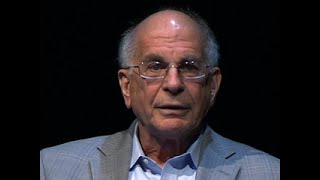 1:17:38
Daniel Kahneman on System 1 and System 2: Fast and Slow Thinking
Kahneman explains fast and slow thinking, intuition, effort, bias, and belief at a Long Now lecture in 2018.
 46:51
Daniel Kahneman on Intuition And Knowing: How System 1 Shapes Belief
Kahneman explains how System 1 shapes belief, coherence, and scientific communication in a 2011 lecture, Thinking That We Know.
 59:11
Daniel Kahneman on Well-Being: Living and Thinking About It
Kahneman explains the difference between experiencing and remembering self, and why income, marriage, and country shape happiness differently at UCTV in 2008.
 1:44:38
Daniel Kahneman on Decision Making and Rationality: Beyond the Rational Agent
Kahneman traces decision making from Lewin to prospect theory, showing how context, loss aversion, and framing shape judgment at Harvard in 2008.
See also: what 21 great thinkers said about thinking & rationality.