Daniel Kahneman on Noise Reduction: Why Experts Disagree

What Kahneman talks about
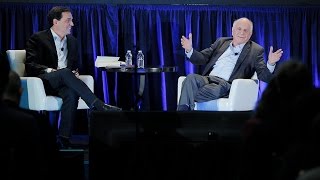
Daniel Kahneman joined a panel conversation with Daniel Pink at the Wharton People Analytics Conference in 2016 about noise in expert judgment, algorithms, hiring, and better organizational decision-making.
Also known as: 2016 Wharton People Analytics Conference; Daniel Kahneman & Daniel Pink; Wharton School panel.
Daniel Kahneman argues that many organizational mistakes come less from bias than from noise: random, unreliable variation in expert judgments. He contrasts human inconsistency with the stability of algorithms and structured decision processes.
He discusses how firms, interview systems, and hiring can be improved by breaking judgments into dimensions, using independent ratings, and standardizing the information people consider. He also warns that algorithms can threaten status and power inside organizations.
The conversation widens to AI, intuition, luck, and public decision-making. Kahneman is cautiously hopeful that organizations and governments can make better decisions, but only with disciplined process and humility about human limits.
An interviewer moderates a conversation with Kahneman at the Wharton People Analytics Conference.
In his words
“The core reason why we make these mistakes is the perniciousness of overconfidence”
“A lot of the errors that people make is simply noise”
“The rules beat the experts”
“If they don't agree, they are not—they can't will be right.”
“The best you can is likely not to be enough if you have bad luck”
Key points
- Noise is random judgment variability, distinct from systematic bias.
- Expert judgment is often far less consistent than people assume.
- Simple formulas and algorithms frequently match or beat experts.
- Organizations can reduce noise by structuring decisions and using independent ratings.
- Hiring improves when multiple people evaluate candidates on separate dimensions.
- Intuition can be valuable after disciplined, independent assessment of the components.
- Luck and unpredictability limit how much any decision process can improve outcomes.
Full transcript: Daniel Kahneman, Wharton People Analytics Conference panel (2016)
(music) Let me start, um, with a—I'm going to start with a question here about some of your work, and I want to start with an anecdote because I think it's—I think some of us have had this experience. So, I have a father-in-law; his name is Allan. Uh, because he has concerns about his age, uh, he doesn't like his grandchildren to call him grandpa or, uh, you know, Granddad. He wants to be known as Big Al. Okay? So, Big Al is a very astute guy, very, very astute guy, uh, an incredibly skilled poker player. He earned his way through law school playing poker. He is an incredibly accomplished lawyer, was a corporate counsel at, you know, a very, very large firm. I mean, just—he's a super
smart guy. And so, I talked to him a lot about books, and in November, he said to me, “Hey, I just read this book called *Thinking, Fast and Slow.* Have you read it?” I said, “Yeah, it's an awesome book, isn't it?” He said, “Yeah, it's so good. It's about all of these, you know, ways that our thinking goes ‘ay.’” And said, “I really learned a lot from it.” Um, you know, “I've made some of these mistakes, but in general I'm pretty good. Like, I probably make fewer of these mistakes than other people.” Um, so you don't argue with Big Al about something like that. So we—M—I said, “Well, Big Al, what are you reading right now?” And, um, he told me the name of a book that he's reading, and he—I said, “Is it any good?” He says, “No, it's terrible. I don't like it at all. It's tedious, but I've already read 150 pages of it, so I need to finish it.” So, in the space of like a few breaths,
the man who had just read this was making that kind of COG. I don't want to say who the author of the other book was because that would not be fair to Walter Isaacson, uh, but, um, but so, so are we hopeless, Professor Konoman? Is it just hopeless when the big owls of the world keep making these mistakes in the space of recognizing that they're going to make these mistakes? Is it hopeless for us to make these kinds of cognitive errors? Fairly hopeless. Good night, thanks for coming. For individuals, I think, think pretty hopeless. Yeah, I mean, you know, people do get better with education, but, uh, reading this book isn't making anybody think much better. Is there anything we can do, though, to, to, to, to,
over—yeah, I think so. I think primarily organizations can improve the quality of their processes. Okay? Individuals, I think it's much more tenuous, much more, and the reason for that—just to isolate this, we'll go to organizations here in a moment—I think that the way that you've written about this is that the core reason why we make these mistakes is the perniciousness of overconfidence. Is that—we fundamentally overconfident? Well, I mean, we're fundamentally overconfident in the sense that we are fundamentally, I think, why, to jump to conclusions and to complete coherent stories, to create interpretations. All of this happens very quickly. We have very little control of
it. Uh, we have very little control over the quality, the other information that goes into it, and so we just understand situations spontaneously, automatically, and that's very difficult to control. Organizations don't think that way; typically, they think more slowly, and that gives you a chance to interb—there are AC, but there's a—there's a problem with organizations. Let's get to that in that—and this is what you've been work—so, so, so Professor Konoman, no longer teaching at Princeton, living in New York, doing a lot of consulting, and consulting to organizations, and, and as I understand it, the problem in organizations in their decision-making process isn't one of bias, which is sort of what a lot of this is, but one of noise. Tell us the difference between bias and noise and
why it matters. Yeah, that's actually, you know, when people think about error, uh, we tend to think about biases, you know, systematic errors. But in fact, a lot of the errors that people make is simply noise in the sense that it's random, it's unpredictable, uh, it cannot be explained; there is no accounting for it. And that is most of—I think many of the problems of the errors of judgment that we make originate not in bias but originate
actually in noise, in unreliability. So let me explain that a little more because the concept of noise is pretty vague. There is a lot of literature that actually is not well known in the business world, which I find very surprising. There is a lot of literature on how unreliable, uh, professional judgment is. You put two professionals—you put the same, uh, x-ray in front of radiologists and about 20% of the time, in some experiments, they don't reach the same diagnosis. Uh, the amount of variability in people's judgments when you put the same case in
front of people is much, much larger than people anticipate. And we know that in a lot of areas. And there is another thing that we know that connects to noise: we know that, in general, when you put professional judgment, even expert judgment, against formulas, algorithms, simple rules that combine information, in general, the rules beat the experts. Actually, the result is this: that about half of the time, in half of the studies, the rules beat the experts outright, and in the other half, it's a draw. There is little or no evidence of cases in which expert judgments do
better than intelligently constructed formulas. Okay, sort of a daunting, daunting message to a group of MBAs, but—and the reason for that, it turns out, is primarily noise. That is, it's not that people are biased; it is just that when you put, when you put some data in front of an algorithm, you will always get the same response. At the other end, the output will always be the same. When you put the same data in front of an individual on two separate occasions, you're not going to get the same response, and the indications from research are really unequal. That's the main reason for the superiority of algorithms over people.
And that algorithms are noise-free and people are not, give us an example of what noise would be in expert decision-making in the case of radiologist or some other expert. Well, uh, I'll give you an example from a large financial institution in which we've done some research. So that I'm jumping into the kind of consulting experience that you were mentioning, and, uh, well, it's going to be difficult. They have professionals who are making judgments, and I can't tell you the kind of judgments, and you'll see why in a minute, but they're making judgments about quantities which are measured in dollars and in hundreds of thousands of dollars, and the decisions are
consequential. It really makes a difference the number that the individual produces. Now, a typical feature, and that is not uncommon, that happens in many places, is that a single individual typically makes that judgment. And you find that in a lot of places; you find that, you know, among, uh, in loan approvals very frequently you have a single individual approving loans. You find that in insurance companies, an underwriter, a single underwriter can make, can set policies for very expensive. Now, we actually conducted an experiment where materials were presented, were
constructed by the professionals themselves, or by some respected members of that team, and they presented material that were completely realistic of the kind of judgments that people make. It would be nicer if I could tell you what it is, but you can imagine it's in the — it's in the vicinity of what professionals in, in financial large financial organizations do. We asked the leaders of that team how much variability they would expect, and the question was straightforward: If you take two people at random, two professionals at random, and they looked at the same case and they produced a number which is their
evaluation of the case, how much in percentages, how much do you expect them to vary relative to, say, the average of their two? And you can probably guess the answer because many people give the same answer somewhere between 5 and 10%. That's what you expect. The answer is between 40 and 60%. It's an order of magnitude more. It's completely different from what anybody expected. And how it comes about that an organization has a huge noise problem and is completely unaware of it, that's an interesting question. So, what do you do in that case to—how do, so, so you—so you've got the—we, Dr. Kahneman has diagnosed the problem. The problem is noise. What do
you say as a, you know, now you're a novice consultant here, right? Your reputation is on the line, you got to solve the problem. What are you—what are you advising to them to reduce that kind of noise? Well, I mean, you know, there is advice that can be given. I mean, the obvious kind of advice is use an algorithm, uh-huh, don't use judgment. I mean, it's—and how does that go over among the experts? Not very well. But by the way, when you tell experts that there is—when you tell the team leaders that there is 50% variability where they had expected five or 10, they're willing to take an algorithm. Oh, really? Yeah. I mean, that really concentrates the mind. I mean, that's the contrast between the
expectation and, and the reality. Now, so that's that. I would say the first thing you should look at is, is it practical to apply an algorithm? In many situations it won't be. And then what you want to do is you want to apply disciplined thinking. You want to force, to lead people to see, to think about every case that they do in a more or less standardized way. There is a lot of resistance to it, but actually it can be done if it can be done in a way that the professionals will see as helping them rather than constraining them. Then it can work. I mean, our
experience has, has been fairly positive on what we call noise reduction. And I think it's a new field. I think it's quite an interesting field, and it's new in the sense that, uh, when people think of error, they think of bias and debiasing and cognitive biases and all that sort of thing. But in fact, noise is a big problem, and you can measure noise, and that's a very important feature of professional situations. You can measure noise without knowing the correct answer. So if you have, you know, somebody in banking who is deciding on
whether the appropriate rate for a loan; and you have variability, you have noise; you don't need to know what is the appropriate rate for that loan. What you actually can observe is that people don't agree, and if they don't agree, that's an error. Something is wrong. If they don't agree, they are not—they can't will be right. If they don't agree, is there any—you know, we have a lot of people here who are working in HR and talent management and in training. Is any part of that variability due to perhaps hiring the wrong people or having inadequate training? What is very surprising, at least in our experiment,
was that experienced professionals were as variable as novices. So it is not actually experience. And that's the social psychology of that is really quite interesting. How could it come about? In an organization, you have experts, they all become increasingly confident with the years of service, and they all respect their colleagues by and large, so they typically expect when they see a case and they make a judgment, they think it's correct. That's the overconfidence aspect. And they think it's correct, so they think that the colleagues' respect would agree with them, that basically they would make the same judgment. In fact, that isn't true, but in
Many organizations, there is no opportunity to discover that the only opportunities in many places are when you have a group of people discussing a case. And there, sometimes you have disagreement, but the social psychology here is crucial. When you have a team discussing a case, when you have a group in a group discussion, you are going to have huge conformity pressures, which will lead people to radically underestimate the amount of disagreement that is actually there. If you want to measure disagreement, you have to have people making independent judgments, and very few organizations go through the trouble of doing that. Are there, SI, on either one of these fronts? Are there systematic practices that
organizations can use to essentially put on noise-canceling headphones so that they're, you know, so that they, you know, sort—so that they can eliminate that? I mean, give us an example of how that might—how, how an organization can do that, because that variability problem is actually troubling to anyone who's ever gone to an accountant, to a lawyer, to a doctor. Yeah. I mean, this is why you get a third, a second, and third opinion. I guess maybe a sort of variability reduction. But the thing about's I like this idea of noise, noise-canceling headphones for organizations: what can, what can organizations do? Well, what you would want to do, you know—you would, there are several phases in any judgment. In a professional judgment, saying approving a loan or determining a
rate or evaluating a claim or something like that. The first stage is collecting information: what is the information that you collect, and what are the information—if there is a lot of information already there, what are the information that you look at? And there are individual differences there, and the individual differences in the information that you collect or the information that you attend tend to, are a source of noise. Now, that you can overcome by having people—and it's a different process—but by guiding people to look at the information in a particular way, and in a fairly orderly sequence, and you
have to do that with a light touch because otherwise people will hate you and they will actually not comply. But if you do it in a way that they view as helping them perform their task, it's not too bad. That's the first phase: it's collecting the information. Then you have to think of what are the basic dimensions of the problem. That is, if I'm going to approve a loan, what do I really have to say? If I am going to approve a loan to a business, what are dimensions do I have to look at? And if you stop to think about it, there is a limited number of dimensions that you want to look at. You want to look at: what are the prospects of the industry to which that particular business
belongs, what is the quality of management, what is the immediate competition? I mean, there's a set—and it's a finite set, not very large—of dimensions that you want to be covered. And by listing those dimensions and having people evaluate those dimensions, you're going to cut down on the noise. So basically, it's imposing discipline on the process of thinking, which imposes some kind of standardization on the process and leads to noise. Is there a downside to that standardization in terms of basically—you're very good at solving the existing problem, but if a new problem presents itself, it somehow kind of cramps adaptability? That's, uh, that's a
you know, that debate is everywhere about, uh, there is a risk. I think there is a risk when you impose procedures that, uh, bureaucratization in one way or another might set in. Uh, it really depends on how the forms that you impose on people who construct them, right? And whether they're user-friendly. And in our experience, if you put a lot of effort into guiding people to look at information in a particular way, they actually find that it helps them do a good job. Interesting. Uh-huh. If you, if they view this as a bureaucratic requ—
requirement, you—you you're lost. It's worse than nothing. Right? Right. Are there—so we got a lot of questions coming in here. Um, this is an interesting one: When do you think human decision is superior to an algorithm, if at all? Well, you know, it depends on the quality of the algorithm. But the bu—and let's take the median algorithm, all right? I mean, what you have to do is the question is: what is the information that you put into the algorithm? And here there are really some very striking results. Uh, you can build an algorithm without
data, and that's really very useful to know if you are thinking of a problem and you're evaluating cases, say, uh, you know, you're evaluating the financial stability of firms, for example, to give them a loan or to insure them against financial risk or some such thing. You don't need to look at past data. You can probably sit down with a committee of people who understand the situation and make a list of five or six dimensions. Mhm. More than eight is probably unnecessary. And you create good rating scales on those eight dimensions, and you get them equal
weight, and you will typically with that do just as well as with a very sophisticated statistical algorithm, and just as well, and typically much better than experts on the average. So algorithms are easy, good algorithms. And that's a—that's a secret that is not, you know, it's not widely known in the industry. For example, I discovered that it's not known in the financial industry that we talked about—and they should know about it—they don't know. They think that in order to construct an algorithm you need massive data. Actually, you don't. And that's a very important fact that is not widely known. Let me
Backtrack a little bit so you're doing consulting with, uh, big financial services company, really in the realm of HR. But it turns out that this is not your first experience as an HR consultant; your experience as an HR consultant goes back for, like, 40, a lot of 50, 50 a long time. Yeah, a long time. Yeah. Tell us about that. I think that's actually quite interesting to me. That's actually — it goes back 60 years. I mean, I was, um, I served in, I was in Israel, and I served in the Army, and I had the BA in psychology, and I, uh, and a year in the
Infantry as a platoon commander, and then they put me in the psychology branch. And they, among other things, they assigned me the task of setting up an interviewing system for the Israeli Army. Uh, I was 22 years old, and I recently actually got the report signed by Lieutenant Daniel Kahneman dated 1956. So it is actually 60 years. Yeah, and what we did there in the interviewing system was very much in the spirit that I've described here. Here, it was in the spirit of setting up a series of dimensions on which people were to be evaluated, setting up a set of questions
to evaluate these dimensions. Like, for example, what would you ask to establish whether somebody is punctual? Punctuality is important. What would you ask? There is a list of questions, things that you can ask, not necessarily in a fixed order, but there is a list that interviewers become familiar with. And then they rate punctuality. The way that they did that, they rated punctuality, and then they rated sociability, and they rate things one at a time. Very important to rate things one at a time, because that way you don't form a global impression of the person but you form a differentiated
impression of one topic at a time. It controls what psychologists call the halo effect. Very important to do that. So we had that system. I had actually six dimensions. Turns out to be a very good number. Uh, what were the dimensions? Well, those I remember were, uh, well, punctuality was one of them. Uh, conscientiousness, sense of duty was another. Sociability was another. Uh, something that I call masculine pride was another. This was all for combat units, I should add, by the way. This system is still in force in the Israeli Army, I mean, 60 years later that
interview actually works. So, but it works because it is in a way as close to an algorithm as you can be. It's a fairly structured. But I have a story to tell you about that, which is an important part of the experience. So I was 22 years old. The people who were doing the interviews were 20 years old, and, uh, and, uh, and, you know, we were all Israelis, and Israelis are not supposed to be particularly disciplined or, or obedient. And, and I very nearly had a mutiny on my hands because the interviewers hated that system, and they hated the system because
I had told them, "You generate those six scores, and then we'll add the six scores, and that's it." They didn't, they didn't want that. They wanted to express themselves. They wanted their intuition to, to play a role in their judgment. So, and I still remember, I mean, one of them telling me, "You're turning us into robots." So it's the same argument that's, you know, I've been living with it, as it turns out, for 60 years. And I, I had an idea, which I viewed at the time as a concession that I was making. I said, "Okay, you do the six scores as I've told you to do them." That is, "You try to be reliable. Don't think about validity. Don't think about predicting anything.
Just tell me how punctual that person was in his civilian life. Now, when you're done with that, close your eyes and think what kind of a soldier is this person going to be. And put down a rating between one to five on the quality of that individual as a soldier." Now, two stories to tell you about that. The first one is that when we collected validity data a few months later — so we had interviews and a few hundred people — we went to see how they actually were performing in combat units. And we correlated the ratings with the ratings of their, with their
evaluations by their officers. It turned out that the final global question, the "close your eyes" question, was far better than any of the single ratings. But there is a lesson to be learned from that. The previous form of the interview was one in which all they produced was a global rating, and it was worthless. A global rating is very good, and intuition is very good, provided that you have gone through the exercise of systematically evaluating and independently evaluating the constituents of the problem. Then when you close, close your eyes and you
and you generate an intuitive comprehensive image of the case, you will actually add information. I should add the other compliment of the story that some 15 years ago I visited the unit in which I had served, and, uh, and still there, in the same place in which I served. And the commanding officer was describing what they do, and she says, "And at that point we tell them, 'Close your eyes'." So that phrase has, uh, has lived for, for, um, so and 60 years later it's still in place. Yeah, although I have to say a reason it could be in place would be some kind of combination of the halo effect and the status quo bias, because anyone — what about our interview process? Oh, it was designed by Daniel.
Conan, oh okay, I'm good. Um, so, uh, so not the way it works, but we've got some great questions coming in here, uh, from our, uh, audience. Um, um, this is a good one: How do you get people to become more comfortable using an algorithm? You have people who basically, not only their work life, but at some level their identity is built up on being an expert. And you come in here and say, you know what, this set of ones and zeros can do your work better than you or can be an important, uh, augmentation of your work. How do you get, you know, as a management practice, as a leadership practice, how do you get people comfortable with that? Well, you know, I, I haven't had a lot of experience with that, but my guess would be that in
some cases you will never get them comfortable with. The people will have to train their job. If an algorithm does their job better than they can, they will have to—somebody will have to find something else for these people to do. You cannot fake it. Now, in some cases, as in the case of the interviewers in the Israeli Army, there is room for expertise. And what you do is you do disciplined thinking, and then there is professional judgment, and you still need the professional judgment. Mhm. And that will be true in many situations. Do you think that's sort of in some ways what white collar work will look like? You look at the MBA students here, when they go out into the workplace, wherever they are, that one of their core—that they have to, one of the things that they do
on the job is augment the abilities of these super powerful algorithms that are doing things that consultants and managers and accountants used to do in the past. Clearly, you know, that's the direction that things are going. I mean, people— I mean, people are going to have decision aids that are going to do a lot of the work for them, and how—how you can use people so as not to ruin the quality of the algorithms—I—that's—that's a significant problem in some cases. But, uh, how to achieve that balance between algorithm and judgment, intuition, experience—that's quite difficult. Do you think it—but ultimately then just reduce
significantly reduces the amount of judgment, human judgment that's necessary? I'm—I'm sort of leading us into this, the kind of the dark, dystopian, uh, artificial intelligence scenario here. I mean, I'm—I think I'm quite worried about that. Okay. And I—I heard, I heard, uh, I was recently at a conference on, on AI, on artificial intelligence, and Eric Schmidt, uh, spoke, and he spoke of the future in which he would have an assistant, a digital assistant, and he called him Not Eric, and
he would use that digital assistant for a variety of things, and it sounded very good. But I had a problem, and my problem with this ultimately is there is going to be a digital assistant with business judgment who can evaluate business propositions. You put input, you know, you give it input, and then it comes with—and, and that will be based on artificial intelligence with huge databases, you know, more than an individual can collect. Now, how would Eric Schmidt deal with a Not Eric, a digital assistant who has business judgment? And if you think of the
implications of that, they're huge, because right now Eric Schmidt is a myth, you know, his judgment, his experience. I mean, he is a semi-God. Now, one of the effects of creating algorithms that do complex things like business judgments or medical diagnosis is that the Godlike feature of human judgment is eliminated because anybody with that algorithm can out-guess Eric Schmidt. Now, how does this work within an organization? How does this affect the power structure? Very important, very difficult. We know from experience with decision
analysis that decision analysis, which was proposed some 40 years ago, was, you know, the end all and be all, that, that would, that was the way that organizations would make decisions in future because it was a rational way. It didn't work. Nobody except oil companies for drilling decisions uses decision analysis now this much. And the reason they don't is that decision analysis is very threatening to the leaders of organizations because once you have the decision analysis, anybody can out-guess the leader, and leaders, if there is one thing they don't like, it's to be outg
guessed. So how, how that will play out with artificial intelligence and leadership? No idea. And I think it's a big problem. Yeah. So you, so you're, you find it a little bit frightening, a little bit um, da—yeah, interesting. I mean, I think inevitably you get to a point where, I mean, if you're right, if we continue on that trajectory where basically Not Eric fires Eric, I mean it—h—I think that, I mean, my expectation is that Eric will fire Not Eric. I mean, in—in get there in the sense that clearly, then Not Eric be able to file an employee discrimination suit, you know, it's—it's going to be a problem how to especially for leadership
functions, the integration of algorithm. It's going to happen. I mean, one of the most significant news—I mean, you know, we're all into politics these days, but one of the more important things that happened this year, I think, is that a program beats the world champion in Go, and it beats the world champion 4 to 1. And I think they lost out of generosity after they had won the first three, they lost one, and then they—they won the fifth again. Go was not supposed to be mastered for another decade, right? And Go is supposed to be the example of intuition, of an intuitive game because people really cannot
Explain what they do. The real experts cannot explain exactly how they reach their conclusions—just too complicated. But what happened was that with the huge amount of data, I mean once they have the software that they built on 150,000 games, they developed that software and it played against itself 30 million times. And then you had a program that was better than the world champion. Now, all of this depends on the availability of data. This is how intuition develops, but we develop intuition with the data we collect in a lifetime, right? I will be able to do better how we live.
With that or how you live with that, I don't know. Um, let's ask—this is a very interesting question that just came in: How do you optimize decision making in rapid-fire ambiguous situations when you don't have time to develop an algorithm? Well, I mean, you know, algorithms are supposed to be developed in advance. I mean, you know, you never have time to develop an algorithm to make a decision, but there are many situations where you have to decide very quickly and intuitively. And, you know, the best examples—the best example I know, example that Gary Klein...
Was—I recommend Gary Klein's work. He doesn't like anything that I do, but we're close friends. He believes in intuition and the intuition of experts, and everything that I have set up to here, he really would rub him wrong. Mhm. But he studied—he has been studying for decades the decision making of fire ground commanders, the commanders of firefighting units, and they really don't have time to analyze the situation; they must take action, and they must rely on intuition. And here, there may be something that we can do to improve...
Intuition, because if you view it as your role to get people to have a lot of practice—because this is how intuition develops—then we should change the way that we train people, and we should make it an objective to train them for intuition. And that would be a different training than the training that is given today. Interesting. And that's for all expert decision makers? I think in many—I think in many fields, if you can't use—you want to use algorithms where you can, you want to use disciplined thinking where you can, and where decisions are going to have to be made very quickly, you want to train...
Intuition. Yeah, and you want to do that deliberately, and it's a different kind of training, I think, than the common. Yeah, apply some of that thinking to hiring, which I know is an issue for a lot of people here. Um, you know, we know this is—I guess a problem of both bias and noise in hiring, but on the bias side, we know, you know, we're more inclined to hire tall people rather than short people; there's racial bias, there's bias based on gender. Um, how can we apply some of these insights to hiring better people, well, or hiring more intelligently? I mean, I always had the feeling that we're going to look back on the way we hire people today with job...
Interviews that have no predictive value, with a set of credentials that we think signal ability but might not, will look back on those hiring practices the way that physicians look back on, say, leeches and say, whoa, it's amazing that anybody survived. Uh, it seems like we can bring to bear some of your insights into both bias and noise to hire better. Well, I mean, you know, they've been brought to bear. That is, when I read how Google selects its employees, you know, I don't feel that psychologists have much to tell Google that it doesn't know what they're doing to overcome noise. The one thing that really overcomes noise that is not disciplined thinking or algorithm: they use many people to judge each candidate, and so...
When you have many independent judgments of the same candidate, you eliminate noise by sampling. So, that is one aspect of what they do. They break down the problem, so they do everything right in that sense. Whether how much better you can do, I think there is a limit—I think there is a limit to how predictable performance is. When I was a graduate student many years ago, I heard from my professor, he had a rule, and the rule was he said that in the 1920s tests of personality and...
Intelligence achieved a validity of about .3, a correlation of about .3 with the criteria, and yet that rule was in the late '50s, early '60s. And he said it's still .3, and maybe now today it's .4, not much more. The gains are certainly quite slow, and the problem is not that we're poor at predicting; the problem may be that it's unpredictable—that is, that there are chaotic interactions between the characteristics of the individual and the events that happen to them on the job that change them and that change the way that they are viewed and treated by...
Other people, and that there is just no way that by testing the individual you can achieve more than, I don't know, maybe .4. Mhm. So you basically improve your odds a tiny bit but not a huge amount. But you're are not going—there is no way. You know, medicine, I think we can go a long way beyond leeches on guessing the performance of people on the job whether we can go radically better, can do radically better than we're doing now, I'm quite skeptical just because not about the process that we use, not saying that say a blind audition or eliminating job interviews or some kind of tactical measure will do the trick. No, it's the nature of performance. It's...
The world, I mean, many of the problems that we have in predicting the future, they're not because we predict poorly, they're because the world is really unpredictable. Mhm. And that sets the limit to how well you can predict it. You know, people can be very, very clever. They're not going to predict the prices on Wall Street very well or at all, you know, long-term or medium-term. And that's because this is an unpredictable situation. It's essentially random. It's unpredictable. And if it's unpredictable, no matter how hard you try, you're not going to predict it. And something along those lines I—
Think, uh, to sort of smaller degree, applies to human performance. Well, one thing that I noticed reading, or one thing I thought about reading this book, is sort of embedded in it is some notion—I don't even know if it's the right word in this circumstance—but sort of the notion of luck. Like basically, some things are just luck. Do you agree with that? Oh, yeah. I mean, that's a major theme. And we have in the first draft Michael will be saying—he wrote a book on luck and skill. It's a major theme in The Success Equation. It's a terrific book, especially if you're a sports fan. I'm a big sports fan. I love that. I love that book. It explains why, um, basketball players are better than baseball players.
Among other things. But go ahead. I mean, we tend—and there is good psychological reasons for that—we tend to underestimate the role of luck in human affairs. We tend to think that people are responsible for outcomes when, in fact, they have limited control over outcomes. And we’re built that way, and it's good that we're built that way because, you know, we want to extract as much variance as possible from what is regular in the world. But, in fact, it leads us to underestimate consistently the role of uncertainty, the role of luck, and it causes us to be overconfident. To close a loop that you started earlier. Mhm, mhm. Well, and part of it is that we—
Look at things that are happenstance, and we want to build a convenient story around it. So we, so post-hawk, we look back and say, "Oh, look, I can connect the dots retrospectively," and that makes perfect sense. But you're saying, so, so this is—so this is, um, so the luck and randomness play a huge role. AI is a daunting force for us in the future. Any other good news to bring us? No? Let me ask a serious question on that. Um, like, so, so, so think about that because I think that the—an obviously the analysis is sound. We've got people in this room, young people here who are about to, you know, make their way in a world, a world where I think very legitimately we're recognizing there is a degree of randomness, there is a degree—
Of luck. We have these powerful algorithms that are going to do the sorts of things that not just that, you know, welders did at one point but that Wharton MBAs do. I mean, what truly—what advice would you give to some of the MBA students out here about how to navigate their world? Oh God, no, you—no, I—you know, here’s the thing: you got to—I'm going to—I'm going to push you a little bit on this because I mean, you know, I like the diagnosis but give us a little prescription, doctor. Give us some false hope is what I'm saying. I'm much better than—okay, yeah, give us, bring the false hope. The, you know, I think we've got to—
Realize that we have very little control, but we want to extract all we can from the little control we have. So that's basically knowing that you must try to understand the world to do the best you can, and knowing that the best you can is likely not to be enough if you have bad luck. Uh, that's the wisdom that you can provide in effect. In effect, it doesn't make any difference, uh, that is—you have to be prepared for luck. And one thing that I think—one thing that the luck message brings is to be more compassionate about the failures of other people. Interesting.
I mean, it’s—it’s this the constant thing that we do of trying to figure out what people have done wrong because things have gone wrong. Mhm. That we do far too much of. We over-explain and we over-blame. And the recognition of luck and of limited control should cure us of that. And if possible, do that without turning us into fatalists, that is, without saying, "Well, you know, throwing up our hands," because, in fact, we do have some control, and in fact, we should be doing the best we can, except there is no guarantee that it will work. Almost there. (laughter)
Um, um, but I think that's actually a very good—I think that's actually a very positive lesson. Um, and it comes out actually interesting—it’s that you're reaching that kind of that conclusion from your very keen analysis of behavior and how human beings reason. But it's also the analysis of certain philosophers at a, at a C earlier on, like John Rawls talks about, you know, you should—you should create the rules for society as if you were behind the veil of ignorance. So the rules for a just society are those that you would have if you didn't know what your circumstances were going to be. Do you think that that leads to a question here which is, um, we're on politics this question says, we're governed by politicians not companies. Um, how do you get—uh, how would?
You invite our political system, our governments that make decisions, to use algorithms more effectively. And the question also asked, why isn't that happening? But that seems pretty clear. But is there a way to bring these kinds of thoughts, this sort of decision-making rigor, to public decisions rather than just individual decisions or organizational decisions? That's actually a very interesting development. There is now, within the White House, a unit that basically does psychology. It's called the NUD unit, and they help— they help instituting policies that are adapted to the needs and wishes of and
and limitations of citizens. They help people make better decisions. They design forms, they look for ways to convey messages in a transparent way. And I attended recently a meeting at the White House of that unit and of all the Departments actually that are benefiting from that unit, and the feedback is surprisingly positive. But one thing that impressed me was that there is something we haven't begun to do, which is to improve decision making within government. We talk a lot about waste and abuse and so on, but actually what happens, and I see that, I must say
from my few years in consulting. I'm trying to be polite. Uh, we only have a few minutes left, so don't trouble yourself. You know, you look at large organizations that are supposed to be optimal, you know, they're supposed to be rational, and the amount of folly, actually, in the way that these places are run, the stupid procedures that they have, the really, really poor thinking that you see all around you, it is
actually very troubling to see the extent to which there is so much that could be improved when you just step in from the outside and you listen to the way that decisions are made, you look at the way that processes, at the processes that are in place, and I expect it to be aided by the quality of decision making by organizations that, you know, need to make profit to survive in a competitive world. I have not been aided, and uh, and I think government is no better. And there is a very important rule, that something that I think we know something about, which is that the quality of
decisions doesn't necessarily improve with the size of the stakes. In fact, there is a significant argument that says that it could go the other way around, that we're more stupid for very big decisions because we don't have many opportunities to practice them, so we can't learn from experience. But figuring out how to make the effort of decision making commensurate with a complexity and importance of the stakes, it's a huge problem. You don't see much thinking about it either in the private sector, so far as I know, or in government. And so, thinking of the decision problem and how you could
improve decision processes without, and making organizations more intelligent, I think there is significant hope there. I mean, I'm—I don't want to sound, you know, completely pessimistic. I started out with this: I think organizations and governments can be made more intelligent. I think really this can be done. But for that, you need sort of, you need an intelligent cooperation between people from inside the organizations and outsiders, and I hope that this, that this is beginning to happen. So you can see that for consequential public decisions
like going to war, budgeting—I mean, the very striking thing is, when you look at examples of extremely consequential decisions like going to war, the quality of the thinking that goes into it is not necessarily, you know, impressive. That was overly polite. Yeah, um, we have an interesting question here. Um, have there been ways to apply your own research to your own life? Do you ever, do you find yourself sometimes saying some cost fallacy? Oh, yeah, I mean, I would—I would say this: I have
it's never helped me in anything that mattered. In relatively unimportant things, uh, I—I have been helped by the research. I'll give you a trivial example, that was one. When you're a young person buying a house and buying furniture, what people— a mistake that people typically do is they pay too much for the house and leave too little for the furniture. Okay, you should think of it as one budget for house and furniture. You're going to make a better decision. This was a thought I had, I applied it, and I was very glad I had. But it really, but it really is a very
unimportant decision. They're important decisions in life. Yeah, actually, just getting a text here about Ikea's new furniture decision-making algorithm that will, um, actually be superior to that. Um, let's just wrap up here. I actually—so, this is an incredibly consequential book, and this is an incredibly consequential person. There are very few people out there in public life who have such a profound effect on, on at some level, how we truly see the world. So, um, it's an honor to talk to you. I—I wanted to still though, as someone who sees the glass half empty, I think your advice is actually quite wise. And let me just distill it for you and then give you the last word. Uh, what you're saying, I think especially to these younger folks here, is to don't be overconfident,
be systematic in the way you, um, make your decisions, and be humble about your own abilities. You're saying to, um, control the domain of life, control what you can control, and don't worry about widening beyond that focus. And also, and I think it's profound, is to be compassionate. Is, um, is that your life? Is that what you've done? In which ways, in the entire entirety of your life, the broad canvas of your life, have you been a compassionate person? Not—I mean, we still got time; you can't run out the clock. I'm not—I'm not—I'm not sure that all my students would perceive me as compassionate, but
But I have tried. Uhhuh. Um, you, you, I actually think there is a, there is a compassion to what I, I was getting at, uh, in an inartful way. I think there's a compassion to, to wisdom and to challenging convention that has been profound for a lot of us. So why don't you all join me and give a big round of thanks to Daniel Kahneman. Thank you.
From YouTube captions, lightly punctuated for readability. Timestamps link to the video above. Errors are possible.
Cite this recording
Daniel Kahneman, “Wharton People Analytics Conference panel (2016)”, 2016. Transcript and video: Thinkers Archive, https://thinkersarchive.com/daniel-kahneman/noise-reduction-wharton-2016/
Quoting a passage? Link to its exact moment: every timestamp above has its own anchor (for example https://thinkersarchive.com/daniel-kahneman/noise-reduction-wharton-2016/#t-133).