Daniel Kahneman on Algorithms Vs Human Judgment
Kahneman’s view is that informal human judgment is usually too noisy and overconfident, so simple rules, algorithms, and structured procedures often make better decisions.
- Human judgment is noisier than people realize, so the same case often gets different answers from different people or on different days.
- That consistency advantage is a major reason rules and algorithms often match or beat experts.
- Confidence is not a reliable sign of accuracy, especially in forecasting and other uncertain domains.
- Intuition is not useless, but it works best in regular environments with clear cues and fast feedback.
- When algorithms cannot be used, Kahneman recommends delaying intuition and breaking judgments into separate dimensions.
Why Kahneman usually sides with algorithms
Kahneman’s basic claim is direct: if the goal is better decision quality, rules and algorithms usually have the edge over informal human judgment. His reason is not that people are always foolish, but that human judgment is variable, unstable, and easily distorted by context and premature impressions.123
An algorithm has one huge advantage before any discussion of artificial intelligence begins: it gives the same answer to the same case every time. Human judges do not. For Kahneman, that consistency alone often makes even simple statistical rules superior to expert intuition.45
The real problem is noise, not just bias
Kahneman argues that many decision errors come not only from bias but from noise: unwanted variability in judgments that should be the same. Two qualified people can look at the same applicant, defendant, forecast, or case and reach sharply different conclusions, even when both are trying to be fair and competent.678
This matters because inconsistency is not a side issue. Kahneman treats noise as a major source of inaccuracy in its own right, and he stresses that people usually underestimate how much of it there is. Wherever there is judgment, he says, there is noise.91011
That is why algorithms matter so much in his framework. They do not get tired, drift with mood, or change standards from one case to the next. Their stability removes a large source of error that human judgment naturally introduces.412
Why human judgment goes wrong so often
Kahneman thinks the mind is built to form quick, coherent impressions. That is useful in many settings, but it also means people jump to conclusions, suppress ambiguity, and feel confident before the evidence really supports it.31314
This is one reason confidence is a poor guide to accuracy. People often feel sure because they have a plausible story, not because the judgment is well grounded. Overconfidence then makes experts trust their own impressions more than they should.151617
Context can also push judgments around in ways people do not notice. Kahneman’s broader view is that the mind is sensitive to framing, wording, and immediate associations, which means two presentations of the same facts can yield different judgments. That instability is another reason he is cautious about trusting unaided intuition.1813
When intuition deserves trust
Kahneman does not say intuition is always bad. He repeatedly distinguishes between environments where intuition can become skilled and environments where it cannot.
He is more willing to trust expert intuition when the environment is regular, the cues are valid, and feedback is fast and clear. In those settings, people can learn real patterns from experience. But in forecasting, personnel judgment, investing, and other noisy or delayed-feedback domains, that learning is much weaker, so intuition is much less dependable.
What to do when you cannot replace judgment with an algorithm
Kahneman’s first recommendation is simple: use algorithms wherever you can. But he knows many important decisions still require human judgment, so his second recommendation is decision hygiene.2021
The central move is to delay intuition. Instead of forming an overall impression immediately, break the case into separate dimensions, evaluate each one on its own, and only then look at the whole profile. This reduces the pull of first impressions and makes judgment more disciplined.222324
He also favors procedures that create independence and structure: standardized information, separate ratings, and aggregation rather than loose discussion. Groups and organizations can improve because they can build these steps into procedures more easily than individuals can change their own thinking habits.2125
Kahneman on algorithms vs human judgment, in his own words
“…rules are more accurate than people…”
Where to watch
 Daniel Kahneman on Judgment and Noise: Delay Intuition2021 · 67 min · full transcriptBest single overview of why Kahneman prefers algorithms and how to improve judgment when rules cannot replace people.
 Daniel Kahneman on Noise and Judgment2021 · 61 min · full transcriptClear explanation of noise as a statistical property of judgment and why inconsistency is so pervasive.
 Daniel Kahneman on Noise Reduction: Why Experts Disagree2016 · 53 min · full transcriptStrong treatment of expert disagreement, overconfidence, and practical noise reduction in organizations.
 Daniel Kahneman on Noise in Judgment: Why Decisions Vary2021 · 90 min · full transcriptUseful if you want the cleanest statement of why rules are often more accurate than people.
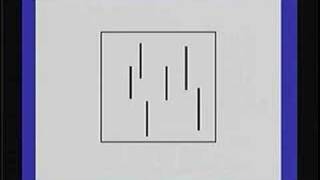 Daniel Kahneman on Intuition and Bias: System One, System Two2007 · 56 min · full transcriptBest for understanding the psychology behind fast intuition, jumping to conclusions, and when expertise can be trusted.
Questions people ask
- How does Daniel Kahneman distinguish noise from bias?
- What did Daniel Kahneman find when he combined structured ratings with intuition?
- What did Daniel Kahneman say about algorithms versus human judgment?
- What did Daniel Kahneman say about delaying intuition when making decisions?
- What did Daniel Kahneman say about improving decision making?
- What did Daniel Kahneman say is the best way to reduce noise?
Sources
Every quote above, word for word from the transcripts. Numbers match the text.
“If you really want to improve the quality of decision making, use algorithms.”
“…rules are more accurate than people…”
“…the mind as a machine for jumping to conclusions…”
“That is, when you apply an algorithm or a rule to the same case on different occasions, you are going to come up with exactly the same answer. That's noise free. It turns out there is so much noise in human judgment that for that reason alone rules tend to be superior in many cases to human judgment and in some cases vastly superior. Now, that's even - that was true even before artificial intelligence. It was true applying simple statistical rules and even imperfect statistical rules just applied consistently will do better than people.”
“Noise is a characteristic of a set of judgments, it's a statistical concept…”
“…noise is unwanted variability in judgments that should be identical…”
“…wherever there is judgment there is noise, and there is more of it than you think.”
“So that's the concept of noise. It's completely different from the concept of bias. Bias is a concept within individual psychology. That is, we think of bias as a psychological process and we detect or identify bias sometimes in a particular error in a particular judgment, but we cannot identify noise in a particular judgment. Noise is a characteristic of a set of judgments, it's a statistical concept, and in that way it's very different from bias.”
“Wherever there is judgment, there is noise and more of it than you think.”
“…whenever there is judgment, there is noise…”
“…wherever there is judgment, there is noise…”
“Well, we call that noise as useless variability. And variability can be very useful if you have a selection mechanism and some feedback. So evolution is built on variability, but... And, of course, it's useful. But noise among underwriters is useless. There's nothing. Nothing gets learned. There's no feedback. It's just noise, and it's costly. The first advice, of course, would be algorithms, as I said earlier. So algorithm are better than people than judgments. That's not intuitive, but it's really it's really true. And and after that, then, you know, the procedure that I mentioned earlier for making decisions in an orderly way by breaking it up into assessments, and that's the best that we can do.”
“The way the system works, it suppresses ambiguity.”
“Now this system guides interpretations. So let me show you how this works. Now you can read that silently, and you know what that is. And you can read that, and you know what that is. And, of course, the b and the 13 are physically identical. I mean, it's the same object, but you were not aware of this. The context determined how you read the words, and you were not aware that there was ambiguity. You were not aware that you had suppressed the ambiguity. You were not aware that there was another way of seeing what you saw. The way the system works, it suppresses ambiguity. Doubt and ambiguity is mostly a function of system two. System one doesn't have much doubts. It makes choices, and it delivers to our conscious experience the choices that it has made, and we're not aware of having made the choice.”
“…confidence is not a guide to accuracy…”
“…the core reason why we make these mistakes is the perniciousness of overconfidence…”
“Among other things. But go ahead. I mean, we tend—and there is good psychological reasons for that—we tend to underestimate the role of luck in human affairs. We tend to think that people are responsible for outcomes when, in fact, they have limited control over outcomes. And we’re built that way, and it's good that we're built that way because, you know, we want to extract as much variance as possible from what is regular in the world. But, in fact, it leads us to underestimate consistently the role of uncertainty, the role of luck, and it causes us to be overconfident. To close a loop that you started earlier. Mhm, mhm. Well, and part of it is that we—…”
“So if you describe the statistics of medical interventions like surgery and radiation therapy, it makes a difference whether you say that during the first month after surgery, there is ten percent mortality or that survival rate after one month is ninety percent. The first description is more frightening than the second description because the word mortality is there, and the word survival is in the other. And when you have that, indeed, physicians, experienced physicians will make different choices between surgery and, radiation therapy depending on which of these formulations is adopted. We have no control over that. This is an operation of... That displays associative coherence.”
“If you really want to improve the quality of decision making, use algorithms. I mean, when... Wherever you can. If you can replace judgments by by rules and algorithms, they'll do better. There... There's big social costs to trusting, allowing algorithm to make decisions, but but the decisions will likely to be better. So that's one thing. If you can't use algorithms, then you slow yourself down. And then there are things that you can do for certain types of problems, and there are different types of problems. So one class of problems like forecasting problems, our friend Phil Tetlock, you know, has that book on super forecasters where he identifies with people who are good at forecasting the future, what they do that makes them good, and, you know, he tries to train people and they can improve people.”
“Absolutely. And altogether - I mean, this is the orientation that I have in general, and I had it I think even in the previous book, that organisations - it's much easier to improve the thinking and the decision making of organisations than to improve the thinking and the decision making of individuals. Organisations think slowly, they have procedures, you can intervene in the procedures, you can standardise procedures, and there is a chance of improving things that really doesn't exist when you're trying to improve your own thinking.”
“Don't try to form an intuition quickly, which is what we normally do.”
“…you want to resist forming an intuition too quickly…”
“So, actually, I have same idea, really, that when you are making decisions, you should think of options as if they were candidates. So you should break break it up into dimensions, evaluate each dimension separately, then look at the profile, and and the key is delay your intuition. Don't try to form an intuition quickly, which is what we normally do. Focus on the separate points. And then when you have the whole profile, then you can have an intuition, and it's going to be better. Because people make form intuitions too quickly, and the rapid intuitions are not particularly good. So if you delay intuition until you have more information, it's going to be better.”
“The wisdom of the crowd eliminates noise. It does not eliminate bias…”
How this guide was made: drafted with AI from the full transcripts of the recordings cited, then checked: every quotation must match a transcript word for word and be the speaker's own words, and an independent review gates accuracy. Methodology and corrections.