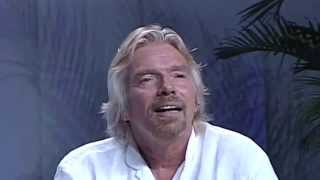
Richard Branson on Optimism
Richard Branson treats optimism as a practical choice: say yes to worthwhile challenges, focus on making life better for people, and keep moving without fear of failure.
- Optimism is essential in life and in business.
- He links optimism to saying yes, taking calculated risks, and not fearing failure.
- His optimism is practical: look for opportunities and build something better than what exists.
- He pairs positivity with humor, strong people skills, and praise-heavy leadership.
- He believes optimism helps create luck rather than waiting for luck to appear.
Optimism is a way to act, not just a mood
Branson sees optimism as a basic stance toward life. He says a positive attitude is essential, and he returns to the same idea in different forms: say yes more often, give things a go, and avoid letting caution become paralysis123.
That makes optimism active rather than passive. For him, optimism means stepping toward a challenge even when the outcome is uncertain, because a fuller life and most breakthroughs come from movement, not hesitation245.
He connects optimism to courage and a low fear of failure
Branson does not present optimism as naivety. He knows bold action can look foolish, and he openly ties entrepreneurship to being willing to seem brave, stupid, or foolish when trying something new65.
What makes that possible is his view that fear of failure is the bigger danger. He treats a low fear of failure as central to entrepreneurship, because without it people talk themselves out of the very moves that can change their lives or industries7.
At the same time, he is not arguing for reckless gambling. He repeatedly frames risk as calculated risk, which means optimism should help you move, but judgment should shape how you move3.
Optimism works best when it is aimed at real improvement
Branson's optimism is grounded in usefulness. He defines business as coming up with an idea that makes other people's lives better, so positive thinking matters most when it is attached to solving a problem or improving an experience8.
That is why he tends to enter fields he thinks are poorly served. His instinct is that if a new business becomes the best in its field, it is likely to survive, and he looks at situations as opportunities to build something better rather than reasons to stay away910.
In practice, this means optimism is not just confidence that things will work out. It is confidence that careful improvement, better service, and attention to what customers actually feel can create an opening where others see a locked market111213.
“I look at everything as an opportunity.”Graham Bensinger interview, 2025 · full transcript →
Positive leadership helps people do their best work
Branson's optimism is deeply social. He says people skills are the most important skill, and his leadership style centers on trusting people, listening well, and bringing out their strengths instead of leading through criticism and fear141215.
He often expresses this through warmth and encouragement. He talks about treating people gently and helping them flourish, and he emphasizes looking for the best in people even when they are difficult16.
Humor also matters in his version of optimism. He sees humor and making people smile as part of building resilient teams, because energy spreads through a company just as quickly as anxiety does18.
Optimism helps create momentum, luck, and big moves
Branson often acknowledges luck, but he does not treat it as something you simply wait for. His habit is to say yes to the right challenge, and that repeated willingness creates more surface area for luck to show up420.
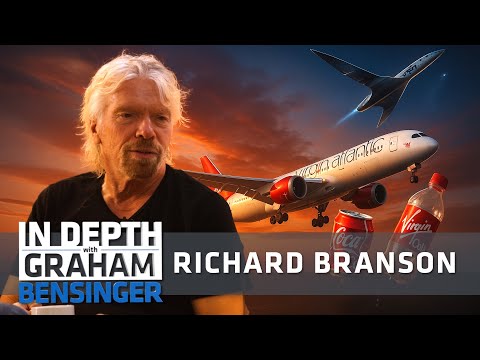
This is visible in how he describes Virgin's biggest leaps. Launching an airline with one secondhand 747 was a bold, brand-defining move, and it reflected his belief that optimistic action can put a company on the map if it is tied to a better customer experience2113.
The underlying pattern is simple: optimism widens possibility. It pushes you to start small, keep building, and attempt things that cautious people leave untouched, which is one reason he sees entrepreneurship as such an important force in society222324.
Branson on optimism, in his own words
“I look at everything as an opportunity.”
“Screw it, let's do it.”
Where to watch
 Richard Branson on Entrepreneurship and Optimism: Build Small, Stay Positive27 min · full transcriptBest quick overview of why Branson sees positivity as essential to both happiness and entrepreneurial success.
 Richard Branson on Calculated Risk Taking: Say Yes and Go for It2016 · 26 min · full transcriptShows how his optimism turns into action through saying yes, taking risks, and not fearing failure.
 Richard Branson on Entrepreneurship and Leadership: Build, Smile, Delegate2024 · 58 min · full transcriptBest for understanding optimism in leadership, humor, purpose, and creating luck.
 Richard Branson on Adventure and Resilience: Balloons, Airlines, Space2025 · 74 min · full transcriptShows his opportunity-focused mindset under pressure, from adventure to major business bets.
 Richard Branson on Virgin Growth Strategy: Diversify, Delegate, Win2023 · 76 min · full transcriptUseful for seeing how optimism becomes execution through delegation, listening, and customer detail.
Questions people ask
- What did Richard Branson say about customer service and the little details?
- What did Richard Branson say about saying yes and taking risks?
- Why did Richard Branson keep taking on big challenges?
- What did Richard Branson say about taking risks in life?
- What does Richard Branson think makes great leadership?
Sources
Every quote above, word for word from the transcripts. Numbers match the text.
“…a positive attitude is essential in life…”
“…life’s a lot more fun when you say yes, not when you say no…”
“In the end, you've got to, I think, take calculated risks in life; otherwise, you're going to, you know, sit it off mothballs or all they do and do nothing. And life is a hell of a lot more fun if you say yes rather than say no.”
“I think if the, if the right challenge comes up, I will, I will still jump in and say yes.”
“Well, I suppose I've stuck my neck out a lot of times. I've learned that life’s a lot more fun when you say yes, not when you say no. Sometimes you thought that and your face won’t do it that way. Look, sometimes you've got to make a decision, get on and give it a go. You have to be a little bit brave and stupid and foolish to do that, and fortunately we've got away with it more often.”
“…you have to be a little bit brave and stupid and foolish to do that…”
“…not having a fear of failure is at the heart of entrepreneurialism…”
“What is a business? A business is simply somebody coming up with an idea to make other people's lives better.”
“…my whole attitude to life is, you know, if you create a new business that's the best in its field, it's likely to survive.”
“I look at everything as an opportunity.”
“If you get the little details right, it makes for an exceptional company over an average company.”
“So I think, you know, every every little detail, I think, we, the team have got right at at Virgin, and if you get the little details right, you know, then collectively, you... It makes for an exceptional company over an average company. And, you know, if I'm on a Virgin plane, or in any Virgin company, I'll have my notebook, I'll take notes, I'll listen to it, listen to the staff, listen to the customers, you know, and then act on it when I get to the far end, and and and then be in touch... Back in touch with the people who, you know, gave me the ideas to thank them and tell them what we've done. And and and I think a good a good leader has to be a good listener.”
“But, anyway, we didn't listen to him on that. We did get the second 747, and I think, you know, the reason I think my partners were wrong was traveling on airlines in those days was abysmal. I mean, they would dump a bit of cold chicken on your lap. There was no entertainment. The cabin crew didn't smile because they were treated so badly. The planes were old and run down. So, you know, bring somebody in from the entertainment world and liven it up and make it a wonderful experience. And um...”
“I think I think the people skills is is is the most important, skill.”
“I think that... Well, first of all, I I I would like to say I'm proud of being a dyslexic thinker, and I'm delighted that dyslexic thinking is now becoming almost part of the vocabulary. And I'm pleased to, you know, talk to many dyslexic kids over the years to try to make them realize that, you know, do not do not be worried about it. You know, look at look at the areas that you that you enjoy and concentrate on those. The areas that you're not great at, you you know, either that you'll catch up later on in life, or, you know, if you're gonna start a business, you can delegate and find other people who can deal with those.”
“…to treat people like you would a flower…”
“The more humor you can have, the better.”
“I can't resist saying yes. Uh, if there's a, you know, if there's a challenge, uh, that, um, that I'm going to regret sitting and watching somebody else doing on television and having said no myself. So, you know, I think if the, if the right challenge comes up, I will, I will still jump in and say yes. Um, you know, the, the, the challenge that we are concentrating on right now, uh, is one that, uh, you know, has been perhaps the biggest challenge of my, uh, my life, and that, and that is, um, building a space line, and, um, it's taken 10 years to get to you, to get to where we are today.”
“I think the thing that put Virgin on the map was when we bought one secondhand 747…”
“…being an entrepreneur is very important for society…”
“Entrepreneurs are what is fixing the world.”
“Screw it, let's do it.”
How this guide was made: drafted with AI from the full transcripts of the recordings cited, then checked: every quotation must match a transcript word for word and be the speaker's own words, and an independent review gates accuracy. Methodology and corrections.