Richard Branson on Leadership
Richard Branson sees leadership as finding great people, listening closely, giving them room to shine, and keeping the whole company focused on making life better for customers.
- Leadership starts with people: find strong talent, inspire them, and draw out their best.
- A leader should listen carefully to staff and customers, then act on what they hear.
- Branson delegates aggressively and hires people better than himself.
- Great leadership shows up in customer experience and small details, not just grand strategy.
- Optimism, fun, and a sense of purpose help teams do their best work.

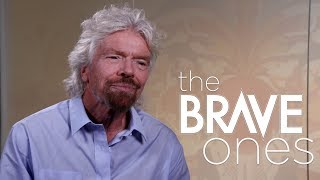
“…company's all about finding the right people and inspiring those people…”TED conference talk, 2000s · 1:30
Leadership is mainly about people
Branson’s basic view is simple: the heart of leadership is not hierarchy, control, or technical brilliance. It is choosing the right people, inspiring them, and helping them do their best work. He treats that as the core skill that transfers across industries, which is why he argues that if you can run one company, you can run any company.12345
That emphasis explains why he describes people skills as the most important leadership skill. In his telling, companies rise or fall less on the leader having all the answers than on the leader’s ability to attract talent, trust talent, and create energy around a shared mission.625
“…company's all about finding the right people and inspiring those people…”TED conference talk, 2000s · full transcript →
Listen hard, especially to the front line
Branson puts listening near the center of leadership. He says a leader should listen to staff, listen to customers, take notes on what is not working, and then follow through. For him, listening is not passive; it is how leaders notice problems early and turn small observations into better decisions.78
His standard is practical rather than abstract. He pays attention to the little details customers notice, and he connects those details to whether a company becomes exceptional or merely average. That means good leadership is visible in service quality, responsiveness, and the discipline to act on feedback.98
He also links listening with maturity and judgment. Leaders improve when they absorb more than they speak, choose their words carefully, and look for the best in people rather than rushing to dismiss them.10
Delegate to people better than you
Branson does not present the leader as the smartest operator in the room. He openly frames his own style around delegation, shaped in part by dyslexia and by learning early that he needed capable people around him. Instead of trying to master everything himself, he built by surrounding himself with people who were stronger than he was in specific areas.1112
This leads to a very clear leadership rule: do not cling to tasks other people can do better. Delegate, let specialists lead in their domain, and focus your own effort on judgment, encouragement, and direction. That is one reason he says people skills matter so much.612
He also favors giving people room to grow inside the company. Promoting from within, in his view, strengthens motivation because people can see a future for themselves and believe their contribution will be recognized.13

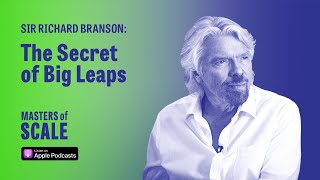
“I was 15, I was dyslexic, and I needed people better than me to be around.”Masters of Scale interview, 2022 · full transcript →
Lead with purpose: make life better for customers
Branson’s leadership philosophy is tightly tied to purpose. He defines business as coming up with an idea that makes other people’s lives better, and he repeatedly says Virgin entered new sectors when customers were being badly served. In other words, leadership begins with spotting a real problem and deciding to fix it.141516
That purpose shapes how he thinks about growth. Virgin did not expand for the sake of empire; it moved into industries where the experience was poor and where a better team, better service, or better design could make a meaningful difference.165
This also explains his insistence on reputation and quality. If a leader asks people to trust a brand, that trust has to be earned through better experiences, not slogans.1718
Optimism and fun are leadership tools, not extras
Branson does not separate performance from emotional tone. He believes a positive attitude is essential in life, and he extends that into management: humor, enjoyment, and energy help people do better work and make a company more resilient.192021
He even uses a vivid image for how to treat people: nurture them as you would a flower. The point is not softness for its own sake, but the idea that people respond to appreciation, encouragement, and belief more than to constant criticism.22
His own language around action is also deliberately energizing. He favors a spirit of forward motion and experimentation, paired with the idea that life and business are long learning processes. That outlook helps leaders recover from mistakes instead of becoming paralyzed by them.23242526

“…a positive attitude is essential in life…”Business Secrets interview at Necker Island · full transcript →
Take bold risks, but protect people and keep learning
Branson is often associated with daring, but his leadership view is not reckless. He recognizes how thin the line can be between success and failure, and when he took big risks, he often describes them in terms of defending the company, protecting jobs, and preserving what the team had built.272829
He also argues that standing still is dangerous. Virgin survived because it adapted, diversified, and kept moving into new areas rather than depending on one aging business. For leaders, the lesson is to stay curious, challenge the status quo, and avoid mistaking stability for safety.30315
Underneath the boldness is a learning mindset. He sees life as a long education, and that makes experimentation part of the job of leading.2526
Branson on leadership, in his own words
“…company's all about finding the right people and inspiring those people…”
“I think being a really good listener is one of them things…”
“If you get the little details right, it makes for an exceptional company over an average company.”
“I was 15, I was dyslexic, and I needed people better than me to be around.”
“…to treat people like you would a flower…”
Where to watch
 Richard Branson on Entrepreneurship and Leadership: Build, Smile, Delegate2024 · 58 min · full transcriptBest quick entry to Branson’s leadership style: purpose, optimism, humor, and delegation.
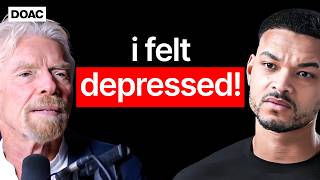 Richard Branson on Virgin Growth Strategy: Diversify, Delegate, Win2023 · 76 min · full transcriptShows how his leadership works in practice through delegation, customer detail, and adaptation.
 Richard Branson on Entrepreneurial Leadership: Culture, Risk, and Purpose2022 · 26 min · full transcriptStrong summary of his belief that leadership is about finding, inspiring, and drawing out the best in people.
 Richard Branson on Leadership and Virgin: Building, Risk, and Purpose2019 · 24 min · full transcriptUseful for his emphasis on listening, judgment, and entering sectors only when customers are badly served.
 Richard Branson on Entrepreneurship: Building, Risk, and Purpose26 min · full transcriptGood for the broad philosophy: leadership as learning, people selection, and challenging the status quo.
Questions people ask
- What did Richard Branson say about customer service and the little details?
- What did Richard Branson say about dyslexia and delegation?
- What does Richard Branson think makes great leadership?
- How does Richard Branson choose and promote people in his company?
- Why did Richard Branson sell Virgin Records to support Virgin Atlantic?
Sources
Every quote above, word for word from the transcripts. Numbers match the text.
“…if you can run one company, um, you can really run any company…”
“…company's all about finding the right people and inspiring those people…”
“…if you can run one company, you can really run any companies…”
“…companies are all about finding the right people, inspiring those people…”
“I mean, I think I learned early on that if you can, uh, if you can run one company, um, you can really run any company. I mean, company's all about finding the right people and inspiring those people, um, uh, you know, drawing out the best in people and, um, and I'm, uh, I just love learning and I'm incredibly inquisitive, and, um, I love taking on the, you know, the status quo and trying to turn it upside down. So, um, so I've seen life as one long, one long learning process, and if I see, you know, if I fly on somebody else's airline and find the experience is not a pleasant one.”
“I think I think the people skills is is is the most important, skill.”
“I think being a really good listener is one of them things…”
“So I think, you know, every every little detail, I think, we, the team have got right at at Virgin, and if you get the little details right, you know, then collectively, you... It makes for an exceptional company over an average company. And, you know, if I'm on a Virgin plane, or in any Virgin company, I'll have my notebook, I'll take notes, I'll listen to it, listen to the staff, listen to the customers, you know, and then act on it when I get to the far end, and and and then be in touch... Back in touch with the people who, you know, gave me the ideas to thank them and tell them what we've done. And and and I think a good a good leader has to be a good listener.”
“If you get the little details right, it makes for an exceptional company over an average company.”
“You know, you realize that, you know, why they've become elders is because, you know, they've spent their lifetime listening and absorbing, and then, you know, only speaking, you know, choosing their words carefully. I think loving people, I mean, I think, you know, a genuine love of a genuine love of everybody, you know, and, you know, looking for the best in people. I mean, even, you know, even if they're being a pain, you know, you can normally find the best in pretty well anybody.”
“I was 15, I was dyslexic, and I needed people better than me to be around.”
“I think that... Well, first of all, I I I would like to say I'm proud of being a dyslexic thinker, and I'm delighted that dyslexic thinking is now becoming almost part of the vocabulary. And I'm pleased to, you know, talk to many dyslexic kids over the years to try to make them realize that, you know, do not do not be worried about it. You know, look at look at the areas that you that you enjoy and concentrate on those. The areas that you're not great at, you you know, either that you'll catch up later on in life, or, you know, if you're gonna start a business, you can delegate and find other people who can deal with those.”
“Well, uh, I, um, I'm a great believer in promoting from within the company and not necessarily promoting from outside. We do, we do on occasions bring people from outside, but the advantage of promoting from within the company is, uh, you know, people from within the company know that they've got a chance of, you know, growing with the company, um, and, uh, and, and, you know, and it's, can be quite demoralizing if you keep bringing people in from outside above people, and, um, so by the time we've actually promoted somebody, we know their weaknesses, we…”
“What is a business? A business is simply somebody coming up with an idea to make other people's lives better.”
“An entrepreneur is simply coming up with an idea that makes other people's lives better.”
“…the only reason we would go into a new sector is if we felt it was being badly run…”
“…all you have in life is your reputation…”
“I like to think it stands for quality…”
“…a positive attitude is essential in life…”
“The more humor you can have, the better.”
“If it's not fun, we don't do it.”
“…to treat people like you would a flower…”
“Screw it, let's do it.”
“Screw it. Let's do it.”
“I’ve seen life as one long, one long learning process…”
“I see life as the one long university education I never had…”
“There's a very thin dividing line between success and failure…”
“…there's a very thin dividing line between success and failure…”
“Well, I think that, um, you know, there's a very thin dividing line between success and failure, and I think if you start a business without financial backing, um, you're likely to, you're likely to go the wrong side of that dividing line. Um, the, uh, we had, um, we were being attacked by British Airways. They were trying to put, um, our airline out of business, and, um, and they launched what’s become known as the dirty tricks campaign. And, um, and I realized that, you know, the whole empire was likely to come crashing down unless I chipped in a chip. And, uh, and in order to protect the jobs of the people who work for the airline and protect the jobs of the people who work for the record company, um, I had to sell…”
“If we'd stayed still and only focused on one business, we wouldn't have a business today.”
“If we were still in record shops, we would have been bust.”
How this guide was made: drafted with AI from the full transcripts of the recordings cited, then checked: every quotation must match a transcript word for word and be the speaker's own words, and an independent review gates accuracy. Methodology and corrections.