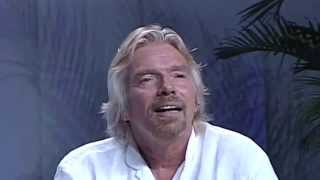
Richard Branson on Failure & Resilience
Richard Branson treats failure as part of action: say yes, protect the downside, learn fast, and keep your reputation and people intact when things go wrong.
- He sees failure as inseparable from trying bold things, especially in entrepreneurship.
- Resilience means acting anyway, but reducing the downside before you leap.
- He treats life and business as a long learning process, not a straight line of wins.
- In hard moments, he focuses on protecting jobs, quality, and reputation.
- He also extends resilience to people: second chances can unlock strong work and new beginnings.

Failure is the price of saying yes
Branson’s basic view is that a fuller life comes from saying yes to opportunities instead of shrinking from them. That attitude naturally brings mistakes, awkward attempts, and the real chance of failing, but he sees that as better than standing still.123
He does not present bold action as polished or safe. He says entrepreneurial action often requires being willing to look foolish, and he links the entrepreneurial mindset directly to not being ruled by fear of failure.456
Applied practically, this means resilience starts before the setback. It starts with a willingness to begin before certainty arrives.78
Resilience is not recklessness; it is calculated risk
Branson is not arguing that people should ignore risk. He repeatedly pairs boldness with protecting the downside, which is why his version of resilience is tougher and more disciplined than simple optimism.79
He describes a very thin line between success and failure, especially when a business is underfunded or under attack. That is why he favors calculated risks over blind leaps: move forward, but structure the move so a bad outcome does not destroy everything.101112
This is the key practical lesson in his approach. If you want to recover from setbacks, do not bet in a way that one miss ends the game. Build room to survive your own experiments.57
Setbacks are part of a long learning process
Branson frames his career less as a chain of masterstrokes and more as ongoing education. He says he has seen life as one long learning process, which turns failure from a verdict into feedback.1314
That lens matters because it changes how you interpret hard moments. A failed attempt, a wrong call, or a crisis is not proof you should stop; it is part of learning how to build better judgment.135
His own story reinforces this pattern. He points to hands-on experience, curiosity, and learning by doing rather than waiting for perfect credentials or perfect plans.14
“I’ve seen life as one long, one long learning process…”TED conference talk, 2000s · full transcript →
In a crisis, protect people and your reputation
For Branson, resilience is not just inner toughness. It also shows up in what you refuse to sacrifice when things get difficult. He says reputation is what you ultimately have, so how you behave under pressure matters as much as whether you win.1617
He gives a concrete standard for hard business decisions: protect jobs, defend the company when necessary, and avoid letting one crisis bring the whole thing down. In his account of pressure on Virgin Atlantic, the point was not ego alone but keeping the business and its people alive.12
This makes his idea of resilience moral as well as strategic. Endurance is not merely surviving personally; it is carrying responsibility for staff, customers, and the trust attached to your name.1816
“Well, I think that, um, you know, there's a very thin dividing line between success and failure, and I think if you start a business without financial backing, um, you're likely to, you're likely to go the wrong side of that dividing line. Um, the, uh, we had, um, we were being attacked by British Airways. They were trying to put, um, our airline out of business, and, um, and they launched what’s become known as the dirty tricks campaign. And, um, and I realized that, you know, the whole empire was likely to come crashing down unless I chipped in a chip. And, uh, and in order to protect the jobs of the people who work for the airline and protect the jobs of the people who work for the record company, um, I had to sell…”TED conference talk, 2000s · full transcript →
Second chances are part of resilience too
Branson’s thinking about resilience goes beyond entrepreneurs and extreme adventures. He argues that people who have gone badly off track can still rebuild if they are given dignity, trust, and work.1920
That view comes from his belief that a second chance can change the trajectory of a life. He suggests that practical opportunity matters more than permanent stigma, and that work can restore both stability and self-respect.2019
This expands his idea of failure. A setback should not become a life sentence if someone can learn, contribute, and improve other people’s lives.2122

“…if you can give people the dignity of work when they leave prison…”TEDxIronwoodStatePrison talk, 2013 · full transcript →
Branson on failure & resilience, in his own words
“I’ve seen life as one long, one long learning process…”
“…if you can give people the dignity of work when they leave prison…”
Where to watch
 Richard Branson on Calculated Risk Taking: Say Yes and Go for It2016 · 26 min · full transcriptBest single overview of how Branson links bold action, fear of failure, and calculated risk.
 Richard Branson on Entrepreneurship: Building, Risk, and Purpose26 min · full transcriptShows how he turns business crises and setbacks into a long-term learning philosophy.
 Richard Branson on Second Chances: Why Prison Reform Matters2013 · 18 min · full transcriptExtends resilience beyond business into second chances, dignity, and rebuilding lives.
 Richard Branson on Risk Taking: Betting Virgin Records on an Airline2025 · 45 min · full transcriptUseful for his practical method of making a big bet while limiting the downside.
 Richard Branson on Adventure and Resilience: Balloons, Airlines, Space2025 · 74 min · full transcriptGood for seeing how near-disasters, instinct, and optimism shaped his personal resilience.
Questions people ask
- What did Richard Branson say about saying yes and taking risks?
- What did Richard Branson say about second chances after prison?
- What does Richard Branson say entrepreneurship is really about?
- Why did Richard Branson keep taking on big challenges?
- What did Richard Branson say about taking risks in life?
- What did Richard Branson say prisoners should do to prepare for life after prison?
Sources
Every quote above, word for word from the transcripts. Numbers match the text.
“…life’s a lot more fun when you say yes, not when you say no…”
“I think, um, yeah, I do think life's, life's a lot more fun if you, if you, if you say yes.”
“I think if the, if the right challenge comes up, I will, I will still jump in and say yes.”
“…you have to be a little bit brave and stupid and foolish to do that…”
“…not having a fear of failure is at the heart of entrepreneurialism…”
“Well, I suppose I've stuck my neck out a lot of times. I've learned that life’s a lot more fun when you say yes, not when you say no. Sometimes you thought that and your face won’t do it that way. Look, sometimes you've got to make a decision, get on and give it a go. You have to be a little bit brave and stupid and foolish to do that, and fortunately we've got away with it more often.”
“In the end, you've got to, I think, take calculated risks in life; otherwise, you're going to, you know, sit it off mothballs or all they do and do nothing. And life is a hell of a lot more fun if you say yes rather than say no.”
“Screw it. Let's do it.”
“If it's not fun, we don't do it.”
“There's a very thin dividing line between success and failure…”
“…there's a very thin dividing line between success and failure…”
“Well, I think that, um, you know, there's a very thin dividing line between success and failure, and I think if you start a business without financial backing, um, you're likely to, you're likely to go the wrong side of that dividing line. Um, the, uh, we had, um, we were being attacked by British Airways. They were trying to put, um, our airline out of business, and, um, and they launched what’s become known as the dirty tricks campaign. And, um, and I realized that, you know, the whole empire was likely to come crashing down unless I chipped in a chip. And, uh, and in order to protect the jobs of the people who work for the airline and protect the jobs of the people who work for the record company, um, I had to sell…”
“I’ve seen life as one long, one long learning process…”
“I mean, I think I learned early on that if you can, uh, if you can run one company, um, you can really run any company. I mean, company's all about finding the right people and inspiring those people, um, uh, you know, drawing out the best in people and, um, and I'm, uh, I just love learning and I'm incredibly inquisitive, and, um, I love taking on the, you know, the status quo and trying to turn it upside down. So, um, so I've seen life as one long, one long learning process, and if I see, you know, if I fly on somebody else's airline and find the experience is not a pleasant one.”
“…all you have in life is your reputation…”
“…your reputation is all you have in life.”
“…company's all about finding the right people and inspiring those people…”
“…if you can give people the dignity of work when they leave prison…”
“That moment, just being in prison, made me first of all realize I didn't like the idea of going to prison. So, from then on I think I've managed to make sure I make decisions where I can sleep well at night and avoid that. But I've also just learned that if you give people a second chance in life, and I had a second chance, I wouldn't have been employing 60,000 people, I suspect, if I had spent 2 or 3 months in prison. If you give people a second chance they can do great things. And I think if you can give people the dignity of work when they leave prison, if you don't just dump them on the street and tell them to make their own way to the nearest city.”
“And B, it's going to give them that much better a chance of getting a good job when they get out. It may even turn them into an entrepreneur. Basically an entrenpreneur is somebody who comes up with an idea that can improve other people's lives and make their lives better. That's all a business is. And I think, you people got time here to think about when they get out, do they have a hobby? What could they do to make other people's lives better? And possibly, rather than working for somebody else people here could actually start a business when they leave. And start in a small way. I started literally in a really small way.”
“An entrepreneur is simply coming up with an idea that makes other people's lives better.”
How this guide was made: drafted with AI from the full transcripts of the recordings cited, then checked: every quotation must match a transcript word for word and be the speaker's own words, and an independent review gates accuracy. Methodology and corrections.