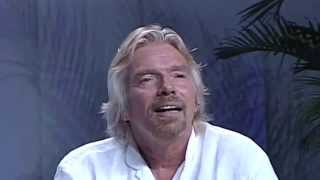
Richard Branson on Risk
Richard Branson treats risk as something to embrace boldly, but only after shaping the odds so the downside is limited and the upside can compound.
- Say yes more often; a fuller life and many opportunities start there
- Take calculated risks, not reckless ones; protect the downside before you leap
- Do not fear failure; entrepreneurship depends on acting despite the chance of looking foolish
- Back bold bets with great people, learning, and a product that is genuinely better
- Protect your reputation as carefully as your finances; it shapes long-term opportunity

“…life’s a lot more fun when you say yes, not when you say no…”CNBC Brave Ones interview, 2016 · 0:01
Risk starts with saying yes
Branson’s first principle is simple: opportunity usually belongs to people who move toward it, not away from it. He repeatedly frames life as more rewarding when you say yes, and he ties that directly to the willingness to act before certainty arrives123.
That does not mean he thinks boldness looks polished. He sees useful risk-taking as requiring a tolerance for seeming foolish, especially when you are trying something new that other people do not yet understand45.
He also links this attitude to entrepreneurship itself. In his view, fear of failure stops people before they discover what might work, while a willingness to try opens the door to ventures that can redefine an industry67.
“…life’s a lot more fun when you say yes, not when you say no…”CNBC Brave Ones interview, 2016 · full transcript →
The real trick is to cap the downside
What makes Branson’s approach distinctive is that his boldness is paired with downside protection. He says the most important thing when starting a business is to think hard about how to protect the downside, and he treats that as the foundation of smart risk-taking rather than an afterthought89.
His airline launch is his clearest example. He structured the early Virgin Atlantic bet so that failure would be survivable, limiting the potential loss to a manageable slice of Virgin Records’ profits rather than risking everything on a single move10.
This is the practical lesson: do not wait for risk to disappear. Instead, shape the bet so that if you are wrong, you stay in the game; if you are right, you have room to grow810.
Bet big when the customer experience is obviously broken
Branson is most willing to take risk when he believes an industry is failing customers. He does not describe his ventures as random leaps; he sees them as responses to stale incumbents and unpleasant experiences that create an opening for a better product11.
That is why an airline made sense to him even when others thought it was absurd. He believed flying had become joyless and badly run, so a newcomer focused on quality, entertainment, and delight could stand out and survive713.
His standard is not novelty for its own sake. He is more confident taking a risk when the new business can credibly become best in its field, because he believes excellence improves the odds of survival14.
“I think the thing that put Virgin on the map was when we bought one secondhand 747…”CNBC Brave Ones interview, 2016 · full transcript →
Risk becomes manageable when great people carry it
Branson does not think risk is handled by one heroic founder making every decision. He returns again and again to the idea that companies are built by finding the right people, inspiring them, and drawing out their best work151611.
This matters for risk because entering a new industry always means facing what you do not know. His answer is not to become the expert in everything, but to build teams that can learn fast, execute well, and challenge the status quo intelligently171811.
Seen this way, personnel is not separate from risk management. Hiring well, delegating, and staying curious are some of the main ways Branson reduces uncertainty while still moving aggressively151819.
Protect reputation as fiercely as capital
For Branson, risk is never only financial. He treats reputation as a core asset, arguing that in business and life it is what endures across repeated dealings with the same people and partners2021.
That belief changes how he thinks about hard decisions. A risk that might produce short-term gain but damages trust is a bad trade, because it weakens future partnerships and the brand’s long-term strength20.
It also explains why he sometimes took painful steps to protect companies and jobs when the line between success and failure was thin. In his view, leadership under risk includes defending the enterprise when collapse would harm employees, customers, and the name attached to the business2324.

“…all you have in life is your reputation…”TED conference talk, 2000s · full transcript →
Keep risk tied to energy, fun, and resilience
Branson’s appetite for risk is sustained by enjoyment. He believes ventures should have a sense of fun and play, and he has said plainly that if something is not fun, Virgin does not do it2526.
That may sound soft, but it serves a hard purpose. Enjoyment helps people persist through uncertainty, and persistence matters because the line between success and failure can be very thin2327.
His broader mindset is optimistic and opportunity-focused. He tends to look at situations as openings, stay positive under pressure, and keep moving rather than dwelling on fear or regret2827.
Branson on risk, in his own words
“Take great chances and yet predict or protect the downside…”
“…life’s a lot more fun when you say yes, not when you say no…”
“…all you have in life is your reputation…”
“There's a very thin dividing line between success and failure…”
Where to watch
 Richard Branson on Entrepreneurship and Risk: How He Caps the Downside2017 · 88 min · full transcriptBest for his practical method: make the leap, but structure the bet so failure is survivable.
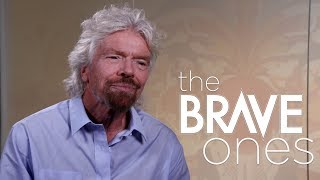 Richard Branson on Calculated Risk Taking: Say Yes and Go for It2016 · 26 min · full transcriptBest short statement of the yes-first mindset and why fear of failure kills entrepreneurship.
 Richard Branson on Risk Taking: Betting Virgin Records on an Airline2025 · 45 min · full transcriptBest for the Virgin Atlantic decision and how he trusted instinct while limiting downside.
 Richard Branson on Entrepreneurship: Building, Risk, and Purpose26 min · full transcriptBest for seeing risk as part of a long learning process powered by people and reputation.
 Richard Branson on Creativity and Entrepreneurship: Take Bold Risks2016 · 40 min · full transcriptBest for the formula of bold chances plus downside protection, applied across ventures.
Questions people ask
- How does Richard Branson cap the downside when starting a new business?
- What did Richard Branson say about saying yes and taking risks?
- What does Richard Branson say about protecting reputation in business deals?
- What does Richard Branson say entrepreneurship is really about?
- Why did Richard Branson keep taking on big challenges?
- Why did Richard Branson sell Virgin Records to support Virgin Atlantic?
Sources
Every quote above, word for word from the transcripts. Numbers match the text.
“…life’s a lot more fun when you say yes, not when you say no…”
“In the end, you've got to, I think, take calculated risks in life; otherwise, you're going to, you know, sit it off mothballs or all they do and do nothing. And life is a hell of a lot more fun if you say yes rather than say no.”
“I think if the, if the right challenge comes up, I will, I will still jump in and say yes.”
“…you have to be a little bit brave and stupid and foolish to do that…”
“Well, I suppose I've stuck my neck out a lot of times. I've learned that life’s a lot more fun when you say yes, not when you say no. Sometimes you thought that and your face won’t do it that way. Look, sometimes you've got to make a decision, get on and give it a go. You have to be a little bit brave and stupid and foolish to do that, and fortunately we've got away with it more often.”
“…not having a fear of failure is at the heart of entrepreneurialism…”
“I think the thing that put Virgin on the map was when we bought one secondhand 747…”
“Take great chances and yet predict or protect the downside…”
“The most important thing when you start a business is thinking about protecting the downside.”
“To protect the downside, so I knew that the worst that could happen would be, you know, maybe six months of the profits of Virgin Records we would lose if it didn't work out. And, Boeing agreed to it. And, you know, when the end of the first year came, instead of handing the plane back, people loved Virgin Atlantic, and, you know, we had a... You know, you know, people flocked to it, and we had a spirit about it, which is very different from British Airways. We ended up buying a couple more seven... Secondhand seven four sevens from Boeing. And and then, you know, over the years since, we bought, some hundreds of planes from, you know, for the three or four different airlines we set up over the years from Boeing.”
“I mean, I think I learned early on that if you can, uh, if you can run one company, um, you can really run any company. I mean, company's all about finding the right people and inspiring those people, um, uh, you know, drawing out the best in people and, um, and I'm, uh, I just love learning and I'm incredibly inquisitive, and, um, I love taking on the, you know, the status quo and trying to turn it upside down. So, um, so I've seen life as one long, one long learning process, and if I see, you know, if I fly on somebody else's airline and find the experience is not a pleasant one.”
“I like to think it stands for quality…”
“…my whole attitude to life is, you know, if you create a new business that's the best in its field, it's likely to survive.”
“…company's all about finding the right people and inspiring those people…”
“…companies are all about finding the right people, inspiring those people…”
“…if you can run one company, um, you can really run any company…”
“I’ve seen life as one long, one long learning process…”
“…if you can run one company, you can really run any companies…”
“…all you have in life is your reputation…”
“…your reputation is all you have in life.”
“There's a very thin dividing line between success and failure…”
“Well, I think that, um, you know, there's a very thin dividing line between success and failure, and I think if you start a business without financial backing, um, you're likely to, you're likely to go the wrong side of that dividing line. Um, the, uh, we had, um, we were being attacked by British Airways. They were trying to put, um, our airline out of business, and, um, and they launched what’s become known as the dirty tricks campaign. And, um, and I realized that, you know, the whole empire was likely to come crashing down unless I chipped in a chip. And, uh, and in order to protect the jobs of the people who work for the airline and protect the jobs of the people who work for the record company, um, I had to sell…”
“If it's not fun, we don't do it.”
“I think play is really important.”
“If you're gonna survive, the only way you're gonna survive is by keeping focused, by staying positive…”
“I look at everything as an opportunity.”
How this guide was made: drafted with AI from the full transcripts of the recordings cited, then checked: every quotation must match a transcript word for word and be the speaker's own words, and an independent review gates accuracy. Methodology and corrections.