Richard Branson on Calculated Risk Taking: Say Yes and Go for It

What Branson talks about
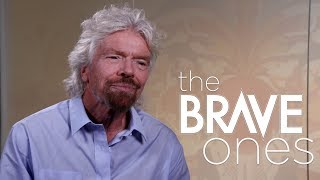
Richard Branson gave this interview for CNBC’s The Brave Ones in 2016 about calculated risk taking, building Virgin, and using judgment, delegation, and timing to manage business ventures.
Also known as: CNBC Brave Ones interview; Sir Richard Branson, Founder of Virgin | The Brave Ones; The Brave Ones (CNBC International Live).
Richard Branson says his life and business success came from saying yes, taking chances, and being willing to look “brave and stupid and foolish.” He connects that mindset to early ventures, from student media to records, airlines, and beyond.
He also emphasizes that risk works best with judgment: protect yourself, find good people, delegate well, and know when to exit failing businesses. For Branson, the Virgin brand grew by doing attention-grabbing things with clear purpose and a fun, adventurous spirit.
Branson speaks throughout, with a narrator/interviewer introducing the profile and context.
In his words
“Life’s a lot more fun when you say yes, not when you say no”
“You have to be a little bit brave and stupid and foolish to do that”
“I think the thing that put Virgin on the map was when we bought one secondhand 747”
“Not having a fear of failure is at the heart of entrepreneurialism”
“The number one thing he will say to us is, is enough fun”
Key points
- Branson argues that life is more rewarding when you say yes and give things a go.
- He traces his entrepreneurial drive to an adventurous childhood and a mother who pushed independence.
- His early businesses taught him to take risks, but also to protect himself from downside.
- Virgin was built through bold, brand-defining moves like discounted records, a record label, and launching an airline.
- He says fear of failure is central to entrepreneurship, but practical judgment matters when businesses no longer fit the brand.
- He stresses delegation, hiring strong people, and keeping a clear end vision while others handle execution.
- He frames adventure, space, and public causes as extensions of the same instinct to push limits and do useful things.
Full transcript: Richard Branson, The Brave Ones interview (2016)
[music] Well, I suppose I've stuck my neck out a lot of times. I've learned that life’s a lot more fun when you say yes, not when you say no. Sometimes you thought that and your face won’t do it that way. Look, sometimes you've got to make a decision, get on and give it a go. You have to be a little bit brave and stupid and foolish to do that, and fortunately we've got away with it more often. We are excited
to have Sir Richard Branson, founder of Virgin Group, here with us today to light the Empire State Building. He's a rockstar within the business world. Five years ago, with one secondhand 747, Richard Branson's one of the bravest people I've ever met. We go into the airship. Yeah, it does not lend some being limited by what came before it. Abilities, yeah. He certainly doesn't let other people define you. You know, basically these guys, you need like there's not a lot of return. Do us the honor of actually lighting the
tower for us. I think Rich's childhood was absolutely key in making him who he is today. His father was in the Desert Rats during the Second World War, fighting as a tank commander. His mother Eve had a huge influence on him. My mum is a very adventurous person. She very much felt that she wanted us to stand on our own two feet and not to be multi-coloured as you call it. She was one of the world's first ever air stewardesses on an aircraft and there
was the moment when, and I was four, that we were going to Branson’s house in Devon, and about three miles before we got there, she—I think I must have been misbehaving or something in the back of it—she just pushed me out of the car and said, "Right, you make their own way." Right from a very early age, he was a classic schoolboy adventurer and would go places where others would fear. Detroit at age 10, myself and Richard—but really Richard was trying to make extra money to increase his pocket money more than anything else—and he kept on coming up with ideas. Somebody told me that bad regards bred a lot, and so I thought, well, if I get a pair of odd regards and and
they bred quickly. We built the cage and we bought a bunch of regards, and indeed they did breed. But we had to go away to school, and when we came back the catwalk, so to speak, had got them, so wasn't a hugely successful venture. So then we tried Christmas trees because for every foot of Christmas trees grows you could get a pound a foot. Who can eat a lot of Christmas trees? And the rabbits got in and ate them all. So our first two business ventures weren't very successful. We just learn bit by bit you can take risks, but also you need to protect yourself a little bit from the things that can happen and and it's the 60s. People, the young people want to—the boys cheering crowds of hundreds of thousands
Princess Margaret vines to Westminster Abbey on her wedding day like a malignant broke the wall, crowded inside Berlin, three thousand screaming teenagers are at New York's Kennedy Airport. The Greek, you guessed it, the people's. When I was about fourteen, the Vietnamese war started. We decided to start a magazine to campaign against it, a magazine to give a voice to young people. It was an original idea because there was no national magazine for students. We were having to sell advertising, we were having to attract big contributors, and again, that took a lot of guts. Yeah, I was working out of the school phone box where you had to put money in, so instead of, instead of putting the money in, I just rang up your pressure to put
the money in. The operator Kent became my secretary. I'm hello, I have Mr. Branson that will go straight through to Coca-Cola or Pepsi without paying. I soon learned the art that if I let Coke know that Pepsi would definitely and that Coke would then jump in and and and and my education started. It was an exciting time and the headmaster called me in one day and said, you know, either you leave school and run the magazine or you stop running the magazine and you stay at school, and so I said, thank you for that choice, I'm off to run the magazine. Richard made an incredibly bold move to leave school. Obviously his parents didn't want him to leave, but he made the decision that he just wasn't learning that I'm Dyslexic, so I was hopeless at
conventional schooling. I remember walking around the garden with my dad the first time I walked around he tried to persuade me out of it. Then the second time around he said, look, if you, if you, if you've really made up your mind on reflection you know, when I left college at 22 I had no idea what I wanted to do. You're 15, you know what you want to do, so, you know, give it a go and if it doesn't succeed we'll try to get you an education again. And I could have given the biggest, biggest kiss ever for his understanding. He left school that's 15 and his headmaster said when he left school, "Branson, you're either going to become a millionaire or go to jail," and all he had was a bunch of mates around him. None of them really knew how to start a
business, none of them really knew how to run a magazine and they managed to secure great names in terms of Vanessa Redgrave, Mick Jagger, to participate in this magazine. The student magazine was profitable in the end, but it was proving a tough backland. We were really looking for other ways to make money. He looked at the mail-order business. He saw that you could buy records cheaper and he was like, "Okay guys, this is gonna be our next venture." I was sitting in a basement with a bunch of girls. We were all about 15, 16 years old and trying to think of a name for a mail-order company, and then one of the girls said, "For all virgins, why did
You call it Virgin, we all went, "Yes, birds," it sounded good. So we went, we went with Virgin. You know, it's a great name, you know, it's fresh, it hasn't been done before. It's, in those days, slightly risque. I actually found it very risque. The registry office wouldn't register the name. I had to have the dictionary, and I looked up the word "virgin"—pure and untouched, unblemished. So I sent all these words to the registry office, and finally, they relented and registered the brand. So we were basically the first people to go in and offer discounted records, records at cheaper prices than anybody could get elsewhere. So what happened was, we had an order for records from Belgium. Very
excited, our first export order for music. And then we drove down. The authority said you don't have a car name. Drove back to England, and we suddenly thought, "Well, majority will assume that we've exported them. We could sell them in Ingram, you don't have to pay the 35% tax." And foolishly, we did that. And then we did it again. And then we got caught. He ended up in jail overnight. His mother, Eve, came to him and she had to put the family home up for mortgage so that he could come out on bail. And ever since then, he said he'd learned his biggest lesson. Fortunately, I was still a teenager, but it taught me it's better to sleep well at nights than then take off, who take on authority and and
that almost came to her to a very end because there was a mail order strike. So we had to find a way to keep going. I've heard a tape of a fifteen-year-old, and I thought, "Somebody must put this out." He doesn't have any vocals on it. And I took it to eight record companies, and all of them said they liked it but they wouldn't put it out without singing on it. So I thought, screw it, let's do it. We'll form a record company, going out with a record that had no lyrics, no song structure, was hugely risky. We had sort of protected ourselves to an extent by recording it in our own studios, doing everything on a very low-cost basis, so
that if it didn't work, you know, we would be fine. This young lad who made the record was called Mike Oldfield and (music) shooting the girls. It became one of the best-selling albums of the decade. We've gotten better in the music into the Exorcist, and that got into number one in America, and it really helped kickstart the record paper. So he would pick the artists that he felt were innovative, and of course, he threw on the Sex Pistols for might. One of you feel that we like some contagious disease, which at the time you couldn't get more rebellious, more revolutionary than that.
Classical early (applause) (music). We've done a lot of really fun challenges. We decided to try to be the first to cross the Atlantic in a hot-air balloon. Everything went wrong. I'd been pulled out of the sea four or five times by helicopters. I think some of these sort of adventure things have helped get from the Virgin that sort of exciting image which really sort of sets it apart from someone like British Airways or other people that we compete with. I
mean, when I was 15, 16, I had nothing to lose. I had no mortgage, didn't have children, so perfect time to take a risk and stick your neck out. So he would pick the artists that he felt were innovative, and of course, he signed on The Sex Pistols, which is the time you couldn't get more rebellious, more revolutionary than that. And that's how he wanted to create the brand. He wanted them to stand out from all the other record companies by saying, "We are for the young people. We are him. We are trendy, and we are gonna set boundaries." We needed to get profile, and
one of the great ways to get profile is to do things that are attention-getting. So we were always looking up ways to get the Virgin name. I think the thing that put Virgin on the map was when we bought one secondhand 747. We took on British Airways, Pan Am, TWA with their hundreds of planes. It was a genuinely disruptive thing to do. The airline industry was totally regulated in the 1980s, and people didn't start airlines because the big monopolistic US national carriers and European state-owned carriers, you know, had
normally destroyed any opposition. People thought we were absolutely off our heads. I could almost say mad. So a lot of my friends thought, "My God, why are you going to work there? He's that guy that's just started the airline. It's never gonna work. All he's got is a record company." People around the record company were distraught. Why was I going to put this very successful record company at risk and guarantee airline business every day? There were things happening that were putting at risk what was already being done. So all of the time you thought of, feel the whole thing collapse like a pack of cards. I hated flying on other people's airlines. Owning it, you know, particularly appreciate ways it was there. It was stuffy, boring. So of
course, when he went head to head with British Airways, he had to really pull out everything that he had. And they wanted to get rid of him. They wanted to get rid of Virgin, and there was Richard. It was a David and Goliath situation. They launched the dirty tricks campaign against us to try to drive us out of business. I went to extraordinary lengths to try to put us out of business. You know, we somehow survived, and when we took them to court, and it did mean that I had to sell my record company in order to make sure that we had the financial muscle to combat. And I mean, we've got, you know, the five hundred sixty million pounds which we can then spend on building up on newer companies. And in
Particular, I suppose, the airline and trying to make sure that that can compete on a worldwide basis. Richard was a rare breed in a world that had been dominated by socialist politics and then dominated by Thatcherism in the early part of it. He was an entrepreneur that had come through in the '70s, and there weren't many of them around. We won the biggest libel damages in history; it was a turning point for Virgin Atlantic. I think that British Airways realized that messing with us, we would fight. So while his company was taking risks and also attracting all the young people, he himself is actually representing what his brand is, and that's adventure. He wasn't one of these sort of backseat adventurers who would simply fund things because he thought having his
Personality at the front of it was actually good for the business, and it was—they had set a record pace since leaving New York City Monday. We decided to bring the Blue Riband cut back from America to England by seeing if we could be the fastest boat across the Atlantic. That he was out at sea doing something very dangerous while his wife was pregnant with a second child. Well, we sank about two-thirds of the way across. Yeah, one of the most emotional moments I had was actually when we did get rescued out of the sea by this banana boat, and this lady came out. He said, "You know, did you know that you have a son?" I said, "No." "Would you like to see a picture of him?" And, you know, there she shows me a picture of him on the front.
Page of the paper. Well, I know it created a lot of tension between him and especially John, who's been with him for decades, that he would go on risking things while having young children and now having grandchildren. Sometimes he wrote letters to them, you know, what happens if he didn't quite make it. He wrote these very personal letters to his wife, to his children just in case. If you have children and you want to, you know, push the limits, are you being selfish? All I know is that family is really important to him. Balancing that with the things that he likes to do and things he wants to achieve is not easy, is it?
Is it daring? Is it bravery? Or is it because you know, when we cover it, we're going to mention the Virgin name? Richard, of course, loves challenges. He wants to put the Virgin brand on all sorts of industries, and of course, with trains in the United Kingdom, they didn't have a very good image. British Rail was awful. I mean, the experience was ghastly. They needed new trains, they needed better management, and he wanted to change that. He wanted to put that Virgin brand on that. He wanted to put the fun into trains, and he felt this is what the industry needed. So I had the head of British Rail over to my house, and he said to the person next to him, "I'm not"
Going to let that Branson get hold of our trains. We realized that talking to him was not going to work, so we then contacted the government and said, you know, we're willing to stick our necks out and create a great train service if you privatize part of the train network. He didn't have a fear of failure, and I think not having a fear of failure is at the heart of entrepreneurialism. You know, some things are going to work out, some things are not. Virgin Cola, Virgin Brides — there have been some failures. And when that happens, he is very practical. He realizes that the number one thing you have to think about is the brand overall, and the right timing to actually leave those kind of businesses. He's been absolutely right on if the
Writing's on the wall. The sooner you do it, the better. You know, you can then use the money that you save by doing it to start new businesses and create new things. And howling and me, you know, the shaking was limits. We were in this bunker for five hours. No way I would have left. (applause) (music) I've been lucky to have sort of wonderful moments. Benighted is it was lovely because my parents were alive, and you know, it's lovely to be able to share something like that with them.
I love sporting events, and yeah, crossing the English Channel with my children, then being the fastest, me being the oldest, it's great. I can, I've got two medals where I can win all the oldest prizes. That's good. (music) Hurricane Irma began tearing through the Caribbean overnight. I'm in howling, and the shaking was horrendous. This is the latest on Irma, a category five storm. Still, that's the only— that's why we're being consular in this bunker, per unit, for five hours. One hundred eighty-five mile-per-hour winds. It's moving west-northwest. Festival, we have 70 staff who were staying, so there's no way, you know, I would have left because, of course, we were all staying.
Should they be saying, secondly, you know, we have a wonderful community in the British Virgin Islands and thousands of people who were far group that have greater risk than we were? Richard is a calculated risk taker. Deadly, it's my home and it's, but you know, loved to be VI since I was, you know, we since we bought it when I was 27 years old. The powerful storm cut a deadly path of destruction for the region, flattening entire communities. And to see your home destroyed and to see your island denuded, you know, of plant life and everything, it must be just a terrible, terrible thing. But he's stepping up, you know, I mean, he's trying to mobilize the global community to help out and to come together. So when he finds problems like
That he naturally wants to get involved in them, and I don't think it's out of any sense of the brand or him as a him, you know, in any way self-promoting his own position there. It's just because he knows that when you become well-known, you do have a power to at least make an argument on behalf of others who aren't so well-known. If the Virgin Islands that hit by her—you can turn, turn, turn your head if you feel that you can help resolve conflicts in the world by creating an organization. Faust Mandela called The Elders, you know, you've got to do it. I mean, he's always had a strong sense as an individual of the imperative of people standing up for what they believe in. He has the Carbon War Room.
He has ocean conservation. He's involved with so many different projects around the world. If something catches his eye, you know, that is through whatever the magic Richard Branson calculator going on in there, that's special or new or exciting, he's gonna go after it. You should see his schedule. He's at the UN. He's a B-Team working with other leaders on ways we can create better workplaces. He's in meetings with the team here, and then he's meeting with the investment team on all the different businesses they have and the businesses they're gonna create. We're going to inspire people to experience something that they would never have had the opportunity to.
Experience, I think, I'll move into space. It's been our build this move for us at Virgin at the time we could develop a space storage system capable of rolling satellites and science into space and fund it without any government money using space tourism. This was really exciting stuff. That's a risk, right? That's a big business risk, but I think it'd be much more a risk if he didn't do that. Can you imagine the Virgin brand without China? Go to space Travels Beyond Our World. Richard Branson is the guy behind everything Virgin: the old record stores, the airline, and now space travel, at least as close as you can get for a price, 200 grand. So I was very excited about that, and I wanted to be a part of it, and so my wife and I
Decided to buy a couple of tickets. We're inspired by how space represents the best of humanity in a way: courage, cooperation, discovery, wonder, awe. I think that if it hadn't been for the tragic accident that happened, they would have been flying commercially by now. The dream of civilians soaring into space, has paying passengers, could be on hold tonight after the deadly crash of a Virgin Galactic space plane. It was a, it was a dreadful day. Richard emailed me that he was coming to Mojave immediately after I let him know what had happened. So there was, there was no hesitation. He knew that that's what he had to do.
Because you know, if you're the boss of a business and someone has died on your watch, you are ultimately responsible for at least finding out what happened. One of the pilots was able to parachute out and was injured; the other did not get out alive. The accident was a terrible moment for all of us, and you know, we continue to think of the families of the guys who were involved. I was not sure whether, you know, whether we would continue. It was only when I got to the Mojave Desert and talked to the sort of many of the 700 astronauts who signed up, when I found out that it wasn't a technical problem, we decided to press on.
He was very strong that we needed to continue, and that was a key moment. And I think, you know, a moment that represents his bravery. Virgin Galactic, SpaceX, Blue Origin—we know it's Elon Musk, it's Richard Branson, it's Jeff Bezos. Why are these people investing in space? They will, they are the producers of an industrial revolution in space that's coming very quickly, which will almost surpass everything you've seen in the internet over the past 25 years. (music) If there's a complex problem, which thinks about the end solution, and he thinks about not so much that none—you should how we get there. You'll find good people to do that, but he gives them a
Clear vision of where we want to get to at the end of that journey. I learned the art of delegation early on. I think I'm good at finding good people and motivating them and, and people seem to like working for urgent stuff that he keeps in touch with me on is comprehensive feasibility—the space business. So he's on top of all the big issues. What I don't get until I'm in the car with him listening to him make like a series of calls is that he's like doing that for, you know, 30 different companies. Richard has a super clear vision for what he wants. The number one thing he will say to us is, is enough fun. There's always a first time for everything. I'm a virgin, I suppose, so all of the things you read in the
Kind of textbooks of good management, he kind of naturally had lots of those in his personality. He wasn't the shouty boss, he was the thinking boss. He represents actually what we're trying to bring to other people: this spirit of giving it a go and getting out there and living life and going for it. In life, that is the ethos of Virgin. To take a challenge on, he just has always been at the edge of, you know, pushing the next thing. Wherever he goes around the world, people recognise him, they want to be part of him, and they also want to learn from him. He just was brave enough to see things.
Through his own eyes, and probably the biggest lesson is, for most people, if they did that, who knows what potential they might unlock. You do anything once, and if you're capable of doing some extraordinary things, you know you should get out and try to do them foolishly. I was busy, as busy as ever, but enjoying it and enjoying it as much as ever. (music)
(music) You
From YouTube captions, lightly punctuated for readability. Timestamps link to the video above. Errors are possible.
Cite this recording
Richard Branson, “The Brave Ones interview (2016)”, 2016. Transcript and video: Thinkers Archive, https://thinkersarchive.com/richard-branson/calculated-risk-taking-cnbc-brave-ones-2016/
Quoting a passage? Link to its exact moment: every timestamp above has its own anchor (for example https://thinkersarchive.com/richard-branson/calculated-risk-taking-cnbc-brave-ones-2016/#t-125).