Richard Branson on Virgin Growth Strategy: Diversify, Delegate, Win

What Branson talks about
Richard Branson gave this interview on The Diary of a CEO in 2023 about Virgin’s growth through diversification, delegation, customer experience, and leadership.
Also known as: The Diary Of A CEO interview; Diary of a CEO interview with Richard Branson.
Richard Branson says Virgin survived and grew because he refused to stay focused on one business. He argues diversification, backed by strong delegation, helped the group adapt when industries changed or crises hit.
He also explains that Virgin’s edge came from obsessing over the details that customers notice, from seatback videos to better service and innovation. For him, good leadership means listening, trusting people, and building companies others are proud to work for.
Branson speaks throughout, with the interviewer guiding the conversation.
In his words
“If we'd stayed still and only focused on one business, we wouldn't have a business today.”
“Diversification actually saved us.”
“If you get the little details right, it makes for an exceptional company over an average company.”
“I think I think the people skills is is is the most important, skill.”
“Screw it, let's do it”
Key points
- Diversification kept Virgin alive when record stores, airlines, and other businesses faced disruption.
- Branson says his strength is people skills: trusting, delegating, praising, and surrounding himself with strong teams.
- He credits Virgin’s success to customer experience and small details, not just big strategy.
- His willingness to take risks comes from instinct and a desire to improve badly run industries.
- He says failure and real-world experience educated him more than formal schooling.
- Competition, he argues, pushes companies to improve and should be protected by fair rules.
Full transcript: Richard Branson, Diary of a CEO interview (2023)
Richard BransonYou do think about, is it selfish? Is it worth it? Is it something? So sir Richard
InterviewerRichard Branson is one of the most fun loving and adventurous billionaires in the world. He's conquered our skies, blasted off into space. The entrepreneur's entrepreneur, the marketer's marketer. In the school of business, they said focus. By the age of 33, you've got 50 different companies. You kind of break that law, it seems.
Richard BransonIf we'd stayed still and only focused on one business, we wouldn't have a business today. We're still going strong fifty five years later. If you get the little details right, it makes for an exceptional company over an average company. We were the first airline to introduce seatback videos in the world, sleeper seats for business class passengers. We've always been ahead of the pack. The airline's been bullied by British Airways famously through the dirty tricks campaign. The best always succeeds.
InterviewerAs if all of that you'd done before wasn't enough, you decided to aim for the stars.
Richard BransonWe're going to space. Looking back at this beautiful, beautiful Earth that we live on whilst floating, it was a dream come true. You know, we're still at the early stage of space travel, and there's still risks. We're a problem here. One pilot has died after a passenger spaceship crashed. Everything that we built up looked like it was crashing down.
InterviewerWhat impact does that have on you and your mission?
Richard BransonYou've gotta continue.
InterviewerRichard, having spent the last twenty four hours reading both your autobiographies, but also your new HBO docuseries, it feels very relevant to start where I usually start when I have these conversations, which is, can you tell me the context that I would need to understand about you in your earliest years, your home life, before the age of 10, that went on to making you the man that I saw in that document series, but the man that we've also observed and been inspired by for many decades?
Richard BransonSo I was brought up in the countryside. I I love the country, and I was brought up by a mom and dad who, I suppose, were struggling after the second world war, a mother who was a fairly extraordinary woman, who was absolutely determined that we'd stand on our own two feet, wouldn't let us watch television, you know, made sure that we were out outside doing things or creating things. And and, you know, I've been forever grateful for for for that approach.
And on occasion, she would maybe go a little bit far, you know, to sort of, you know, pushing us out of the car at age five or six and making us, you know, find our own way to granny's house. But, you know, anyway, we survived all her all all her her approach and and hopefully, the stronger for it.
InterviewerThroughout your docuseries, but also throughout your your books and everything that I've heard you talk about Eve, your mother, she she felt like a really, really extraordinarily principled and strong character. And in the docuseries, you actually say that you didn't realize how much she had influenced you on becoming the entrepreneur you are today. What was it that she was doing? Pushing her out of car at four, five years old, and making you walk home. But what is... What was... Were those principles that underlined her approach?
Richard BransonSo, I mean, she was one of the sort of first entrepreneurs around, really. I mean, not, you know, not a particularly successful one, but she was making table mats and, you know, cutting out pretty pictures from books and and and turning them to, you know, turn turning them into pictures that she would then take to Harrods or Harvey Nichols. Interestingly, and I I didn't realize this until I saw saw it in some letters that she'd written to me, you know, working from a phone box in in in London. And that was her office, just like my office had been later on working from a phone box at school. But... Yeah.
But so she she would never stop. She she she was an idea idea a minute, always trying to, you know, better better our lives, better... And also always trying to create things that she could be proud of.
InterviewerWhen was when was she most proud of you in terms of what kind of behaviors or achievements would make her most happy when you were young?
Richard BransonShe... She was fairly firm when it came to the need for being courteous from a young age. And I mean, I remember in church one day, I refused to go and sit next to some... Somebody that she wanted me to sit next to who was maybe visiting our house. And and when I got home, she asked my dad to spank me, and that that had never happened before. And my dad takes me into into the living room, into into the next door room, and instructs me to burst into tears, and he slaps his hands together very hard six times.
I come out rubbing my bum. But... And then, of course, she regretted having done it in the first place, but of course, it never happened. That, you know, she she, you know, she, generally speaking, it was unreserved love, but she she wanted us to care for other people properly. You know, if we ever said ill about somebody, we'd be sent to the mirror, and we'd have to stand there for ten minutes because it... They... You know, she felt it reflected so badly on us that we'd said ill of somebody. And, you know, those sort of less... Lessons, I think, were very, very, very powerful and very good later on in life when I was, you know, leading people, always trying to look for the best in in everybody.
InterviewerOne of the threads throughout your story, which shocked me, surprised me, and inspired me in many ways throughout the docuseries was this continual desire to move on to the next thing and and make things bigger and to capture another opportunity, which struck me as being, at times, like, defining character of of you. You know, even when things seem to be successful by anyone's estimation, you pushed on again, and then you'd push on again and again. Do do you have any idea where that instinct or that characteristic came from in you?
Richard BransonI'm sure that came from my mom. I am son of Eve, which which is my mom's name. And... But it's all... Also, I think, because I was dyslexic and pretty hopeless at school, I've forever been trying to prove something to myself, and and and prove something that, you know, when she was alive to her and my dad. And and I'm inquisitive. I just love I love learning about new things. And once I've actually absorbed everything there is to know about, you know, the thing I've just created, I'm apt to want to move on and learn learn something about something completely different, particularly if I feel other people are not doing it well.
And and so I just love diving in there and and trying to, you know, shake up an industry that is badly run.
InterviewerDo you think she she and your father, even your father, Ted, had high hopes for you?
Richard BransonI think that my mom definitely thought that I would be... Yeah. She she she she she decided that I was gonna be prime minister of Britain one day, and and I think that... Yeah. She so she she definitely had high hopes for me. My dad just wanted us to be happy. I mean, he was a very love... Lovable, content, funny, witty individual, wanted to be an archaeologist, but ended up going into the law after after the war, and would have been happy, I think, what... You know, as long as we were happy. He he didn't mind... You know, he didn't really want to push us, but but my mom, I think, expected expected more of us.
InterviewerYou mentioned school a few moments ago. You and me both have a similarity in that we were hopeless in school. You went off to boarding school at seven years old, which in and of itself is a pretty extreme experience for a seven year old. You described this as being a little bit too young in your view. And you struggled in part because of your dyslexia. At the time, did you did you know what dyslexia was or what it meant?
Richard BransonNo. I had no idea what dyslexia was. I just assumed that I must be a little bit thick. I mean, I could just about add up and subtract, but when it got to more complicated stuff like algebra and geometry and the likes, I couldn't understand the reason for it. I wasn't interested in it. You know, I couldn't understand why we were having to learn French when when, nobody seemed to ever actually speak it when they left school and, or Latin or... And and so I suppose in my head, I rebelled against being taught things that I couldn't see the relevance of. And and actually, was a good thing because it it it ended with me rebelling from actually staying at school and leaving school at 15, and creating some...
And creating a magazine which... To try to sort of address some of the issues in the world.
InterviewerYour dyslexia, you've often highlighted that in many respects. It's been a superpower. It's given you skills that have led to your success. What what what is that? What are those skills, and what is the advantage in your view of this dyslexia, and how that's changed how you function and operate?
Richard BransonI think that... Well, first of all, I I I would like to say I'm proud of being a dyslexic thinker, and I'm delighted that dyslexic thinking is now becoming almost part of the vocabulary. And I'm pleased to, you know, talk to many dyslexic kids over the years to try to make them realize that, you know, do not do not be worried about it. You know, look at look at the areas that you that you enjoy and concentrate on those. The areas that you're not great at, you you know, either that you'll catch up later on in life, or, you know, if you're gonna start a business, you can delegate and find other people who can deal with those.
So I think dyslexic people really excel at the things that things that they're... That interest them. And I think I know a lot of a lot of business people, for instance, who were dyslexics, who've who have have gone gone on to do incredible things.
InterviewerYour headmaster. I I read the very slightly humorous, slightly shocking story of when you're at boarding school, you had a little bit of a romantic run-in with his daughter Charlotte, got expelled, staged a fake suicide, got unexpelled. And then you... As you referenced a second ago, you had this idea for the student magazine. I read that there was a... An ultimatum given to you by your headmaster where he said, Richard, I know you're starting this magazine. You you either got to leave school or... And start the magazine or stay in school and focus on your formal education. At that point, you made the decision to jump ship.
Richard BransonYeah. I mean, I I don't think the headmaster was very foresighted. I think, you know, if a kid at school wants to start a national magazine for young people, what a great education, and that they should have they should have welcomed us to stay at school and do it, you know, within the... From from school. But the headmaster wasn't going to, allow me to do that. And and and thank God because, you know, getting out into the real world, I'd I'd achieved a lot more than I would have done if he'd if he'd he'd been pleasant and said, you know, run the magazine from school. There were a lot there was a lot going on in the world. You know, there was the Vietnamese war, there was the Biafran war, there were the provost in Holland, there was there was the education system that needed students to rebel against, and and the...
And so it was a... It was an exciting time in the sixties to leave school, go to London, and try to start a magazine.
InterviewerI watched your... As I watched your docuseries yesterday in that that theater that we're all in, including yourself, one of the lines really struck struck me when when they showed the the small room that you were building this magazine in. I know sometimes it was a post box, but sometimes there was a small room, I think, at a later date. A a line was said, which was this was my education. And for young people who are considering take... Taking a leap when they have very little responsibility or think, you know, very little to lose, throwing themselves in that kind of... Throwing themselves in a situation where they'll fail their way to an education struck me as being so important and so underrated. You don't have kids or you don't have a house or a mortgage. And it seems like that's exactly what you did. You used, like, failure and risk as a way to self educate.
Richard BransonYeah. I mean, it's difficult for me to recommend it to everybody listening to this program because not everyone's going to be successful, and obviously, you and I have been fortunate that we we have had success doing it that way. Some people, and not gonna get put my conservative hat on knowing that the parents may be listening as well, you know, some people will benefit from having an education, you know, degree or whatever to fall back on if they're if they're if they're... They find that they're... They just can't make a go of it in business. But anyway, for... I I think for the two of us, I think the... Yeah. Being out in the real world, I mean, I learned so much, and and it, you know, it's held me into such good stead throughout my life.
You know, in running a magazine, of course, you're going out interviewing people. You're learning every time you interview somebody. I'd... You know, I think being being a journalist or being being an editor, you... It's not so different from being an entrepreneur. You're you're out all the time meeting new people in different sectors, just learning learning learning, and you know, through the magazine, a lot of people would write with problems, young people would write with problems, so we ended up setting up a student advisory center where we would give people advice on venereal disease or the population or contraceptive or, advice, abortion advice, psychiatric advice, you know, and and, you know, just meeting all these people with all these different problems, suicidal mental problems, really open open my mind.
It was just a fascinating fascinating education. And and throughout my life since then, I've spent a lot of my life trying to address some of these issues in a in a in a... First of all, in a wider sense in London and now more more on a global scale. And... But but that was, you know, that education of... Was so important. You know, for instance, I remember when I was 15 in London, you know, somebody who's gay came to me saying that they wanted help, and maybe I I just turned 16. And and I thought very naively that when they said they wanted help that, you know, they didn't want to be gay. And, of course, you know, within a month or two, I realized that, you know, that people are born gay, and and and they don't have a choice in the matter.
And and and what they what they desperately need... Needed in those days was to meet other gay people and... Because it... Because, you know, if they came from some remote place in The UK where gay people weren't accepted, They would come to London desperately seeking seeking love or seek seeking friendship. And and and so, you know, just little things like that, I learned from just just being out there listening and doing.
InterviewerYour... That was... That magazine was your... The first sort of big notable thing that you'd you'd done in business. And throughout your story and even before I'd I'd met you and watched the docuseries and read the book, I was told by other people Richard Branson's are an amazing delegator. You mentioned it earlier on your your your delegation skills. To understand how to delegate to someone else, you first, as you've said, need to understand your strengths and weaknesses and also their strengths and weaknesses. So what is... What are your strengths, in your own words? What is the bit of the puzzle that you're good at?
Richard BransonI think I'm good with people. I think I try... I can trust people. I think I can surround myself with, you know, with with with really, really good people. I think I'm able to, yeah, to delegate to to delegate, not to second second guess them all the time, Yeah. To praise, not criticize. And and I I think I'm I think I'm quite good at, if I create something, making sure it's the best, you know, the best in its area, so that the people who are working for Virgin are really proud of what they're doing.
You know, it's really important that, you know, if if if somebody's in a pub and they work for Virgin and somebody says, what do you do? That they're they're proud of the fact that that, you know, they work for Virgin and they're happy to say it. And there are some companies that that that if people work for, they weren't they weren't really want to be able to say that they work for such and such a company. Yes. I think I I I think I think the people skills is is is the most important, skill. I think just giving giving, you know, giving things a try, you know, screw it, let's do it, obviously, is one phrase I made did years ago, and and and I've used that phrase many many a time.
You know, somebody comes with a... An idea, and I like them. And and, yeah, just say, you know, let's let's give it a go. And and sometimes we both... We we all flat... Fall flat on our face. Sometimes sometimes it succeeds.
InterviewerAnd conversely then, what are the what are the weaknesses that you've kind of observed in yourself or the things that you tend to delegate to other people? I actually read something which said which is a quote of yours that said I wanted an IQ test at eight years old. I don't think I filled in anything. Going forward thirty or so years, I was running Europe's largest private group of companies, but I didn't know the difference between gross and net profit, but it didn't matter.
Richard BransonYes. I was in a board meeting when I was about 50 years old, and the director said, and I think I said, is that good news or bad news? And one of the directors said, come come outside, Richard, a minute. So came outside, and he said, you don't know the difference between net and gross, do you? So I said, no. He said, I thought not. Anyway, I brought a sheet of paper, so he brings out this sheet of paper and he he has some color pens and he he colors it in blue, and then he puts a fishing net in the in it, and then he puts a little fish in the fishing net, and he says, so the fish that are in the net, that's your profit at the end of the year, and the rest of the ocean, that's your gross turnover. And I went, I've got it.
And I was ever ever since then, I've been name dropping net and gross to people who've obviously know full full well what it is for. And and... But the but the point of the story is it really doesn't matter. I mean, it's it's a good idea most likely if your your chief accountant knows. But, you know, for for somebody who's running a company, what matters is can you, you know, can you create the best the best company in its sector? You know, if you're gonna create an airline, is it gonna be palpably better than the rival airline? If you create a cruise company, is it gonna be palpably better than the other cruise companies? If you're gonna create a train company, is it gonna be palpably better than what's gone before?
And if it is, then at the end of the year, it's likely that more money that will come in than goes out, and and then somebody, you know, somebody else can add up add up the figures. So I think, you know, to to be... To to run a to run a business, you know, yes, it helps add up. It helps to subtract. It helps to multiply. I don't even think you need to worry about division. That... That's it. So, you know, so if you can if you can do those three things, you you can run a business. If you can't do those three things, I wouldn't worry too much. You find somebody else you can and just... But just go out and create something that's gonna make a positive difference to other people's lives.
InterviewerThat student magazine became, kind of pivoted at the end into a mail order music business, which is a big part of the docu series that we watched yesterday. But then it became so many more things and it's the interesting thing is kind of how you swung from one of these business ideas to the next because you'd seen a product or service that you thought could be done better or there was an opportunity there. When I, you know, in the school of entrepreneurship, if that's like a metaphorical thing, we always talk about the importance of focus. Now, I look at your story from 15 years old starting that magazine to starting a mail order business around, I think, twenty twenty two years old when Virgin was kind of conceptualized and launched. And then by the age of 33, you've got 50 different companies involving everything from filmmaking to conditioner cleaning and and generating more than $10,000,000 in sales. I go, this is not what they told me about the need for focus in the school of business.
They said focus. You kind of break that law, it seems, of focus.
Richard BransonSo so I've I've never really thought of myself as a business person. Obviously, you know, on paper, I am an entrepreneur or a business person. I've never really been interested in the bottom line despite what the doc... Docuseries seems to betray. I've I've really have been interested in creating things I can be proud of, and a lot of those things come out of personal frustration. And I must have been frustrated quite a lot when I was young because I've and and ended up, you know, trying a lot of things. And and I just found it great fun investing in, you know, people I met, you know, you know, somebody will come along and, you know, the the the music business may have been, you know, struggling at one stage in my career with with with the advent of the iPod, and, you know, a couple of guys come along and say, you know, we we...
You should do mobile phones. This is... You know, this would replace the music business, and and they were great great great people. And and, you know, so we thought, screw it. You know, let's do it. Let's get you to go into the mobile phone business. And and and so if we if we'd stayed still and only done... Only focused on one business, maybe let's say the record business, let's say record stores, which is one of our earlier earlier things, we most likely wouldn't have a business today because the, you know, megastores and and record stores no longer exist because, the the iPod and free music really put them out of business. So, you know, so by actually going against the rule rules of, you know, what you learn in business school, we, you know, we we are still going strong, you know, 55 later.
And and diversification actually saved us. I mean, like, you know, during COVID, you know, Virgin Atlantic and very badly hit companies was was saved by Virgin... I mean, being able to sell sell Virgin Galactic shares. So, so diversification is far more exciting. You you learn a hell of a lot more, and it can be useful in times of crisis.
InterviewerIt's clear that only a great delegator would would be able to diversify without creating... Spreading themselves too thinly per se. I that goes back to that skill of of delegation. Your headmaster said something to you that my best friend, Joe Ridgeway, said to me when I was 18 years old after I dropped out of university. My best friend, Joe Ridgeway, from Plymouth said to me, I remember I was stood in this this curry shop on on... In Rushholm. He said, you're either going to be a millionaire or in prison. Now when I read that this morning when I was doing research on your headmaster, it stopped me and and my breakfast halfway through my sort of chew. I thought, gosh. Now I know why he said that to me because he knew there was a certain level of desperation in me and there was a certain craftiness, which was could either take me... Could either be used for good or evil. When you was...
When you did the student magazine, that that prophecy appeared to come true one day when the police raided your magazine and arrested you. And I learned about this in the doc... Docuseries last night. Your your mother then puts her house on the line to get you out of jail, and you choose to expand you you choose to expand your way out of the problem, which for you meant, as it said in the docuseries, opening 30 record stores that year to be able to pay your mother back. Have you always chosen to expand your way out of problems?
Richard BransonYes. I think I think the answer is yes. I mean, I I spent one night in prison. Those days, you had to pay tax on records if you ship them to Europe. Sadly, with Brexit, you're gonna have... People gonna have to do that again. But... And and I stumbled into the fact that if you drove across the channel and drove back again, you had a piece of paper which said you'd exported the records, and therefore, you didn't have to pay the tax. And and and... But, anyway, so we we we got a a bad rap on the knuckles. I spent spent a night in prison and swore never ever ever to spend a second night in prison in my life. And and, yes, we expanded fast in order to pay pay off the fine.
We just needed the turnover, and it was it was actually actually a really a wonderful booster to to all the team at Virgin to to... And fortunately, you know, we managed within three years to pay it off. But, I mean, sometimes we're expanding just for the shared pleasure of learning about something new, and and then maybe occasionally on... Like like on that occasion, we're expanding to get ourselves out of out of trouble.
InterviewerThe most... From my perspective, one of the most terrifying decisions you ever made was to go into the airline industry. Warren Buffett's fairly famous for saying that he has once considered employing someone to sit in his office and every time he feels like investing in an airline to talk him out of it because it's such a absurd terrifying business to get into. You were running a very successful record label and record store business by then. You had many, many companies, many investments, and you decided to take this huge bet to start an airline. Now there's a lot said about why. Could you tell me in your own words why?
Richard BransonIt it it really was out of frustration of flying on other people's airlines, having having bad experiences, and feeling that we could could do it better. We can make it... It could be more fun. I mean, in in those days, you know, if you flew on, say, British Airways, it was a monopoly. They... You know, you were... You you maybe got a lump of chicken dumped in your lap. There was no entertainment. The cabin crew certainly didn't enjoy working for the company, and and and you really felt like you're just being herded from a to b in in a in a cattle truck. And and and so I flew... I was flying all over the world to visit our record companies, because we had record companies in most countries around the world, and and just felt, you know, that that we we could we could do it better.
Somebody came along to us with the idea of a business airline only. I didn't think that would be very exciting to run. And... But I thought a really really good quality airline for everybody, including business people, you know, would be a a something special to run. And then, and so ended up ring ringing up Boeing and and having a wonderful discussion with a wonderful guy called RJ Wilson, and then ending up, being able to, lease a secondhand seven four seven from him. And and because, you know, I do like to, you know, to protect the downside, which is obviously important in business, I did a deal with him whereby I could hand the plane back at the end of twelve months if, you know, if my instinct was not right.
And and... But fortunately, at the end of twelve months, people loved flying on Virgin Atlantic, and we ended up, you know, getting a second and a third plane from Boeing. And and that was, yeah, thirty eight years ago. And and and, you know, Virgin Atlantic has, you know, is is like a is roughly the same age as my daughter. You know, she's been... The the airline's been bullied by British Airways, I mean, famously through the dirty tricks campaign. It was a really tough time. We took b a to court, and we won the biggest libel damages in history. She's had she's had to go through the, like, think crashes like the nine nine nine eleven disaster, the two thousand eight disaster, the COVID disaster.
And and I'm sure that we've, you know, that that it's cost us more money than, than we've ever made from it. But it's been the flagship, you know, for Virgin. It's enabled us to launch other companies in different countries around the world on the back of the the strong brand and the strong reputation it's had. And she's she's a daughter that I will zealously protect and and as long as I can.
InterviewerWhen you look back at why that business survived considering the fierce competition, considering what British Airways did and what ultimately found guilty of in court with their dirty tricks campaigns, the bit that really stuck out to me yesterday was hearing that they had a staff member hack into your customer database to to kinda cease fire on what you were doing. That went to court. You won the battle, and that acted as a a real boost, I think, for Virgin because it kinda staged you as this sort of David versus Goliath situation where you were the underdog. But as you look back on that journey, many people have fallen in that industry. It's a graveyard, as you say in the documentary. Why did Virgin win? What was it? Was it brand? Was it customer experience? Was it just grit?
Richard BransonI think I think that I think a lot comes back to staff. I mean, that that we we... We've always had a great, team of people working at Virgin. They're they're really proud of the company. They... We've done things, you know, we've always been ahead of ahead of the pack in in, new innovations. So, seat back videos, for instance, we were the first airline to introduce seat back videos in the world. The sleeper seats for business class passengers, you know, stand up bars and and lounges and so on, you know, collect... Collecting money at the door, you know, for charity that Virgin was the first to do that, and now pretty well every airline, and most airports are doing it as well, at least change.
So I think, you know, every every little detail, I think, we, the team have got right at at Virgin, and if you get the little details right, you know, then collectively, you... It makes for an exceptional company over an average company. And, you know, if I'm on a Virgin plane, or in any Virgin company, I'll have my notebook, I'll take notes, I'll listen to it, listen to the staff, listen to the customers, you know, and then act on it when I get to the far end, and and and then be in touch... Back in touch with the people who, you know, gave me the ideas to thank them and tell them what we've done. And and and I think a good a good leader has to be a good listener. And if you're if you're in...
And that's, I think, one of the most important attributes of a good leader.
InterviewerI grabbed my phone halfway through watching the docuseries yesterday when you mentioned the seat back videos because in the same breath, you mentioned how every accountant would tell you not to do many of the things that you've chosen to do, but also the banks wouldn't even lend you the money to to do the seatback videos. They'd give you the money like $2,000,000,000 to do the planes, but they wouldn't give you the 10,000,000 to do the seatback videos. You've mentioned instinct as well a few times. As a CEO over the years, I've had this battle between, like, instinct and the CFO. You seem to tend to... I think the quote you said was, you tend not to consult finance people and accounts people when you when you have these ideas. How have you found that battle between the two, between your instinct and your vision and the money people going, this won't work. This doesn't make sense.
Richard BransonI suspect that you're an... You're the entrepreneur and and they're the CFO because you're the entrepreneur and they're the CFO. So I think you just got to believe in your your your your instinct and and and go with it. And if you create something, you know, I mean, we're just opening a new hotel in New York, and, you know, if it's the best hotel in New York, even if it's gone over budget in in the building of it, which it which it will have done, the the best always succeeds. You know, we we we famously, during COVID, launched a new cruise line, Virgin Voyages. You know, it is, you know, so much better than any other cruise line out there.
You know, we've had two years where we've had to moth mothball the ships, but, you know, we're stuck with it because we know that the quality is such that people will seek it out, and and the feedback's been, you know, spectacular. I mean, it's virgin at virgin at its absolute best. I'm actually heading there this afternoon. You know, it's fascinating. Each ship has 78 different nationalities working on it, you know, 1,200 people, and they're just the best. And and and it's adults only, and it's a lot of fun. And and... But, you know, there were moments during COVID that we did think, you know, we we definitely chose the wrong business to launch.
InterviewerVirgin at its absolute best. What does that mean? What is Virgin at its best?
Richard BransonVirgin at its best is when you launch a new company and you know that because, you know, people have experienced previous Virgin companies that they will give it a try. You don't really have to even advertise. They know that when they went on a Virgin train, when we ran the network, that it was really good quality. When they went on a Virgin plane, was good quality. When they went into Virgin Health Club, it was good quality, and so on. And so, you know, that gives us a big advantage with with a brand that that, people have tried, they've loved, and so when we launch something new like a cruise line, they they will give it a go, and and we make sure that we don't let them down. And and then, you know, having them try the cruise line if we decide to do a new venture, you know, we we can we can...
It's that much easier for us to launch it off off the back of the cruise line.
InterviewerYou you are so synonymous with the the Virgin. I don't think I I know a person who is as synonymous with their brand as an individual. So when you think of Virgin, think of Richard Branson. You think of Richard Branson, you think Virgin. And in 1985, you start doing some pretty extreme adventures around the world which become kind of pay into the brand and give give the brand extra meaning. Things like crossing crossing the Atlantic by boat which sunk. It seems like a lot of the other trips you took either collapsed, like fell out the sky into the into the the sea or the boat sank. You set so many records through that period. So, you know, I was reading about you going 250 miles per hour in a hot air balloon across the The Pacific from Japan to the Arctic in Canada, again breaking, existing records at the time. This became a real hallmark of, like, the the Richard Branson and Virgin Brand, these extreme adventures.
Was that intentional? When you did that first one, did you... Was was it because of a marketing thing, or was it because of the fun of doing it for yourself?
Richard BransonIt started out as a mixture of the two, but more... We had one plane, and somebody said, you know, why don't we try to bring the Blue Ribbon back to Britain for the fastest boat across the Atlantic, and, you know, we we can we can build this boat. And, but it ended up being, much more than just a marketing adventure. It became it became a real adventure. I mean, it was, you know, tremendously exciting, and, I was in in my very early thirties. And and and, you know, it was tough, but it was it was great fun. There were, you know, lots of moments of drama, which there always are when you're trying something that's never really been tried before, including, as you pointed out, we sang we sang before we got the whole way across.
But anyway, it makes for a good documentary series, it makes for a good book, it did put Virgin on the map. It made Virgin a much more sexy brand, a more adventurous brand than say, British Airways Our Rival, and and other and other brands. I mean, Virgin Atlantic cheekily took a full page ad when we when we we sank in the Atlantic. The the only thing that was sticking out of the Atlantic of the boat was the brand Virgin, and and the ad just had the picture of the boat sticking out of the water, and and the ad said next time, Richard, take the plane. And and, of course, there were there were people who said, you know, what have you seen?
What have you end up in the The Atlantic? You you know, no one's gonna wanna fly an airline where... But, of course, it's quite the reverse. It's... You know, people, you know, it it helped put it helped put a tiny little airline on the map more effectively than anything else, could do it much more cheaply.
InterviewerYou mentioned that ad from from your competitor there. In the moment, competition is the arch enemy, you know, causing you a ton of nuisance. But as you look back on the competition you've had throughout the different industries you've been in, has the competition actually made you stronger and better at what you've done?
Richard BransonYes. And I think the reverse is also true, that that, you know, these big public companies or big government run companies like British Airways have been made the better, by having Virgin Atlantic innovating and you know, them having to, you know, catch us up over the years. And I think British Airways is a better company today than it was, you know, thirty eight years ago when we started. So competition is good for all of us, big big and small, and and the only role that governments need to play is intervening when there's unfair competition, and that's one of the most important roles the government can play is is making sure that they set laws that encourage competition and don't stifle competition.
And you know, we've had... Yeah. Anyway, there there have been books written about companies that have tried to stifle Virgin in the past, but somehow we somehow we came through.
InterviewerThere's this term now called personal branding, which has become very popular predominantly because of social media and everybody having a channel and they can build followers, and they can try and tell the world who their company is using social media. But you were kind of the first CEO personal brand to many people because everything you did added value to the brand and it wasn't just what Virgin said. I think when I look at your story, teaches me that the brand is what the people do and what the founder does becomes the brand more so than ever. And I think that's often what we lose sight of, and some of the best band... Brands in the world, like the Red Bulls of the world, have figured out that the things you do say much more about the brand than what you say. Yeah. And you you are like the perfect example of that. In the early nineties, you got in a bit of a struggle because of the broader economy and you ended up selling your record business. From all accounts and from speaking to some of your current team, they said that this was a very difficult moment for you, that it was crushing, think the quote that I that I was told.
Is that accurate, and why was it why was it crushing?
Richard BransonOh, look. I think if you think of your if you think of the things that you create like children, which which I I do, and and and I'd think of it like that because it is just a bunch of people. And I mean, you know, your business is yourself and a and a group of people. If you sell it, it's like selling selling, you know, if you sell a company, it's like selling a group of children, and and that's that's tough all around. I needed to I needed a war chest to combat British Airways and and and the dirty tricks that they were... They'd they'd launched at Virgin. And and, you know, so, you know, the the war chest that I that I thought I could best tap into was Virgin Records.
The good thing was that, you know, the the staff at Virgin Records, you know, still had a had a job, but working for another company, and the staff at Virgin Atlantic were safe because we had the financial clout to deal to deal with our competitor. So there are there, you know, there are obviously times in life where you have to make tough decisions like that and and yeah. But it... And and move and move on.
InterviewerDo you have any regrets about about how that happened, about that phase?
Richard BransonI have... I've I've always think that if if anybody asked me if I ever have any regrets about anything, it would be... I'd be a very sad person to answer answer positively because, you know, I've I've had the most extraordinary life. It's been full of, you know, interesting twists and turns, and I honestly really, you know, can't think of anything I regret in the past. The... I think I I really do think I'd be a sad person if I if I had regrets. Mean, it's just been rich with rich with, you know, adventure and and people, and and and and I'm not somebody who looks back, by and large. I mean, obviously, an interview like this, I will. But... And I suppose I've reached an age where, you know, it's important to write books, and it's important to do documentaries, you know, because it's important not to waste your life, and and and and it's important to share what you've learned.
InterviewerHow did you feel yesterday watching the docuseries on your life? I I was sat just behind you, so I'd watch... I'd look at the screen, and now I'd look at your reaction, and I'd see you laughing sometimes. I
Richard Bransonwas emotionally drained, to be honest. I I mean, after the after party, I just could not really get my my words out for the first half an hour. It... You know, I found it quite, you know, fairly exhausting. I mean, they've... It's incredible, a really good documentary maker, and and Chris Smith is one of the best in the world. I mean, you know, prides himself on on his independence, which I respect completely. And and so we, you know, we didn't have input into it. Obviously, therefore, not everything one's going to agree with, and not everything in my brain would be exactly as it was, but 95%, 96% was was was as I see it. And...
But but but just what is is incredible was the archive footage they managed to find, you know, considering we'd had my my main house burnt down, my main house blown down in a hurricane twice, the fact that anything survived to be able to make such a, you know, such a really full, quite, you know, really quite exciting, I think, docu... Documentary series was... You know, I have to take my hat off to them.
InterviewerAnd then in the... As I watched the the last episode of the docuseries last night, I saw you once again in typical Richard Branson style set yourself a new frontier, which was space. As if you, you know, as if all of that you'd done before wasn't enough, you you decided to aim for the stars. Why?
Richard BransonSo I remember many, many, many years ago when president Gorbachev was leader of Russia, and he was trying to bring perestroika to the West and trying to put out peace signs. He invited me to come to Russia to be the first person to go up in a Russian spaceship, but it would have meant a big check, you know, 60,000,000. It would have meant, a year, learning Russian and being in Russia. And I just didn't have the time that... And already the the spare money to do something like that. But it it did just get me thinking, you know, that's an inordinate amount of money to charge for somebody to go to space, you know, for that kind of money.
We we... Why why couldn't I just build... Start building a spaceship? And and so we registered Virgin Galactic Airways, and and I was set up... Went around the world trying to see if we could find somebody to build us a spaceship, and and then just found this genius, Bert Ruta. You know, to me, you know, I've I've I've always dreamt of going to space one day. I think 50% of the people listening to this program will will will have will have dreamt or will dream of going to space. 50% will think, you know, why why on earth would you want to do that? But, you know, it's... It it was the most extraordinary day of my life, the... My my trip to space. And and, you know, looking back at this beautiful beautiful Earth that we live on, it was from space whilst whilst floating at the...
You know, whilst floating with a lovely group of people. Just an extraordinary experience. And and to be honest, yeah. To pinch pinch pinch oneself moment to be doing it in a spaceship that we that we built. And and and... Yeah. It's... So it it was a dream come true.
InterviewerIn that documentary, we're also reminded of the the cost of all of these endeavors at a moment when there's a shot of you taking a phone call at your house learning that in the lead up to Virgin Galactic going to space for the first time, an astronaut had died in one of the tests. It's a very emotional scene, but it it is a reminder of of the cost of these great endeavors to humanity. That day when you receive that phone call and then you you rushed yourself to the to the to the site, what's on your mind?
Richard BransonSo it's happened to me twice in my life. You know, I was once in a cinema in in Europe with my kids, and I... My phone just kept kept vibrating, and and and I ignored it and ignored it, and then on the sort of third or fourth time, I I decided to walk out of the cinema and check it. And and one of our trains had come off the track, and and, you know, straight away, I knew that, you know, I just had to get to the scene of the accident. And, you know, there were no flights that night, so we had to had to drive through the through the night. And then... Yeah. And and then, anyway, we got got there at at early early in the morning the next day.
One lady had died and, you know, and I went went to the morgue to meet the relatives, and, you know, we we had a hug hug. And and, I mean, fortunately, it turned out it wasn't actually a virgin's fault, but, you know, but you're still obviously responsible for the fact that it was on a virgin train. And and and then you've got to, as as owner, you know, confront... Talk to the press and and and... But it it... I think the fact that you make the fact that you make an effort and get get there quickly, is very important. And and the same when when when we, lost a test spaceship, I knew straight away based on my previous experience with the train that I I needed to be there as fast as possible.
InterviewerIs there a conversation about discontinuing Virgin Galactic at that moment after losing that life?
Richard BransonYeah. There was. I mean, you know, we... I sat down with George Whiteside and just said, you know, is it, you know, asked ourselves questions. Is it worth it? Is it worth, you know, is it worth continuing? What what what would happen if we had a second accident? You know, we would never never never be forgiven. I mean, it would, you know, it would... Our reputations would be destroyed. But then we then we spoke with all the all the engineers, and we spoke with many of the people who'd signed up to go to space, and and we spoke with the family and of of the pilot who'd who'd lost. And with one with one voice they said, you know, you just gotta you've gotta continue.
And we did, and and we're still, you know, we're still, you know, we're still at the early stage of space travel. There's still risks. I mean, we think that, you know, we don't you know, we think that we're through all the big risks. You know, we've we've got a... We can automatically switch off an engine if, you know, if if anything's wrong... Goes wrong with the rocket motor just... And and and we've got we've got astronauts actually flying flying our craft. But it is the it is it is the early stages, and then... But but I think every... Everybody involved are doing it with their eyes open.
InterviewerOne of the most beautiful heart wrenching scenes from the docuseries is in 2021 when you are months away from your first spaceflight on your on your own spaceship, spacecraft, space plane, whatever the terminology is. You've named it after your mother. You've named the mothership after Eve. And then tragically, she passes away from COVID before she has the chance to embark on that space journey with you, which she was planning to do. That phase of your life when you lose your mother, when you lose Eve, what impact does that have on you and your mission?
Richard BransonIt it... I mean, first of all, she'd lived a long life and an extraordinary life, and and so was... Yeah. I mean, I was very very fortunate in our family. We're very fortunate to have had her around so long. And and the absolute last thing that she would have wanted was for for the mission or any missions to be held up as a result of her death. I mean, you know, she she will... You know, if there's a star up there, she'll be on it, and and I'm sure that she was there and there in spirit when when when I went to space, and she definitely would have been smiling smiling down and down down at us with with my dad, Ted.
And and so... Yeah. And so I think when when we when we lose loved ones, we... It's... You know, we... You you live on you live on through your parents, and your and your children live on through you, and and your grandchildren live on through your your children, and and, you know, that's the sort of wonder... The wonders of life.
InterviewerAnd when you came down from that space flight, which is detailed in your your second memoir in the the sort of updated version, which has just been updated, You wrote a letter to your mom after coming down from space. You said, dear mom, you always told me to reach for the stars while I took my own winding road, but I always knew when to follow your lead. You always pushed us to our limits. You were always a dreamer. You urged me to strive for every opportunity I saw. You told me to chase my wildest fantasies, to live life to the full, how you lived, how you loved, and how you are missed.
Richard BransonYeah. I mean, she... You know, I think, yeah, hopefully, yeah, when when people read the book, they'll think about their own their own moms and dads and and and, you know, how how how lucky lucky we are to have moms and dads who've sacrificed so much for us. And and as as we as we grow up and then obviously later on in life, one can one can give, you know, give give back in looking after them as they get a little bit older.
InterviewerThe docuseries was a bit of a punch in the face from the start because that... Because of that opening scene about your family where you're sat there ahead of your journey to space trying to say some words to Holly, Sam, and Joan, your wonderful wife, your kids just in case you never make it back from space. This is something that you've done time and time again before you embarked on these journeys. Really, really difficult to watch. Really difficult to watch and took me by by surprise because it was so early on in the film. Why why was... Why is it so hard to to get those words out? Otherwise, you seem like such a composed individual. But when it came to those words, it seemed like, you you know, multiple takes. You got up, you walked away, you came back, got up, walked away, and came back.
Richard BransonSo so first of all, I I do... I cry in happy films. I cry in sad films. My kids bring a box of tissues when we when we go to the cinema or used to. So that I'm... I'm... Know, even even now just talking to you, I can feel tears in my eyes. So so it's it's not surprising for me to suddenly not not be able to get my get through my sentence sometimes. But obviously, look, if you're if you're if you're reading, if you're if you're speaking about as if you've as if you've died to, you know, to to your kids and your grandkids, yeah, lots of emotions go through your head at the time of saying of speaking.
I suspect even the emotions of my god, should I be should you know, is it worth it? And a lot a lot of this documentary series is asking the question, is it selfish? Is it worth it? Is it it it something Is it is it something that one should be doing? I remember I was in I was just taking off on to go across the Pacific in a hot air balloon and walking into this truck, and Joan Thurkett from ITN was just finishing editing my obituary, in case I didn't come back. And she said, you know, Richard, do do you want to sit and watch the obituary? And I said, why not? And and, you know, I sat and watched the obituary, again, had a couple of tears in my eyes at the end of it.
But but, you know, but I do think that in life, you know, one advantage of doing these adventures is actually you do confront the ultimate inevitability of, you know, that you're not going to be here forever, and so you do think about, you know, have I left everything in order? You know, what am I gonna say to my children? What am I gonna say to my grandchildren? A lot of people don't have that opportunity because they they they die suddenly. So, you know, so I have written quite a few letters over the years in thinking that I just may not come back from this adventure or that adventure.
InterviewerThe documentary also shone a light on Joan, who has clearly been this huge rock in your life over the years. She's a strong, tenacious, honest, very very to the point, wonderful woman. What does she mean to you? And what has she meant to you over the last forty, fifty years?
Richard BransonWell, I was lucky enough to meet her forty five years ago in a recording studio called The Manor. I walked into the kitchen and just looked across the room, she was the most gorgeous creature I'd ever seen in my life. And it was instantaneous love from me to her, it took me a while the other way around. But she's just a fantastic, down to earth, Glaswegian, doesn't suffer fools gladly, complete opposite to me, you know, doesn't play tennis, doesn't run, doesn't ski, doesn't climb mountains, you know, doesn't go adventuring, but, you know, she's the most fantastic mother for Holly and Sam and the grandkids, and she knows what matters in life.
Know, I mean, the in in the end, I suppose what matters is, you know, the love you can give to your children, the food on the table. Yeah. But all above everything, just unreserved love to all everybody around her, and and and everything else is is sort of icing on the cake.
InterviewerYou're a man synonymous with living a life worth living. One of the quotes from the film was about, you know, not living a life that is full of risk is not living at all. Words to that effect. If I was Sam or Holly, your kids, and I asked you, I said, dad, what's... What is a a life worth living? What what would you say to me?
Richard BransonI think just to to, first of all, fulfill their own fulfill their own dreams. I mean I mean, not not to have their father or mother push them into things they don't want to do. So, you know, I was lucky. My my my daughter wanted to be a doctor, and she, you know, she she did the medic... She became a doctor. She now helps us with our foundation. My son, wanted to make films, and and he's a musician, basically, which is his main love, and he and he he does a little bit of both of those things. They're both fantastic parents, they find the time, for the grandkids. So I think just to, you know, to to follow to follow whatever dream it is that you have as best you can. And and...
Yeah. And, you know, we've been lucky that our kids have kids have, I think, found their found their path in life.
InterviewerWe have a closing tradition on this podcast where the last last guest asks a question for the next guest, not knowing who they are asking it for. The question that has been left for you is, where were you when you when you felt most vulnerable, and why?
Richard BransonI think I felt most vulnerable relatively recently, during the six weeks into COVID, when everything everything that we'd built up looked like it was crashing down. And interestingly, when the sort of British press, rather than being supportive, really really turned on us. And and... But fortunately, you know, my my kids and grandkids, everybody arrived at around about that same time, and and the team just got down and worked really hard day and night to make sure we kept as many jobs safe as as possible.
And and I think pretty well every Virgin company got through it, and pretty well every every employee's jobs got protected. But but that was that was maybe the toughest time toughest time in my life for, know, sudden suddenly, it just looked like one for your reputation and everything else was going out of the window. It was... COVID was tough for so many people. And and... But, yeah, but but we've we've helped it too.
InterviewerHolly and several members of your team referenced that as being your toughest moment. But the word tough is just a word. If I zoomed in and if I was there, what would I... Have I was you, what would I have seen and what would I have felt? When you say the word tough, you...
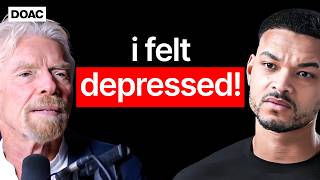
Richard BransonWell, think I've I've never understood depression, and I think I understood a slight, you know, where people get depression from after that experience. And it was good, you know, it's good to under... You know, it's good to have gone through it myself a bit. I mean, it didn't last too long, because I've, you know, brought up by, you know, parents who'd, you know, been through the second world war, and you couldn't waste your time, you know, getting depressed. You know, there were much far worse things than being depressed. But anyway, it it it taught it taught me to understand it, which I think will hopefully make me better understand other people's depression in the years to come.
InterviewerWhat were the symptoms of that?
Richard BransonWhat were the symptoms of it? It's very difficult to to pinpoint the symptoms, but you don't look. You just you just feel very sorry for yourself for a day or two, and then you just have to snap out of it and and and get, you know, my mom my mom would have... If she'd been alive, which she was, but I mean, if I talked to her about it, she would have told me to pull myself together and just... And and and get back to work. And and and I think within two or three days, you know, her her her words would have been ringing in my head, and and I would have overcome it. And I did overcome it. But it's just, you know, it's just a little... A taste of it anyway.
InterviewerRichard. So Richard Branson, thank you so much for your time. I... You... To me, you've... When I started this podcast, you were the name you were the name that if one day I could speak to on this podcast, I think we might as well pack it up and finish. Because to me, as a entrepreneur my whole life, you've always been the North Star of entrepreneurs. You've represented and embodied what it is to be an entrepreneur that's striving forward to create better in everything you do. I had the pleasure of researching your story again now at 30 years old, and it's been a tremendous source of inspiration for me. To meet you today, to get to come and watch your docuseries is one of the highlights of my entire entrepreneurial career and life and definitely this podcast. So thank you so much for that because I'm I'm not sure you'll ever really appreciate how much of an impact you have on people like me. So I wanna make sure that I... While I have you here, I have a chance to tell you and to thank you for that because you've definitely changed my life and I know I'm not the only person.
So thank you. Your book is amazing. The docuseries was so captivating. I see it up to about 3AM last night making sure I watched all of it and then watched it... The last episode again this morning, and I implore everybody to go and check it out now on HBO. But, yeah, most important thing is I just wanted to say thank you.
Richard BransonWell, thank you back, and and, yeah, many many congratulations on all you've achieved and all all you being a young bastard. All all you will achieve in the years to come.
InterviewerThank you, Richard.
Transcribed from the podcast audio (The Diary Of A CEO with Steven Bartlett) by speech recognition (Deepgram); speaker labels are automatic. Timestamps follow the podcast episode and can differ slightly from the video. Errors are possible.
Cite this recording
Richard Branson, “Diary of a CEO interview (2023)”, 2023. Transcript and video: Thinkers Archive, https://thinkersarchive.com/richard-branson/virgin-growth-diary-of-a-ceo-2023/
Quoting a passage? Link to its exact moment: every timestamp above has its own anchor (for example https://thinkersarchive.com/richard-branson/virgin-growth-diary-of-a-ceo-2023/#t-61).