Richard Branson on Innovation
Richard Branson sees innovation as challenging stale industries, obsessing over the customer experience, and acting boldly while protecting the downside.
- Start with frustration and improve what people hate.
- Ask why not, then move fast on the idea.
- Great innovation lives in small customer-facing details.
- Take bold risks, but protect the downside.
- Hire great people and delegate hard.
Innovation starts by challenging the status quo
Branson’s basic move is to look at an industry that feels stale, overpriced, joyless, or badly run and ask whether it could be done differently. He describes himself as naturally drawn to turning the status quo upside down, and that rebellious instinct is at the center of how he spots opportunities. Innovation for him is not novelty for its own sake; it is a practical response to experiences that are not good enough.1
That helps explain why Virgin kept entering very different sectors. Branson’s view is that staying fixed in one business is dangerous, while moving into new areas creates room to keep solving new problems. In his telling, innovation is as much about refusing to stand still as it is about inventing something brand-new.34
The best ideas come from what customers actually feel
Branson treats innovation as close observation of the user experience. He emphasizes the little details customers notice, and he ties exceptional companies to getting those details right consistently. His habit is to listen to staff, listen to customers, take notes, and act on what he hears, which makes innovation a discipline of attention rather than a one-time brainstorm.56
This is why Virgin’s edge often came from redesigning the experience instead of changing the core category. In travel especially, his instinct was to make a grim or impersonal experience more enjoyable, more human, and more memorable. He wants innovation to be felt directly by the customer, not just admired in a strategy deck.51
Bold bets work best when you cap the downside
Branson is strongly associated with daring moves, but his own description is more disciplined than the myth suggests. He argues for taking great chances while predicting or protecting the downside, and he calls downside protection the most important thing when starting a business. So his model of innovation is adventurous, but not careless.78
He also recognizes how thin the line is between success and failure. That awareness matters because it turns risk into something to be designed around, not ignored. In practice, Branson’s approach is to pursue ideas that look improbable while building conditions that let you survive if they go wrong.98
Innovation depends on people more than genius founders
Branson repeatedly returns to people as the real engine of innovation. He says companies are about finding the right people and inspiring them, and he calls people skills the most important skill. That means innovation is not a solo act in his worldview; it is a team sport built on trust, encouragement, and strong hiring.1011
His emphasis on delegation is also central. He says his dyslexia forced him early on to rely on people better than himself and to hand off areas where others were stronger. That made him focus on vision, opportunity, and energy while building teams capable of executing at a high level.1213
This matters because Branson does not frame innovation as knowing everything yourself. He frames it as assembling talented people, giving them room, and drawing out their best work. The founder’s job is to set direction, maintain belief, and keep the culture ambitious and alive.101114
Innovation should expand what seems possible
At its most ambitious, Branson sees innovation as turning the impossible into the inevitable. His space work shows the outer edge of that mindset: take a childhood dream, commit to it for years, and build not just a product but a whole new category. He describes commercial spaceflight as opening space to more people and changing how humanity views space.151617
What matters here is not only the technology but the ambition behind it. Branson’s innovation lens asks whether a breakthrough can make a once-elite experience accessible to ordinary people and create a new future others can step into. That is why he treats moments like Virgin Galactic as more than company milestones; for him they mark a broader shift in what humans can do.1714
The same pattern appears in his environmental comments. Once convinced a problem is real, he looks for better solutions rather than accepting weak ones, rejecting inadequate options and pushing for alternatives he thinks can scale. Innovation, in this sense, is a refusal to settle for first-pass answers when the stakes are large.1920

“We've taken the impossible, and we're making it inevitable.”Virgin Galactic Unity 22 launch coverage, 2021 · full transcript →
Branson on innovation, in his own words
“We've taken the impossible, and we're making it inevitable.”
Where to watch
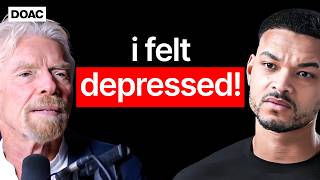 Richard Branson on Virgin Growth Strategy: Diversify, Delegate, Win2023 · 76 min · full transcriptBest overview of how Branson links innovation to customer details, listening, delegation, and diversification.
 Richard Branson on Creativity and Entrepreneurship: Take Bold Risks2016 · 40 min · full transcriptBest for his practical philosophy of creativity, bold action, and protecting the downside.
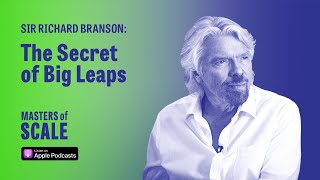 Richard Branson on Brand Diversification: Keep Asking Why Not2022 · 36 min · full transcriptShows his recurring habit of asking why not and entering categories others would avoid.
 Richard Branson on Business, Innovation and Giving Back: TED Talk2004 · 30 min · full transcriptUseful for his broader view that innovation comes from curiosity, people, and challenging stagnant industries.
 Richard Branson on Commercial Spaceflight: Opening Space to All2021 · 130 min · full transcriptBest example of Branson’s biggest innovation theme: making the impossible feel inevitable.
Questions people ask
- What did Richard Branson say Virgin Galactic is trying to do with space travel?
- What did Richard Branson say about customer service and the little details?
- What did Richard Branson say about dyslexia and delegation?
- What did Richard Branson say about how Virgin Galactic started?
- What did Richard Branson say about the years it took to build Virgin Galactic?
- What does Richard Branson say entrepreneurship is really about?
Sources
Every quote above, word for word from the transcripts. Numbers match the text.
“I mean, I think I learned early on that if you can, uh, if you can run one company, um, you can really run any company. I mean, company's all about finding the right people and inspiring those people, um, uh, you know, drawing out the best in people and, um, and I'm, uh, I just love learning and I'm incredibly inquisitive, and, um, I love taking on the, you know, the status quo and trying to turn it upside down. So, um, so I've seen life as one long, one long learning process, and if I see, you know, if I fly on somebody else's airline and find the experience is not a pleasant one.”
“If we'd stayed still and only focused on one business, we wouldn't have a business today.”
“If we were still in record shops, we would have been bust.”
“If you get the little details right, it makes for an exceptional company over an average company.”
“So I think, you know, every every little detail, I think, we, the team have got right at at Virgin, and if you get the little details right, you know, then collectively, you... It makes for an exceptional company over an average company. And, you know, if I'm on a Virgin plane, or in any Virgin company, I'll have my notebook, I'll take notes, I'll listen to it, listen to the staff, listen to the customers, you know, and then act on it when I get to the far end, and and and then be in touch... Back in touch with the people who, you know, gave me the ideas to thank them and tell them what we've done. And and and I think a good a good leader has to be a good listener.”
“Take great chances and yet predict or protect the downside…”
“The most important thing when you start a business is thinking about protecting the downside.”
“There's a very thin dividing line between success and failure…”
“…companies are all about finding the right people, inspiring those people…”
“I think I think the people skills is is is the most important, skill.”
“I was 15, I was dyslexic, and I needed people better than me to be around.”
“I think that... Well, first of all, I I I would like to say I'm proud of being a dyslexic thinker, and I'm delighted that dyslexic thinking is now becoming almost part of the vocabulary. And I'm pleased to, you know, talk to many dyslexic kids over the years to try to make them realize that, you know, do not do not be worried about it. You know, look at look at the areas that you that you enjoy and concentrate on those. The areas that you're not great at, you you know, either that you'll catch up later on in life, or, you know, if you're gonna start a business, you can delegate and find other people who can deal with those.”
“And I just finally—I know I said it from the spaceship—but I just want to say thank you, thank you, thank you, thank you to every single person who has believed in Virgin Galactic. Uh, the team who have worked so hard to make this dream come true. Uh, love you all. You—it's 17 years of, uh, painstaking work and, uh, the occasional horrible down, but by and large, ups, ups with it, and, and today was definitely the biggest up. Uh, so thank you, all of you. Um, love you all.”
“We've taken the impossible, and we're making it inevitable.”
“We are changing the way humanity views space.”
“Virgin Galactic offers the first real platform where we can actually open it up to make space for all of us. We build on the shoulders of giants. But we want to be that first space line for Earth and actually deliver on that promise. We are changing the way humanity views space. We've taken the impossible, and we're making it inevitable. I always want to celebrate the team on this. You need heart. You need the best minds. You need the best humans to work on programs like this. The sky is no longer the limit for us. This is an inflection point in human history.”
“…corn-based biofuels is not the answer by any means…”
“I sleep well at night knowing that's what we're doing.”
How this guide was made: drafted with AI from the full transcripts of the recordings cited, then checked: every quotation must match a transcript word for word and be the speaker's own words, and an independent review gates accuracy. Methodology and corrections.


