Richard Branson on Adventure and Resilience: Balloons, Airlines, Space

What Branson talks about
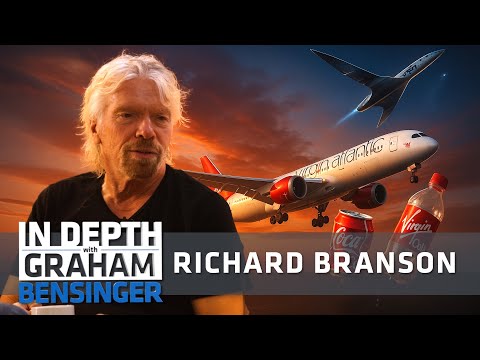
Richard Branson speaks in this interview with Graham Bensinger in 2025 about adventure, survival, building Virgin, and his views on space, safety, and climate change.
Also known as: Full interview with Richard Branson: Adventures, Virgin and the Future.
Branson talks about how adventure has shaped his life, from record-setting balloon flights to the dangers, luck, and split-second decisions that kept him alive. He describes surviving extreme weather, near-certain failures, and the moments when instinct mattered more than analysis.
He also traces how that same mindset fed Virgin's growth: starting a magazine, building Virgin Records, launching Virgin Atlantic, and taking on bigger competitors. Along the way, he emphasizes optimism, reputation, and doing things better than incumbents rather than merely cheaper.
The interview turns to Virgin Galactic and his belief that space can help improve life on Earth through satellite connectivity and future transport. He closes by reflecting on climate change, safety, and why he still feels compelled to take on bold challenges.
Graham Bensinger asks the questions throughout; Branson answers in a long sit-down interview.
In his words
“I am a lucky, a jammy bastard as they say in England.”
“I think if the, if the right challenge comes up, I will, I will still jump in and say yes.”
“My whole attitude to life is, you know, if you create a new business that's the best in its field, it's likely to survive.”
“Your reputation is all you have in life.”
“I look at everything as an opportunity.”
Key points
- Adventure, he says, has repeatedly put him in life-or-death situations, especially in ballooning and boating.
- He often relies on instinct and optimism instead of lengthy outside analysis when starting new ventures.
- Virgin grew by creating a better customer experience, not by copying incumbents.
- He describes British Airways' dirty tricks campaign and the libel victory that followed.
- He sees space as both an adventure and a practical tool for connectivity and future transport.
- He stresses safety, accountability, and showing up immediately when something goes wrong.
- He links climate change to stronger hurricanes and says Virgin should help set an example on clean energy.
Full transcript: Richard Branson, Graham Bensinger interview (2025)
So, I wanted to start off by talking to you about adventure. That's obviously been such a key part of your life. Uh, notably some of your record-setting balloon expeditions. And I wanted to, um, take you back to when all of a sudden you unexpectedly lose two full fuel tanks and climb perilously high. Um, what could have happened if the balloon continued elevating? And what are you thinking at the time? It wouldn't have been very pretty. Um, the, uh, if the balloon had just carried on going up, which it looked for a horrible moment that it was going to do, the capsule would have imploded and I wouldn't have seen, you seen or got to know my
grandchildren. So, um, so you know, it's a strange thing when when you when you embark on these wonderful adventures, you know, trying to do something that you know, mankind has, uh, and womankind has never managed to achieve before. Um, uh, you think, you know, you've thought of everything. Um, uh, but but just because it hasn't been done before, uh, there are things that go wrong that you know that that, um, you never expected to go wrong. And um and then you just have to, you know, you have to, um, do your best to to deal with them. Um, and on that particular crossing, when we were trying to be the first to cross the Pacific in a hot air balloon, it on paper, you know, when when we lost the
fuel tanks, uh, it looked like we didn't have a chance to survive. I mean, you know, the chances were, you know, less than 1%. We needed an I needed a miracle, um, to survive. We knew that we'd have to go at speeds of over 200 miles an hour. And a balloon had never been faster than, you know, 80, 80 miles an hour at the very very very fastest. And that was when we did the Atlantic. We managed to fly it right into the core of the jet stream. Um, you know, like it's the equivalent of being right in the middle of a river when you've, you know, you've thrown a stick in the river and you got the absolute fastest stream. And I just suddenly saw the speedometer going, you know, 100 miles,
110, 120, 130, 140, 150, 160, 170, 180, 200, 210, 220, 230. And we're in a balloon. We're traveling at 230 mph. And at that speed, if we could keep up that speed, we had a chance of making land and a chance of survival. Um, and, um, we were aiming for Los Angeles. We missed Los Angeles by nearly two and a half thousand miles. We ended up in the Arctic on a frozen lake, uh, 800 miles from the nearest, uh, person. The only thing that saw us was an otter that came up and gave us a sniff and and then just walked off and, um, uh, but we were the first across the Pacific in a hot air balloon and, um, and we'd survived. So, uh,
we'd lived to tell the tale. Another moment. You hadn't slept for more than 24 hours. Uh, and your captain jumps off the capsule going 100 ft down into the freezing ocean. Take it from there. >> You know, our first balloon flight was to try to be the first people to cross the Atlantic in a hot air balloon. And Pere had thrown an explosive bolt and had been worried that the cables were cut most of the way through but not the whole way through. So, uh, he threw himself out of the, uh, capsule into the sea. And because his weight had gone and and he wasn't a light light man, the, the balloon just soared, soared back up into
the air, um, you know 10,000, 11,000, 12,000 ft through the clouds and I was standing on top of the balloon as it went up and, um, I'd only just learned to fly a balloon three weeks before and there was, you know, my my experienced balloonist was now no longer with me. And you're in the biggest balloon in >> I was in the biggest balloon ever flown. Uh, and I was in trouble and I climbed back into the capsule and, um, you know, I didn't think I had a lot of chance of survival. So I I wrote a, um, a, a short note to Holly, Holly Sam and my wife and telling them how much I love them. And
um, then I put my parachute on, um, put a life vest on, climbed back on top of the capsule and prepared to jump. And I knew this was the last, you know, few moments of my life. And, um, you know, I mean, to be a parachute is jumping into the North Sea where it's freezing cold. Never jump never done a parachute jump into water before. I'd lost all communication with the outside world. So nobody knew, you know, knew where I was. Um, and so the chances of survival were yeah very very very unlikely and and I was looking down at the clouds and and I because I knew that I mean the fuel was almost finished, uh, but I I knew I had about another 20
minutes of fuel on board and I decided just to, you know, before I jumped, you know, just to have another five minutes of life so I climbed back into the capsule and and I also wanted some thinking time and um, and as I was climbing back out of the capsule, I looked up and and I saw the balloon and I thought, "Screw it. I've got the biggest, you know, the biggest parachute in in the whole world right above me. The balloon is the parachute. What on earth am I doing?" Uh, and it sounds sort of simple looking thinking back at it now, but anyway. And so I then got back into the capsule and I just started burning, um, and and taking the balloon down towards the sea. About 100 ft before I hit the sea, I climbed back onto the top and just before it hit
The sea, I threw myself off the capsule, um, away from the capsule, and the capsule hit the water. And then the whole bloom, without my weight, you know, soared back up to 10,000 ft, and there I was in the sea. Um, but I am a lucky, a jammy bastard as they say in England. Um, I had arrived in the sea, and a military navy helicopter exercise was going on, uh, at exactly that time, and one of those helicopters saw me jump, and um, within four or five minutes, there was a helicopter dropping a rope down to me to hold on to, and um, they yanked me to safety and and
We then were able to go and rescue rescue pair. Tell about, uh, being almost docked next to a refueling ship for seven hours, uh, meanwhile your vessel's riding 50, uh, foot waves. >> Yeah. So, we were, um, we were trying to break the record for the fastest crossing of the Atlantic in a boat, and America held this beautiful trophy, uh, the Hales Trophy but called, and it was for the Blue Riband of the Atlantic. Um, and, um, uh, and we, um, ESO had put a a
refueling ship, um, halfway across the Atlantic, and um, uh, and somehow had made a mistake, and when they filled us up with fuel, half of it was water, half of it was fuel. And so when we turned the engine on, it just, you know, clouds of smoke came out of the back of the engine. And while we were doing this, you know, this massive big refueling boat was rising. We were rising, and um, yeah, we were being thoroughly ill, all of us, and the smell and the stench of, um, kerosene and, and, um, uh, but we had a brilliant engineer on board, and um, he used, you know, the few filters we
had left to filter out the water. Um, uh, and we then headed off towards the UK again. Um, but he started to run out of filters, and, um, Margaret Thatcher was in power in Britain at the time. So we contacted the prime minister. She, she scrambled a Nimrod, and this Nimrod flew over us. The whole, the whole of Britain was sort of on the edge of their seats. So we, we, you know, so it was fun. It was something which everybody was participating in. This Nimrod flew over and, um, parachuted more, more, um, uh, you know, more, more filters to us, and it was so exciting, and um, and we, on the
first occasion, we sank, as you do, uh, and, um, got rescued by a banana boat, and then on the second occasion, we, we were successful and brought the record back to Britain. >> And, uh, governments aren't always as nice as Britain obviously was, uh, what do you remember from having to once negotiate midair with the Chinese, um, and how that strangely then resulted in Virgin being granted rights to commercially fly to China? >> So we were attempting to fly around the world in a hot air balloon. We'd done the Atlantic. We've done the Pacific, um, to fly around the world in a hot air
balloon was going to take about 18 days. Uh, we, we took off from Morocco, um, and, uh, we, um, headed across the Mediterranean. Uh, we skirted Iraq, and as we were skirting Iraq, um, there were American planes coming in to bomb Iraq, and we were wishing they were wishing us good luck, we were wishing them good luck, and we, we, we then carried on, um, over Kazakhstan and, you know, some of the sort of the remote places, and then we got sucked into the, um, Himalaya chain, um, and it was beautiful. Um, but we were going where we weren't meant to go, and that was towards China. We hadn't got permission to fly over China, and we
flew over Mount Everest. Uh, we flew over K2. Um, uh, and we were just marveling at the beauty. Um, but the Chinese made it clear to us that if we came into Chinese territory, they would have to shoot us down. Um, and so as we got closer and closer to China, um, you know, I was getting on the phone, you know, to everybody I knew in Hong Kong to ask them to, you know, Cathay Pacific and, um, you know, the British ambassador in China, and, uh, you know, asking them to try to intervene with the Chinese and wasn't getting far. And, um, and then I rang up my secretary at the
time and I said, um, "Can you, uh, can you ring Downing Street so I can talk to Tony Blair?" And, um, and she said, um, "I, I don't have the number of Downing Street," and, and I was getting very tired by now, and I just said, "Dial 192 Director Inquiries and ask please for the number of Downing Street." Anyway, I remember it distinctly. I don't, don't like to behave like that, but anyway I did, and, um, anyway then Tony Blair intervened, and, um, and finally the Chinese, just before we get went into ch-you — Chinese territory, um, they said, um, you know, that that that we had to get, get through Chinese territory quickly and get out of Chinese territory, and they wouldn't shoot us
down, and, um, and the bizarre irony was that as we flew over Shanghai I got another email from our airlines saying, "You won't believe this, but the Chinese authorities have just given Virgin Atlantic permission to fly to Shanghai, and we've been trying for years to get permission." So, a few minutes ago, they were planning to shoot us down. Now, Virgin Atlantic had been given rights to fly to Shanghai, and, um, and I'm not sure whether it was coincidence or whether they'd taken pity on us and decided that actually it was quite an adventure after all. So, you've rightly said you don't want to risk your life for those sorts of adventures anymore. Um, but what do you think the chance is you'll ever do anything like
That again? >> I can't resist saying yes. Uh, if there's a, you know, if there's a challenge, uh, that, um, that I'm going to regret sitting and watching somebody else doing on television and having said no myself. So, you know, I think if the, if the right challenge comes up, I will, I will still jump in and say yes. Um, you know, the, the, the challenge that we are concentrating on right now, uh, is one that, uh, you know, has been perhaps the biggest challenge of my, uh, my life, and that, and that is, um, building a space line, and, um, it's taken 10 years to get to you, to get to where we are today. Um
We are literally months, months away, I think, from, um, the space line, be, you know, beginning operations, and we're months away from myself and, um, you know, and my, you know, grown-up kids going into space, and then we're, we're months away from, you know, from the sort of 750 people who signed up, you know, starting to go into space. So, you know, it's tremendously exciting. Um, it's been, you know, we've had, uh, uh, high moments, we've had tears. Um, uh, you know, rocket science, uh, is tough, and, um, uh, and, um, but we've got, you know, the 700 best engineers in America.
Working with us, and, um, you know, we, we're just going through the very, very, very final stages of the test program. So, um, you know, so that will be, you know, that would be the culmination, I suppose, of, um, years of, of doing adventures, um, you know, the day that strap myself into a seat and, um, and, and head off on Virgin Galactic into space, and, you know, the the, the, um, uh, there's one moment in that journey where you go from n miles an hour to over 3,000 m an hour in 7 seconds. And that's going to be some rush. And, um, uh, and, um, and then, you know.
When you actually go into space, the, the sudden hush, uh, from the roar of the engines to complete, complete tranquility. Uh, and being able to unbuckle and, um, float around, look out through these beautiful windows, back at, back at the earth. Um, and, um, uh, and, uh, and it's been a long time coming. Um, but, um, you know, we're, we're, we're, we, we all believe that we're just about there now, >> right? And that would obviously be the ultimate adventure, and you would have succeeded in creating the opportunity for private citizens to, uh, enter space among many other things. Um before we get into the details of that, uh, you know.
I've read both of your books and loved them—the autobiography and then the, the new book which talks about your more, uh, recent years—and one thing that, you know, was kind of interesting: Losing My Virginity was the autobiography and now Finding My Virginity is the update. >> There you go. Um, >> I was, I was in Russia last week, and they have no idea what Losing My Virginity or Finding My Virginity means. So, I had to explain it all. >> Well, and, uh, you almost, uh, never even were able to get Virgin as the name of your company because you had to battle, uh, authorities back in the day. >> Yeah. We had a really bizarre situation where the authorities decided the word virgin was rude, and, um, for three or four.
Years, they wouldn't protect it, protect it, and in the end I, you know, got the English dictionary out and there it said, you know, pure, untouched, unblemished, you know, perfection. And so I wrote, wrote to them and said this is the opposite of rude, and they finally caved in and let us register the, the brand. But, but so in reading your books, you seem to have this keen ability to almost do whatever it takes to figure out how to make something happen. And, uh, some of the stories are particularly, uh, funny, and I wanted to bring some of them up and get you to recall them. Uh, the first of which being, uh, tell about, um, volunteering to your school's headmaster that you were seeing his daughter and then, uh, subsequently faking a suicide.
Scare. Um, well, uh, I was the only Protestant in a Catholic school. Um, uh, the, the, the, the positive thing about the school was that, um, the head's daughter adopted a boy every term, and I, I, I was adopted for this particular term, and, um, and it was all going swimmingly well. Uh, uh, but one day I got caught climbing, uh, climbing down the drainpipe from her window and, um, uh, or from her, from the house that she was the matron of, and, um, uh, and the headmaster had me into his study and he said, um.
Well, uh, you know, I, I, I want to know what you're up to, and I said, well, I can't tell you, sir. So I, I said, um, he said, well, you know, I'm, I put you on your word, word of honor to tell me, um, you know, and, um, and I was just going through a little bit of a religious stage. So, well, said, well, something to do with your daughter, sir, and, and he, he, he exploded and, um, and told me I was expelled, uh, for even suggesting such a thing. And, um, uh, and for some strange reason, I wanted to finish my, you know, finish the schooling. Um, so that night I, I wrote a suicide note. I gave it to the one boy I knew would open it and I said you hand.
This to the headmaster tomorrow morning. And then I started walking very slowly up to Lover's Sleep. Um, uh, and fortunately after a few hundred yards up the hill, all the lights of the house started going on, and, and then I could start seeing, you know, a hundred boys running up, running after me, and I started hurrying up a bit just to add to the, to the excitement. Anyway, they, they, they rescued me just before I left, and, um, and they, they decided not to expel me, and, um, and he gave me—yeah, he gave me a, a good thorough birching instead, though. Um, but, um, uh, I think I should have just accepted being expelled. It would have been a lot easier. But I think I quite still quite fancied the daughter.
>> Uh, your first real business student magazine. Uh, how would you go about, uh, using a company's competitors to get advertising? >> Well, I was working out of the school phone box. Uh, and you know in those days you had to put money into the phone box, uh, in order to keep, keep the phone calls going. Uh, and early, early on I put some money in and I got cut off. So I rang up the operator and I said, um, uh, operator, I've been cut off and I put some money in the box and they went, oh, no problem. So we'll just put you through. I thought, well, that's good. And so I would keep ringing the operator and saying I've been cut off and they would keep putting me through. And now I had
my own secretary working for me, which was the British Telecom operator. Uh, and I wasn't paying for the phone calls. Um, and then I sort of started to learn from trying to sell advertising in order to get the magazine going. I didn't have any money. I needed to sell £4,000 worth of advertising to cover the printing and the paper costs. I learned early on that if you said to Coke that Pepsi, you know, were interested in taking an ad, that they would jump in and say, "Oh, well, we better take an ad, too." If you said to National Westminster Bank that Barclays were in taking an ad, then they would jump in. So, um, so I learned the art of, as we call this in England, quite early on. and uh ended up having, you know, Pepsi and Coke because, you know, and and the National
Westminster Bank and Barclays and um had, you know, managed to get enough advertising to pay for the printing and the paper of 50,000 magazines and the headmaster said to me, you know, you either stay at school and do your school work or you can leave the school and do your magazine and so I said, you know, just turning 16 I'm off thank you very much and um and I left and I left Why when journalists would come to visit you to do stories on you, would you make the phones ring off the hook? >> We I would have people downstairs, uh, the journalists would be doing interviews and and yeah, and I mean it was going to be a very dull interview unless I could get some excitement going. So my phone started ringing and
um, Mick Jagger on that phoneed. I don't know. Anyway, you know, when you when you're building a company without any financial backing from scratch, you need to make it a little sexier than it than it really is. And and uh in those early days, we we we just threw everything we could at trying to make it succeed. >> So, you get an interview with John Lennon. Um, explain why you ultimately hired a lawyer to threaten to sue, uh, and what ended up happening. Um, so uh so Derek Taylor who managed, um, the Beatles had promised us after I'd done an interview with John Lennon and it all gone very well, uh, that for the first issue of the magazine we'd have a John
Lennon and Yoko Ono single on this on the front cover of the magazine. Um, and so we had Alan Aldridge do beautiful artwork around it. We had 50,000 copies printed up and um they somehow forgot to do the single. So uh so they decided they, they said we have an idea. So I I went turned up at Apple's headquarters and John and Yoko were there and Derek was there and they played the record that they were going to give us and then Yoko burst into tears and uh and I said, well you know what what exactly is it? and they said, "Oh, it's um the the heartbeat of Yoko Ono's dead baby
that that had um had had died." And um uh and that's all it was. It was just boom boom boom boom for, you know, for four minutes. And um and I said, "It's not really it's not really what we were expecting." Um and um I suspect foolishly, you know, decided not to not to go with it. I I I just think people might have felt a bit cheated. Um but um and uh and we we sent a couple of legal letters saying, "Could you please give us um uh give us a uh you know, you know, get get us a proper record." And it didn't it wasn't forthcoming. And then I just I wrote to Derek Taylor and
just said, "Look, you we'll we'll we'll we'll survive without it." And Derek wrote me a note saying, you know, "Thanks, Richard. all all all all everybody needs is love and um and and we called it a day. Um uh but we had to we had to uh you know we had to get rid of 50,000 magazines without a without that cover and and that set us back quite quite a lot at the time. >> Uh much later on in your career you call up, uh, the Rolling Stones manager. Um what did he say to you that you almost took as a challenge and it it seemed like it was >> um Yeah. So Prince Rupert was the Rolling Stones manager. We had a
record label at the time, uh, and uh and I've always wanted to sign the Rolling Stones and uh and um and their contract was available and I can't remember the exact figure but I mean he said right if you can get me six million by Monday, um uh you know, I I I would seriously consider doing a deal with you. and he was only getting 3 million from other other people. So this was on a Thursday. So I then flew off to Germany, to France, to Italy, to you know, as many countries as I could over the weekend um getting pledges of money from all these different territories.
And, um, on the Monday, I rang him up and said, you know, we have your six million. And, um, what he did, which was, you know, was fair enough, he just went to EMI and got them to increase their 3 million to 6 million. Um, but in the end, after a few years later, when their contract came up again, um, he took mercy on me and, by then, Virgin Records was the most successful independent record label in the world. You know, we had Janet Jackson, we had Culture Club and Genesis and Phil Collins, and anyway, it was really, really going great guns. And, um...
Uh, and, um, we signed the Rolling Stones, and it was a, yeah, great, a great turning point for the record company. So, the majority of your success up to that point had been in music with Virgin Records, and you've said before the easiest way to become a millionaire is to start as a billionaire and buy an airline. Uh, what do your partners say to you when you come to them with the idea to start your own airline and when they realized you were actually serious? Well, Simon Draper, who ran the record label with me, basically said that if I went into the airline business, our friendship would have to...
End, or, and that we couldn't, we could no longer work together. Uh, he just thought I should ring up and get the white coats to come and take me away and have me locked up because, you know, what on earth is somebody who's in the entertainment business doing wanting to start an airline? I was... I'd had a bad experience. I had been trying to get to see my lovely lady in the Virgin Islands, and we'd been bumped by American Airlines. I was in Puerto Rico, and it was 6:00 one evening, and I was determined to get to see her. I was about 28 years old. I...
Went to the back of the airport, and I borrowed a blackboard. I hired a plane. I wrote, as a joke, "Virgin Airlines one way, $39 to the BVI." And I went around all the people who had been bumped with me, and I filled up my first plane. And when we got to the Virgin Islands that night, you know, it was the next day I rang up Boeing and said, "Do you have any secondhand 747s for sale?" And this wonderful salesman called RJ Wilson said, "We happen to have one." But, whatever happens, he said, Richard, you know, change the name from Virgin because nobody will think that an airline with the name Virgin will go the whole way." So, uh, so...
But, anyway, we didn't listen to him on that. We did get the second 747, and I think, you know, the reason I think my partners were wrong was traveling on airlines in those days was abysmal. I mean, they would dump a bit of cold chicken on your lap. There was no entertainment. The cabin crew didn't smile because they were treated so badly. The planes were old and run down. So, you know, bring somebody in from the entertainment world and liven it up and make it a wonderful experience. And um... >> Yeah. But I'm sure they're rightly thinking, "What do you know about an...
Airline? You're a music guy." >> Yeah, and the head of British Airways, you know, came out with a sort of caustic comment, "Too young to fly, too old to rock and roll. They're never going to succeed." And, um... >> Funny enough though, you know, soon enough you had them pretty concerned. Um, what made you realize somebody was messing with your airline and starting to create problems for you? So we had about three or four planes after two or three years, and British Airways launched what became famously known as the British Airways dirty tricks campaign. And it was a kneecapping job to try to put Virgin...
Atlantic out of business completely. And we'd learned about what they were up to from people who actually worked for British Airways who were really embarrassed to be working for a company that behaved in this way. So, for instance, they would have a team of people behind locked doors at British Airways who would be ringing up our passengers, pretending to be from Virgin Atlantic, telling our passengers that the Virgin flight was delayed and then switching them on to British Airways. They had people intercepting our passengers at the airport and switching them on to British Airways. They had teams of people going through my rubbish bins, and if there was a journalist that I'd talked to, they would be going through the...
Journalist rubbish bins. They had people... we had a gay nightclub in London; they would go through the rubbish bins there to see if they could find any needles or any signs of drugs and then report it to the newspaper. And then they would be trying to disparage our finances and so on in the press. But fortunately, you know, they denied all this. >> What was the point at which you realized you had to take them to court? >> The amount of rumors they were managing to get the press to write about was becoming very dangerous and very damaging. You know, if the press write about an airline and say that it's on the verge of bankruptcy or something, you know, it can actually become a...
Self-fulfilling prophecy. When they denied all this, we sued them for libel and we ended up winning the largest libel damages in, um, British history. Um, uh, it was Christmas time. Um, so we distributed them to all our staff equally and it became known as the British Airways Christmas bonus and all our staff were very, very happy and it was such a big, you know, reward against British Airways that it really did shut them up and from then on yeah, we've had lots of competition over the last, um, 35 years but it's been, you know, basically relatively fair competition, not the sort of dirty tricks sort of competition. Lord King, who was the
Infamous head of British Airways. What did your interaction with him entail when you guys ran into each other after your victory in court? >> Um, yeah, he wasn't best pleased and actually he ended up stepping down from British Airways, um, >> because of your victory. Because of our victory. And, um, but you know, I think what it what it illustrates is your reputation is all you have in life. And you just got to be very careful not to, um, yeah, not to destroy that reputation. And, um, by, you know, by doing something that is, you know, verging on illegal, I mean, you know,
Arguably was illegal. You end up selling your music business for a billion US dollars, um, in effort to fight off, uh, British Airways during their attack. Um, while for a lot of money very painful for you, um, not something you wanted to do, what's the likelihood looking back that you could have fought off British Airways without having sold the business you think? Uh, it's a good question and I suspect we, I suspect we may have just got away with it. Um, but it was a hell of a risk. Um, and you know, if we'd failed to get away with it, we could have brought both companies, our record company and our airline crashing down.
So, by selling the record company, the jobs in the record company were secure. Um, it still has the Virgin, you know, the Virgin brand on it. It's still the most successful record label in, in, uh, in Britain and maybe even in the world at the moment and, um, uh, and all the jobs that the airline would secure as well. So I think it was the right decision. Um, it gave us the financial muscle to not only combat British Airways but also to move Virgin into, uh, a whole, you know, whole mass of new areas and, um, and Virgin became a sort of way of life brand and became
Very exciting as a result of us having the resources to do it. What got you interested in space, uh, and allowing private citizens to travel to space to begin with? A long time ago, just as Paris Stoker was happening in Russia, um, uh, I got a telephone call and I was told that President Gorbachev was on the phone, um, uh, who was president of Russia at the time and he invited me to go up on a Russian spaceship, not for free, um, for something like, uh, you know, $40 or $50 million. Um, but nobody else had ever been, no, no private citizen had ever been
To space and I, and I, you know, I might have been able to just about pull that money together but I felt it would be perceived as being a waste of money for, you know, one individual to, to go to space and I felt that I could put that money to better use. So, um, so I said no. Um, but it did get me thinking and that was, you know, why not spend that kind of money building our own space line one day. And I didn't do it right away. I waited to see whether, uh, the American government or the Chinese government or the Russian government whether they would be interested in putting, uh, you or me or people watching this program into space. And it soon became apparent they had no
Interest in that whatsoever. And, um, yeah, so in the 1990s I registered the name Virgin Galactic Airways. I'm an optimist. I also registered the name Virgin Intergalactic Airways. Um, and, um, and we went out looking for a genius who could build a spaceship for us. And we were lucky enough to come across Bert Rutan who was that genius and is that genius. Uh, and he got, you know, he got building a spaceship for us. Explain the significance of winning your first military contract. >> We have Virgin Galactic which is putting, um, yeah, people into space. Uh, we also have Virgin Orbit which is putting
Um, satellites into space and, um, and Virgin Orbit has, um, uh, has won quite a number of contracts recently including, uh, Department of Defense contracts from the American government. Uh, and the exciting thing about that is it shows, you know, a faith in what the team at Virgin Orbit and Virgin Galactic are doing to have such a reputable organization actually make an order from us. >> Uh, what role do you see space playing in Earth's future? >> Uh, I, I mean space has already transformed, uh, how we do everything back here on Earth. So, um, you know, whether it's your
Mobile phone or whether it's your iPad or all the way we communicate with each other, you know, space is most likely playing a part in that. What we see Virgin Galactic as, um, and Virgin Orbit as is a means to try to improve things back here on Earth. So, um, there's 4 billion people who are not connected. Um, uh, if you're not connected it's unlikely you're going to be able to start a business. You know, it's difficult to get proper education for your children, you know, health information. There's a whole, whole lot of things going to hold you back. Um, so one of the things that we're working on is a wonderful company called OneWeb that we're involved in, uh, to put a massive array of satellites around the earth. Um, you
Know, maybe as many as two or three thousand satellites up to connect, um, those four billion people are not connected. And that's one, you know, one, one, one of the sort of prime, prime purposes of, of, of our spaceship company. Another area is point-to-point travel. When Concorde disappeared, um, many years ago, it was the first time really that a breakthrough technology had just gone backwards. I mean, we don't have supersonic air travel anymore. You know, Virgin Galactic will is going to be one of, one of the companies that are going to be there pushing supersonic air travel and, and um, creating supersonic air travel, and we'll be working with partners like Boom and others to bring, bring that to the world again and that
that's tremendously exciting. >> How do you balance the desire to pursue extraordinary achievement with the inherent risk associated with that? Um, test pilots are, uh, incredibly brave. Um, their, their job is to test a craft, uh, to its limits to find out, you know, all the sort of things that could potentially go wrong, which is very difficult to find out on the ground before it actually goes in the air. And um, and and test pilots can make a mistake because, um, uh, you know, because they're again testing something for the
first time. And um, and you know, we had, um, the incredibly unfortunate incident, which, um, you know, where, where a test pilot did lose their life and where the program was set back, you know, by nearly three, three years. But you know, by, you know, by pushing themselves to the limit, you know, that, that, that particular incident will never happen again and the program will be that much more inherently safe when by the time we actually finally get passengers to fly. You know, we had to ask ourselves after the accident, you know, uh, you know is it worth it? Um, we asked the 750 people who'd signed up to go to space, you know, did they feel we should push on? Uh
almost with one voice, they said we should. We asked the 700 engineers that work for us, did they want to push on? They with one voice, they said they did. Um, and I think, you know, most of the public, you know, wanted us to push on. And, um, you know, so we actually, you know, took all the business in house. We're using another company's test pilots. We're using another company to build the spaceship. Now, you know, everything, everything is in house. We've got our own test pilots. Um, we've got our own engineers. Uh, and we feel we, you know, we, we feel it's extremely unlikely that that we'll have a repeat of what happened, but you can never, you can never be sure when you're going through a test, a test program. >> Um, safety obviously is so important to
you, you know, when your train company had a crash many years ago that was solely the fault of the, the track had nothing to do with the train company. The reason why so many lives were saved was because of the extreme measures you went in construction of the train and just, uh, you know, making it safe. So what's it like for you getting a call like that when there's been loss of life? Uh, it, it's happened to me twice in my lifetime and, uh, and I've, you know, and one of the positive things is we've, we've, we've got three airlines flying millions and millions of passengers for 35 years and, and we've never had such a call, though. Um, so it's happened, you know, once, once when a train went off
its tracks. Um, and obviously with Virgin Galactic and, um, uh, and I mean I, with Virgin Trains I was, um, in a cinema in Zerat with my children and like this vibrating phone just kept going in my pocket and, you know, um, generally speaking I don't answer the phones but there was just something about the consistency of the vibration that made me, uh, look at the phone and, um, uh, and the moment I knew that we'd, you know, the train had come off the tracks. You know, I knew that the first thing you've got to do as an owner of a company, whether it's your fault or not, is just get, you know, get to the scene of the accident. And and um, and that's what I did. I drove through the night. You couldn't, I
couldn't get a plane, the airport was closed. Um and got to the, um, the scene of the accident first thing in the morning. Um, and there was an elderly lady that had been killed and, um, and I went to the morgue to meet her children and, um, and we all had a big hug and, um, uh, and then I went, you know, to meet the press in the field and and, um, uh, and I think, you know, if you you know, you know, I think all that anybody who runs a company, if if there's a bad incident, the the critical thing is, you know, confronted head on. um uh and um anybody who's affected by it, make sure
that, um, you're there to comfort them. >> What would you say has been your biggest failure over the years and what do you think you most learned from it? >> I suspect the, um, most notable failure has been, u, not knocking Coca-Cola off their pedestal. >> Virgin Cola. >> Virgin Cola. We had a, we had a good try for a year or two. It looked like we were going to take Coke for everything they had. Uh, we were out selling them in, in Britain in, in all all the retailers that we were stopped and we were out selling Pepsi. I then got a bit too big for my boots and I arrived in Times Square with a Sherman tank from Britain. I crushed all these Coke, Coke and cola
Um, and Pepsi, uh, cans. You know, cola was flying everywhere. And, um, I then turned our Sherman tank's turret onto the Coca-Cola sign in the middle of Times Square. Uh, anyway, KO didn't take that too kindly. Uh, and, um, the next day in Atlanta headquarters, they got, um, bagfuls of suitcases of money. Uh, they got a DC-10 on the runway at Atlanta. They filled it with squat teams. They arrived in England, and, uh, retailers, um, suddenly became very wealthy and all our Virgin Cola disappeared off the shelves, and they basically kneecapped us. Yeah. >> I mean, it was that quick. >> No, no, no, they kneecap, they kneecapped
us. I mean, very, very systematically, and we did not know this was going on. I mean, they, you know, I would ring up Tesco and say, "What are you doing? You've taken Virgin Cola off all the shelves." And, um, they would say, "I don't know." They would come up with some excuse, but, um, so it wasn't until about a year later that, um, a lady arrived who announced to me that she was the new manager of Virgin Group at Lloyd's Bank and she—we went out to dinner—and it turned out that she was the lady at KO at the time who had been in charge of the kneecapping exercise, and now she was my bank manager. And I wasn't sure whether to strangle her or not, but >> you said before real leaders see opportunities where others only see
challenges. Explain that. >> I, I look at everything as an opportunity. Uh, so, you know, I'm, I'm positive about life generally, and I generally feel that you can, you can, um, find ways of solving problems and making things work. And, you know, I'm definitely a sort of glass, you know, nearly full kind of person rather than a glass half full. So, you know, I think, I think, um, out of, out of being just a generally positive person, you can, you can make positive things happen. >> What do you think about during your decision-making process? >> So, uh, so if I, if I come up with an idea for a new business, um, I don't bring in accounting firms to cost-analyze and
analyze it. Um, you know, because one accounting firm will say it's a good idea, another accounting firm will say it's a bad idea. So if I, if I, for instance, had brought in an accounting firm to say, "Will Virgin Atlantic work?" when we started the airline, I'm sure they would have said, "No way." But, but I, but what I knew was if I could create the kind of airline I'd want to fly on, that was exceptionally better than any other airline flying, that it was likely that more money would come in in the year than going out, and I'd have money left over at the end of the year. And that turned out to be the case because people loved Virgin Atlantic. They went out of their way to fly it. Um, the planes were full, and, um, at the end
of the year, you know, we ended up getting our second 747, and the end of the next year our third and fourth 747, and so it grew. Um, so yeah, so my whole attitude to life is, you know, if you create a new business that's the best in its field, it's likely to survive. When we took on Coca-Cola, a can of cola, Virgin Cola, and a can of Coke, you know, that ours may taste a little bit better than theirs, uh, but we're not exceptionally better and, and therefore it was easy for them to use their share might and their market dominance; they could, they could put us out of business. But when you got British Airways versus Virgin Atlantic, when they tried to put us out of business, Virgin Atlantic was a much better airline. So, you know, people
didn't desert us in droves. Explain how you learned the difference between net and gross. >> So, I'm dyslexic, and I was hopeless at school, which is one of the reasons I left school at 15. But I, I, I could never comprehend things like, you know, net or gross. And I would just ask people, "Is this, is that good news or bad news?" And, um, and it wasn't until I was 50 that I was in a board meeting and, um, one of the directors said, um, "Pop outside a minute." Um, uh, "Richard, you just said, 'Is that good news?' Did you not realize whether that was your profit or your turnover?" And I said, "Alright, I, you know, I, I admit it." So, he said, "Well, look, here's a sheet of paper." And he penciled in the sheet of
paper blue. Then he put a fishing net in the, in the, um, in the blue sea. And then he put some fish in the net, and he said, "Right, your, your, your profit at the end of the year, that's your net profit. The rest is your turnover. The sea is a whole; the fish are not in your net." Um, and I went, "Hey, presto, I know the difference between net and gross." And how old were you then? >> 50. We had the biggest private group of companies in Europe and I did not know the difference between net and gross. And so ever since then I've been, you know, net this, gross that. I've been name dropping the two words, but nobody seems to be that impressed because they all knew the answer anyway. Um, but, um, and the other
sad thing was, of course, I thought, um, I thought that net was you, gross was the profit, and, and I realized I was making much less money than I thought I was. Um, how does your dyslexia affect you today? I think being dyslexic by and large helps people, and, and I know that when kids who are maybe watching this program and they're struggling, struggling at school, will not necessarily agree with me, but I mean the great thing about being dyslexic is, um, you concentrate on the things that you're good at and you often excel at those things, and particularly as you get on later on in life. As a dyslexic, I, I had to become a good delegator very early on, so I had to surround myself with great people. Uh
You know, because I wasn't good at, um, uh, at math or something, you know, had to find people who were good at it. You know, most likely Virgin, who now employs 90,000 people, would not have been successful if I hadn't been dyslexic. >> What about when you went skydiving? Skydiving, uh, different dyslexia comes out in different ways in different people, but, uh, but I went skydiving for the first time, and the guys thought they... I remember him saying to me, Richard, um, you don't need to go down with an instructor. You're, you're, you're, you know, you're a bit macho and you can, you can do it yourself. And, um, little did he know that I was dyslexic. So, I'm, I'm, I'm coming down on my own with two
instructors either side of me, and, um, the instructor on my right is going, as I, as I'm, as I'm doing this sort of maneuver, and the instructor on my left is shaking his head, and I decided that I like the instructor on my right, and, you know, he's doing this. So, I pulled the cord and, um, it turned out that I pulled the cord that actually got rid of the parachute, not the one that opened the parachute. And that's not a great idea. Um, and that, um, was my dyslexia or whatever coming out in rather a bad way at a rather an unfortunate time. >> What about when you were a kid? >> When I was a kid, nobody had heard of the word dyslexia. It's a very strange word anyway for you, I mean, to call
dyslexics, because it's a really difficult word to understand. Um, but, um, and I people just thought I was thick or stupid at school. I got beaten regularly. Um, I mean it was a sort of English boarding school thing that they used to do. I, it was, it was brutal. I mean, they, they would take... I mean, I was sent away to boarding school at 7 and a half. Uh, you know, you, you, you, you were called into the headmaster's study, uh, in your, in your, um, pajamas. You had to take the pajama bottoms down and you, you often beat until you bled. It was, it was a very archaic, um, system, um, which fortunately I think has been banned finally in Britain a few years ago. >> Uh, in a story that's since become
famous. You're four years old near your grandparent's house, and your mom pushes you out of the car a mile away. Why? Well, I suspect I was being a bit of a brat, u, in the back of the car, but, um, but she also was the kind of mother that felt that we needed to stand on our own two feet. Um, and so she, she would do things which most likely she would get arrested for today, but, and, um, and I got lost in the fields and, um, and ended up, uh, being rescued by a farmer. >> She did claim she was honking her horn as it started to get dark. >> Yeah. And I think I was trying to get my own back on her bit as well. I was even, even at four, I was thinking, "Damn you, I'm going to make you sweat." >> How did you convince your parents to let
you leave school at 16? >> Um, it took three walks around the lawn. So, the first walk, my dad understandably said, you know, you, you know, you, you should really try to finish your education. Uh, the second way around the garden, when I said I really had decided I wanted to leave, um, he started to mellow, and on the third walk around the garden he said, "Well look, you know, I didn't know what I wanted to do when I was 21 leaving, you know, college, and, um, at least, you know, you know what you want to do. You know, go and give it a go, and if it doesn't work out, we'll try to get you a formal education again," and, um, they were very loving, very
understanding, um, parents, and, um, uh, and it was great to have their support. I think it helped that I was so hopeless at school. Um, so I suspect they also felt there was nothing much to lose by me doing something different. >> How much do you think your mom being an entrepreneur helped get you interested in business? >> Um, maybe it did. I mean, yeah, she, she always was trying things. She never was successful at trying things, but she was always trying new things. And I'm sure that some of that must have, must have rubbed off of me. >> What role would you say each of them played in your lives over the years? >> Um, my mother was the more sort of disciplinary
and my dad was more overtly loving, loving father. So I'll give you an example. We lived next to a sweet shop, and, um, my dad used to leave his loose change in the top drawer, uh, his, uh, in his bedroom, and myself, my sister, one day when, when I was about six or seven and she was about four or five, we, we, we climbed onto a chair and we took some money out of the, his top drawer, we went to the sweet shop next door, and we bought this enormous pile of sweeties, and Mrs. Aanel rang up my dad and said, "Um, I think you ought to come to the sweet shop." So he turned up and, um, she said, "I think that you know your maybe your children have borrowed some money from you." And he looked at us and he
looked at Mrs. Aanel, and he just turned on her and said, "How dare you accuse my children of stealing?" Uh, he then left the, left the sweets on the, on the counter, took us by our hands and walked us home. Never said anything and we never stole from him again. Very, it was a very, very, very good lesson. Uh, on another occasion, um, my mother asked him to spank me, and he took me into the next door room and, uh, he just clapped his hands very loudly and then told me to cry, and, uh, and and he gave me a bit of water and we wet and I went running out pretending to cry. Um, so both of them were very loving. Anyway, >> you were married, uh, once before your
Marriage to your current wife Joan of nearly, uh, 30 years—40 years. >> Nearly 40 years. Uh, before, uh, marrying Joan, you were thinking marriage was starting to become less appealing to you. Why? >> Before marrying Joan, um, I had been married very briefly when I was very young, and um, uh, she fell in love with a musician and, um, uh, went her own way, and um, and I didn't really fancy the idea of being hurt again and getting and getting married again. And so when Joan and I got together, um, you know, we, we decided just to live in sin and have our children, not get married. And
It wasn't until, um, Holly was about, um, 10 years old. You know, I, I just came back from Los Angeles and I, I turned to her and said, um, you know, do you think Mom and I should get married? And, um, she said, um, yeah, that's a lovely idea. And then she said, you know, I'm not sure she'll have you. So I said, "Well, do you mind going and asking her?" So anyway, so anyway, she, she, she went and asked for me and all all was good. >> But a key moment for you in that relationship seems to be, uh, you had just come home. Joan was gone. She'd left a note for you on the table, uh, I believe telling you she was pregnant. And yes, I came home one day and, um, to find that she was pregnant and, um, and and had left
me and said if I, yeah, if I want to see her again to give her a ring and, um >> Why'd she leave you? Because she wasn't sure whether I wanted children at the time and, um, and she decided she did want to have children and I wasn't necessarily, yeah, ready for children, but so I sat down, thought about it for a few moments and gave her a ring and and it couldn't have been better. You know, men are terrible. We don't, we don't like to be tied down, to be honest, you know, and sometimes it takes the woman to, uh, uh, to do the job for us. >> What did you say on the phone? Um, uh, we should have, we should have dinner or I can't remember what it was but we, we, but, um, no, I mean, look, it was, it was
it was absolutely fantastic and, and, um, uh, and has only been, you know, better every single day of, of our lives since. And it was, um, uh, the best, the best decision of our lives. So I'm very happy. Given all your professional success and the constant travel associated with it, how challenging did it make it to be a present father when your kids were growing up? >> Do you know, I would say that I've spent more time with my kids than most fathers I know. Um, and the reason for that is I'm a great believer in, um, delegation and I'm a great believer in working from home. So, we lived on a houseboat and I
worked on the houseboat and, and the kids would literally be crawling around the floor. I might be changing their nappy having a meeting. Uh, so I think I spent a lot more time with my kids than, than most fathers and and and as a result, you know, we're an unbelievably close family and I, and actually I do try to encourage our companies to, you know, be very flexible with, you know, people that work for the company. So they can, they can if they want to work from home they should be able to work from home. If they want to work from home on a Friday and a Monday they should be able to do so. Um, not feel that, um, uh, you know, they they have to rigidly be in an office all the time. >> Uh, Holly and Sam your two grown kids now. Um, what role do you see them
playing, if any, long-term in Virgin? >> They're both wonderfully personable. Um, they're great with people. Holly runs our foundation and runs it really well. You know, Sam has got his own little film company. He's done wonderful films on the, the war—against the war on drugs and breaking the taboo and, um, on about, you know, trying to sort of campaign to stop the death penalty and other, and other, and other areas. You know, one day, uh, you know, when I decide to move on, um, they, they will, will be very capable, I think, of together, um, you know, being a, um, ambassador, you know, being the two ambassadors for the Virgin Group. And I
think, I think companies benefit from having faces, um, instead of just being faceless companies, having, you know, having front people. And I think, I think they'll, they can play that role really well. Explain how, uh, teaching Queen Noor of Jordan's family to fly a hot air balloon uniquely positioned you to negotiate with Saddam Hussein for hostages. So, I got to know, um, King Hussein and Queen Noor of Jordan. Uh, yeah, through, uh, flying them in a hot air balloon, uh, over Amman, uh, their capital city, with their children on board and going across the chimney tops and the people looking
up at this balloon and then just seeing their king and their queen and the princes were waving down at them. It was a, it was quite a moment. And then Saddam Hussein was holding some hostages, um, to try to avert, um, uh, the allies, um, invading him. And I was wanted to try to see if we could, you know, get these hostages out. And, um, so I went and saw King Hussein at the Royal Palace. And I wrote a letter to Saddam Hussein and asked him if he could translate it for me, which he did. And he then sent a messenger to, to Saddam Hussein. And Salah Zayn responded and said, um, you know, yes, if you're willing to come and
In one of your 747s to Baghdad, I will come to the airport. I will bring the ill hostages to the airport. Uh, you know, if you could bring some medical supplies for Iraq, that would be wonderful. And three days later, you know, we flew into Baghdad. Uh, it was an eerie, incredible experience. I mean, no plane had flown in for months and months. The lights went on at the last minute, and we met Saddam Hussein at the airport, and he handed over the hostages. And as we left Iraqi airspace, there was, you know, an almighty cheer. And, you know, when the second Iraq war looked like it was going to happen, you know, I, for one,
was vehemently against the idea of it. Um, I thought it was a dreadful mistake. One of, you know, one of the worst mistakes since the invasion of Vietnam all those years ago. And because I'd got to know Saddam Hussein, you know, briefly, I thought maybe I could try to persuade him to step down and go and live somewhere else in order to avoid the war. >> And you've later reflected on this being the biggest regret of your life. >> Yeah. You know, ISIS came because of the invasion of Iraq. I mean, that, that, that it was the sacking of all those police and all the military and giving them no hope after the successful invasion of Iraq that resulted in ISIS and all the other horrors that have gone on, that the whole
balance between Sunnis and Shiites has been ruined because of it. So, you know, we were trying to stop it. So, we asked Saddam Hussein, you know, would you be willing to entertain Nelson Mandela coming and seeing you? And the idea was that Nelson Mandela would arrive in Baghdad, would persuade Saddam Hussein to leave Baghdad to save his countrymen and to save an unnecessary war, and then go and live somewhere like Libya for the rest of his life. I asked Mandela if he would go, and he said he would go if Kofi Annan, who was then secretary general of the United Nations, would go with him. Asked Kofi Annan if he
would come as well, and he agreed to go. And then, sadly, a couple of days before they went, the bombing started, and the meeting never took place. And, you know, who’s to know how history might have been changed if that meeting had taken place. But one positive thing came out of it, and that was, you know, an idea that, you know, if these elders like Kofi Annan or Nelson Mandela could have such influence over somebody like Saddam, maybe we should get a group of elders together. And Peter Gabriel and myself set up,
with Nelson Mandela, a group of global leaders who now go into conflict regions to try to resolve conflicts. And the Elders started under Nelson Mandela’s blessing, and then you had Archbishop Tutu running them. Now you have Kofi Annan running them, and it’s just 12 incredible men and women who’ve got, you know, maybe the biggest moral authority in the world, the biggest respect in the world of any group of people, and they’ve done some fantastic work. How about the most interesting conversation you ever had over the years with Nelson Mandela? >> Anytime he came to lunch, he would
try to hit you up for a lot of money for good causes, you know, and he had lots of good causes. So, I had lunch with him and Graca Machel, his wife, and myself and my wife and children. And we got through the first course, the second course, the third course. We were on to the coffee, and I was thinking, I’ve got away with it. And then he turned to me and said, “Oh, Richard, by the way, last week I had lunch with Bill Gates, and he gave me $50 million for our half.” Anyway, but no, I mean, he was just an extraordinary man who was always thinking about other people. Yeah, somebody that I think the whole
world has looked up to. And Archbishop Tutu has, you know, continued to carry the banner ever since with a lot of grace and good humor. >> And you ended up rescuing a lot of South African health clubs that were in fine natural trouble thanks to >> So, he rang me up one day. I had just got back from South Africa. He rang me; I was in the bath. And he said, “Richard, a chain of health clubs with, you know, 6,000 people working there is about to go bankrupt. I want you on the next plane down. I want you to come and rescue the health clubs.” And I did get on the next plane, and we did rescue the health clubs. And actually, it’s become one of
our most successful businesses. And now Virgin Active has, I don’t know, over 200 health clubs in South Africa. So it’s the kind of thing that he, as a president, you know, not many presidents would ring up and think, you know, he didn’t even know that we had a couple of health clubs in England, wouldn’t ring up and say, “Come and rescue these jobs,” and it was great. >> Tell about the meal you once had with President Trump. >> Well, it was the first time I’d met President Trump, and he wasn’t president then, and it was back in the ’90s. And he rang me up to invite me to his flat to have a meal, and I turned up, and there were just the two of us, and it was a fairly extraordinary.
Lunch. Um, he spent most of the lunch talking about his bankruptcy, his latest bankruptcy, and um, during the time he was sort of trying to save the company, he'd rung up a number of people and asked them for financial help and how five people had said they wouldn't give him financial help. He then went on to say that his life's mission was going to be to destroy these five people. I've been brought up to look for the best in people, to um, yeah, to forgive people who, who, you know, you, you feel have let you down, and um, and in any event I don't believe that these people had really let him down. They just said no when he'd asked for financial help when his companies were in trouble. So I
said to him, you know, I think it's going to eat you up. It'll, um, won't do them any, any good and um, it seems counterproductive. Um, but, but he, he was going to have none of it and I left feeling quite, you know, it was quite a strange lunch 'cause, um, I was also quite baffled by why it was the main subject of discussion rather than, you know, talking about something maybe a bit more worthwhile. When you had a rival television show on an American network, uh, competing against his then show The Apprentice, what did he write in the letter he sent you? >> Um, well, our show wasn't really a rival, although he seemed to think of, think of
it in a letter that he wrote me. Um, ours was more an adventure-based show. So I would take people to different countries and put them through, uh, yeah, really extreme, extreme adventures. And um, uh, but he wrote me a letter basically saying first of all the show shouldn't be called The Rebel Billionaire because um, I'm in the airline business and I couldn't possibly be worth a billion because, um, uh, because people in the airline business you never make any money and therefore I should be effectively changing the name of the show to something called something like The Rebel Millionaire or something. I mean anyway it was just rather rather, uh,
a chishy letter and um, so in my new book, um, uh, Finding My Virginity I thought it would be interesting for people to see the correspondence and um, to tell one or two of these stories because it it, you know, it, it shows, you know, it, it, it, it shows quite a lot I think about the president of America at the moment. >> What did he subsequently say when you next heard from him in 2015? Um, so in 2015 he wrote to me um, yeah, congratulating us on Virgin Galactic and um, yeah, very very pleasant note and um >> and your impression of that was what? >> You know, I'm, I'm a great believer in
making up and being friends with people you may have fallen out with in your life and I think if it wasn't for the fact that he was running for presidency of America, um, I would have, um, yeah, I would have been delighted to have responded and you know, but you know, I was slightly suspicious that, um, that he most likely was sending notes like that to lots of people because he was running for running to be president of America. Uh, but anyway, you know, look, he's done extraordinarily well. So u so but it just I think it's interesting for people to, uh, hear stories and people can judge for themselves, you know, based on stories like this. Necker, your oasis of a private island in the Caribbean. Uh,
how have you gone about building the island up over the years and what's been involved with working to make Necker and the sister island you bought, Mosquito, carbon neutral? >> Um, well, we didn't have any money to do anything with it when we bought it. Um, so over the years, if if, um, the Rolling Stones had a hit, we'd build one house. If Janet Jax had a hit, we'd build another house. If the Sex Pistols had a hit, we'd build another house. If Mike Oldfield had had a hit, we'd build another one. And Genesis, another one. And so over the years, we've created a beautiful island. And then, you know, we I I spend a lot of time on issues, uh, global issues. And one of them is climate change. And therefore, it's very important that, uh, that we can set an
example ourselves. And we have a big array of, um, solar and um, and you know wind and, um, and you know we're almost self-sufficient on clean energy and by hopefully by the end of next year we'll be completely self-sufficient and um, uh, and we're also trying to roll out, um, to many many islands throughout the Caribbean and help them become self-sufficient. >> How many hurricanes have you been in? I've been in one hurac every 10 years. Um, the first three were extraordinary, magnificent, beautiful. The seas were unbelievable, skies were unbelievable, the wind was
unbelievable. Uh, but the damage was not by and large too bad. Um, the last hurac was um anything but beautiful. I mean, it was, um, effectively a category 7 hurac. Um, over 200 mph winds, um, and the damage was horrendous. >> How at the time were you witnessing the severity of it? >> Uh, I was, uh, with with my team in a bunker, uh, under the main house, um, for 4 and a half hours. We heard the screaming screaming wind and then sudden hush and then we poked our head out of the door and, um, saw the utter devastation that
that had happened in those first four and a half hours. Um, and then we realized that we were in the middle of in the eye of the hurricane and and then the winds hit us from the other side and then we threw ourselves back into the hurricane shelter for another 4 and 1/2 hours and um, uh, and at the end of it all. Um, yeah, it I've never seen any any devastation like it. You know, buildings that had literally disappeared, not one tree left standing. And what we were really worried about was, you know, next to us were all our all the people who worked on Necker Island, um, in little, you know, wooden huts and things. And, you know, later that day we went over there and and um, you know, people had lost
Their homes, and um, fortunately, very little life was lost. I think because it was a daytime storm. But the Caribbean people are so resilient, and they've just, you know, they rallied around. They've helped each other, and we, you know, we've got a foundation there with Larry Page, and that's done a lot of good work there. My son's been great and, anyway, everybody, everybody, you know, has just rallied around. I think I, I, I mean, I think one thing that, um, this teaches us is the reason that the hurricane was so strong, and the strongest in history, was that the sea levels had never been so high and so hot at this time of year. So, um, and this is, this is the big danger.
The impact of climate change is that, as the sea gets hotter, the hurricanes are going to get stronger and the damage is going to get worse. And that's one of the reasons that we're working very, very hard trying to address climate change on a global basis, and we'll continue to do so. >> So, this has been about five years in the making. I never thought this would have happened, much less bumping into you in North Africa, only then to a month later be sitting down with you in the Bahamas. But thank you very much. >> It's been a pleasure. Thank you very much. Cheers.
From YouTube captions, lightly punctuated for readability. Timestamps link to the video above. Errors are possible.
Cite this recording
Richard Branson, “Graham Bensinger interview (2025)”, 2025. Transcript and video: Thinkers Archive, https://thinkersarchive.com/richard-branson/adventure-resilience-graham-bensinger-2025/
Quoting a passage? Link to its exact moment: every timestamp above has its own anchor (for example https://thinkersarchive.com/richard-branson/adventure-resilience-graham-bensinger-2025/#t-128).