Richard Branson on Entrepreneurial Philosophy: Fun, Risk, and Purpose

What Branson talks about
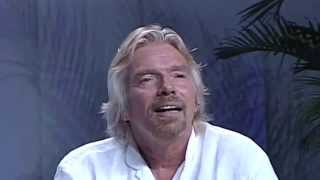
Richard Branson gave this interview for Megacast in 2013 about his entrepreneurial philosophy, including fun, risk, purpose, company culture, and social impact.
Also known as: Richard Branson - Entrepreneurial Philosophies (Megacast); Entrepreneurial Philosophies.
Richard Branson lays out his core entrepreneurial philosophy: build businesses that matter, keep them fun, and protect the downside when taking risks. He says Virgin grew from a desire to make a difference, not to become a serial empire.
He argues that small companies can beat bigger rivals by being nimble, treating staff well, and innovating faster. He also stresses ethics, second chances, and creating a family-like culture where people flourish.
The conversation also covers his use of Virgin’s platform for social impact, especially via Virgin Unite and work on global issues like health, conflict, and climate change. Branson frames success as responsibility plus action.
The interviewer主持s the discussion and audience members ask questions; Branson answers throughout.
In his words
“If it's not fun, we don't do it.”
“Rules are made to be broken.”
“Protecting the downside”
“Never take no for an answer.”
“Wealth comes with it, and responsibility comes with that wealth”
Key points
- Business should be enjoyable; if it is not fun, Virgin does not do it.
- Small companies can beat larger ones by being nimble, innovative, and good to their staff.
- Branson thinks in terms of protecting the downside before taking bold risks.
- Virgin started from a desire to make a difference, not from a plan to become a giant conglomerate.
- He believes ethical behavior and sleeping well at night are essential in business.
- He sees business success as a responsibility to help tackle social problems like global warming and healthcare.
- He values praise, second chances, and a family-style company culture.
Full transcript: Richard Branson, Megacast interview (2013)
Ladies and gentlemen, Sir Richard Branson. It's just like doing a radio show, and normally I'm behind a microphone. Only this time, all of the listeners are right in front of us. So this is going to be a piece of cake, and we're going to have a lot of fun. This is so cool. I can't tell you, this has been a dream of mine for many years to interview Richard Branson, and I'm just thrilled and honored. I've been such a huge fan of yours, as has everyone here. And true to form, you are such a class act, Sir Branson. I understand that many people have paid a lot of money to be here today, but that all the proceeds from your speaking engagements worldwide go to a charity near and dear to your heart. So in many respects, all of you are contributing to those charities, and I'm
wondering if you could elaborate on which charity they're going to, Richard. Um, no, I just say thanks very much for coming. Hopefully, um, you know, hopefully we can share some interesting thoughts today. Um, but I think that if you are a successful entrepreneur, um, you know, wealth, and wealth comes with it, and responsibility comes with that wealth, and you can make a real difference. And so, Virgin has one particular charity called Virgin Unite that unites the 50,000 employees who work for Virgin
worldwide to tackle, you know, some of the major issues in the world. And obviously, Africa is a place that just has numerous problems, but a lot of those problems, I believe, are solvable problems. They're not insurmountable problems. They just need, you know, entrepreneurial social workers with resources to resolve them. So, the money that you've paid today, that I've managed to extract from the organizers, is going towards the specific hospital that's being built in Africa, which will cater for about 200,000 people in a community that actually don't have any medical services.
And it'll make a big difference, Richard. When we watch the film and we look at the myriad and compilation of the various companies you've built under one brand into one of the world's biggest and largest companies, in the early years, and you started Virgin, I believe, when you were 20, I'm sure that people were telling you from the sidelines, "This can't be done. You could never build this kind of company with this many different entities." How have you dealt over the years with adversity and also with other people's opinions? Um, yes, I mean, conventional wisdom will say that, and I suspect any of you who've been to
business schools, you'll be taught, you know, you should specialize in one area and try not to stray from that area, and that the best businesses in the world are those best businesses that stick to their core. And actually, if you look at the top 20 brands in the world, you have got, you know, Nike specializing in shoes, you do have Microsoft specializing in computers, or Coca-Cola specializing in soft drinks, and you can't really imagine, you know, Coca-Cola Airline or. So, but I don't think, you know, I mean, personally, I think rules are made to be broken, and what we've at
Virgin tried to do is to create a way of life brand, a brand that, you know, tackles major companies in quite a lot of different sectors, and it wasn't something we actually set out to do. I mean, I left school at 15 because I wanted to start a magazine run by students to try to put the world right. I mean, there was the Vietnam War going on, I'm afraid, you know, the equivalent of what's happening in Iraq but in Vietnam. I was against it, and I was, you know, campaign, wanted a voice to campaign to try to, you know, to stop it or have our little play, our little bit in trying to stop it. There was, you know,
the way we were being taught at school. You would spend eight years learning French in an English school, and you'd come out not speaking French, and the way we were being taught was not conducive to learning it. So my principal aim was to create a business to create a magazine that would make a difference, and it wasn't going into creating a magazine to make money or to become an entrepreneur. It was creating a magazine to make a difference. And since then, we've gone into a lot of different areas, a lot of different businesses again, not with the purpose of becoming a serial entrepreneur, but because we have seen, you know, I mean, I used to fly
when we had a record company on a lot of other people's airlines, and the experience was dire. If you've ever flown on an American carrier—I won't mention Canadian carriers—you'll know what I mean. And so I decided that if you could create an airline where the staff were actually enjoying working on that plane, and they were actually proud of the tools they were given, and they were proud of the service they were offering the consumers, and it was actually a fun airline to fly, that it might be successful. And so in that particular case, you know, sat down with Boeing and said, you know, I'd like to...
Buy a secondhand 747. Um, and you know, you know, I, you know, I was the person that brought, brought them, brought the Sex Pistols and a few other bands. They actually must have thought me absolutely mad. Um, but, um, anyway, they, they sort of maybe spotted something in me that made me made them think that we could maybe build a competitor to British Airways. Um, uh, but I also made a stipulation because I didn't want to bring everything else that I built, Comcrushing down if I, if I was wrong about the airline business. I said, look, you know, I've got to protect the downside. I may be completely wrong that there's an opening, um, for Virgin Atlantic. Um, at the end of the first year, I want the right to hand that plane back to you if you
know if, if I'm wrong and it might mean that you won't make any money, um, but you know you won't lose any money either, and, and, you know, and, and we can both walk away from it. And so, you know, by protecting the downside, I could then convince, well, just about convince my fellow directors at Virgin Records, uh, to let us start an airline. And as it turned out, after the first year, things were going quite well. That's a very interesting and novel concept, one that I've written down: staff who enjoy working on an airline and I think that has some marketing prowess. Um, I wanted to ask you an interesting question. I've heard it said many times that adversity is to men or women, Richard, what carbon is to steel. What are some of the biggest
adversaries that that you've had to face in your life and how have you overcome them? And you're also fond of saying never give up. Well, um, as a, in business, obviously, there've been numerous adversities, and, um, and you know, and anyone here who's trying to set up their own business without any financial backing, uh, will know just how difficult it is. Um, and for a number of years, there's only one word that really matters and that is survival, um, because, um, you know, the difference between survival and, you know, get there, there's a very thin dividing line between survival and not surviving and most people who start in business end up
the wrong side of that dividing line. Um, because the bigger, the bigger businesses out there will try to crush, um, small upstarts, um, and you know, we had, you know, I mean, you know, we, we were no, no different from anybody else when we set up our airline. Um, Bri, excuse me, but a slight cough. Um, British Airways, um, you know, set up behind, you know, behind closed doors, and that unit was set up to crush Virgin Atlantic, um, and you know, they had people illegally accessing our computer information. Um, they, um, were then, they then had a team of people ringing up our passengers pretending to be from Virgin Atlantic,
suggesting that, um, that Virgin Atlantic was cancelled that day and maybe, you know, but British Airways, we could maybe move you over to British Airways. They had people going through my rubbish bins. They had people, um, anyway, the lengths they went were extraordinary. Um, so, you know, any small business going up against bigger businesses are likely to, you know, are likely to come up with, uh, ferocious competition. So to beat a big business, um, you have just got to, um, use your, use your strengths of being small. Um, you, you, you generally speaking, if you work for a big corporation, it's quite impersonal and, and quite often the staff are not looked after well, and, and quite often the staff actually don't like
going to work because they're not treated well in, in a, in a smaller company. Um, you can make sure that your staff are looked after well. You can make sure your staff are proud of what they're doing. You can make sure that, you know, that they believe in what they're doing and they work, um, you know, long hours to try to, um, to make to make the company a success. Um, as a small company, you can be more nimble. You can move, move more quickly. Um, I mean, with, with, um, you know, Virgin Atlantic, for instance, if we want to, you know, change all our seats in our plane to better seats, um, you know, we can do so in, you know, maybe nine months. For British Airways, it would take them seven years. Um, so you know by, by being more nimble, one can, one can, um, one
can move quicker. One can be more innovative, um, and innovate more. So it is possible for, you know, for small companies. You can keep your overheads, you know, lower so you can actually undercut the bigger guy. And most likely the bigger guys had years of building up, um, you know, overheads that you as a small company haven't yet got and hopefully never will have. And so, uh, so it is, it is possible for smaller companies to beat bigger companies but, uh, you have to be, uh, quick of foot. And as you say, um, never take no for an answer. Richard, you spent a fair on of your life running across the ocean and go fast boats, hanging on to balloons and altitudes that that are unthinkable. Um, in fact, it was raining Richard Branson here on the weekend you were hanging
from a helicopter somewhere. Do you believe that without these challenges you would be who you are today? And do you believe that you can truly reach your goals without being challenged in life? Well, I, I think that there isn't a lot of difference between being an adventurer and and being an entrepreneur. If you're, you know, an entrepreneur, um, you are pushing the limits. Um, you're trying to, as I said before, trying to protect the downside. And the downside as an entrepreneur is, um, is going bust. Um, as an adventurer, you're pushing the limits. Um, you want to protect the downside because the downside possibly is losing your life. Um, so you particularly want to protect the
Downside, um, and, um, and I mean, I realized quite early on in life that, um, in order to put Virgin on the map on a global basis, I didn't have the advertising power of our big rivals, um, so I would have to utilize myself, um, to get out there and make sure that the world knew about Virgin, um, and I've had a lot of fun doing it, as well as, um, you know, the sort of normal stunts you do when you, when you launch new businesses. So, you know, trying to beat the record for the fastest boat across the Atlantic, um, you know, yes, we ended up sinking the first time, but, you know, we came back and
um was successful the second time, um, you know, trying to be the first person to fly the Atlantic in a balloon. Yes, we sank the first time, um, but, you know, anyway, the second time we were successful and, and so on. So, um, but, but I think it, it helped, um, portray Virgin, you know, as a, a company that was adventurous and, um, you know, was willing to, um, literally, you know, push the balloon out or the boat out, um, you know, believing in that, in their company enough to, um, to put it on the map, and, um, and, uh, anyway, it seems it's been a lot of fun doing it and it seems to have worked. You've talked a lot about living in the moment, and I know that you own a couple of islands, possibly a couple of
continents by now. Um, in living in the moment, and I was reading your book, it was very interesting to me that you could accomplish as much as in 15 minutes as many people can accomplish in a month. How have you found a way to make every second, every moment really, um, well, I mean, I, you know, I'm very fortunate. I love, I love life enormously. I love people, um, love meeting new people, uh, love learning, you know, about new things, um, and, you know, I find myself in quite a unique position and so don't want to waste the position I find myself in, um, don't want to wa you know waste my
time, and, um, and I think I'm, you know, I'm in a position I think to, um, you know, make a difference in employing more people and, and and challenging, you know, big business around the world, um, but equally about 50% of my time I think we, we can, um, you know, we can literally make a difference in the world on on quite a some of the big social issues. So, um, so living for the moment, um, is fun and it, you know, makes a lot of sense and it would be very sad, I think, if somebody got into the position I've got, um, and, uh, they didn't live life to its full. You've often said never do anything in life or in business where you can't sleep at night. Have you ever been in a
situation where you were on the verge of doing a business deal or been involved in a business transaction where you felt uncomfortable about it and pulled out where you couldn't sleep at night? I think I, mean I think that, you know, from an early age, um, and when I was 19, um, I had a wrap on the, the back of my knuckles from the Customs and Excise in the UK. Um, and, and that taught me, um, uh, that sleeping well at night is absolutely critical and running, um, your companies ethically is absolutely critical and, um, and, you know, I hope that, you know, subsequent to that, we've got it about right, um, and it is
very important because I think, you know, the reputation of a company or an individual can be destroyed overnight if you, if, if you get it wrong. Michael Eisner said something very interesting about giving people second chances. In your group of companies Richard, do you give second chances? Yes, I mean I think, you know, that the, the, the word family is used by big business to, to, to, uh, talk about their company and I'm afraid quite often misused. I remember, you know, CBS Records, um, in New York had a very impersonal company and, you know, people, they were people were high hard and fast, uh, at a moment's notice and, you know, you'd find, you know, the managing director was the managing director or the deputy managing
director one year was certainly not, not there the next year and so on. Um, but I think, you know, I think that you, uh, that a good company, um, you know, does run, you know, run its company as if it's a family and, you know, if you know, you, if if your, um, well if your son messes up you don't, you don't kick him out of the, um, you know, of the family. I remember when I was, um, you know, 7 years old, we had a sweet shop next door and, um, uh, or six or seven years old and, and and I've discovered where my father had left his, his pocket money, uh, or sorry, his, his spare change in, in his top drawer of his chair. So, so I went in one day and, you know, got got
some money out, went to the sweet shop, got a big pile of sweets and Mrs. AEL rang up my dad and, and, um, said I think you should come along to the sweet shop and, um, my dad arrived, and she said, well, you know, I'm sure you haven't given him this money to come and buy all these sweets. And my dad looked at her and went, of course I have, um, and, um, and it anyway, it taught me that, um, uh, you know, I've, I've had similar situations with employees where you know where where they've maybe stolen a bit from the company and so on but by, you know, by sitting them down and talking to them they've become the most loyal, you know, loyal people, um, you could imagine. You said you don't kick your son or daughter out for what they've done. In my case, I have three sons that I'm
Thinking depends on which one. Um, what I'd like to do, with your permission Richard, is I'd like to open up the floor for questions for you. Is that all right? And I know we've got a couple of runners out there with microphones, so if you have a question, if you raise your hand and we'll try and find you. Ra, here's a question over here in the front and we'll get a microphone over to you as soon as we can. I don't know whether we should put the lights on for this. Maybe should we turn the lights up a smidge? A spot. Hi there. My question is that you're consistently innovating, getting into new businesses like Virgin Galactic. Where do you get your new ideas? Um, the question was where we get
our new ideas and for new businesses. Um, some, uh, some come from my own personal gut feeling. Um, I mean space travel is something I'm old enough to remember watching the moon landings and thinking, you know, I would love one day to have the opportunity to go into space. Um, and assumed that in my lifetime, you know, it would have gone without saying that, you know, having been able to land man on the moon, that NASA would have then moved on to enabling members of the public to be able to experience the wonders of space. Um, you know, waited, you know, a couple, couple of decades, two or three
decades, found that, you know, they really weren't interested in sending us human beings into space. Um, and so in the early '90s went out to look for somebody who, you know, look for who could be the best person to build a reusable space rocket commercially that could send people safely to space and even more importantly safely back to Earth. Um, and came across Ber Rutar and, um, and you know, space travel. Um, you know, I think we'll be the only company in the world offering space travel for a while. Um, it'll be great for the brand. Uh, it'll be, you know, wonderful to experience it personally and hopefully in time we'll be able to bring the price down to
enable a lot of people to be able to travel into space. Um, equally importantly on that one because, um, you know, we spend a lot of time on clean energy. You know, we're trying to build spaceships that, you know, are thousands of times more environmentally friendly than NASA spaceships because otherwise I think in this day and age it would be unacceptable to send people to space with the dangers that are happening to this Earth. Um, while we're waiting for the next question, I'm just wondering how long will it be before the Rolling Stones perform on Mars? I'll smck the next time I see him anyway. Um, yeah, I think Mars is, uh, Mars is a little bit further off anyway.
Do we have another question? Yeah. Okay. But the way they're going, they may still be around when we get there. Hello, hi over here Richard, I, I can't see you but I can hear you. Okay, just wondering how the festival went this weekend and will you do it again next year? Well, apart from, um, one of the headline band being stopped at immigration and told they couldn't come in, which didn't help. Um, I think it was a, I think people had a good weekend and, um, you know, we had a lovely sunny Sunday. Um, not such a sunny Saturday maybe. Maybe we should try it in July rather than September next
time. Um, but, um, but you know, 30,000 happy people were there and we'll certainly do it again next year. Richard, while we're waiting for the next question, who's the most influential person in your life today? Uh, um, well obviously apart from the family, um, I think the person I admire the most in the world, and I'm very fortunate to have known him ever since he, well, even before he came out of prison was his Nelson Mandela. Um, he and actually his wife, obviously remarkable people and, um, and, um, and
we're working together actually in setting up an organization which may, you know, something quite good may come of it. And, um, basically he and his wife have agreed to be the founding elders of an organization called The Elders, and the idea is that initially he and his wife will appoint the 12 most respected people in the world. Uh, people like, say, Archbishop Tutu or people like, say, President Carter or, um, you know, maybe Kofi Annan when he steps down from the UN, and those people, those 12 people will be properly
funded to look at the bigger issues of the world that presidents and politicians don't look at. They'll think more long term. So, um, if you'd say take global warming as an example, I mean, I've spent a lot of time the last few years reading about global warming. Um, I started by reading a book called The Skeptical Environmentalist which put this skeptical side on about global warming, but since then I've read numerous books and met numerous scientists and sadly I think we that the world is careering into a catastrophe and, uh, it's a
beautiful world and we can't, we just can't let that happen. Um, and it is possible I believe to stop it happening. Um, I mean there are, you know, one or two, you know, scientists like James Lovelock who discovered the ozone layer who actually think we've let it go too far and we can't stop it now. But, um, but the majority of scientists believe that we can prevent catastrophe. Um, but in order to prevent catastrophe, um, you know, we, you know, I believe that we need, you know, an organization like The Elders can do quite a lot in alerting the world to an issue like that. Um, to, you know, I mean for instance setting up an Internet site where everybody throughout the world can contribute to what they're doing to, um
To doing their bit to prevent global warming. Um, I mean, if everybody in this room makes sure you keep your air conditioning units turned off, um, uh, you know, when you're out of the house and so on, I mean, it, you know, it all, it would start to make an enormous difference. So, um, so the elders will look at issues like global warming. They look at issues, um, uh, uh, like I mean, you know, AIDS in South Africa. I mean, you've got, you know, a president of South Africa who believes HIV, um, and AIDS is not connected and they've got a health minister in South Africa who is saying that, you know, garlic is the way to, you know, um, to cure, uh, AIDS, and therefore thousands and thousands of people are dying.
Unnecessarily. Um, you know, maybe the elders could have a quiet word with, um, uh, with the president, president, um, and, um, so you know, there are conflicts that are taking place in the world. I mean, you know, at the time when Israel, um, uh, invaded Lebanon, um, two or three months ago, um, the same week Somalia, um, uh, in, sorry, Ethiopia invaded Somalia, but there were just two little lines on the internet. Uh, I mean, almost nobody in this room, I suspect, would know that happened. Um, uh, it can be possible for, for, um, a group of Elders to go along and knock heads together quietly behind the scenes and maybe, um,
You know, find out why, why this invasion's taking place, you know, what the grievances are and try to, um, resolve it. Um, Mandela's managed to do it on his own, um, and, but he's not going to be with us forever. Um, so the idea is to, you know, set up this group of Elders that can, you know, last for hopefully generations to come and look at some of the bigger long-term issues. I'd just like to point out. (applause) Yeah, this is a topic on leadership and I think what Richard Branson has done right now is exemplified why he truly is one of the world's great leaders with the triple bottom line: people, planet, and profits, Richard, and it's really
spectacular to see that we have a question from over here. Go ahead please. What advice would you give to somebody just starting out in their career that wants to be really successful for themselves, their family, and the World At Large? Well, I think, um, the first of all, you can't be successful for the World At Large, and, you know, you can't make a big difference to the world and large unless you look after yourself and make sure that you're successful initially. So, you know, I think that, you know, realistically it is unfair to ask for small struggling companies to say contribute cash to the World At Large. They, they can do, play their bit in the environment, and, uh, you know, make sure that the directors are not driving
Around in, you know, big cars and, and, you know, all, all the, all the, all, all, all the various areas that they can contribute to. But, um, so, so the important thing is if you're setting up, um, you're setting out in business, is you, you've got to actually look after yourself, um, and your family first and make sure that, um, that that you, you that you do well and you that and that you're as successful as possible. Ideally, I think you, you, you know, since you're going to spend your life most likely, um, you know, building, say, a business or, or working in a business, um, it must be something that you enjoy. It must be something you're going to get satisfaction from, and I'm, and I'm sure actually, you know, getting satisfaction from it is more important than, you know, making another five $5,000
or $10,000 a year or whatever it is. Um, so, you know, so, you know, if you can get involved with something which is your hobby or something which, you know, really interests you, I think that, you know, that that's important. And if you're actually, you know, trying to build a business, uh, if you, if you, you know, if you have a passion for what you're doing, um, you're going to be able to do it, to do it that much better. Are you, you planning to get into business yourself? Yes, one day they, um, anyway, well good luck with it. Thank you. Do you have fun with everything you do, Richard? Is that part of your strategy? If it's not fun, we don't do it. I think it's, I think it's extremely— I, I remember when we started, you know, Virgin
Atlantic, the rival airlines put out a press statement saying, you know, how, what you know, what does somebody from the entertainment business know about the airline business, um, and, you know, what, what chance have we got to survive? Uh, I, I think what they didn't realize was actually, you know, people in life like to be entertained, people like to, um, you know, like to have fun. Um, and, you know, if you, if you're going to spend, um, 80 or 90% of your, or 80% of your life in the workplace, it's got to be enjoyable. Um, you've got to, you know, the people are running companies must realize that that, um, you know, that the people that they're, they're working with or working for them, um, you know, this is their life. It must be a pleasurable experience. Um, and at
Virgin, you know, we, we do try to make sure that, you know, we, we throw lots of parties and, and that, um, you know, the chairman of the group, uh, make sure that he's the last home and and and and that's why I suspect I got a deep throat today. Um, and, um, uh, but if I do go to a party and, you know, I'm and and and I'm socializing, I'll make sure I always have a notebook in my back pocket because, you know, if you're, if you're partying with, with, with people who you work with, they're all going to have ideas. Um, they're all going to have suggestions. Um, and if, and and if you just listen and you've got a drink, you're not going to remember it the next day. So, you know, scribble all those ideas down and make sure you, you address them the next day. Um, and I think what, what
Makes an exceptional company over an average company, um, is, uh, is the detail. Um, you know, on our claims, for instance, I mean, you know, we, we've striven to get all the little detail right. Um, you know, even to the extent that, you know, if you, you know, we've got these lovely little pepper pots and salt pots on Virgin Atlantic, and, um, we know they're going to be stolen, so, um, you know, underneath the salt pots, we've got "stolen from Virgin Atlantics," so, so, um, it's, uh, they get, they get
passed around various households when they get home. Am I paraphrasing this correctly? When I heard you say you like to party, does that mean we should fly everybody here to London, England, your place, for Christmas? Does that work for you? Or they, um, well, I do have a party for all our staff in England. Um, uh, and it's now got to 880,000 people come, and it's spread over eight days, so don't come please. It's a lot of handshake. Let's try and squeeze in a few more questions. Yes, over here, go ahead please. Sir, Sir Richard, uh, I'm interested in the, uh, uh, the business acquisition criteria that you, Ed, you've, you've mentioned it's got to be fun. What about, uh, relationship to your other companies
what about return on investment, risk, growth category, unfulfilled need? What would be your top three business acquisition criteria? Well, um, as a group of companies, it's extremely rare that we, we'll acquire other companies. Um, we, we've, um, planted, you know, we, we almost all the 300 companies we've got, um, we, we've planted the acorns and then, you know, put some water on them and, you know, if they start to flourish, we'll put more water on them and we let, we let them grow. Um, but my criteria is, um, you know, there's only so many hours, you know, in the day and, um, and, and it's ready to go into businesses where, um, where we can make a
fundamental difference to a sector or, or, or just a fundamental difference. I mean, I've talked about global warming, um, you know, Virgin's in a position, um, where, uh, we can invest a lot of money in, um, businesses that can tackle global warming. So, um, you know, so we've spent the last 18 months, um, uh, you know, in investing in, um, you know, building new ethanol plants. We've been, you know, we've been talking to IEN in Canada about, um, cellulosic ethanol. Um, we, we've been investing in enzyme companies to try to, you know, break down the cellulose to, um
uh, you know, to, to, to try to, um, be able to use waste product rather than, um, than grain and corn to, to create ethanol. Um, we've been developing a new fuel, uh, so a derivative of butanol, which is again a very clean fuel like ethanol, but, um, it's more powerful than ethanol. And, um, and, uh, and, you know, so we will be spending hundreds of millions of dollars, of, you know, profits we make from, you know, our mobile phone businesses and our airlines and other things in, in, um, in, in developing, you know, a whole series of different areas to, to tackle global warming. And I suspect other, you know, as many companies who can afford to right now, um, ought to be looking at, at, at,
doing the same thing. I mean, if we can, you know, if we can actually, you know, a company could consider, you know, trying to, you know, develop a little, you know, the most efficient solar panels to go on people's houses, that, that, you know, possible. Or the most efficient, you know, wind power to go in people's homes. I mean, everybody, I think in this room knows that they've got to play their, their bit in dealing with global warming. Um, I, I suspect for entrepreneurs in this room, um, you know, it's going to become a bigger and bigger issue and it would be, be something worthwhile. Um, you know, a lot of entrepreneurs in this room cons considering as, as, as a really important business to go into. So it can be, you know, a good business. Um, it can do a lot for the world and, and, and
and, uh, and, uh, and, and yeah. And I suspect make a real difference. Richard, you have a history of doing great things for the world, and if we have time, I wonder if you could give us a brief synopsis of what you did with Virgin, um, during the Iraq War. Um, well, uh, we, we, um, sorry, I'm trying to, okay. Well, there been a, a couple of Iraq Wars, um, they, they, um, no, I mean, again, I suppose, you know, one advantage of becoming a public figure, um, and, um, is that, you know, you can pick up the phone to anybody and you
can, you know, maybe cut through and, and, and get things done and and get, and, um, and I happened to know King Hussein of Jordan and there were quite a few hostages, um, in Iraq, but, um, uh, that, um, obviously didn't want to be in Iraq and, and, and it looked like, um, America was going to, um, to invade. And, um, so we managed to persuade King Hussein to, uh, write a letter to Saddam Hussein and and, um, and, uh, and you know, persuaded Saddam Hussein to get the hostages released and then flew, flew in on a, uh, 747 into Baghdad airport. No, no plane had been there for 3 years. It was dark and, uh, and, um, the only other plane there was a
bombed-out British Airways plane that had been blown up, um, a few months earlier. So it was, um, it, it was a, uh, an airy experience, but it was the most incredibly wonderful experience when we, when we actually then ended up, um, flying out of Iraq. And, um, so it's, you know, so it's, um, you know, there are advantages in, in, in, um, you know, in becoming a public figure and there are a few disadvantages but not many. A question over here? Yes, uh, up at the front please with the microphone. Hi, uh, Peter Foren, calling, uh, MEL Professional Development. Um, I wanted to say thank you very much for coming into our homes, uh, every week with your show. A couple of seasons ago, I felt that, uh, I learned a lesson in business from every one of those shows. The
Question is, um, the person you hired at the end of that, uh, where is he today and how have you learned, uh, from that whole experience? Um, well, I had a, uh, a ball making the shows, um, and it was, it was a lot of fun and thank you for the kind words. Um, Shan, um, came and worked with us for a while and has now gone back, um, to run LoveSac, and we've actually invested in this company and, uh, and he's doing great. Um, Sarah, um, who we gave the million dollars to, to set up a charity, we, we've now, um, we're actually launching a charity called Women on the Move, um, in Atlanta in a couple of weeks' time, and basically it'll be to empower women, uh, particularly in Africa because
Um, you know, women, women, uh, women actually, particularly African women, um, uh, I think can, you know, can help stop the spread of things like AIDS, um, perhaps more effectively than men and, and, and address a lot of the problems that need to be addressed. Um, and, um, uh, and a couple of the other people have also, um, you know, um, joined up with us. So, um, so we, we managed to find three or four very good people from the show. Thank you. Thank you. Do we have another question from over here? Right there, go ahead please. Okay, how do you approach mentoring your own children in terms of teaching them life skills? Um, well I think the, um, you know, I
think the key to being a good boss is not that different from the key to being a good father in my own opinion and that is, um, you know, to lavish praise, um, to very rarely criticize, um, and you know if you lavish, you know, we're talking about watering trees earlier, if you lavish praise then, you know, people will, um, will flourish. And, um, and you know if you, if you criticize people will shrivel, shrivel up. People know when they haven't got it quite right. You don't need to, you don't need to say it. And so with my kids, I hope they've been brought up in an atmosphere of, you know, a lot of love and, uh, a lot of care and, and, um, lots of
praise and, um, and, um, and anyway, they seem, they're great kids, Medina, so far so good. And a question from here please. Sir Richard Branson, you've achieved so much in your life and can you tell us who or whom has been an inspiration in your life and to or what is your driving force to continue to achieve each of your goals? Um, I, su-SP, my, I mean I spent my own parents, um, were, uh, an enormous, uh, influence in my life and still are fortunately. Um, you know, my mother, um,
never sits still. Um, she wouldn't, you know, let me watch television as a child. I had to get out and do things and, uh, you know, she would, you know, put me on bicycles and make me ride 300 miles to see, you know, to see Granny, um, when I was six or seven years old. Um, and, uh, you know, she made me do things that she would have got arrested for today but, um, they, um, uh, but anyway she, she taught us to stand, stand on our own two feet and, you know, I spent the rest of my life trying to, trying to keep up with her. So, um, you know, so we've been very fortunate as a family that, um, you know, that, um, you know, lots of, lots of love and lots of support. Richard, we're just about out of
time. I wanted to ask you, I was in London this summer, and in London this summer I heard a BBC, I think it was a repeat BBC interview with you and it mentioned your daughter Holly and were alluding to the fact—in fact, you were being interviewed—that your daughter, I believe her name is Holly, has been seeing Prince William, if I'm not mistaken. And I'm wondering, is there going to be a Branson in Buckingham Palace? Not to start rumors. Well, I think the word seeing is, is, is, as they do in newspapers, is, uh, very much in inverted commas. I mean, they're both good friends, um. Uh, I'll end on just an amusing note. Um, Holly went to Prince William's 21st, uh, birthday party at Windsor Castle. Um, actually I'll even switch, I'll, I'll
switch back a minute. Um, 16 years before this birth, um, birthday party, um, Princess Diana, uh, named one of our PLS, uh, lady in red. And Princess Diana was great fun and she was a good friend and she went into the cockpit and, um, and we were flying over Windsor Castle and, and she had Prince William on her knee in the cockpit and in the days when you were allowed in the cockpit it and, um, and she had the, had the microphone, the speaker on and she said to the, everybody in the plane, and if you look to the right, uh, you'll see Granny's house.
Um, and, um, anyway, so, uh, you know, a number of years later when Prince William was 21, um, uh, Holly was there and there was this giant iced elephant, uh, with this enormous trunk and, um, and there were boys at the top, you know, pouring shots at the top of the elephant. This is in Windsor Castle, and, uh, Holly was kneeling at the bottom waiting to receive, receive the shot, um, through the, uh, they, the, the M through, through the trunk of the elephant and her eyes glanced up to see the Queen looking down at her very disapprovingly. We're just out a out of
Time, Richard, but I'd like to ask you one last question. Um, what would your advice be for everybody in this room this afternoon about following their dreams? Um, well, I just, uh, um, think that, um, get, you know, you know, live life to its full, um, uh, you know, enjoy life to its full, uh, you know, don't waste a minute of it. Uh, um, uh, you, you know, friend. I mean, a lot of what I'm sure most people know already, but I mean, you know, just, you know, get around you, you know, a great bunch of friends and, you know, support each other and, uh, get out there, have fun.
Enjoy yourself, and thanks very much for listening. Thank you. I would like to mention that one of our dreams has been to take the packaging and distribution of fulfillment for human beings to the rest of the world. If you like Sir Richard Branson's message, and Bill and Lance's message, and The Power Within — next week, we launch Power Within Broadcasting on international satellite television and radio, and that's one of our goals: to take this information worldwide. Richard, on behalf of all of us, thank you. Thank you, thank you so much. Than—
Thank you, Jesse, and thank you, Sir Richard Branson, and to all of
From YouTube captions, lightly punctuated for readability. Timestamps link to the video above. Errors are possible.
Cite this recording
Richard Branson, “Megacast interview (2013)”, 2013. Transcript and video: Thinkers Archive, https://thinkersarchive.com/richard-branson/entrepreneurial-philosophy-megacast-2013/
Quoting a passage? Link to its exact moment: every timestamp above has its own anchor (for example https://thinkersarchive.com/richard-branson/entrepreneurial-philosophy-megacast-2013/#t-138).