Business as Service
The Branson test: does this make people’s lives better?

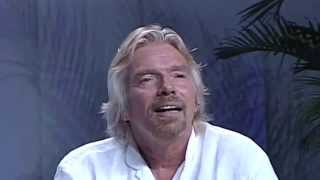
“I'm not really interested in making money. I'm interested in creating things…”High Performance interview, 2024 · 0:00
The lesson
Branson’s starting point for business is simple: enter markets where people are being poorly served and improve the experience. In his account of how Virgin expanded, he says the company only moved into new sectors when it felt those sectors were badly run, which turns entrepreneurship into a practical test: where are customers frustrated, overcharged, or ignored?1 That is why this chapter is about service first, not growth for its own sake.
He defines business less as a machine for extracting profit and more as an organized way to make life better for other people. In the High Performance interview, he describes a business as an idea that improves people’s lives and says his own motivation is creating things rather than making money.23 The implication is not that profit is irrelevant, but that profit should come from solving a real problem well enough that people choose you.
This mindset also explains why Branson is attracted to established industries with stale incumbents. He is drawn to the status quo when the customer experience is unpleasant, and he sees entrepreneurship as a force that can fix what large organizations have neglected.5 In practice, that means looking for complaint-rich categories and asking what a more human, more responsive version would look like.
Branson does not present service and responsibility as separate from business success. He argues that entrepreneurship matters for society, and once a business is working, contribution can expand through jobs, reinvestment, and socially responsible ventures that are still commercially sound.678 So the sequence is: first build something people genuinely need, then use that success to widen the benefit.
A final part of the service idea is how you treat the people delivering the service. Branson repeatedly links better businesses to listening well, drawing out the best in people, and creating an enjoyable environment rather than a fearful one.91011 If your team feels trusted and energized, they are more likely to create the kind of customer experience that makes a badly served industry better.
5 principles from Richard Branson
Enter markets where people are badly served
Do not start with the question, "What business should I own?" Start with, "Where are customers unhappy?" Branson’s filter is to go where an industry is badly run and improve the experience in a meaningful way.
“…the only reason we would go into a new sector is if we felt it was being badly run…”
Define business as improvement, not extraction
A strong venture begins with a concrete improvement in someone’s life. Profit matters, but in this chapter it is the result of creating something useful, not the sole purpose.
“I'm not really interested in making money. I'm interested in creating things…”
Use entrepreneurship to challenge stale incumbents
Branson sees entrepreneurship as a way to push against the status quo when large players stop serving people well. Look for industries where big companies have become complacent, confusing, or impersonal.
“Entrepreneurs are what is fixing the world.”
Let success expand your contribution
Early on, the business must survive, but the larger aim is broader value: jobs, reinvestment, and responsible ventures. Apply this by first building a viable model, then asking how growth can benefit more than just owners.
“…it could be a win-win-win situation…”
Serve customers by serving your team well
Better service usually comes from people who feel heard, appreciated, and trusted. Listening, praise, and a healthy culture are not soft extras; they are part of how a company delivers a better customer experience.
“I think being a really good listener is one of them things…”
In his own words
The quotes behind the lesson, word for word from the transcripts. Numbers match the lesson above.
“…the only reason we would go into a new sector is if we felt it was being badly run…”
“What is a business? A business is simply somebody coming up with an idea to make other people's lives better.”
“I'm not really interested in making money. I'm interested in creating things…”
“Entrepreneurs are what is fixing the world.”
“…being an entrepreneur is very important for society…”
“…it could be a win-win-win situation…”
“…wealth comes with it, and responsibility comes with that wealth…”
“I think being a really good listener is one of them things…”
“…to treat people like you would a flower…”
“If it's not fun, we don't do it.”
Reflect
- What industry or process in your work feels obviously badly served, and what specific frustration would you fix first?
- If you described your project as a way to make people’s lives better, what would you say in one sentence?
- Where are you focusing on revenue alone when you should be focusing on a better experience for customers or colleagues?
Check your understanding
Go deeper
 Richard Branson on Leadership and Virgin: Building, Risk, and Purpose2019 · 24 min · full transcript
 Richard Branson on Entrepreneurship and Leadership: Build, Smile, Delegate2024 · 58 min · full transcript
 Richard Branson on Entrepreneurship and Optimism: Build Small, Stay Positive27 min · full transcript
 Richard Branson on Entrepreneurship: Survive, then give back2013 · 50 min · full transcript
 Richard Branson on Entrepreneurial Philosophy: Fun, Risk, and Purpose2013 · 44 min · full transcript