Say Yes, But Hedge
The real meaning of “screw it, just do it.”

“In the end, you've got to, I think, take calculated risks in life; otherwise, you're going to, you know, sit it off mothballs or all they do and do nothing. And life is a hell of a lot more fun if you say yes rather than say no.”TIME Magazine interview, 2007 · 2:09
The lesson
Branson’s version of boldness is not blind jumping. He wants you to move toward opportunity, because a life of constant refusal becomes small and static, and many ventures only begin when someone is willing to try12. But he also says action often looks messy from the outside, because starting something new requires tolerating the chance of looking foolish and failing in public3.
The key is that his famous bias toward action comes with a second instruction: cap the downside first. He repeatedly argues that when you start a business, one of the most important jobs is to work out how to protect yourself if it does not work56. In Branson’s framing, courage is not pretending risk does not exist; it is designing the bet so a miss hurts, but does not destroy you7.
His airline example shows the pattern clearly. He was willing to pursue an idea that sounded unreasonable at the time, and even saw that kind of move as part of what built Virgin’s identity89. But before committing fully, he arranged terms so the failure case was limited rather than catastrophic, turning a dramatic leap into a survivable experiment7.
That practical judgment also shapes how Branson thinks about staying power. Taking risks is easier when you remain positive and focused through uncertainty, instead of freezing the moment things get difficult10. It also helps to build ventures you actually enjoy, because fun and play are not side issues for him; they are part of the energy needed to persist, attract people, and keep trying when outcomes are unclear1112.
So the real meaning of Branson’s approach is: say yes more often, but never confuse enthusiasm with recklessness. Back instinct with structure, use negotiations to limit the damage if you are wrong, and remember that your reputation affects future opportunities as much as the current deal. The goal is not to eliminate risk; it is to make bold action repeatable.
5 principles from Richard Branson
Say yes to worthwhile opportunities
Branson believes many good outcomes begin with a willingness to try rather than defaulting to caution. Apply this by noticing where hesitation is protecting you from embarrassment more than from real danger.
“In the end, you've got to, I think, take calculated risks in life; otherwise, you're going to, you know, sit it off mothballs or all they do and do nothing. And life is a hell of a lot more fun if you say yes rather than say no.”
Protect the downside before you leap
Before acting, define the worst realistic loss and reduce it. Structure deals, commitments, and timelines so that failure is survivable and teaches you something instead of ending the game.
“Take great chances and yet predict or protect the downside…”
Treat bold moves as experiments, not all-or-nothing bets
Branson’s large-seeming risks often had a boundary around the damage. When you can, test an idea with an exit option, a limited budget, or a reversible commitment.
“To protect the downside, so I knew that the worst that could happen would be, you know, maybe six months of the profits of Virgin Records we would lose if it didn't work out. And, Boeing agreed to it. And, you know, when the end of the first year came, instead of handing the plane back, people loved Virgin Atlantic, and, you know, we had a... You know, you know, people flocked to it, and we had a spirit about it, which is very different from British Airways. We ended up buying a couple more seven... Secondhand seven four sevens from Boeing. And and then, you know, over the years since, we bought, some hundreds of planes from, you know, for the three or four different airlines we set up over the years from Boeing.”
Do not fear looking foolish
New ventures often appear naive until they work. If the downside is capped, being briefly wrong-looking is often a fair price for learning and breakthrough opportunities.
“…you have to be a little bit brave and stupid and foolish to do that…”
Use enjoyment to sustain risk
Branson treats fun and play as practical advantages, not luxuries. Work that energizes you makes it easier to stay resilient and creative when uncertainty rises.
“If it's not fun, we don't do it.”
Moments to watch
In his own words
The quotes behind the lesson, word for word from the transcripts. Numbers match the lesson above.
“…life’s a lot more fun when you say yes, not when you say no…”
“In the end, you've got to, I think, take calculated risks in life; otherwise, you're going to, you know, sit it off mothballs or all they do and do nothing. And life is a hell of a lot more fun if you say yes rather than say no.”
“…you have to be a little bit brave and stupid and foolish to do that…”
“Take great chances and yet predict or protect the downside…”
“The most important thing when you start a business is thinking about protecting the downside.”
“To protect the downside, so I knew that the worst that could happen would be, you know, maybe six months of the profits of Virgin Records we would lose if it didn't work out. And, Boeing agreed to it. And, you know, when the end of the first year came, instead of handing the plane back, people loved Virgin Atlantic, and, you know, we had a... You know, you know, people flocked to it, and we had a spirit about it, which is very different from British Airways. We ended up buying a couple more seven... Secondhand seven four sevens from Boeing. And and then, you know, over the years since, we bought, some hundreds of planes from, you know, for the three or four different airlines we set up over the years from Boeing.”
“I quite like to start an airline…”
“I think the thing that put Virgin on the map was when we bought one secondhand 747…”
“If you're gonna survive, the only way you're gonna survive is by keeping focused, by staying positive…”
“If it's not fun, we don't do it.”
“I think play is really important.”
Reflect
- What opportunity are you currently saying no to mainly because you might look foolish, and how could you redesign it so the downside is limited?
- If your next big move failed, what is the maximum loss you could tolerate in time, money, or reputation? What specific term or boundary would cap it?
- Which parts of your work feel energizing enough to sustain uncertainty, and which are draining your willingness to take smart risks?
Check your understanding
Go deeper
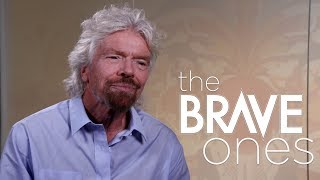 Richard Branson on Calculated Risk Taking: Say Yes and Go for It2016 · 26 min · full transcript
 Richard Branson on Creativity and Entrepreneurship: Take Bold Risks2016 · 40 min · full transcript
 Richard Branson on Entrepreneurship and Risk: How He Caps the Downside2017 · 88 min · full transcript
 Richard Branson on Risk Taking: Betting Virgin Records on an Airline2025 · 45 min · full transcript
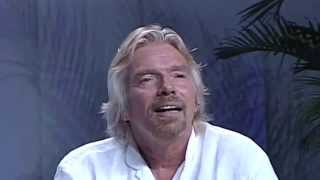 Richard Branson on Entrepreneurial Philosophy: Fun, Risk, and Purpose2013 · 44 min · full transcript