Employees First
Look after your people and they will look after the customer.
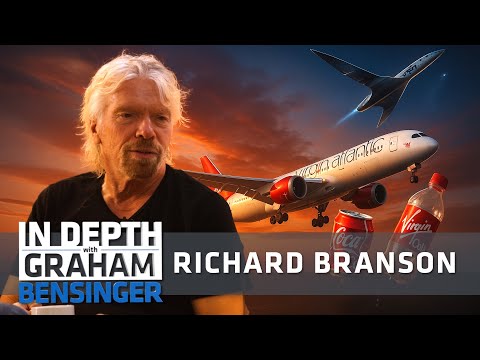
“But, anyway, we didn't listen to him on that. We did get the second 747, and I think, you know, the reason I think my partners were wrong was traveling on airlines in those days was abysmal. I mean, they would dump a bit of cold chicken on your lap. There was no entertainment. The cabin crew didn't smile because they were treated so badly. The planes were old and run down. So, you know, bring somebody in from the entertainment world and liven it up and make it a wonderful experience. And um...”Graham Bensinger interview, 2025 · 27:31
The lesson
Branson’s employee-first logic starts with a simple chain: if a business exists to make people’s lives better, then that includes the people who work inside it, not only the customers outside it. He treats people skills as a central leadership capability, not a soft extra, and he repeatedly ties company quality to the way leaders listen, notice details, and respond to what staff and customers say. In his view, culture is built through attention: hiring well, listening closely, and acting on what you hear.123
That is why he puts so much weight on finding strong people and trusting them. Branson is unusually direct that he has needed people better than himself around him, and he connects that to delegation rather than trying to control everything personally. He also prefers giving people room to grow from within, because internal promotion shows employees that the company believes in them and reduces the demoralization that comes when leaders keep choosing outsiders over insiders.456
Once good people are in place, Branson’s next move is encouragement. He leans toward praise, optimism, and looking for the best in people, which means treating people in a way that helps them open up rather than shrink back. The practical point is not to avoid standards; it is to create the conditions where people want to contribute, improve, and bring energy to the work.789
He also thinks work should feel enjoyable. Fun and humor are not distractions in his system; they are part of performance because they shape the emotional tone of the workplace. When people are having a better time, that mood becomes visible to customers, and Branson explicitly connects bad customer experience to badly treated staff, as in his criticism of airlines where crews did not smile because of how they were managed.101112
The final step is that culture shows up in the product and service through small details. Branson believes exceptional companies are separated from average ones by getting many little things right, and that only happens when leaders listen carefully to both employees and customers and then act. Employee-first leadership is therefore not separate from customer experience; it is the operating system that makes better service possible.13314
5 principles from Richard Branson
Hire people stronger than you
Branson does not try to be the smartest person in every room. Build teams by finding capable people, then delegate real responsibility so the company can improve beyond your own limits.
“I was 15, I was dyslexic, and I needed people better than me to be around.”
Promote trust by promoting from within
When possible, give existing people a visible path to grow. Internal promotion signals belief, preserves morale, and strengthens loyalty because employees can see a future with the company.
“Well, uh, I, um, I'm a great believer in promoting from within the company and not necessarily promoting from outside. We do, we do on occasions bring people from outside, but the advantage of promoting from within the company is, uh, you know, people from within the company know that they've got a chance of, you know, growing with the company, um, and, uh, and, and, you know, and it's, can be quite demoralizing if you keep bringing people in from outside above people, and, um, so by the time we've actually promoted somebody, we know their weaknesses, we…”
Use praise and optimism to draw out better work
Branson’s approach is to look for the best in people and help it grow. In practice, that means more recognition, more encouragement, and less management by fear or constant criticism.
“…to treat people like you would a flower…”
Make work enjoyable on purpose
Fun and humor are part of how Branson wants a company to operate, not a reward after the real work is done. A lighter, more human workplace can raise energy internally and make service feel warmer externally.
“If it's not fun, we don't do it.”
Let culture reach the customer through details
Great service is the visible output of an internal culture that listens and cares. Ask what small frustrations staff and customers notice, then fix them quickly and consistently.
“If you get the little details right, it makes for an exceptional company over an average company.”
Moments to watch
In his own words
The quotes behind the lesson, word for word from the transcripts. Numbers match the lesson above.
“What is a business? A business is simply somebody coming up with an idea to make other people's lives better.”
“I think I think the people skills is is is the most important, skill.”
“So I think, you know, every every little detail, I think, we, the team have got right at at Virgin, and if you get the little details right, you know, then collectively, you... It makes for an exceptional company over an average company. And, you know, if I'm on a Virgin plane, or in any Virgin company, I'll have my notebook, I'll take notes, I'll listen to it, listen to the staff, listen to the customers, you know, and then act on it when I get to the far end, and and and then be in touch... Back in touch with the people who, you know, gave me the ideas to thank them and tell them what we've done. And and and I think a good a good leader has to be a good listener.”
“I was 15, I was dyslexic, and I needed people better than me to be around.”
“I think that... Well, first of all, I I I would like to say I'm proud of being a dyslexic thinker, and I'm delighted that dyslexic thinking is now becoming almost part of the vocabulary. And I'm pleased to, you know, talk to many dyslexic kids over the years to try to make them realize that, you know, do not do not be worried about it. You know, look at look at the areas that you that you enjoy and concentrate on those. The areas that you're not great at, you you know, either that you'll catch up later on in life, or, you know, if you're gonna start a business, you can delegate and find other people who can deal with those.”
“Well, uh, I, um, I'm a great believer in promoting from within the company and not necessarily promoting from outside. We do, we do on occasions bring people from outside, but the advantage of promoting from within the company is, uh, you know, people from within the company know that they've got a chance of, you know, growing with the company, um, and, uh, and, and, you know, and it's, can be quite demoralizing if you keep bringing people in from outside above people, and, um, so by the time we've actually promoted somebody, we know their weaknesses, we…”
“…to treat people like you would a flower…”
“You know, you realize that, you know, why they've become elders is because, you know, they've spent their lifetime listening and absorbing, and then, you know, only speaking, you know, choosing their words carefully. I think loving people, I mean, I think, you know, a genuine love of a genuine love of everybody, you know, and, you know, looking for the best in people. I mean, even, you know, even if they're being a pain, you know, you can normally find the best in pretty well anybody.”
“…a positive attitude is essential in life…”
“If it's not fun, we don't do it.”
“The more humor you can have, the better.”
“But, anyway, we didn't listen to him on that. We did get the second 747, and I think, you know, the reason I think my partners were wrong was traveling on airlines in those days was abysmal. I mean, they would dump a bit of cold chicken on your lap. There was no entertainment. The cabin crew didn't smile because they were treated so badly. The planes were old and run down. So, you know, bring somebody in from the entertainment world and liven it up and make it a wonderful experience. And um...”
“If you get the little details right, it makes for an exceptional company over an average company.”
“I like to think it stands for quality…”
Reflect
- Where in your work are you over-controlling instead of hiring or trusting people who are stronger than you in specific areas?
- What is one way your team’s internal experience is already showing up in the customer experience, for better or worse?
- What small ritual of praise, humor, or listening could you add this week to make work more energizing for the people around you?
Check your understanding
Go deeper
 Richard Branson on Virgin Growth Strategy: Diversify, Delegate, Win2023 · 76 min · full transcript
 Richard Branson on Entrepreneurship and Leadership: Build, Smile, Delegate2024 · 58 min · full transcript
 Richard Branson on Entrepreneurship and Optimism: Build Small, Stay Positive27 min · full transcript
 Richard Branson on Entrepreneurial Philosophy: Fun, Risk, and Purpose2013 · 44 min · full transcript
 Richard Branson on Brand Diversification: Keep Asking Why Not2022 · 36 min · full transcript
 Richard Branson on Entrepreneurial Leadership: Culture, Risk, and Purpose2022 · 26 min · full transcript