Survive the Setbacks
What Branson learned from danger, lawsuits, crises, and near-failure.

The lesson
Branson treats setbacks as part of the game, not as proof that you should stop. He argues that progress often requires saying yes before you have certainty, and being willing to look foolish while you learn12. But in his telling, this is not reckless optimism: he sees life and business as a long learning process, where each attempt teaches you how to handle the next one better4.
His way of handling fear is to pair boldness with downside protection. When he launched Virgin Atlantic, he did not just make an emotional leap; he structured the deal so the losses were capped if the airline failed, which let him take a large swing without risking everything he had built5. That reflects his broader view that there is a thin line between success and failure, so survival depends on reducing the damage if a bet goes wrong67.
When a crisis threatens the business, Branson focuses on protecting the core: the people, the brand, and the quality of the product. He describes stepping in financially to keep Virgin Atlantic alive because the alternative risked jobs and the wider company7. He also ties survival to building something genuinely better, arguing that a new business is more likely to last if it becomes the best in its field rather than a weak copy of incumbents89.
He also treats reputation as a form of insurance during hard times. Branson repeatedly says that your reputation is what you really own, which means you should negotiate and behave in ways that preserve trust, especially because business relationships continue over many years1011. Setbacks are easier to recover from if customers, partners, and employees believe you are fair and dependable.
Finally, Branson's recovery mindset is practical and forward-moving. He accepts that some ventures will fail, and the key is to exit at the right time, protect the overall brand, and stay positive enough to keep going13. In his approach, resilience is not denial; it is the combination of realism about losses, optimism about the next move, and enough curiosity to keep taking on new challenges1415.
5 principles from Richard Branson
Take the risk, but cap the downside
Do not wait for complete certainty before acting on a strong opportunity. Instead, structure the decision so a failure is survivable, which gives you room to be bold without putting everything at risk.
“To protect the downside, so I knew that the worst that could happen would be, you know, maybe six months of the profits of Virgin Records we would lose if it didn't work out. And, Boeing agreed to it. And, you know, when the end of the first year came, instead of handing the plane back, people loved Virgin Atlantic, and, you know, we had a... You know, you know, people flocked to it, and we had a spirit about it, which is very different from British Airways. We ended up buying a couple more seven... Secondhand seven four sevens from Boeing. And and then, you know, over the years since, we bought, some hundreds of planes from, you know, for the three or four different airlines we set up over the years from Boeing.”
Treat setbacks as part of learning
Do not interpret mistakes or near-failures as a final verdict on your ability. Use them as information, then make the next decision with better judgment and less fear.
“I’ve seen life as one long, one long learning process…”
Protect the core when crisis hits
In a serious threat, focus first on preserving the parts that matter most: jobs, the health of the main business, and the brand. That may require hard choices and concentrated action rather than spreading resources thinly.
“Well, I think that, um, you know, there's a very thin dividing line between success and failure, and I think if you start a business without financial backing, um, you're likely to, you're likely to go the wrong side of that dividing line. Um, the, uh, we had, um, we were being attacked by British Airways. They were trying to put, um, our airline out of business, and, um, and they launched what’s become known as the dirty tricks campaign. And, um, and I realized that, you know, the whole empire was likely to come crashing down unless I chipped in a chip. And, uh, and in order to protect the jobs of the people who work for the airline and protect the jobs of the people who work for the record company, um, I had to sell…”
Guard your reputation like an asset
People remember how you behave under pressure. If you negotiate fairly and act in a way others can trust, you improve your odds of getting support, second chances, and long-term partners after a setback.
“…all you have in life is your reputation…”
Stay positive and keep moving
Resilience is not passive endurance. It means keeping your attention on what you can do next, maintaining energy after losses, and continuing to look for opportunity instead of freezing in fear.
“If you're gonna survive, the only way you're gonna survive is by keeping focused, by staying positive…”
In his own words
The quotes behind the lesson, word for word from the transcripts. Numbers match the lesson above.
“…life’s a lot more fun when you say yes, not when you say no…”
“…you have to be a little bit brave and stupid and foolish to do that…”
“I’ve seen life as one long, one long learning process…”
“To protect the downside, so I knew that the worst that could happen would be, you know, maybe six months of the profits of Virgin Records we would lose if it didn't work out. And, Boeing agreed to it. And, you know, when the end of the first year came, instead of handing the plane back, people loved Virgin Atlantic, and, you know, we had a... You know, you know, people flocked to it, and we had a spirit about it, which is very different from British Airways. We ended up buying a couple more seven... Secondhand seven four sevens from Boeing. And and then, you know, over the years since, we bought, some hundreds of planes from, you know, for the three or four different airlines we set up over the years from Boeing.”
“There's a very thin dividing line between success and failure…”
“Well, I think that, um, you know, there's a very thin dividing line between success and failure, and I think if you start a business without financial backing, um, you're likely to, you're likely to go the wrong side of that dividing line. Um, the, uh, we had, um, we were being attacked by British Airways. They were trying to put, um, our airline out of business, and, um, and they launched what’s become known as the dirty tricks campaign. And, um, and I realized that, you know, the whole empire was likely to come crashing down unless I chipped in a chip. And, uh, and in order to protect the jobs of the people who work for the airline and protect the jobs of the people who work for the record company, um, I had to sell…”
“…my whole attitude to life is, you know, if you create a new business that's the best in its field, it's likely to survive.”
“But, anyway, we didn't listen to him on that. We did get the second 747, and I think, you know, the reason I think my partners were wrong was traveling on airlines in those days was abysmal. I mean, they would dump a bit of cold chicken on your lap. There was no entertainment. The cabin crew didn't smile because they were treated so badly. The planes were old and run down. So, you know, bring somebody in from the entertainment world and liven it up and make it a wonderful experience. And um...”
“…all you have in life is your reputation…”
“…your reputation is all you have in life.”
“If you're gonna survive, the only way you're gonna survive is by keeping focused, by staying positive…”
“I look at everything as an opportunity.”
“I can't resist saying yes. Uh, if there's a, you know, if there's a challenge, uh, that, um, that I'm going to regret sitting and watching somebody else doing on television and having said no myself. So, you know, I think if the, if the right challenge comes up, I will, I will still jump in and say yes. Um, you know, the, the, the challenge that we are concentrating on right now, uh, is one that, uh, you know, has been perhaps the biggest challenge of my, uh, my life, and that, and that is, um, building a space line, and, um, it's taken 10 years to get to you, to get to where we are today.”
Reflect
- What risk are you currently avoiding because the downside feels vague or unlimited? How could you redesign it so the loss is capped?
- Think of a recent setback in your work. Did you treat it as evidence to learn from, or as a reason to pull back entirely?
- If your reputation is one of your main assets, what habit in your current work most strengthens it, and what habit most puts it at risk?
Check your understanding
Go deeper
 Richard Branson on Adventure and Resilience: Balloons, Airlines, Space2025 · 74 min · full transcript
 Richard Branson on Entrepreneurship: Building, Risk, and Purpose26 min · full transcript
 Richard Branson on Business, Innovation and Giving Back: TED Talk2004 · 30 min · full transcript
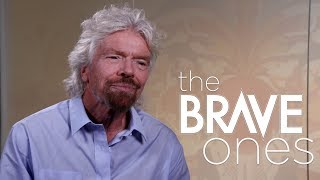 Richard Branson on Calculated Risk Taking: Say Yes and Go for It2016 · 26 min · full transcript
 Richard Branson on Risk Taking: Betting Virgin Records on an Airline2025 · 45 min · full transcript
 Richard Branson on Entrepreneurship and Risk: How He Caps the Downside2017 · 88 min · full transcript