Jeff Bezos on Day 1
For Bezos, Day 1 means keeping a company small in spirit even as it grows: customer-obsessed, inventive, fast-moving, and willing to build for the long term.
- Day 1 is about staying nimble and entrepreneurial at any size
- Its anchor is customer obsession, not competitor obsession
- It requires long-term thinking instead of reacting to short-term noise
- It starts small, compounds over time, and keeps inventing for customers
- It also means leaning into the future and accepting misunderstanding while you build
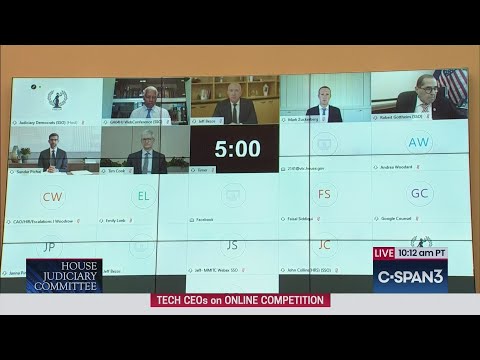
“We were betting that it was not a zero sum game.”House Judiciary Committee hearing, 2020 · 27:45
Day 1 is a discipline for staying small in spirit
Bezos uses Day 1 to describe a company mindset, not a company age. The point is to preserve the speed, heart, and entrepreneurial energy that are natural in a startup but easy to lose at scale1.
He connects Day 1 to beginning small and treating new efforts that way even after they become large. He says everything he has done started small, and he ties that memory directly to the Day 1 mentality of acting like small things can become big over time23.
Customer obsession is the engine of Day 1
For Bezos, Day 1 is grounded first in customer obsession. He repeatedly contrasts this with competitor obsession and argues that the biggest advantage a company can have is to keep its attention on customers instead of rivals456.
That focus shapes how a company decides what to build. He says to start with the customer and work backwards, and he frames success as something that should happen only when customers win78.
He also sees customers as a forcing function for innovation because they keep asking for better experiences. Since customers are never fully satisfied, they pull a company to keep improving instead of settling into comfort910.
Day 1 ignores short-term noise and builds for what lasts
Bezos treats Day 1 as inseparable from long-term thinking. He warns against spending attention on daily market signals and instead argues that durable value shows up over time, not in short-run fluctuations1112.
That long-term lens changes what leaders pay attention to. Rather than chasing what is fashionable right now, he emphasizes identifying what will not change for customers over long periods and building around those stable needs13.
This is why Day 1 can look stubborn from the outside. Lower prices, trust, reliability, and customer value matter more than short-term optics, which is why he describes trust as something earned slowly by doing hard things well14.
Day 1 requires invention, risk, and comfort with being misunderstood
Bezos does not treat customer focus as passive listening. He says leaders should ask customers what they need, but that is not enough because important breakthroughs often require inventing on their behalf before they can articulate the idea themselves16.
That makes experimentation central to Day 1. He links innovation to a willingness to fail and says that if you want to be an innovative company, you have to accept that some bets will be unconventional1718.
This also explains why Day 1 often feels uncomfortable. A company that keeps leaning into the future cannot wait for universal agreement before acting1920.
The practical test of Day 1 is whether growth increases possibility
Bezos does not reject scale; he wants scale without sclerosis. He says large organizations gain resources, talent, and reach, but the danger is losing nimbleness and entrepreneurial spirit, so Day 1 is the counterweight that keeps size from turning into stasis1.
In practice, that means using scale to create better customer outcomes and bigger opportunities, not to close the system. He points to decisions like opening the store to third-party sellers because it would create a better customer experience and a growing pie rather than a zero-sum contest21.
This is why Day 1 is ultimately optimistic. Bezos presents it as a way to keep building, keep opening new possibilities, and keep believing that the future can be better if you stay inventive and customer-focused2324.
“We were betting that it was not a zero sum game.”House Judiciary Committee hearing, 2020 · full transcript →
Bezos on day 1, in his own words
“Day one. Everything I've ever done has started small.”
“…customer obsession as opposed to competitor obsession…”
“Customer obsession has driven our success.”
Where to watch
 Jeff Bezos on Leadership: Customer Obsession and Day One2018 · 56 min · full transcriptBest direct explanation of how Day 1 preserves nimbleness, entrepreneurial spirit, and customer obsession at scale.
 Jeff Bezos on Leadership and Long-Term Thinking2018 · 71 min · full transcriptShows how Day 1 fits Bezos’s broader view of starting small and thinking long term.
 Jeff Bezos on Customer Obsession: Leaning Into the Future2016 · 37 min · full transcriptExplains why customer obsession and leaning into the future are central to the Day 1 mindset.
 Jeff Bezos on Customer-Centric Innovation: AWS, Flywheels, and Space2012 · 42 min · full transcriptUseful for understanding the operating logic behind Day 1: work backwards from customers and innovate through experimentation.
 Jeff Bezos on Antitrust and Market Power: Amazon, Customers, Day One2020 · 327 min · full transcriptShows Bezos applying Day 1 language to customer trust, optimism, and non-zero-sum growth at large scale.
Questions people ask
- What did Jeff Bezos mean by Day 1?
- What did Jeff Bezos say about customer obsession and intuition?
- What did Jeff Bezos say about how Amazon became successful?
- What did Jeff Bezos say about staying Day 1 at Amazon?
- Why does Jeff Bezos say focus on the customer instead of competitors?
- What did Jeff Bezos say about instinct in important decisions?
Sources
Every quote above, word for word from the transcripts. Numbers match the text.
“Well, so day one, this is a phrase that we use at Amazon all the time. I've been using it in my first annual shareholder letter from twenty years ago. And we say it's always day one, and it needs to be day one for the reason that you just mentioned. And how do you so the real question for me is how do you go about maintaining a day one culture? It's great to have the scale of Amazon. We have financial resources. We have lots of brilliant people. We can accomplish great things. We have global scopes. We have operations all over the world. But the downside of that is that you can lose your nimbleness. You can lose your entrepreneurial spirit. You can lose your that kind of heart that small companies often have. And so if you could have the best of both worlds, if you can have that entrepreneurial spirit and heart, while at the same time having all the advantages that come with scale and scope, think of the things that you could do.”
“Day one. Everything I've ever done has started small.”
“It's day one. Everything I've ever done has started small. Amazon started with a couple of people and, Blue Origin started with five people. And, the budget at Blue Origin was very, very small. Now the budget at Blue Origin approaches $1,000,000,000 a year. Next year, will be more than $1,000,000,000. So in Amazon, it literally was 10 people. Today, it's zero five million people, but you, it's hard to remember for you guys. But for me, it's like yesterday, I was driving the packages to the post office myself and, hoping one day we could afford a forklift. And so for me, I've seen small things get big and it's part of this day one mentality. I like treating things as if they're small. Amazon, even though it is a large company, I wanted to have the heart and spirit of a small one.”
“…customer obsession as opposed to competitor obsession…”
“…the core of the company is customer obsession as opposed to competitor obsession…”
“The number one thing that has made us successful by far is obsessive compulsive focus on the customer as opposed to obsession over the competitor. And I talk so often to other CEOs and some other CEOs and also founders and entrepreneurs. And I can tell that even though they're talking about customers, they're really focusing on competitors. And it is a huge advantage to any company if you can stay focused on your customer instead of your competitors. So then you have to identify who is your customer.”
“…start with the customer and work backwards…”
“…we should only win when our customers win…”
“…customers are always dissatisfied. They always want more…”
“Customer obsession has driven our success.”
“In the short run, the stock market is a voting machine. In the long run, it's a weighing machine.”
“Never spend any time thinking about the daily stock price. I don't.”
“…what's not going to change in the next 10 years…”
“We're not going to raise prices. So if you're waiting for us to raise prices, give up now.”
“The touchstone, the thing you always go back to is those customer needs. So that's the only way that I could advise any founder or entrepreneur is to deeply understand what are the big ideas that their customers want. And you can't you should ask them, ask your customers, but it's not sufficient. You also have to invent on their behalf because the biggest breakthroughs, the most important ideas customers don't know to ask. They don't know to ask for those things. That's why... Dream. You have to dream, and you have to use your intuition and your gut and your heart. All of the data that gets used in business is essential.”
“If you want to be an innovative company…”
“…you have to be willing to be misunderstood…”
“You have to always be leaning into the future.”
“Never, ever, ever lean away from the future.”
“We were betting that it was not a zero sum game.”
“I have never been more optimistic about our future.”
“It is still Day One for this country.”
How this guide was made: drafted with AI from the full transcripts of the recordings cited, then checked: every quotation must match a transcript word for word and be the speaker's own words, and an independent review gates accuracy. Methodology and corrections.