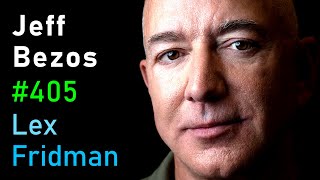
Jeff Bezos on Leadership
For Bezos, leadership means building from the customer backward, thinking long term, deciding at the right speed, and preserving a Day 1 culture that keeps invention alive.
- Start with the customer, not the competitor.
- Lead for the long term and ignore short-term noise.
- Move fast on reversible decisions and experiment constantly.
- Keep a Day 1 culture as you scale so you do not lose speed or heart.
- Leadership is also character: choices, courage, and kindness matter.
Leadership starts with customer obsession
Bezos’s central leadership idea is that the company should be pulled forward by customers, not pushed around by competitors. He treats customer obsession as a discipline that clarifies priorities, shapes strategy, and keeps leaders grounded in what matters when markets get noisy.
This is why he returns to the customer as the touchstone for decisions. In his view, leaders should deeply understand enduring customer needs, ask customers what they want, and also invent on their behalf because customers cannot always specify the breakthrough in advance.
That approach also explains bets that look unusual from the outside. He frames important moves as worthwhile when they create a better customer experience and expand the pie rather than merely shifting advantage from one player to another.
Great leaders think in decades, not headlines
Bezos sees leadership as the ability to resist short-term pressure and organize around long-term value. He draws a sharp distinction between temporary signals and durable substance, arguing that institutions perform better when they stretch their time horizon far beyond the next quarter.
This long-term lens changes how a leader measures progress. Instead of reacting to daily judgment from outsiders, the job is to build something that becomes weightier over time through trust, capability, and repeated good decisions.
Long-term thinking also expands what leaders believe is possible. Bezos repeatedly links ambition with patience: some problems only become solvable when you are willing to work on them over many years.
Decide fast when you can, slow down when you must
A big part of Bezos’s leadership philosophy is decision velocity. He argues that many organizations become sluggish because they treat every choice as if it were equally consequential, when in fact most choices are reversible and should be made quickly.
His practical distinction is between reversible and irreversible decisions. Reversible choices can be corrected, so delay is often more costly than a mistake; truly consequential, hard-to-reverse choices deserve more care and judgment.
This matters because speed compounds. A leader who creates a culture that can make many good-enough reversible decisions quickly gives the organization more chances to learn, adapt, and seize opportunities.
Innovation requires experiments and room for mavericks
For Bezos, invention is not a side activity of leadership; it is one of leadership’s core responsibilities. He argues that more invention requires more experiments, which means leaders must expect many attempts not to work and still keep the system fertile for discovery.
That has organizational implications. Leaders need multiple paths to yes so ideas can move forward without getting trapped in hierarchy, and they need to distinguish genuine experimental failure from ordinary execution problems.
This also requires tolerance for being early, unconventional, and sometimes misunderstood. Bezos treats misunderstanding as a normal cost of original thinking, which means leadership includes protecting ideas and people that do not yet fit the consensus.
Day 1 leadership keeps a big company small in spirit
Bezos uses Day 1 as a shorthand for the cultural state leaders should preserve as an organization grows. The point is not nostalgia for startup life, but protecting speed, entrepreneurial energy, and the sense of possibility that often disappear with scale.
He believes everything meaningful starts small, and strong leaders keep treating big things with the attention and urgency of small things. That mindset helps prevent stasis and keeps teams close to reality instead of letting process take over.
In practice, this means refusing unnecessary bureaucracy and keeping contact with what is actually happening. Bezos favors concrete signals that cut through abstraction, including direct customer input and lived details that expose reality better than polished narratives.
Leadership is also about choices, courage, and kindness
Bezos does not reduce leadership to strategy and execution. He also frames it as character, arguing that what defines a person is not their gifts but the choices they make when the safer path is available.
That is why courage matters so much in his model of leadership. Starting something new, making a non-consensus bet, or following a conviction often means accepting uncertainty and possible failure in exchange for avoiding the deeper regret of never trying.
He also insists that kindness belongs in leadership, not as softness but as a harder and more revealing choice than cleverness. In his view, a leader’s standards should include both performance and humanity.
Where to watch
 Jeff Bezos on Leadership: Customer Obsession and Day One2018 · 56 min · full transcriptBest single overview of Bezos’s leadership framework: customer obsession, Day 1, scale, and reality checks.
 Jeff Bezos on Innovation and Leadership: Experiment, Decide Fast2018 · 50 min · full transcriptBest for decision speed, experimentation, and how leaders create multiple paths to yes.
 Jeff Bezos on Leadership and Long-Term Thinking2018 · 71 min · full transcriptBest for long-term thinking, Day 1, and how Bezos makes major decisions.
 Jeff Bezos on Gifts and Choices: Build Yourself a Great Story2010 · 17 min · full transcriptBest for the moral side of leadership: choices, courage, regret minimization, and kindness.
 Jeff Bezos on AI and Space Futures: Optimistic, Long-Term, Bold2025 · 64 min · full transcriptBest for protecting mavericks, optimism, and building in periods of rapid change.
Questions people ask
- What did Jeff Bezos mean by Day 1?
- What did Jeff Bezos say about customer obsession and intuition?
- What did Jeff Bezos say about finding your calling?
- What did Jeff Bezos say about long-term thinking?
- What did Jeff Bezos say about staying Day 1 at Amazon?
- What did Jeff Bezos say about instinct in important decisions?
How this guide was made: drafted with AI from the full transcripts of the recordings cited, then checked: every quotation must match a transcript word for word and be the speaker's own words, and an independent review gates accuracy. Methodology and corrections.