Reed Hastings on Freedom & Responsibility
Reed Hastings’s idea is simple: if you hire outstanding people, give them rich context and high standards, they will make better decisions with fewer rules.
- Freedom works only with exceptional talent and clear performance standards.
- Managers should set context, not control decisions.
- Creative work needs flexibility and judgment more than tight process.
- Candor is essential because autonomy only works when people debate openly and share dissent.
- The goal is not chaos but running as loosely as possible without tipping into it, so innovation stays alive.
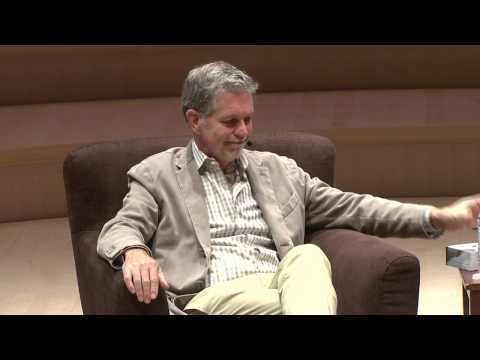
“Yeah, up until 2002, all we focused on was survival. And then once we got public and, and we're profitable we started thinking, wow, this thing might last. And the, the cruelest irony would be to not want to work there. You know to let it become a place we didn't want to be. And so we tried to think through what do we really care about? We realized what we really care about is working with incredible people on hard problems and that, that was the essence. So we should organize everything around supporting that of working with, you know, just incredibly talented people. And so that led us to freedom and responsibility, because incredible people don't wanna be micro managed.”Stanford GSB Entrepreneurial Company of the Year, 2014 · 24:06
Freedom and responsibility are a management system, not a perk
Hastings treats freedom and responsibility as the core operating model for creative work, not as an employee benefit. His basic claim is that innovation comes less from top-down control and more from a culture that lets strong people act with judgment. He ties Netflix’s ability to innovate directly to culture, and he repeatedly describes the company’s style as centered on freedom and responsibility.123
The logic starts with the kind of company he wanted to build. Once survival was no longer the only priority, he says the real aim became working with incredible people on hard problems and organizing the company around that reality. From there, freedom followed because exceptional people do not want to be micromanaged.45
“Yeah, up until 2002, all we focused on was survival. And then once we got public and, and we're profitable we started thinking, wow, this thing might last. And the, the cruelest irony would be to not want to work there. You know to let it become a place we didn't want to be. And so we tried to think through what do we really care about? We realized what we really care about is working with incredible people on hard problems and that, that was the essence. So we should organize everything around supporting that of working with, you know, just incredibly talented people. And so that led us to freedom and responsibility, because incredible people don't wanna be micro managed.”Stanford GSB Entrepreneurial Company of the Year, 2014 · full transcript →
Why Hastings thinks creative work needs fewer rules
Hastings draws a sharp line between factory work and creative work. In factories, the goal is reducing variation and preventing mistakes through supervision and process; in creative work, the goal is inspiration, learning, and original thinking. Because of that difference, he believes many companies damage themselves by managing creative people with industrial-age controls.678
He learned this partly by doing the opposite earlier in his career. When something went wrong, he used to add process to stop it from happening again, but he concluded that this short-term fix made organizations rigid and less able to adapt when markets shifted. That is why he warns that process can kill innovation and why he prefers a looser model built around judgment.7910
This does not mean no discipline. His point is that you should run as loosely as possible without tipping into dysfunction. He describes the aim as staying near the edge of chaos, where there is enough dynamism for creativity but not so much disorder that execution collapses.1112

“In a factory, you control people, you supervise them, but in creative work, you want to inspire them, you want to excite them. And that's completely different. And yet many people still run creative firms almost as if they wanted to be a factory. I know because I did it in our first company in pure software. Every time something went wrong, I would put a process in place to try to make sure that thing didn't go wrong again. And that works in the short term, but it makes you very rigid. And then the market shifted. In that case, it was C++ to Java, but they all shift in some way. And we were unable to adapt,…”TED conversation with Chris Anderson, 2017 · full transcript →
Context, not control, is the manager’s main job
Hastings’s replacement for rules is context. Instead of making every important decision themselves, leaders should clarify what matters, share information broadly, and let the decision owner act. He describes this directly as managing by setting context and then letting people run, and he takes pride in making very few decisions himself.13143
This works only if leaders teach well. Hastings wants leaders to explain the business, the tradeoffs, and the goals so that teams can make independent decisions that are still aligned. In his model, a leader adds value by building understanding, not by approving every move.1513
That is also why writing culture down mattered to him. Once expectations are explicit, people can debate them, refine them, and use them as a real guide for action rather than relying on vague managerial sermons.1617
“…manage through setting context and letting people run…”Stanford GSB Entrepreneurial Company of the Year, 2014 · full transcript →
Freedom only works with talent density and tough standards
Hastings does not believe freedom works in an average-performance environment. The model depends on talent density: a workplace filled with unusually capable people who can handle autonomy well. He says the company cared most about working with incredible people, and he compares the organization to a professional sports team rather than a family.41819
That is why responsibility at Netflix includes strong performance expectations. Hastings says the keeper test is what makes the model different, and he is explicit that the company valued growth and achievement more than lifetime loyalty. Adequate performance was not enough; if someone was no longer a strong fit, the company should part ways generously rather than hide the issue.202122
He also rejects the idea that high standards require coldness. He says the company wanted people who were generous of spirit and big-hearted, which shows that his version of responsibility includes both excellence and strong interpersonal behavior. The standard is not just output, but output combined with good judgment and good teamwork.2324
“What's different about Netflix is the keeper tests.”TED conversation with Chris Anderson, 2017 · full transcript →
Candor is what keeps autonomy from turning into drift
Freedom creates risk unless people can tell each other the truth. Hastings treats candor as a partner to autonomy because people need direct feedback, open disagreement, and honest information sharing to improve decisions. He says people should have wide license to be honest when the aim is helping each other.225
He is especially attentive to dissent. Because hierarchy can silence people, he says leaders must actively reward criticism and farm for disagreement rather than wait for it to appear. In practice, that means structured discussion, inviting people to say whether an idea is good or bad, and even asking what they would do differently if they were CEO.26
This is how responsibility becomes real. In Hastings’s model, responsibility does not mean just owning your tasks; it means using judgment, speaking up when something seems wrong, and helping the organization think better. That is part of why he says the macro rule is to use good judgment.1026
The deeper purpose is speed, adaptability, and better ideas
Hastings’s argument for freedom and responsibility is ultimately practical. Markets move quickly, especially on the internet, so a slow, process-heavy company will miss what comes next. A culture with autonomy and accountability can adapt faster because decisions are made closer to the work by people with the right context.12313
He also sees this model as better for ambition. Netflix’s big bets required a company willing to move before certainty arrived, while still accepting that bravery can lead to painful mistakes. Freedom and responsibility are meant to produce more learning, more adaptation, and more original work, even at the cost of some errors.12728
The result is a company designed around judgment rather than compliance. Instead of trying to control every variable, Hastings wants organizations that focus people on important work, please customers, and stay flexible enough to keep reinventing themselves.293031
Hastings on freedom & responsibility, in his own words
“…manage through setting context and letting people run…”
“I take pride in making as few decisions as possible as opposed to as many as possible…”
“In a factory, you control people, you supervise them, but in creative work, you want to inspire them, you want to excite them. And that's completely different. And yet many people still run creative firms almost as if they wanted to be a factory. I know because I did it in our first company in pure software. Every time something went wrong, I would put a process in place to try to make sure that thing didn't go wrong again. And that works in the short term, but it makes you very rigid. And then the market shifted. In that case, it was C++ to Java, but they all shift in some way. And we were unable to adapt,…”
Where to watch
 Reed Hastings on Freedom & Responsibility: How Netflix Runs Creative Work2017 · 62 min · full transcriptBest single explanation of how freedom, responsibility, candor, and the keeper test fit together in creative work.
 Reed Hastings on Freedom & Responsibility: Building Netflix2014 · 59 min · full transcriptShows Hastings’s core management idea in its clearest form: set context, make few decisions, and let strong people run.
 Reed Hastings on Culture and Talent Density: Context, Not Control2016 · 81 min · full transcriptBest for understanding talent density, why the culture was written down, and how context replaces micromanagement.
 Reed Hastings on Netflix Culture: Why Rules Need Reinvention2018 · 38 min · full transcriptBest case for why rules and process need reinvention when the goal is creativity rather than error reduction.
 Reed Hastings on Netflix Culture: Freedom, Candor, and Talent2019 · 24 min · full transcriptA concise overview of why Netflix prefers inspiration, flexibility, and sports-team performance standards.
Questions people ask
- What did Reed Hastings say about Netflix culture and taking bold risks?
- What did Reed Hastings say about freedom and responsibility at Netflix?
- What did Reed Hastings say about loyalty vs performance?
- What did Reed Hastings say about why Netflix wrote down its culture deck?
- What did Reed Hastings say about why creative work should not be run like a factory?
- How does Reed Hastings encourage candor at Netflix?
Sources
Every quote above, word for word from the transcripts. Numbers match the text.
“At root, we do think it's the culture that really enables that kind of innovation.”
“It's very big on freedom and responsibility.”
“Yeah, absolutely. We did have one advantage, which is we were born on DVD, and we knew that that was going to be temporary. No one thought we'd be mailing discs for 100 years. So then you have a lot of paranoia about what's coming next, and that's part of the founding ethos, is really worrying about what's coming next. So that's an advantage. And then in terms of the culture, it's very big on freedom and responsibility. I pride myself on making as few decisions as possible in a quarter.”
“Yeah, up until 2002, all we focused on was survival. And then once we got public and, and we're profitable we started thinking, wow, this thing might last. And the, the cruelest irony would be to not want to work there. You know to let it become a place we didn't want to be. And so we tried to think through what do we really care about? We realized what we really care about is working with incredible people on hard problems and that, that was the essence. So we should organize everything around supporting that of working with, you know, just incredibly talented people. And so that led us to freedom and responsibility, because incredible people don't wanna be micro managed.”
“…we should organize everything around supporting that…”
“…for creative work there's a different model.”
“In a factory, you control people, you supervise them, but in creative work, you want to inspire them, you want to excite them. And that's completely different. And yet many people still run creative firms almost as if they wanted to be a factory. I know because I did it in our first company in pure software. Every time something went wrong, I would put a process in place to try to make sure that thing didn't go wrong again. And that works in the short term, but it makes you very rigid. And then the market shifted. In that case, it was C++ to Java, but they all shift in some way. And we were unable to adapt,…”
“…our culture is designed at inspiring and motivating creative people…”
“Processes can be the death of innovation.”
“…the macro thing is, use good judgment.”
“If you over manage, for example, a tight process or specific hours that you have to be in the office or a wide variety of things, you filter out performance and creativity. And the looser that you can run, the more creative that the organization will be. So we talk about it as managing on the edge of chaos. You don't actually wanna fall into chaos. Okay? In chaos, the product barely gets released. It's full of bugs. People are upset. Payroll's not made. Lots of bad things happen. But it's getting us close to that edge of chaos where there's last minute saves and a lot of dynamism as you can possibly tolerate as opposed to, say, a semiconductor factory, which is trying to reduce variation and reduce error to get rid of variants.”
“That's the bitch about the internet -- it moves fast, you know?”
“…manage through setting context and letting people run…”
“I take pride in making as few decisions as possible as opposed to as many as possible…”
“We want our leaders to be great teachers…”
“One of the great things about putting things in writing is that makes it more debatable. And so it's not just hearing a sermon and it's like, "Okay, that's nice," but you can comment on, you know, this part here that we wrote down doesn't really seem appropriate or doesn't seem what we do, or, you know, to some degree it's a bill of rights for employees, which is here's a set of things that we, the company, want to and aspire to operate by, and if we don't, you.”
“…strong cultures work and weak cultures are diffused…”
“…we try to model ourselves like a professional sports team…”
“We’re a team, not a family…”
“What's different about Netflix is the keeper tests.”
“Ultimately, it was about performance, and that helped us clarify our own values—that we were more valuing growth and achievement than we were, say, lifetime loyalty. Which is different than a family company or other relationships that we have where we value loyalty in our friendships, in our marriage, and other things. We value loyalty over performance.”
“And viewing our task in building organizations like a championship team. And for 10,000 years, the primary organizational unit of society has been family, okay, all the way through kings and companies and family companies. So, so many assumptions we have are built around this 10,000 years of human history where organizations and families are the same thing, okay? And it's only this patina of corporations, and that's a thin layer over that that's different. And so we were the first ones to just lay it out there, to say adequate performance gets a generous severance package.”
“…we want to be around people who are generous of spirit and have a big heart…”
“…you want to be super proud of the organization and personally humble…”
“…we want to get people to realize if it's about helping each other, you have wide license, to be honest…”
“But in particular in feedback, because of the power dynamics, you really have to create an openness for people to give you feedback by giving them psychological rewards. That was so great, by lauding them. And we do things to farm for dissent. So let's say there's a decision about, you know, what should we do about the pandemic, and, you know, what should we, you know — then we would open it up for discussion, and then we want each person to weigh in with: do they think it's a good idea or bad idea to say, close down or whatever the issue is. Another thing we do is run an exercise: what would be different if you were CEO instead of me? And it's a…”
“…the same bravery that allows us to be innovative is the bravery that almost killed us…”
“…if you wanna stimulate creativity, which is making a lot of mistakes and those kinds of things, then that's a different model…”
“…we really want people to focus on ideas, on generating important work…”
“Our primary responsibility is to our customers to entertain them…”
“No, it's really focusing, which is we have to please our members and the big task is, you know, avoiding sort of competitive focus just because we grow doesn't mean people aren't gonna love, you know, Disney more or less, any more than if we grow, they're gonna love, you know, football more or less, you know, these are different entertainment centers. And what we should do is just focus on how do we please, our members.”
How this guide was made: drafted with AI from the full transcripts of the recordings cited, then checked: every quotation must match a transcript word for word and be the speaker's own words, and an independent review gates accuracy. Methodology and corrections.