Reed Hastings on Technology & the Future
Reed Hastings sees TV moving steadily from scheduled channels to internet-native viewing that is on-demand, personalized, global, and measured by time spent rather than subscriptions.
- Linear TV fades as internet TV gives viewers control over what, when, and where they watch.
- The core breakthrough is simple on-demand access: one fee, watch anything, anytime.
- Future competition is for attention and viewing time, not just subscribers.
- TV becomes more personalized, app-like, and global as internet delivery improves.
- Even live areas like sports move online and become more personalized.

TV shifts from schedules to viewer control
Hastings’s basic forecast is that television moves away from fixed schedules and toward internet delivery because people prefer control. In his view, the defining change is not a new genre or a new device but a new relationship to viewing: people choose what to watch for themselves instead of organizing their lives around a channel lineup or a broadcast time.123
That is why he describes internet TV as replacing the older tune-in model. He points to the appeal of not waiting for a set hour, not sitting through the old constraints of television, and being able to watch on your own terms.456
On-demand simplicity is the real breakthrough
For Hastings, the big innovation was not just streaming video technically. It was the consumer proposition: pay one flat fee, then watch as much as you want, whenever you want. He treats that as the radical idea that changed expectations for television.78
He also connects the future of TV to simplicity. Watching should feel immediate and frictionless, more like clicking and playing than dealing with windows, files, downloads, returns, or schedules. That ease is part of why streaming overtook older formats in importance for Netflix and why he sees internet video as the natural direction for the industry.91011
The winners compete for evenings, not just subscriptions
Hastings does not frame the future of TV mainly as a scoreboard of subscriber counts. He says the deeper competition is for time spent: which service or medium wins when someone sits down at night and decides how to relax.1213
That view widens the field. Future TV is not only competing with other streaming services, but with linear TV, YouTube, and other entertainment choices on the same screen. In that world, success comes from becoming a habit in the consumer’s evening decision, not from assuming loyalty once a subscription is paid.141516
Future TV looks like an app platform on a big screen
Hastings’s picture of future television is internet-native and app-like. He expects the TV experience to resemble a large tablet more than a traditional channel guide, with direct selection, flexible interfaces, and services delivered over the internet rather than through rigid linear bundles.176
This also makes television more global. Better internet delivery, smarter devices, and widespread experimentation turn TV into a worldwide network instead of a set of national schedules. He sees that as a structural change in distribution, not just a change in business model.1819
“…the future TV will look like a large iPad…”Conversation in Copenhagen, 2013 · full transcript →
Personalization expands across all kinds of TV, even live viewing
Hastings does not think internet TV only changes scripted entertainment. He expects the whole medium to become internet-centric, including movies, shows, news, and sports, with personalization becoming a bigger part of the experience.21
That matters because it means the future of TV is not simply replacing cable channels with streaming copies. It is a more adaptive medium, where each viewer gets a more tailored experience even when many people are watching the same event at the same time.21
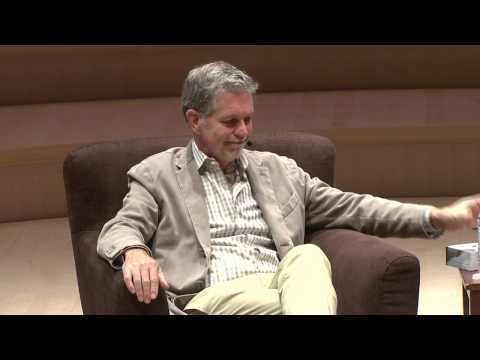
“Well, it's evolving rapidly to be, it'll all be internet centric. So obviously, movies and TV shows will be purely on demand. News is 24 hours, happens all the time. You know that'll be on demand. And then sports is one of the most interesting. We won't do sports, but other people will. And then, you know, there's the whole what team are you rooting for. There's the, all the microsports. There's so much that will be on internet delivery done on a very personalized basis of the sport, even though it's, you know, the game is on at 4 p.m. And everybody is watching at the same time. The experience people get can be enhanced a lot through personalization. So I think they'll be a lot of, you know, great worked on the, the internet for sports.”Stanford GSB Entrepreneurial Company of the Year, 2014 · full transcript →
Hastings on technology & the future, in his own words
“…the future TV will look like a large iPad…”
“Well, it's evolving rapidly to be, it'll all be internet centric. So obviously, movies and TV shows will be purely on demand. News is 24 hours, happens all the time. You know that'll be on demand. And then sports is one of the most interesting. We won't do sports, but other people will. And then, you know, there's the whole what team are you rooting for. There's the, all the microsports. There's so much that will be on internet delivery done on a very personalized basis of the sport, even though it's, you know, the game is on at 4 p.m. And everybody is watching at the same time. The experience people get can be enhanced a lot through personalization. So I think they'll be a lot of, you know, great worked on the, the internet for sports.”
Where to watch
 Reed Hastings on Internet TV: The Future of Television2015 · 53 min · full transcriptBest full statement of his thesis that internet TV steadily replaces linear TV and why that shift is as large as other major tech transitions.
 Reed Hastings on Internet Television: Why Linear TV Will Fade2016 · 23 min · full transcriptA concise explanation of why linear TV fades and how personalization and cross-device viewing drive the change.
 Reed Hastings on Streaming Strategy: Winning with Better Content2021 · 56 min · full transcriptUseful for understanding why on-demand control and the flat-fee model were the breakthrough that changed TV habits.
 Reed Hastings on Global Internet TV: The Birth of a Worldwide Network2016 · 43 min · full transcriptShows how Hastings connects consumer choice, device flexibility, and the rise of a global TV network.
 Reed Hastings on Streaming Wars: Competing for Viewing Time2019 · 31 min · full transcriptBest for his later view that the real battle in TV is for viewing time and attention each evening.
 Reed Hastings on Streaming and Global TV: The Future Is On Demand2013 · 33 min · full transcriptStrong on what future TV will feel like in practice: app-like, internet-based, and less tied to fixed channels.
Questions people ask
Sources
Every quote above, word for word from the transcripts. Numbers match the text.
“…internet television slowly replacing linear television…”
“…more and more consumers want control. They want freedom.”
“Tune-in has been replaced by personal choice.”
“You don't have to sit through commercials or be at the mercy of an 8:00 p.m. tune-in.”
“No more waiting, no more watching on a schedule that's not your own, no more frustration — just Netflix…”
“It's on the internet. It's the way it ought to be.”
“…the idea that you paid a flat fee and you could watch as much as you want and when you want…”
“Well, definitely on demand. You know, the idea that you paid a flat fee and you could watch as much as you want and when you want. You know, that was such a radical proposition which today is taken for granted.”
“…streaming is the core of our business…”
“Streaming is much bigger than DVD for us now…”
“…we think that just makes for a simple proposition…”
“The real measurement will be time.”
“How do consumers vote, um, with their evenings?”
“We want you anytime you want to relax, you're in front of the TV and you think, you know, do I turn on the cable, uh, linear TV, do I turn on YouTube, do I turn on Netflix?”
“We're both trying to please consumers.”
“It's hard to out-YouTube YouTube…”
“…the future TV will look like a large iPad…”
“Today, right now, you are witnessing the birth of a global TV network.”
“…there's just a lot of activity happening with internet video…”
“Well, it's evolving rapidly to be, it'll all be internet centric. So obviously, movies and TV shows will be purely on demand. News is 24 hours, happens all the time. You know that'll be on demand. And then sports is one of the most interesting. We won't do sports, but other people will. And then, you know, there's the whole what team are you rooting for. There's the, all the microsports. There's so much that will be on internet delivery done on a very personalized basis of the sport, even though it's, you know, the game is on at 4 p.m. And everybody is watching at the same time. The experience people get can be enhanced a lot through personalization. So I think they'll be a lot of, you know, great worked on the, the internet for sports.”
How this guide was made: drafted with AI from the full transcripts of the recordings cited, then checked: every quotation must match a transcript word for word and be the speaker's own words, and an independent review gates accuracy. Methodology and corrections.


