Reed Hastings on Original Content
Reed Hastings sees original content as the way Netflix builds a distinctive global entertainment brand, controls its rights, and wins more of viewers’ time in an on-demand world.
- Originals help Netflix build a stronger, more distinctive brand, not just distribute others’ shows
- The goal is to win viewing time, so originals must earn people’s evenings, not just attract sign-ups
- Netflix first leaned into serialized originals because binge viewing gave it a real product advantage
- Originals also solve global rights problems by letting Netflix launch shows broadly on internet TV terms
- Great original programming requires freedom, judgment, and risk, which means some projects will fail
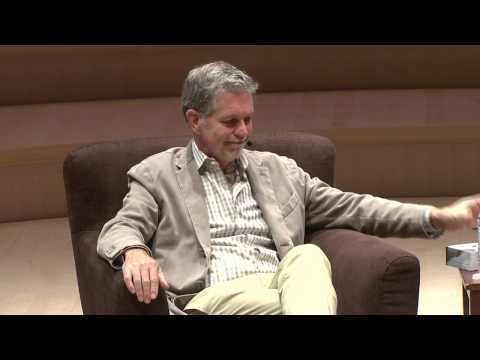
“…we should organize everything around supporting that…”Stanford GSB Entrepreneurial Company of the Year, 2014 · 24:06
Original content was a brand strategy, not just a supply strategy
Hastings frames Netflix’s move into originals as part of becoming a true entertainment destination rather than a service that mainly carries other companies’ programming. He wants Netflix to make a real difference in how people experience entertainment, and he describes the company’s ambition in terms of emotional impact and excitement, which originals support far better than a purely licensed catalog12.
That logic also fits how he thinks about building the company itself. Hastings says Netflix should organize around working with exceptional people on hard problems, and original programming is one of the hardest, highest-leverage problems in entertainment because it creates something distinctive that can define the service34.
“…we should organize everything around supporting that…”Stanford GSB Entrepreneurial Company of the Year, 2014 · full transcript →
The real competition is for viewers’ evenings
Hastings does not reduce the battle to subscriber counts. He says the real test is time: what people actually choose to watch when they sit down to relax. That makes original content valuable only if it consistently wins attention in the moment, against linear TV, YouTube, and other forms of entertainment567.
This is why Netflix’s originals strategy is tied to behavior, not prestige alone. Hastings points to the difference between what people say is high quality and what they actually watch, arguing that entertainment companies serve people best by learning from revealed preferences. Originals have to satisfy real habits and pleasures, not just critical ideals85.
Serialized originals fit Netflix because binge viewing is a real advantage
Hastings connects Netflix’s early originals push to the company’s distinctive product experience. He says binge viewing was something Netflix pioneered, and that made serialized storytelling especially powerful on the service. Releasing full seasons at once was not just a distribution quirk; it matched the form of the content to the way people wanted to watch9.
That helps explain why original series became such a defining bet. In an on-demand environment where linear television is steadily losing ground, a service that lets viewers watch deeply serialized stories on their own schedule has a structural advantage, and original programming lets Netflix design for that advantage directly1011.

“…binge viewing is a very novel thing that we pioneered…”Code Conference interview, 2017 · full transcript →
Owning originals helps Netflix operate globally
Hastings sees internet television as global and on demand, which creates friction for old licensing systems built around territories and delays. Original content gives Netflix more control over rights and timing, letting it serve audiences in a way that matches how internet TV should work1210.
He also believes local storytelling can travel. Hastings points to shows produced for specific countries and then shared more broadly, suggesting that originals are not just a Hollywood export strategy. They are a way to build a global catalog from many local creative centers135.

“It's on the internet. It's the way it ought to be.”Conversation in Copenhagen, 2013 · full transcript →
Original content requires a culture that tolerates risk and uses judgment
Hastings does not present originals as a formula. He says the final creative call is guided by gut, and he pairs that with a culture built on freedom and responsibility rather than tight control. For him, creative success comes from giving strong people context and room to act, not from loading the process with approvals14151617.
That also means accepting misses. Hastings says that when a company is operating at the edge of creativity, some things will not work. So the right way to judge an originals strategy is not whether every title succeeds, but whether the company is taking enough creative swings to produce meaningful differences for viewers1819.
His urgency comes from the pace of the internet. Because the environment changes quickly, Netflix cannot rely on habit or inherited rules; it needs adaptable teams that can keep making bold programming bets before the market settles around someone else’s ideas2021.

“…the sign that you're right at the edge of chaos, the edge of creativity, is that some stuff doesn't work.”TED-format interview, 2017 · full transcript →
Hastings on original content, in his own words
“…binge viewing is a very novel thing that we pioneered…”
“…the sign that you're right at the edge of chaos, the edge of creativity, is that some stuff doesn't work.”
“…the final call is always gut…”
“It's on the internet. It's the way it ought to be.”
Where to watch
 Reed Hastings on Freedom & Responsibility: Building Netflix2014 · 59 min · full transcriptBest overview of why originals mattered in Netflix’s evolution from distributor to brand-building entertainment company.
 Reed Hastings on Netflix Culture: Freedom, Candor, and Bold Bets2017 · 21 min · full transcriptShows how the originals bet fit Netflix’s broader pattern of bold product and strategy moves.
 Reed Hastings on Streaming Wars: Competing for Viewing Time2019 · 31 min · full transcriptExplains why originals matter because streaming competition is really about winning viewing time.
 Reed Hastings on Streaming Wars: Movies, Global Growth, and Net Neutrality2017 · 33 min · full transcriptBest for how Hastings connects original series, movies, binge viewing, and global production.
 Reed Hastings on Internet Television: Why Linear TV Will Fade2016 · 23 min · full transcriptUseful for understanding how originals fit the shift from linear TV to internet television and how judgment beats pure data.
 Reed Hastings on Streaming and Global TV: The Future Is On Demand2013 · 33 min · full transcriptStrong on why originals help bypass old territorial licensing and fit an on-demand global future.
Questions people ask
- What did Reed Hastings say about Netflix culture and taking bold risks?
- What did Reed Hastings say about freedom and responsibility at Netflix?
- What did Reed Hastings say about making international Netflix shows?
- How does Reed Hastings use data and revealed preferences at Netflix?
- What did Reed Hastings say Netflix wants its brand to be?
- What does Reed Hastings think the future of TV will look like?
Sources
Every quote above, word for word from the transcripts. Numbers match the text.
“…we want to have a difference, right?”
“Well, we want the brand to be the most exciting entertainment on Earth, the place you go when you really want emotional stimulation. And for us, that's around film, series, and games. Two of those were strong and one were just beginning on games. And the fact that people, if you look at the Nielsen data, YouTube on TV is equal to us in viewing. Like, there's a lot. That doesn't mean we're going to get into the user-generated business, right? And then there's sports, there's news, so—…”
“…we should organize everything around supporting that…”
“Yeah, up until 2002, all we focused on was survival. And then once we got public and, and we're profitable we started thinking, wow, this thing might last. And the, the cruelest irony would be to not want to work there. You know to let it become a place we didn't want to be. And so we tried to think through what do we really care about? We realized what we really care about is working with incredible people on hard problems and that, that was the essence. So we should organize everything around supporting that of working with, you know, just incredibly talented people. And so that led us to freedom and responsibility, because incredible people don't wanna be micro managed.”
“The real measurement will be time.”
“How do consumers vote, um, with their evenings?”
“We want you anytime you want to relax, you're in front of the TV and you think, you know, do I turn on the cable, uh, linear TV, do I turn on YouTube, do I turn on Netflix?”
“Sure. Everyone would rate "Schindler's List" five stars, and then they'd rate Adam Sandler, "The Do-Over" three stars. But, in fact, when you looked at what they watched, it was almost always Adam Sandler. And so what happens is, when we rate and we're metacognitive about quality, that's sort of our aspirational self. And it works out much better to please people to look at the actual choices that they make, their revealed preferences by how much they enjoy simple pleasures.”
“…binge viewing is a very novel thing that we pioneered…”
“…internet television slowly replacing linear television…”
“…the future TV will look like a large iPad…”
“It's on the internet. It's the way it ought to be.”
“No, I think there's much more connectivity, at least amongst the internet segment. You know, we're not serving the whole audience. We're serving those people on the internet, and there's more awareness of other cultures and interests. And so, you know, we've got a series in India, Sacred Games, based on a book, and hopefully that will carry. Now, it may not be the biggest thing in the US, but it will be bigger than it would have been. And so, it's very much produced locally and then shared around the world.”
“…the final call is always gut…”
“It's very big on freedom and responsibility.”
“…manage through setting context and letting people run…”
“I take pride in making as few decisions as possible as opposed to as many as possible…”
“…the sign that you're right at the edge of chaos, the edge of creativity, is that some stuff doesn't work.”
“…we're always trying to be candid with investors…”
“That's the bitch about the internet -- it moves fast, you know?”
“Yeah, absolutely. We did have one advantage, which is we were born on DVD, and we knew that that was going to be temporary. No one thought we'd be mailing discs for 100 years. So then you have a lot of paranoia about what's coming next, and that's part of the founding ethos, is really worrying about what's coming next. So that's an advantage. And then in terms of the culture, it's very big on freedom and responsibility. I pride myself on making as few decisions as possible in a quarter.”
How this guide was made: drafted with AI from the full transcripts of the recordings cited, then checked: every quotation must match a transcript word for word and be the speaker's own words, and an independent review gates accuracy. Methodology and corrections.

