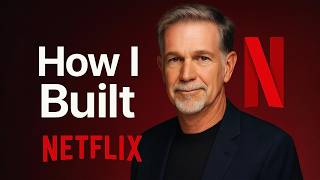
Reed Hastings on Candor
Reed Hastings treats candor as direct, useful truth-telling that helps creative teams learn faster, disagree better, and make stronger decisions.
- Candor is for helping each other improve, not for venting or winning arguments.
- Creative companies need more direct feedback and less bureaucracy if they want to keep innovating.
- Leaders should actively draw out disagreement instead of relying on silence or polite compliance.
- Candor works best inside a culture of freedom, responsibility, and strong performance expectations.

“…we want to get people to realize if it's about helping each other, you have wide license, to be honest…”WeAreNetflix Podcast, 2018 · 5:43
Candor is a tool for improvement, not bluntness for its own sake
Hastings’s basic standard for candor is whether it helps another person get better. He gives people broad permission to be direct when the aim is mutual improvement, which makes honesty part of everyday teamwork rather than a special event.1
That also means candor is not random criticism. He ties culture to the behaviors that are rewarded, so honest feedback has to be constructive and useful enough to improve how people work together and perform.2
“…we want to get people to realize if it's about helping each other, you have wide license, to be honest…”WeAreNetflix Podcast, 2018 · full transcript →
He sees candor as essential for creative work
Hastings draws a sharp line between factory-style work and creative work. In factories, more supervision and tighter controls can reduce errors, but in creative environments he thinks that model backfires because innovation depends on flexibility, inspiration, and learning.34
That is why candor matters so much in his system. If an organization is trying to invent, adapt, and improve, people need to say what is not working, challenge assumptions, and learn quickly from mistakes instead of hiding them behind process.567
He also connects creativity with risk. If a team is truly pushing toward new ideas, some efforts will fail, and candor helps people discuss those failures clearly enough to learn from them.8
Leaders should pull dissent out into the open
Hastings does not treat disagreement as a management problem to suppress. He wants visible differences of view, because better decisions come from hearing objections early instead of discovering them after a mistake.910
He says leaders have to make dissent feel rewarding, especially because power dynamics make people cautious. His approach is to praise people for speaking up, ask them directly for contrary views, and run exercises that force people to imagine what they would do differently if they were in charge.10
This is one reason he wants leaders to teach rather than control. A strong leader in his model creates enough openness and context that others can think independently and say what they really believe.11
Candor only works when paired with freedom and responsibility
Hastings places candor inside a broader operating model built on freedom and responsibility. Direct feedback matters because people are expected to use judgment, act with autonomy, and make decisions without waiting for layers of approval.1314
In that environment, honesty becomes practical. If people have real responsibility, they need clear information about performance, judgment, and the effects of their choices. Candor is one of the mechanisms that keeps freedom from turning into confusion.1314
He also believes strong culture needs clarity, not vagueness. Writing cultural expectations down makes them easier to debate, refine, and hold the company accountable to, which supports more honest conversations across the organization.1516
His version of candor is demanding because standards are high
Hastings’s culture is not built around comfort or loyalty above all else. He is explicit that performance and achievement matter more than lifetime attachment, which makes honest feedback more consequential because it connects to whether someone is thriving in the role.171819
That is why candor at Netflix is not a soft cultural extra. It supports talent density by helping strong people improve, exposing weak fit sooner, and keeping standards visible instead of letting mediocrity hide behind politeness.201718
He also presents this as more respectful than avoidance. People can handle the truth, and directness gives them a fairer picture of where they stand than silence or bureaucratic rituals.1
Hastings on candor, in his own words
“…we want to get people to realize if it's about helping each other, you have wide license, to be honest…”
“…we want to have a difference, right?”
Where to watch
 Reed Hastings on Freedom & Responsibility: How Netflix Runs Creative Work2017 · 62 min · full transcriptBest overview of how candor fits with talent density, dissent, judgment, and freedom in creative work.
 Reed Hastings on Netflix Culture: Why Rules Need Reinvention2018 · 38 min · full transcriptBest for Hastings’s plainest explanation of feedback, honesty, and why creative organizations need a different model.
 Reed Hastings on Culture and Innovation: Reinvention at Netflix2018 · 64 min · full transcriptBest for how culture rewards behavior and why honest, professional feedback matters for innovation.
 Reed Hastings on Company Culture and Leadership: Honesty, Creativity, Risk2017 · 7 min · full transcriptBest short watch on why honesty became central to his leadership style.
 Reed Hastings on Culture and Talent Density: Context, Not Control2016 · 81 min · full transcriptBest for how written culture and strong expectations make candid debate easier to sustain at scale.
Questions people ask
- What did Reed Hastings say about Netflix culture and taking bold risks?
- What did Reed Hastings say about loyalty vs performance?
- What did Reed Hastings say about why Netflix wrote down its culture deck?
- What did Reed Hastings say about why creative work should not be run like a factory?
- How does Reed Hastings encourage candor at Netflix?
Sources
Every quote above, word for word from the transcripts. Numbers match the text.
“…we want to get people to realize if it's about helping each other, you have wide license, to be honest…”
“…company culture is the behaviors that get you promoted or get you. let go…”
“…for creative work there's a different model.”
“In a factory, you control people, you supervise them, but in creative work, you want to inspire them, you want to excite them. And that's completely different. And yet many people still run creative firms almost as if they wanted to be a factory. I know because I did it in our first company in pure software. Every time something went wrong, I would put a process in place to try to make sure that thing didn't go wrong again. And that works in the short term, but it makes you very rigid. And then the market shifted. In that case, it was C++ to Java, but they all shift in some way. And we were unable to adapt,…”
“…if you wanna stimulate creativity, which is making a lot of mistakes and those kinds of things, then that's a different model…”
“Processes can be the death of innovation.”
“At root, we do think it's the culture that really enables that kind of innovation.”
“…the sign that you're right at the edge of chaos, the edge of creativity, is that some stuff doesn't work.”
“…we want to have a difference, right?”
“But in particular in feedback, because of the power dynamics, you really have to create an openness for people to give you feedback by giving them psychological rewards. That was so great, by lauding them. And we do things to farm for dissent. So let's say there's a decision about, you know, what should we do about the pandemic, and, you know, what should we, you know — then we would open it up for discussion, and then we want each person to weigh in with: do they think it's a good idea or bad idea to say, close down or whatever the issue is. Another thing we do is run an exercise: what would be different if you were CEO instead of me? And it's a…”
“We want our leaders to be great teachers…”
“It's very big on freedom and responsibility.”
“…the macro thing is, use good judgment.”
“…strong cultures work and weak cultures are diffused…”
“One of the great things about putting things in writing is that makes it more debatable. And so it's not just hearing a sermon and it's like, "Okay, that's nice," but you can comment on, you know, this part here that we wrote down doesn't really seem appropriate or doesn't seem what we do, or, you know, to some degree it's a bill of rights for employees, which is here's a set of things that we, the company, want to and aspire to operate by, and if we don't, you.”
“We’re a team, not a family…”
“Ultimately, it was about performance, and that helped us clarify our own values—that we were more valuing growth and achievement than we were, say, lifetime loyalty. Which is different than a family company or other relationships that we have where we value loyalty in our friendships, in our marriage, and other things. We value loyalty over performance.”
“We were more valuing growth and achievement than we were, say, lifetime loyalty.”
“What's different about Netflix is the keeper tests.”
How this guide was made: drafted with AI from the full transcripts of the recordings cited, then checked: every quotation must match a transcript word for word and be the speaker's own words, and an independent review gates accuracy. Methodology and corrections.