Reed Hastings on Netflix Culture: Talent, Candor, and Judgment

What Hastings talks about
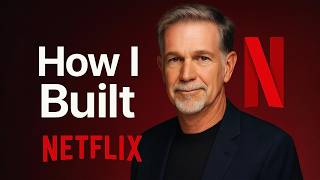
Reed Hastings joined The Knowledge Project podcast in 2024 to discuss Netflix culture, hiring, candor, judgment, and how the company built a high-performance, high-trust workplace.
Also known as: How Netflix Built a Culture That Fires Good People; Reed Hastings on Netflix Culture: Talent, Candor, and Judgment.
Reed Hastings reflects on the culture Netflix built around performance, freedom, and responsibility, and how those ideas shaped hiring, management, and employee expectations. He contrasts a meritocratic workplace with the perception of being cutthroat, arguing that clear standards and generosity can coexist.
He also explains how Netflix used data, instinct, and judgment in decisions ranging from hiring to content bets like House of Cards. Throughout the interview, he returns to the idea that strong culture is really about selecting for people who can thrive in high-trust, high-performance environments.
Beyond Netflix, Hastings discusses his post-retirement focus on charter schools, Powder Mountain, and philanthropy, but the interview's core lesson is how to build organizations that reward excellence without becoming bureaucratic.
An interviewer hosts the conversation; Hastings answers throughout.
In his words
“I have two religions, customer satisfaction and operating income.”
“We were more valuing growth and achievement than we were, say, lifetime loyalty.”
“Processes can be the death of innovation.”
“It's not like spoken language where it's so wired into our biology everybody learns to speak.”
Key points
- Netflix culture was built around talent density, performance, and clear expectations.
- Hastings says hiring is imperfect, so Netflix relied on judgment, track record, and reference-checking beyond formal references.
- He argues that freedom and responsibility work better than bureaucracy for knowledge work.
- Large severance packages and avoiding PIPs made it easier to remove poor fits humanely.
- He sees good judgment as making unusual choices that turn out well.
- Content decisions mix data with instinct; House of Cards was a high-risk call based on limited information.
- He describes Netflix as balancing customer satisfaction with operating income.
Full transcript: Reed Hastings, The Knowledge Project podcast interview (2024)
You put a $100 million bet on House of Cards. How did you make that decision? That was a big bet at the time. You've got a partial script, you've got some casting, and you have to guess how good is that show going to be? So, there's no real data that tells you that. That was an instinct call. How do you think looking back now, are there things that you regret? During my 25 years of Netflix, that was the dominant thing in my life. To be world class at anything, whether that's sports, cooking, business, you have to be pretty maniacal and obsessive and intense and give a tremendous amount of energy. How much data do you collect on what I watch? Dave Chappelle caused a lot of controversy, and how do you see
your role in terms of what you air or don't air? So, that was the storm in 2019, and it was good for us to realize. (music) That I want to start with what you're obsessed with lately. Well, let's see. Several things. Um, so I would say during my 25 years of Netflix, that was the dominant, um, non-family thing in my life. And that was like one big thing with tiny little stuff around the edge. And now my life is more varied. So, I have a big chunk of focus on, uh, charter schools. I'm on a half dozen, uh, nonprofits. Been working on charter
schools in U.S. education for two decades. Uh, big chunk on Powder Mountain, um, which is incredibly joyful. Um, and then smaller chunks on a bunch of other philanthropic, uh, projects. I want to get into all of that. Let's start with Powder Mountain. You first visited in 2016, I believe. Yep, that's right. Um, we had a house in Park City for 20 years. Loved skiing there, and then, uh, got very, very crowded as the whole industry has. And Powder Mountain is not in the Epic Icon ecosystem. And so, it was uncrowded and blissful. So, um, it's become a great place, uh, for me, um, to both enjoy. Okay. So, we went there in
2016 and then built a house, um, that completed in '21. Um, and then I retired in '23, and then crazily bought the mountain. How do we make that leap? It's really hard for independent mountains to compete, I would imagine, especially in the era of Epic Pass, and how do you go from casually skiing to buying a mountain? You know, I wasn't looking to do another capitalist thing. Um, uh, it was definitely a save-the-mountain 'cause I live there, uh, expression. Um, and we haven't done it yet. Um, so you're right that Epic and Icon are fascinating because they're great businesses, and they've made skiing, you know, for 1,100 bucks you get a range of options. So,
it's really popular with skiers. They sell, you know, 2 million passes a piece. They generate, you know, a lot of the visitation, and they're becoming bigger and bigger. So from a commercial standpoint, it's what people want. So think of it as the Costco of skiing. Um, you know, you pay a fee and then you get great value. Um, and, um, it's been very successful. So I don't really have any critique of it. But there's a sector of the market, um, maybe more like Whole Foods is to Costco, um, that's a little more specialty. So people willing to pay for uncrowded skiing. Um, and then that's super fun and you get, um, wide open slopes and low lift lines, but it costs a little more. Do you think that
that's the future for independent ski hills? Like, you're either going to be one or the other. You're going to be like the mass market supermarket almost, or you're going to be niche high-end. Yeah, I think, um, Powder and the other independents need to strongly counter-position, um, or just become part of Epic Icon. Um, but you're not going to live as you were because you lose a third of your revenue and all of your profit to the Epic Icon, uh, family. And it partially depends where you are geographically, but as a general rule, um, you've got to counter-position quite strongly. Do you think that that sort of eventually becomes self-defeating? You know, if we walk through maybe a decade from now and you go to the mountain and the lines are too long, the food stations are
crowded, like you don't have a good experience anymore. Not even to mention the skiing. There's no fresh tracks. There's no sort of, uh, and so people will opt out of skiing in general, or will — do you think — I mean, again, if you're a historic skier and a purist, you might say, "Oh, Park City is really crowded now." Um, but it's also a great value and you've got this great Icon or Epic Pass. Um, and so far the money does the talking, and people are showing up, and visitation is continuing to grow. Um, so it's been a very successful model of broadening, um, the skier base. You've always set culture as a founder. So at first with Pure and then with Netflix. What's it like coming into an existing organization and either changing or
enhancing culture? So in Powder Mountain and running that, um, you know, it's small enough — 150, uh, full-time employees when I took over — um, that it's pretty intimate. It's not, um, like taking over a substantial business. Um, so I suppose it's a little different, um, but not materially. And what changes have you sort of made with culture with respect to taking your learnings from Pure and Netflix? And we'll, we'll get into this a little more later, but sure. I mean, for the Powder story, uh, we've done many changes on kind of the positioning, um, you know, created a private skiing option, we've upgraded the employee, uh, compensation, sense of mission, sense of winning, many aspects, uh, of it and have
You brought the almost meritocratic focus of Netflix into the culture that you were famous for there, into Powder Mountain. Yeah, substantially so. Uh, Powder—I would, we've done, in my opinion, a slightly better job of it from the lessons that we've learned. So, in Netflix, um, there was the meritocracy, and uh, outsiders thought it was cutthroat, thought it was Hunger Games. Um, but inside it really wasn't. People looked out for each other, helped each other quite a lot, but in the words we used to describe it, um, were not warm and loving enough. And so it came across as, uh, brutal from the outside. Okay. And so
We were never really able to shake that, uh, kind of perception. And in Powder, we started with big-hearted champions who pick up the trash. And so, big-hearted, of course, loving and generous as the lead word in our kind of employee motivation. Champions like, no, we really do care about performance. That's that meritocracy aspect. Um, very driven, keeper test, all the things that we had at Netflix. And then, who pick up the trash is a symbol of self-responsibility, and everything is my job. Um, and people really do pick up the trash in both metaphor and, and, and actual ways. I always find that interesting. I used to watch people when I worked in the government and they
Would like push down into the trash instead, like they would do anything possible instead of literally just like taking the bag out of the trash, and they would spend like five minutes doing this, right? And things would fall out and they'd pick it up, and I'm just like, what is wrong? Like just wrap the bag up and put a new bag in. Like, yeah, everybody takes care of the trash at home. Uh, and only some people do that at work. Let's dive into a little bit of culture. But I mean, it starts with hiring, and this applies to Pow Mountain, Netflix, and all the companies and even the schools that you're involved in. How do you go about finding uh the right people? I would say pretty imperfectly. Um, you know, you spend five or 10 hours of interviews with someone.
Um, and it's just hard to tell sometimes. So I'm pretty open-minded. We'll take a chance on people and then, again, if it doesn't work out, we give them a package and move on. Um, so some people say all the focus should be on the hiring process and maybe they're able to do that incredibly well. Um, uh, I found it's hard, um, to differentiate. And so I'm willing to give people chances and let it be a little more instinctual. Um, and then, you know, then you're with them for months and then you can really tell their performance as opposed to from the five or 10 hours of interviews. How long is it before you really form that first?
Intuition? Is it with somebody working directly with you? Is it like a week, two weeks into the job, three months, six months? Like, at what point are you like, okay, this isn't going to work? Well, it's rarely initially. So, almost always we're in honeymoon, you know, for three months. And then you might see some of the cracks start to appear of things, and you know, some of it is coachable and some of it is not. So, you first lean in on that aspect and are communicative and clear, and so that's tended to work very well. What was the highest value aspect of interviewing people or doing reference checks? Like, what was the one thing that you would say is like the 80/20 of that?
I would say almost always, uh, I'll have a meal with them, and it's sort of how they interact with, um, the service staff, the food, um, um, you know, aspects of human, a kind, account, kind of humanity and character, um, might be one of the most telling. That's a really good way to do it. A friend of mine also travels with them. He'll like go on a trip and see how they deal with the airport and the security line. Like, are they thinking in advance? Are they frustrated by delays? Uh, I always think that that's interesting. How do you go about evaluating, um, persistence or character? Mostly by track record. I mean, if
They've moved jobs, you know, every 18 months. Um, that's one pattern. Um, and if they've been, you know, 6 years and then 3 years and then 7 years, you know, uh, with someone, you can sort of see that's their orientation. They dig in and try to make it work. So, the past, again, for a more senior employee where there's a long enough run to be able to see those, um, makes a real difference. I remember listening to an interview, I think it was even last night right before I was going to bed, and you had mentioned reference checks. How do you go about doing a reference check? Yeah, I mean, we rarely ask people for references because those are so anodine. Um, so then it's climbing through LinkedIn histories, finding
Cross, uh, things, going to quite some lengths, um, to get references, um, that are more loyal to me, um, than they are to the candidate. 'Cause again, you know, if you ultimately do all that and you end up with a candidate's brother, they're just going to say nice things. So you, you got to find, you know, intermediates, um, when you can. Sometimes you can't. Are there any tips or tricks for, for doing that that you've learned over the years? Like, do you go on LinkedIn and like who do we have in common? And... well, for sure. Um, but I'll go to like their, their prior, you know, generally they're currently employed and that's not a safe place to go for them. So then I'll look at the prior employer and then try to
Comb through and try to find, um, people who work there, uh, who probably knew the candidate. And then I'll reach out, um, you know, and try to get a conversation going. Um, and then only after there's a little conversation going, reveal that I'm calling as a reference. Is there any particular question you find yourself asking over and over again? Mostly it's the would they hire them again if they wanted to come back? And then once you hire somebody, what's the onboarding process like? Not differentiated, I mean, we don't try to really specialize in making that great. Um, you know, hopefully they get a laptop and an account and that all works and, um, but it's sort of, uh, I don't think there's much to do.
Right or wrong in that first week, you know, it's sort of just a full-on immersion and you sort of take or don't. Right? Almost like a transplant. Uh, well, we're very invested once we've hired someone that they do take and their manager is invested in it, but I haven't seen anything really go wrong in the first week. So, it doesn't, it doesn't feel very error-prone. I don't know what year you put out your first deck that got released. I don't know if it was released or somebody, 2009. I was like, man, I want to work there. I was like, this is the exact type of c. So it almost has a selection bias too because I imagine people see that and then they opt in. They want to be part of this meritocracy. They want to be part of this, this culture of new rules and high
trust and high agency. Sure. Well, we had an internal, uh, slide deck and I would meet, you know, once a month with all the new employees as a group and then go through it. So this is 2006, 2007, etc. Um, and most of the time their managers had well briefed them before they hired them on what we thought was important, but once in a while we'd get people who were in total shock. Uh, and I realized, oh, it's kind of, uh, unfair to this person that they got into something they didn't particularly want. Um, and that it would be better to give all the candidates, um, the slide deck sort of going through the culture. And then we realized, of course, once we're, uh
giving it to all the candidates, it's going to get public at some point. So, let's go ahead and just make it easy for the candidates by making it public. And that's what led to that, uh, release. But the reason it looked so, um, uh, po, you know, uh, unofficial is because it was just an internal comm's deck, um, to the new employee welcome. But it made sense to sort of put it out there so people knew what to expect. That's right. And then it had exactly the effect you referred to, which is the people who fundamentally wanted job security, um, over growth, um, were repelled. And the people who wanted growth and willing to trade off job security, um, uh, loved it. And so then we
we, you know, selected, uh, a very creative type of person who, again, was into performance and taking risk. I think a lot about systems, how to build them, optimize them, and make them more efficient. But efficiency isn't just about productivity. It's also about security. You wouldn't leave your front door unlocked, but most people leave their online activity wide open for anyone to see. Whether it's advertisers tracking you, your internet provider throttling your speed, or hackers looking for weak points. That's why I use NordVPN. NordVPN protects everything I do online. It encrypts my internet traffic, so no one, not even my ISP, can see what I'm browsing, shopping for, or
working on. And because it's the fastest VPN in the world, I don't have to trade security for speed. Whether I'm researching, sending files, or streaming, there's zero lag or buffering. But one of my favorite features, the ability to switch my virtual location. It means I can get better deals on flights, hotels, and subscriptions just by connecting to a different country. And when I'm traveling, I can access all my usual streaming services as if I were at home. Plus, Threat Protection Pro blocks ads, malicious links before they become a problem. And Nord's dark web monitor alerts me if my credentials ever get leaked online. It's a premium cybersecurity for the price of a cup of coffee per month. Plus, it's easy to
use. With one click, you're connected and protected. To get the best discount off your NordVPN plan, go to nordvpn.com/nowledgeproject. Our link will also give you four extra months on the 2-year plan. There's no risk with Nord's 30-day money-back guarantee. The link is in the podcast episode description box. One of the key ideas was talent density. Talk to me about what that means and how you thought about it throughout the organization. Yeah, I mean, I think the big struggle we had in the early days was the contrast of loyalty and what that meant versus performance and, um, you know, everybody, uh, wants loyalty, and they want
performance and their, uh, attention. And so as we sorted through that, we realized, okay, professional sports teams, um, have a clear bargain of you're sort of playing for your position each season, and it is a performance culture, but the team can be quite close and can be, um, very supportive, um, of each other. And so that wrestling, uh, with we came to think of loyalty as a stabilizer. So loyalty gives you, you know, if you have a bad day, you don't get instantly fired. Or if your boss has a bad day, you don't quit instantly. You sort of think things through solidly over, you know, a couple months. Um, but that
Ultimately, it was about performance, and that helped us clarify our own values—that we were more valuing growth and achievement than we were, say, lifetime loyalty. Which is different than a family company or other relationships that we have where we value loyalty in our friendships, in our marriage, and other things. We value loyalty over performance. I remember an interview—I think it was Jamie Dimon who gave it—and he said, "I want loyalty, but loyalty to the company first and loyalty to people second." Yeah. I mean, what he's getting at there is not a personal loyalty like
political factions where you look after your boss or something like that, but you care about the organization. And I do believe he's right—that that creates a very powerful force—and it only works if they see the leader, in that case Jamie or myself at Netflix, are clearly willing to sacrifice themselves for the benefit of the—Um, and then when you get that and everybody's working towards the company's success, it's a very powerful force. How do you think about the notion? Bill Bichc said, you know, "I'm not collecting talent. I'm building a team. I'm building the best team, not the most talent." What's your initial reaction to that? It's two zero
sum. So, I would say it's a little more of both. But what he's trying to get the point across is building the team is a distinct operation. But if you build the team from a bunch of high school football players, you know, that's not going to win. So, but again, he's saying it dramatically to make a point, you know, it's like saying "Only the paranoid survive." And when Andy Grove said that for two decades, that was like the phrase. But it's not literally true because the paranoid are delusional, okay? And they can see everything as a crazy threat, and they can't differentiate what's an important threat and what's not and what's
reality. Okay, but you know, it was a provocative and memorable statement to try to get people to be business leaders to be more worried about what could happen to them. Talent density isn't just about bringing in talent. It's also about removing people who maybe the role has changed, they're no longer suitable, or they were never suitable to begin with. How did you go about identifying and then removing? I mean, one of the things that I think you did was severance packages, but you said, and correct me if I'm wrong here, that the severance packages were for managers, they weren't for the employees, because it gave the managers almost permission to remove people. So, the
money goes to the employee. Okay? It doesn't go to the manager. But managers are generally selected because they have good human skills and they like people, and so it's very hard for them to let people go. And so if you are giving the terminated employee a big severance package, it makes it easier on everyone. And so that's one of the hidden benefits of it. The other is getting a release. Though, you know, Netflix has let go many people, and I mean maybe there's a few employee lawsuits but hardly any, again because the severance package is bigger. And then we generally don't do performance improvement plans, which are sort of a
way to document the employee's poor performance so that you can win a suit instead. Why not just give them a check? And there's so few people who get put on a PIP that then turn around that it's a, I think, a false system of legal protections that doesn't work. And again, it's better to give them a generous severance package, have them sign a release, and help them on to their next challenge. Is there anyone that was either on a PIP that you know of that turned around, or anybody that you had formed an impression of after three months that was like, "This isn't going to work out," and then it turned out to work out spectacularly? Well, again, we didn't use PIPs, but I would say, are there
people who got into a rough spot and got out of it? Absolutely. And the more someone was a longer-term employee, the more the rough spot was sort of taken in context, and we would try to say, "Okay, let's see if we can shift them into some other role and see if they can get back to, you know, being miraculous in that role." You've said, and correct me if I'm wrong, "Processes can be the death of innovation." Yet every company needs some structure as it scales. How do you decide which processes to add and which to remove? Yeah, I mean, that sounds like a long quote. I would say, let's tighten it up of
look, manufacturing provided most of the GDP growth from the beginning of the industrial age. So, 1800 through to, I don't know, 1990. So 200 years manufacturing is providing the GDP growth. And manufacturing is about consistency, about driving out error, about incredible process attention, replication, perfection. And it's not that there weren't ad agencies in the 1950s that were kind of kooky and crazy. There were, but it was a tiny part of the economy. So the metaphors that we all picked up around process, think of way classrooms are basically organized like factories. Lots of things
are organized like factories because it was the prevailing metaphor, and then the economy, you know, shifted a lot to, and higher-value things were creative work and inventive and intellectual. And for those things that are inventive, errors are an inherent part of the process. So, think of it as—in manufacturing, you want to drive out variation, and in innovation you want to increase variation. And so process really is the language and model of driving out variation and getting to consistency. And if you're in a safety-critical
Business like an airline, it's a good thing. And if you're an inventive, creative business where your main threats are that someone else is going to invent something nearby you, uh, then you want to minimize that and maximize the innovation. A large part of the CEO's job seems to be rooting out bureaucracy. How did you go about preventing that from creeping in? Well, once you have a let's take a, um, expense policies, okay? So, you know, most companies have policies. You can spend $250 in certain cities and, you know, more in Tokyo and, you know, less in Omaha. And they're trying to save money, right? And they're like trying to be
careful with expenses. And then you've got to have a whole bureaucracy to administer that, to make sure people comply with that, to educate them and whatever. And we got rid of all of that and we just had a travel as you would on your own nickel. Um, and, you know, I'm sure there's, you know, occasionally some expense that gets done that shouldn't be, but compared to the cost of enforcement, it's tiny. So, you know, again, that's more of our freedom and responsibility approach. I like that approach better because it treats people like adults. Yes. And in treating people like adults, you want to set some context, um, of you know, kind of what we mean by that and give some principles and examples. But yes, you're again it's
getting away. It's moving from the industrial model to the knowledge worker model. Um, and yet many of our corporate forms, um, haven't adjusted fast enough to the basic work. How did you go about recognizing good judgment? I mean, I think people take bets about what's going to work and if they do end up working, then we say they had good judgment. Um, so I think we recognize it by them making unusual choices and having those be quite successful. I think of it like advantageous divergence. You go against the crowd and you're correct. That's right. And in those moments, do you think judgment can
be taught? Uh, I think so. I mean, I, you know, to varying degrees. I mean, it's kind of like, um, music or something, which is everybody can learn some music. Probably only some people become fantastic at it. Um, uh, but you need some teaching in it for sure. It's not just like—it's not like spoken language where it's so wired into our biology everybody learns to speak. Let's talk about Netflix for a second. You left the co-CEO role. You're now on the board. How hard has that been to walk away from something that you created and not be hands-on and not be in the weeds and sort of like to be sitting on the board? It hasn't been
hard at all. Uh, partially because Greg and Ted, you know, were with me for 20 years and, uh, they were very ready and so, um, it was exciting for them to get the opportunity that I had, you know, to have the responsibility and to manage so much, uh, global complexity. So I was excited for them and, you know, they've done a great job these last two years. So that helps. Um, and then in terms of my own time, it was nice just decompressing and then spreading, uh, my focus, you know, around these um, different philanthropic and then, uh, Powder Mountain efforts. Can you maybe riff a little bit on the competitive
landscape of online streaming? Well, it's, you know, very broad. Um, you know, everything from, uh, YouTube, you know, to HBO. Um, and then in every nation it's a little bit different. There's a lot of national networks. Um, and so, uh, Netflix earns, you know, depending depending on the country like 5 to 10% of television viewing. Um, and so we got a long way to go and we, as we say inside, we lose most of the time, you know, um, we don't win the majority of television screen time. So then it's like, okay, what is what are the, um, types of entertainment that we can do and how well can we do them to earn more
time and is that part of the move into gaming? Uh, it's moving in gaming, unscripted, uh, content. Um, I initially we were just film, um, and not even in TV. So yes, we've expanded, uh, category by category to see, um, where can we earn more time or, you know, do a better job than anyone else in entertaining our members. Do you think it's inevitable that live sports becomes part of that? Well, uh, on Christmas, uh, we had two NFL games, so I would say it is part of that. Um, it's one of the things that, uh, Greg and Ted have done, uh, because, uh, I was always very skeptical, um, not of course of the of the, um, viewing but that there could be a good long-term
proposition there and that and, um, they've, uh, proven me wrong and have found good models where it makes sense, uh, for Netflix the company and of course for all the members. One of the interesting shows that you guys, um, did about F1, Drive to Survive, is that what it was called? Yeah. Uh, you turned a whole country really onto an industry and and it's so interesting to me because you, uh, single-handedly changed the trajectory of F1 across the world. Uh, not that it was bad before, but you definitely increased the slope of adoption and interest and you captured so little value of that on a value basis
like billions of dollars accrued to F1 and I'm I'm positive you guys didn't make billions of dollars out of that show. How do you think about that and and your role in, um, driving eyeballs and attention? Well, look, F1's been working hard for 50, maybe 100 years, you know, building up. So, they, they, they deserve, you know, that lion share. It is certainly true that when we set a show in a context and then the show works as Drive to Survive did, um, then it popularizes that thing. But if if we it doesn't like bother us that they profit from it anymore than if we did a show that was set in farming and you know and then all these people are like growing
Apples. It's like, okay, you know, in other words, we're looking to have incredible entertainment, and F1's an incredible context for that. So, it doesn't bother us that they bet on us and then we delivered. I guess where I was thinking about that is, like, do you envision any future in the next, you know, 20 or 50 years where maybe you actually buy a sports team or a franchise? Or you could have bought F1 before this and then made the show and then captured that advantage too, you also had exclusive broadcasting rights and all of these other things and they sort of tie together. Well, you'd have to ask Greg and Ted about that. They will, they will be the ones trying to
figure out, does that make sense in our continued growth and stimulating entertainment or not. The other show that I want to talk about is the Dave Chappelle, caused a lot of controversy. How is that handled internally inside Netflix and how do you see your role in terms of what you air or don't air? Sure. You know, back in 2018, 2019, let's see, we probably did our first Chappelle special in like 2015 or 14. So, we had a great relationship with Dave and had done a number of his standups and they were super popular, some of our most popular standup shows. On the same hand, we were trying
to be very inclusive and to have many people be able to thrive at Netflix as employees, including our transgender employees. And so the tension became, we said to our trans employees and their allies, "Hey, we're very trans-friendly. If you're fantastic at your job, you know, again, it's great." And we're an inclusive place of work. And then some of them felt that in doing the Dave Chappelle show, which had some trans jokes, which I don't believe that Dave is anti-trans, but he definitely takes on some of the issues, that they were being undercut as employees when we were creating a hostile work environment, which got
them to protest internally. So that was the storm in maybe 2019. And it was good for us to realize that we were not resolving this conflict between customer entertainment and employee values. So, for example, in many of our shows, people have guns and blow people up and shoot people, and yet we don't want a workplace that's filled like that. And so we realized entertainment is an escape where various things get said and done that are not endorsing that as workplace behaviors. But we hadn't really clarified that. And so we sat down and we did an amendment to the culture memo and tried to really explain that
entertainment is not always going to be stuff that you love or that you emulate or is admirable. There's lots of stuff in entertainment that's not admirable. And if you don't want to be in the entertainment business, that's fine. But if you do, this is a core part of entertainment. And then, because we clarified all those expectations, you know, a few people left, but for the most part, everyone understood that makes sense. Those are the rules, and we move forward together. Maybe just riff on how you see the inclusiveness, DEI, playing out in the workplace and how it could be better incorporated, because there seems to almost be an anti-DEI movement at the same time now
that's going on politically or within companies where people are questioning whether people deserve their roles just because they might be a minority or underrepresented. How do you think about all of this? Yeah, I mean, there certainly is the US federal government leading this anti-DEI push. I don't know how much it's affected Netflix. Again, you'd have to ask Greg and Ted about that. But I would say in general for us, we always focused on inclusion. We never called it DEI. For us, we want everyone who's a Netflix employee to be able to contribute at their highest ability because that's in our commercial interest. So perhaps we didn't go as far out on a limb as, you know, some
companies did. But our inclusion efforts have remained strong and, again, we want people to feel comfortable so that they can contribute at their highest level. Most mornings, I start my day with a smoothie. It's a secret recipe the kids and I call the Tom Brady. I actually shared the full recipe in episode 191 with Dr. Rhonda Patrick. One thing that hasn't changed since then: protein is a must. These days, I build my foundation around what Momentous calls the Momentous Three: protein, creatine, and omega-3s. I take them daily because they support everything: focus, energy, recovery, and long-term health. Most people don't get enough of any of these things through diet alone.
What makes Momentous different is their quality. Their whey protein isolate is grass-fed. Their creatine uses Creapure, the purest form available. And their omega-3s are sourced for maximum bioavailability, so your body actually uses what you take. No fillers, no artificial ingredients, just what your body needs, backed by science. Head to livemomentous.com and use code KNOWLEDGEPROJECT for 35% off your first subscription. That's code KNOWLEDGEPROJECT at livemomentous.com for 35% off your first subscription. I love this quote from you: I have two religions, customer satisfaction and operating income. Everything else is a
tactic. Talk to me about that. Yeah, I mean, there's another way to say customer satisfaction: there is revenue, right? That's the top line, and the operating income is the bottom line. So you want to be, I think Bezos is the one who said this best, sort of be very firm about certain principles and then very flexible on the tactics. And this is a specific application of that, which is: let's try to think through things that grow customer happiness and also grow operating income. And, you know, it's quite hard to do both of those. It's easy to do one or the other at the cost of each other.
Um, but the art of business is doing both of those better than your competitors do. You put a $100 million bet on House of Cards, having never watched the pilot. What gave you the confidence that that was going to work out? And I think you beat out HBO for the show. Uh, what data did you use? How did you make that decision? That was a big bet at the time. Well, that's 100% credit to Ted Sarandos. Um, so um, uh, Ted um had been working um with David Fincher and trying to develop some of these ideas. The show was up for bid and then um, uh, Ted put in this two-season bid um which was unheard of at the time. You know, HBO had
a precedent where they don't do that. Um, so they didn't match. Um, and then uh that team and Media Rights Capital uh went with us. Um, and it turned out fantastic. Um, but that really all of that uh bravery is due to Ted Sarandos. What data goes into those decisions? I mean, like how did Ted make that decision? You know, there's uh some data but I would say that's raw. It's instinct that the thing you've got a partial script, you've got some casting and you have to guess how good is that show going to be. So, uh, to figure out what it's going to comp against in terms of your data. So, there's no real data that tells you that was an instinct
call. Is it harder to create content that hits or buy content that hits? Well, if you buy content that hits, you're implying that it's never been shown. So the the later it is in the pipeline, okay, the more it's just a sketch, boy, it's hard to tell. The more it's a complete script, you can tell a little bit more. The more it's a script and a cast, you can see a little bit more. The more it's a script and a cast and some dailies, you can see a little bit more. The more it's an edited, completed thing, then you can really take a guess. Okay? But you still don't have that much public reaction. The more you've done test screenings, you can tell. So at each stage you get more information um and you're more likely to
be right but in all of the stages it's a lot of judgment. So a simple case would be Squid Game. So we knew Squid Game would be big in Korea or we highly suspected it would be but the fact that it took off globally um you know was a surprise to us and we'd been doing it for 20 years. So, um, again, there are some surprises in there. Um, but you're increasing the odds each time you do these things of learning. Um, and the team's gotten better and better at learning, uh, which things are going to get really popular. How do you go about using data obviously to inform what you're creating, but also allowing for serendipity and unexpectedness and variation as you would tell? If you're
only using we know people will like this based on their viewing habits, how much they watch, where they stop, all of this stuff, we can create more of this pretty easily. How do you think of that in terms of variation and surprise and new innovative shows or ideas? Um, we, you know, we stimulate uh a lot of judgment of people trying new things and um sometimes we celebrate the failures that don't quite work um because they you know again you got to be willing to have people try things. Um and it doesn't really work in entertainment to say let's do a show just like that that rarely ends up successful. Um, so there's not much risk of going for that because it's not a good commercial path. How
much data do you collect on what I watch? You know, we have some basics. Um, but it doesn't help us with the next show. So, um, the thing that's helpful is at the end of a Netflix show, you give a double thumbs up, single thumbs, or thumbs down. We know you finished it, but maybe you thought it sucked. Um, and so we really want to know what you thought of it. Um, so that's the probably the piece of data that helps the most. I just want to let you know my kids go in and they often mess up these little thumbs-up, thumbs-down things. Sometimes I see these recommendations, you know, when they were younger and I'm like Transformer? I don't watch Transformers. Like what? Yeah. Well, as kids evolve, uh, us adults don't evolve that fast in our taste, but um, kids do.
So, well, they do it on purpose, right? Yeah. Yeah. And they totally hijack my YouTube, too. All these recommended videos. I'm like, what is going on here? Talk to me a little bit about AI and maybe riff on how you're seeing it used today and how you see it being applicable and and yeah, just walk me through a little bit of your thoughts on that. Um, well, let's see in a Netflix context, Ted and Greg really lead that work. Um, you know, Ted's important quote about a year ago was, you know, you're not going to lose your job to AI, you're going to lose your job to a producer who uses AI. Um, and you know it's a tool for people to use um and hopefully everybody
will use it and raise the level of performance just as they did with say digital filmmaking. Um, at Powder Mountain uh we haven't found very many uses for AI yet. Um, so you know we use AI a little bit in marketing copy but um it's pretty minimal. So I think there'll be you know a number of businesses that um are impacted a lot and other ones that are impacted much less. How are you using it personally as a search replacement? So I tend to use um uh Claude uh you know or Gemini or OpenAI where I would have used search. So, in the ski industry, I've been learning a lot of things about um lifts and lift,
You know, cable strengths and other things like that, and water systems. And I'll be educating myself essentially through AI, through posing a bunch of AI questions. Has it changed how you go about learning about these things? 'Cause skiing is an entirely new industry when it comes to like lifts and cable strengths and and sort of—Yeah. I mean, I think 20 or 40 years ago, you'd probably have to go to some engineering textbooks, um, or was very opaque about how to do that. The rate of learning is much higher now because of AI. You know, first, search, and that made a big difference for 20 years, and then AI is really improving that. You do a lot of work with charter schools. I want
to come a little bit higher level in a second, but how do you see AI playing out in the classroom and learning? Hugely. I mean, I think AI for teaching kids is an awesome application. You know, generally, you're in a classroom with 20 or 30 kids, and it's very hard for the teacher. The kids are all at different levels, and it's a very industrialized model. All third graders are going to learn the same thing today. And that really, again, that's for the convenience of the operator of the school and for being able to handle mass education. And AI offers the potential of every kid gets their own tutor and goes at their own pace. So there's a lot of efforts going on now. I'm on the board of Khan
Academy, a nonprofit that's really pioneering a lot of stuff with Conigo, um, helping other for-profits like LOL that does a reading app that's amazing. So if you have a 5 to seven-year-old, it really helps a kid develop a confident reader. The AI is very patient and will listen to the kid, and then correct them, and then help them get stronger and stronger in their reading. So, you know, and we're scratching the surface. So, in the next 10 years, you'll be able to have a complete K-12 and probably university education with AI on a phone or tablet that will really change learning. So think of it as AI is
getting more impactful in society, the standards of what people need to know and can know is much higher. So we've really got to do this pivot to individualized education from mass classroom lecture-style communication. How do you see the role of the teacher changing in that? Well, the teacher will evolve to be a little more like a social worker and a motivator. So they're not actually giving the instruction in that long-term case. All the AI is doing that, and they're doing the social-emotional learning. Okay? So, how do you interact with other students? How do you do the project? How do you sit still? So, think of them as becoming social-emotional experts, and that
they're pretty good at that already and less subject matter. What happened in 12th century England? And you know, and they do regurgitating the facts, which is a lot of what they have to know now. So it's them becoming, again, specialized in the social-emotional side. And then you've got these huge numbers of companies now trying to do AI for education. So it's a big scramble, a lot of competition. Very exciting. Yeah, I think it's going to be really interesting to watch how it plays out. Like Synthysis Tutor just got a state on board signed on to teach math in a whole country. I think El Salvador starting in September, their whole country, and the in past September, and the results are staggering: kids are learning faster, better; they understand
more. Yeah, again, that the classroom model has so many inefficiencies in how it's organized, how little learning happens, that it's a great AI application to take on. And then also, young people are very adept at new technologies. So it's got a double win. So I think education will be one of the big areas transformed, and everyone will be able to get a better education. Just as an aside, I tell my 14-year-old I think he could be a mid-level employee in most companies if they never saw him, just based on his output alone. 'Cause for him, AI is like his arm, you know. Like, he's been using it since he was young, and it's just second nature, and he knows how to work that. And I think the danger for a
14-year-old like that is then they sit in a classroom and they can get pretty bored and then they can act out, and then they can get labeled in various ways. Totally. So, you know, it's why the again industrial education system is slowly adapting, and in good ways, is to avoid that outcome. And then charter schools are US form of school governance where a public school is a nonprofit, and they get to be independent and operate under their own rules. But they operate as a nonprofit focused on the kids, and they're a little more flexible than the government-run schools because they don't have the civil service orientation. And
there's quite a range of them. There's no one learning style for charter schools. So, it's more like a governance change again where they're run by a nonprofit. Why is education so important to you? I mean, it's important to everybody, you know, so I don't think—yeah, but not everybody dedicates their time to it. Sure. I could be working on environment or aquaculture, lots of things. Right out of university, I became a math teacher. I was a Peace Corps math teacher in Swaziland, which is between South Africa and Mozambique, and spent two and a half years teaching. And so later in life, when I became a philanthropist, it was the thing I knew a little bit about. So I would have to say it's a bit random in
That way, um, but then you know what I counsel people is all the problems that we have in society today are the ones our parents and grandparents couldn't solve. They're selected to be quite challenging, so if you dig yourself into one major societal problem and spend your life on that, that's a great outcome, you know, to try to make a difference in one of these hard problems. And why charter schools? Why, why not tackle it through the Department of Education or a different way? Why did you pick that vector? Well, I came to believe that the government running the schools was sort of the essence of the problem. Um, and that it would be better and more effective to have nonprofits. Like if you look at the university
sector, you know, and all of our top universities, they're all nonprofits. And so it's modeling on that. Um, so it's a, it's a shift from uh, kind of more government bureaucratic control to nonprofit control. One thing I think we both agree on is equality of opportunity. And it's not always that way in the education system. Your zip code or your postal code or wherever you live can dictate the quality of education you get. How do we go about increasing equality of opportunity? Well, I think tech is probably the biggest driver of that. Um, you know, which is if we can have AI tutors, um, that are like in Khan Academy's case free, um, or uh low cost in other cases, uh
you know, on tablets that are widely available. I think that's an incredibly, uh, uh, great way to expand the franchise of learning. What if you were to take over, uh, education in charge of the country almost uh from a specific vector? What policies would you change? What would you change in the classroom? What would you include? What would you take away? Um, mostly I'd focus on school choice. Um, and uh, giving teachers the tools to create a school. Um, because that you get that flourishing of, you know, there's lots of teachers who have very good ideas about what would be the perfect public school at least for some sector of kids, but they have no way to do that in the current system. So it's then allowing
them, supporting them to create a nonprofit to create a school and then to give the parents the choice to join that school or not. Um, so the whole model of, um, uh, teachers getting to create lots of new schools and then parents choosing which of those schools they want to go to, um, is something I think would be transformative in a positive way for kids' outcomes. What do you think goes into the decisions to transfer? I'm thinking as a parent and what would cause me to trans, so charter schools, uh, maybe it offers the hope of better education and better teachers, and maybe it also deviates to the negative, um, not all of them are going to be successful, so there's a risk involved in that. How
do you, how do you think about that from the parents' perspective? Yeah, I mean, it's a little like you, you know, for parents who send their kids to university, they have the same thing. Some universities seem good but aren't really, or it can be a good university and you have a bad experience. So there's no perfect outcome, uh, in that. And then in general for charter schools, um, in, uh, wealthy areas where the schools are pretty good, the existing government schools, um, there's not much incentive to change, um, and the basically, uh, so for example in Palo Alto, California, there's no charter schools, but in East Palo Alto, which is quite poor right next door, there's a bunch of charter schools because the parents are desperate for change and options. So the charters have really
focused on the lowest income kids because they, um, you know, don't have great government schools and they're willing to take a chance and try the new charter school and some of them have of those charter schools have worked out fantastically. That's awesome. If you could shadow one CEO for a month, who would it be? In the old days for me it was Jeff Bezos. Um, you know, but now he's retired. Um, so yeah, probably would be Jamie Dimon at this point since he's still active and such a broad intellectual and, uh, it'd be fascinating to sort of, uh, you know, be on his shoulder for a week. I think he's a, he's a one of the, he's
well known but also underappreciated for all the things he's done and all the crises he's managed through in banking and, uh, he's becoming a lot more vocal too which I think is a good thing whether you agree with his vocalness or not. I, I do love the fact that, uh, CEOs are becoming more vocal about things that they're passionate and they feel like they can share their opinions now. Yeah. What's the biggest misconception that you think other people have about you? I really don't know that they have any misconception, uh, or I'm not confident of what their perception is. I would say for now I'm focusing on turning around this cool ski area as a passion project and making it
uh, you know, this, uh, fantastic and unique place. Um, continuing the charter school work that helps, uh, you know, get kids more opportunities. So, um, I would say if people have opportunity, it's that I'm trying to do things that are a balance of fun and good. Um, and, uh, you know, powder is 90% fun and 10% good, you know, and and the charter school work is 30% fun and 70% good. So, it's a, a range of different, um, projects that way. You said one of the philanthropists you admire is Bill Gates. For sure. Why is that? Um, his basic approach is a technocratic approach to human welfare to sort of sit down and try to think
Okay, what are the causes of human misery, um, and how do I knock them down one by one and take bold ambitious bets? Um, you know, curing disease, many other things, uh, energy, um, so very long-term oriented. He'll work on, u, give you an example. There's a, uh, a terrible virus that affects cassava in Africa, and cassava is like potato but it's the main crop, main calorie crop of many countries and people. Um, and this virus is continuing to spread, um, maybe naturally, maybe through climate change. And, um, he's been working for more than a decade, uh, to find genetically modified, um, variants that don't suffer from this virus. Um
and they're now in field trials. Okay. And the I was at one of the field trials recently, and it's stunning. I mean, you know, basically the plants with this, um, genetic modification don't get the virus. And instead of getting a 10 or 20% yield that a farmer gets because the virus is taken 80 or 90%, they get, you know, a 95% yield. So, it's like five or 10 times more food produced. Okay. But the, like, the foresight, you know, that, uh, Bill's team had to have to figure out what to back, you know, early is amazing. So that kind of deep science, um, uh, for again, uh, improved human welfare is very inspiring. When you were
running Netflix and pure software, how did you think about—I don't want to use the word balance, but it's probably the one most people understand—between running a business, being ambitious, being all-in on that, also family, friends, health, all these other competing things for your time and attention? Um, yeah, I think of it as work-life integration. When you have, uh, uh, a bad example of work-life integration is pulling up your phone in the middle of dinner with your family. Okay. Um, and a good example is, uh, you know, you might come home at 5:30 and cook dinner and hang out with your kids, and then at 8, you know, maybe they're watching TV
and you go do an hour or two at work. So the flexibility of what modern technology offers provides you an opportunity to do, uh, great integration. Another would be, you know, while you're running, listening to a podcast. Okay. So there's a, you know, a bunch of clever life hacks to improve integration because we most of us want a great family life and a great professional life. Um, and when you're into the balance metaphor, it's sort of more of one less of another. It's zero sum in the metaphor, and I think that's unsatisfying. You know there's a degree of truth to it, but it's unsatisfying and so it's better to think of it as how do you improve work-life integration where
you have, uh, again a great professional life, um, and a strong family life. The ones that get, you know, pushed to the side are sort of, you know, how much friendships do you develop between, again, depending on your family situation, between family and work—that could be pretty all-consuming. So that tends to get less, and sometimes, you know, health and diet and exercise, uh, do. But of course, as everyone knows, if you put some time into that, you'll be better at the other things. Are there things that you gave up that you regret in the pursuit of your goals? I was talking to Brian Haligan about this on the podcast and he said, "Look, I was focused on HubSpot. That was my baby that got all,
you know, 90% of my attention." And I was like, "Well, that's interesting." Right now, looking back, do you regret? He's like, "Not at all. I don't regret that at all. If anything, I probably spent too much time, you know, uh, with friends and family and I should have spent more time on the business." Like, how do you think looking back now about how you integrated all of these different things? And if anything, you would change. Yeah. I mean, I don't have any big regrets. I'm glad, uh, that I retired at 62. Um, and I think, oh, should I have done it at 55 and had, you know, more, uh, of life in this new kind of multifaceted state versus the obsessive state? Um, but, uh, it was I loved my 25 years on Netflix. It was
fantastic. Um, and, uh, I'm so happy now that Greg and Ted are doing such a good job on it and enjoying it. Um, so it's all coming together. So, I don't—I can't think of any, you know, significant lessons or regrets. You do have to feel your way along. And there, there are a few people who work—Warren Buffett, you know, he does like one thing until he's 95, but I'm not really critical of that. It's not what I would want for my life, but I, you know, it's up to him how he wanted to live his life. You mentioned the word obsessive. Go deeper on that. Well, I think, um, to be world-class at anything, um, whether that's, uh, sports, cooking, business, you
have to be pretty maniacal and obsessive and intense and, you know, it's not easy. So I don't want to kid anyone that, um, it's an easy life. You have to definitely, you know, push hard and, um, and give a tremendous amount of energy, you know, as I did to Netflix. Um, which is part of why it's great at 62 to hand it over to some, you know, people who are a decade younger and they're super obsessive. Now, I want to come back to culture for a sec. There's one question I didn't ask. What was the keeper test and how did it apply? Um, so the keeper test is a Netflix shorthand, um, for, uh, asking yourself if one of your
Employees were quitting. How hard would you work to keep them? To stay, would you try to change their mind? And if you wouldn't, then you should proactively give them a generous severance package and try to recruit someone who you would feel that you would really try to keep them. And so, the typical employee test that people use is: did they screw up enough that they deserve firing? So they have to really fail to deserve firing. And we want to change that presumption to be no, it's the people that you would fight to keep. Those are the ones that you stay, and if someone is not in that, then you should give them a package and move on. And of course, you know, the
more nuanced one is to have a conversation with them, like, "I wouldn't fight that hard," and, you know, "let's try to change that," and, you know, try to not surprise them and be honest with them. It's shifting. Shifting the standard industrial model is like you nearly have to commit a crime to get fired. Okay. As opposed to the athletic team case, which is, I think I can upgrade. I wouldn't fight to keep you because you're fighting for a roster spot because I want to win the championship. Y at Pure, you IPOed. I think you went through five heads of sales in five years. What was that like and what did you learn from that experience? Sure. Um, Pure Software was
like '91 to '97. Um, and we went public in 1995. Um, strangely the week before Netscape. Um, so for one week, we were the hot tech IPO. Um, but, uh, it was challenging. Um, you know, I didn't really understand how to run enterprise sales and so I kept picking the wrong person. Um, that held us back for sure. We could have grown faster, better, and be a more successful company if I had more of an adept hand at enterprise sales. So, we had incredible products because we doubled our sales every year despite the fact of turning over the sales team every year.
Um, so, but again, if we had done—if I had done a better job of sales, we could have been even, so much more successful. So I don't know, take like Atlassian in the modern era here, that's been a, you know, phenomenal software tools company. How did you know you had the wrong head of sales when you're doubling sales every year? Like that seems like a pretty good outcome but you're like it's not fast enough, not enough velocity, or just the wrong fit. Yeah. Uh, I mean each case was a little bit unique, um, but, um, and you know, it's possible that I made the wrong calls and I should have just kept the first one the whole time. So, you know, again, but it was my bad decisions either on the
hiring or the firing in this one area, sales, whereas in this other area, developing the product, we were very short-handed and we had, you know, the hottest products of that time. Was there a moment at Pure Software where you wanted to give up or you found yourself sort of like feeling sorry for yourself or what was that like and how did you get out of it? Yeah, I don't think I felt sorry for myself. Uh, but I did feel like I was hurting the company back to these sales turnovers and back to caring more about the company than myself. So I wanted the company to succeed more than I cared about myself. And so I twice, I went to the board and said, look, you should
hire, you know, a CEO who's got a sure hand in sales and I'll do product and it's fine, and, you know, and both times they rejected that idea. And it's like, yeah, you are making mistakes, they were clear about that, but overall we'd rather be investors in this company that you're doing than make that change. Um, and for me it was a little bit—it's like confession, you know, 'cause I felt so guilty about those sales mistakes that then, you know, offering my role and sacrifice was sort of cleanse that wound, and then I'd get up and live to fight another day. Do you think that there's a difference for the role of the board on a founder-led
company versus maybe a professional manager or non-large founder, I guess involved in the company? You know, there's a lot of talk about that founder companies and not, and I'm not sure that I buy into that very much. There are some very bad founder companies. There's some very good professional-led companies. And there might be some correlation that founder-led ones are extraordinary but, you know, Microsoft under Satya Nadella has done incredibly well probably the most value out of any company ever. Right? Sundar Pichai, I mean, you know, it's like I'm not sure that it's such a strict
correlation. So I'm thrilled that Mark Zuckerberg's doing so well, but I, again, you know, there's lots of other companies that have other managers or leaders and everyone's going to eventually do well. So, do you think the role of the board is different when there's a founder as the CEO versus a non-founder CEO? You know, I did a little venture capital in the mid-'90s after Pure and I sucked at it. And so, I would say I would defer to my venture capital colleagues who would comment to you professionally and thoughtfully. I only know my one or two little board experiences and I would say I'm not that deep in this area. Who's the
Best venture capitalist you know from an investing point of view and identifying talent? I, you know, of the one, I'm not that broad in the area, so I don't have a comprehensive view, but Ben Horowitz has always seemed to me just phenomenal, and he's never been on one of my boards, but just from watching and talking with them. Is there a moment that stands out as a defining moment in your life? No, I don't remember like any kind of Damascus Road experience where I suddenly changed. You know, I would say I've always been open to new experience and trying new things. And I'm quite surprised that then I succeeded at business. I never really thought that much about business.
Um, and so I was content to try many things, and I did a company, Pure Software, only because I got excited about a certain product, and I needed to do a company to get that product out. So I was always led by my passions, and it's worked out super well. The first product you got excited about was a foot mouse, was it not? Well, that's true. I mean, let's see. If we go way back in middle school, I was, you know, selling cinnamon sticks and things like that. But when I was a grad student at Stanford, in the mid-80s, I thought that the big idea was to have a mouse that was controlled by your foot so you could keep your hands on the keyboard and you
could type and point at the same time. And I almost dropped out of school to do it. I got so excited about it, and you know, I did a bunch of research on the original mouse and how it came to be and this kind of thing. But once we started using the prototypes, two problems really became glaring. One is it's very dirty on the floor. So after like three, four days, it was very gross cleaning it out. And then two, your leg cramped, and it just did not have the fine muscle control that your hands have. And so if you tried to do any fine movement with a mouse, it was a big problem. And so luckily, I did not go forward with that idea. I want to wrap up. We always ask the same
question. What is success for you? I would say success is having a positive impact on other people. And that could be, you know, through religion, that could be through a nonprofit, that could be through government service, that could be through business. But, you know, doing good for others would be my fundamental core definition of success. Thanks for listening and learning with us. Be sure to sign up for my free weekly newsletter at fs.blog/newsletter. The Farnam Street website is also where you can get more info on our membership program, which includes access to episode transcripts, my repository, ad-free episodes, and
more. Follow myself and Farnam Street on X, Instagram, and LinkedIn to stay in the loop. If you like what we're doing here, leaving a rating and review would mean the world. And if you really like us, sharing with a friend is the best way to grow this community. Until next time.
From YouTube captions, lightly punctuated for readability. Timestamps link to the video above. Errors are possible.
Cite this recording
Reed Hastings, “The Knowledge Project podcast interview (2024)”, 2024. Transcript and video: Thinkers Archive, https://thinkersarchive.com/reed-hastings/netflix-culture-knowledge-project-2024/
Quoting a passage? Link to its exact moment: every timestamp above has its own anchor (for example https://thinkersarchive.com/reed-hastings/netflix-culture-knowledge-project-2024/#t-134).