Value and Safety
Pay a sensible price and leave room for being wrong.

The lesson
Buffett’s starting point is simple: treat a stock as part ownership of a real business, not as something to trade because the quote moved. That means your job is to decide what the business is worth based on its economics, not to react to the market’s mood swings12. In this framework, the market is useful because it sometimes offers prices well below what a business is worth; it is there to serve your decisions, not make them for you34.
Once you think like an owner, price and value become separate ideas. Buffett’s approach is to buy a business at an attractive price, with the logic that a good entry price already builds in protection and helps the future take care of itself56. He also warns that valuation is not mechanical: expectations, interest rates, and business quality all affect what a sensible price looks like, so you should stay focused on the business rather than macro predictions78.
Because you will never know everything, Buffett insists on a margin of safety. In practice, that means leaving room for mistakes in your analysis, bad luck, and changes you did not foresee, instead of paying a price that requires everything to go right910. It also means patience: if the price is not right, you wait for the right pitch rather than forcing action just because cash is available or others are excited11.
But Buffett did not stop at buying statistically cheap assets. Over time, he moved away from the cigar-butt approach of buying weak businesses just because they looked cheap, and toward buying understandable businesses with durable economics at reasonable prices121314. The reason is that time helps a great business and hurts a poor one; a low-quality company with weak returns can stay disappointing even if you bought it cheaply15.
That shift explains why business quality and price must be judged together. Buffett wants businesses that earn well on capital, are likely to be as good or better years from now, and can be held for a long time if bought sensibly1216. It also explains mistakes like overpaying: a business can remain decent while still producing a poor investment result if the purchase price was too high, which is why safety has to be built in at the moment of purchase1718.
4 principles from Warren Buffett
Think like an owner, not a trader
Judge an investment by the underlying business, not by recent price action. Before buying, be able to explain in plain language why the business is worth more than the price being offered.
“You think of them as parts of a business;…”
Let the market serve you
Use market prices as opportunities, not instructions. When prices are irrational, they may help you buy well or avoid overpaying, but they should not define your view of value.
“The stock market is there to serve you, not to instruct you.”
Always demand a margin of safety
Build room for error into your purchase price because your analysis will never be perfect. A good investment should still make sense even if some assumptions turn out worse than expected.
“…the idea of a margin of safety, of always leaving some extra room in things.”
Prefer great businesses at sensible prices to weak businesses at giveaway prices
Cheapness alone is not enough if the business earns poor returns or gets worse over time. Focus on understandable companies with strong economics, then insist on a reasonable entry price.
“You know, we we always look at what a business does in terms of what it earns on capital. We wanna be in good businesses. What what we really wanna be is in businesses that are gonna be good businesses and better businesses ten years from now. And we wanna buy them at a reasonable price. But many years ago, we gave up what I've labeled the cigar butt approach to investing, which is where you try and find a a really kind of pathetic company, but it sells so cheap that you think there's one good free puff left in it. And and we used to pick up a lot of soggy cigar butts, you know.”
In his own words
The quotes behind the lesson, word for word from the transcripts. Numbers match the lesson above.
“…look at a stock not as some thing that wiggles around…”
“You think of them as parts of a business;…”
“The stock market is there to serve you, not to instruct you.”
“…you use it to serve you and not to instruct you;…”
“All I'm trying to do is buy a piece of a business at an attractive price…”
“Price takes care of the future.”
“Charlie and I will talk about the business. We will not get into discussions about the Fed or government or whatever.”
“If you tell me that 3% long bonds will prevail over the next 30 years, stocks are incredibly cheap…”
“…always have a margin of safety…”
“…the idea of a margin of safety, of always leaving some extra room in things.”
“…we keep waiting for the right pitch…”
“You know, we we always look at what a business does in terms of what it earns on capital. We wanna be in good businesses. What what we really wanna be is in businesses that are gonna be good businesses and better businesses ten years from now. And we wanna buy them at a reasonable price. But many years ago, we gave up what I've labeled the cigar butt approach to investing, which is where you try and find a a really kind of pathetic company, but it sells so cheap that you think there's one good free puff left in it. And and we used to pick up a lot of soggy cigar butts, you know.”
“In fact, I've got a friend, Walter Schloss, who worked with Graham at the same time I did. And and it was the first way I went at stocks to buy stocks selling way below working capital, very cheap quantitative stocks. I call it the cigar butt approach to investing. Is it... You walk down the street, you look around for a cigar butt someplace. And you finally you see one, and it's soggy and kind of repulsive, but there's one puff left in it. So you pick it up, and the puff is free. I mean, it's a cigar butt stock. I mean, you get one free puff out of it, and then you throw it away and you walk down the street trying to find another one. And, I mean, it's not elegant. But it work... You know, if if you're looking for a free puff, it works. Those are low return businesses. But time is the friend of the wonderful business. It's the enemy of of the lousy business. If you're in a lousy business for a long time, you're gonna get a lousy result even if you buy it cheap.”
“We want things that we can understand.”
“Those are the companies that have low returns on equity. And if you have a business that's earning five or 6% on equity and you hold it for a long time, you are not going to do well in investing even if you buy it cheap to start with. Time is the enemy of the of the poor business and it's the it's the friend of the great business. I mean, if you have a business that's earning 20 or 25% on equity and it does that for a long time, time is your friend. But time is your enemy if you if you have your money in a low return business. And you may be lucky enough to pick the exact moment when it gets taken over by someone else, but we like to think when we buy a stock, we're gonna own it for a very long time and therefore we have to stay away from businesses that have low returns on equity.”
“The real thing to do with a great business is just hang on for dear life.”
“I have absolutely no intention of selling…”
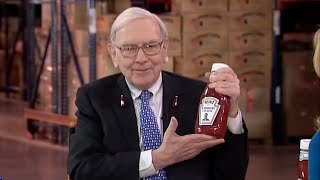
“Heinz makes sense because we've got a business we like, and we've got a partner we like, and we've got a price that I barely like.”
Reflect
- Think of one investment, project, or career choice you are considering. What is the 'business value' underneath it, separate from popularity, headlines, or recent momentum?
- Where in your decisions do you act without a margin of safety? What would 'extra room' look like in price, time, cash, or assumptions?
- Have you ever chosen a low-quality option because it looked cheap? How might the result have changed if you had weighed long-term quality more heavily?
Check your understanding
Go deeper
 Warren Buffett on Value Investing: Wait for the Right Pitch2006 · 52 min · full transcript
 Warren Buffett on Value Investing: Keep It Simple1998 · 332 min · full transcript
 Warren Buffett on Value Investing: Think Like an Owner2008 · 243 min · full transcript
 Warren Buffett on Value Investing: Buy Businesses, Not Stocks1999 · 27 min · full transcript
 Warren Buffett on Capital Allocation: Buybacks, Heinz, and Cash2013 · 115 min · full transcript
 Warren Buffett on Market Valuation: Buybacks, Rates, and Kraft Heinz2019 · 120 min · full transcript