Warren Buffett on Value Investing: Buy Businesses, Not Stocks

What Buffett talks about
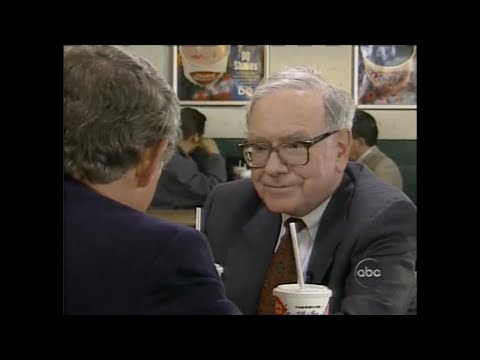
Warren Buffett appeared in this Nightline interview in 1999, discussing value investing, Berkshire Hathaway, market speculation, and his views on wealth and philanthropy.
Also known as: Warren Buffett | Nightline Interview | 1999; Nightline interview with Buffett.
In this Nightline interview, Warren Buffett explains his core investing philosophy: treat every stock as a part of a business, not a ticker symbol. He says the goal is to understand the business, buy it at an attractive price, and hold patiently while the underlying economics do the work.
Buffett contrasts that approach with the speculation, margin debt, and rapid trading he sees in the market. He warns that high valuations and borrowing can end badly, and he recommends long-term saving, broad stock ownership, and staying within your circle of competence.
The interview also touches on Berkshire Hathaway, capital allocation, his preference for simple businesses, and his views on wealth, philanthropy, and meritocracy. Buffett presents money as a tool for productive investment and social benefit, not as an end in itself.
Ted Koppel hosts and narrates throughout, with brief voiceover segments and Buffett speaking at length.
In his words
“All I'm trying to do is buy a piece of a business at an attractive price”
“The one piece of advice I'd give them is don't do it on borrowed money.”
“If the stock exchange closed for a year or two, it would... For for a real investor, it wouldn't make any difference.”
“I don't believe in the divine right of the womb.”
“What you really want in your partner is low expectations, and that marriage will last.”
Key points
- Buffett says he buys pieces of businesses, not stock quotes or price action.
- He favors understandable companies with good economics and honest, talented managers.
- He warns against buying on margin or using borrowed money to speculate.
- He sees stock-market manias as dangerous when speculation overtakes business fundamentals.
- He recommends paying off credit card debt before investing and using index funds for long-term ownership.
- He prefers to keep Berkshire shareholders aligned through policies like not splitting the stock.
Full transcript: Warren Buffett, Nightline interview (1999)
Ted KoppelMister Buffett, I presume. May I call you Warren? I mean, you and me. I love to get rid of Warren. Warren, you are my destiny.
Narration/VoiceoverHe's a man of simple tastes.
Ted KoppelOkay. There's the 50 eight. Alright. There's about
one fifty eight. Here you go, sir. Okay. You have a nice day. Come again.
Narration/VoiceoverNot always comfortable with the finer things in life.
He met a lobster for the first time in
his life, and he was attacking the back of the lobster, which, of
Ted Koppelcourse, was totally resistant. And I said, Warren, if you turn it over, you might have better luck.
Narration/VoiceoverBut don't be fooled by the modest office. There's a $30,000,000,000 investment empire behind that door. If you bought
the S and P five hundred in World War two, you made 54 times your money. I mean, the stock market's been a good place to be. Warren has beat the hell out of
the stock market. And for each brave soul who entrusted the young investor with $10 back in the nineteen fifties, each has become a millionaire many times over. God comes first, my wife comes second, and Butter comes third. And really, I'm not too sure about the second and third place. So when he talks
Warren BuffettIt's it's... There's a lot of action, and and and people are day trading and that sort.
Narration/VoiceoverPeople listen.
Warren BuffettThe one piece of advice I'd give is don't do it on borrowed money.
Narration/VoiceoverPeople decide if they have a good idea, they have to buy it by sundown. Warren Buffett can wait for months and months and years and years.
Warren BuffettIf the stock has changed clothes for a year or two, it would... For for a real investor, it wouldn't make any difference.
Ted KoppelDaddy, more bucks, I believe.
Not more bucks. Let's gate.
Narration/VoiceoverCome on, more bucks. Tonight, Warren Buffett, the down home common sense advice of America's second richest man. Warren Buffett almost never does interviews, and he's been dodging this one for about six years, which is how long it's been since he promised me that one day he would come on nightlife. Having finally agreed though, he has pulled out all the stops, said we could come to Omaha in late February, and that he'd buy us all lunch at his favorite restaurant. Warren likes the Dairy Queen so much, he bought the company.
Warren Buffett holds what is whimsically referred to as a major position in a lot of companies. Coca Cola, Gillette, GEICO, to name just a few. In fact, it's only fair that you know Warren and I own stock in one another's companies. My wife and I bought a few shares of Berkshire Hathaway about twelve years ago, and Warren owns a few million shares of the Disney Corporation, which, of course, owns ABC. I'll try not to let that get in my way. Warren Buffett can speak for himself. I always have a feeling that one of these days, the mask is gonna be ripped away. We're gonna find out that you have a a villa in in Nice and, you know, that you drive hot sports cars around Southern California.
What is it... I mean, what is this Dairy Queen Omaha, Nebraska living in the same home you've lived in for forty years? Why?
Warren BuffettIt's what I enjoy. You know, I I I I like just the way I I lived thirty years ago. When I live that way now, the only difference is I have a I have a plane I can try to travel around in privately. But in terms of what I eat, you know, clothes I wear, I may pay more for the clothes, but they look cheap after I put them on. And the books I read, the television I watch, whatever it may be, the bridge I play, it's it's it's it's what I wanna do in life.
Narration/VoiceoverThat's your passion, bridge.
Warren BuffettYeah. I love bridging. I love bridge. But what can only buy them? If I had five cars, would I have a better time than having one car? I mean, I just have more possessions to keep track of. So I... It doesn't appeal to me.
Narration/VoiceoverBut you understand that is... That's an illusion that a lot of people chase all their lives, especially in this country. Yeah. I mean, this notion that money can buy things for them that otherwise they couldn't have.
Warren BuffettThe the big thing you wanna do is you wanna enjoy every day. So you wanna have a job you love, you and wanna work with people that you like and admire and trust. And if you've got that, you're a long way home. I am getting to do exactly what I love to do every single day. I have hands to work.
Narration/VoiceoverWhich is what?
Warren BuffettWell, it's just... It's it's
Narration/VoiceoverWhat do you do?
Warren BuffettIt's... Well, not much. I allocate capital, and I keep a bunch of very talented people who don't have to work excited about working if I can. I mean, my job is to take these outstanding managers that usually come with the businesses we buy, where they get all kinds of money from me, and keep them as excited about working subsequently as they were before they they sold.
Narration/VoiceoverLet me take you back to that phrase allocate.
Warren BuffettYeah. Allocate money. Is that... Yeah. Allocate capital. Yeah. Sure.
Narration/VoiceoverPretend for a moment that I'm a nine year old. Relatively bright one, but not terribly What does that mean?
Warren BuffettIt means that we've got a bunch of businesses around the country, and they earn money. And when they earn the money, after they take care of the needs of their businesses, they send it to Omaha. And it's my job to take the money they earn and do the most intelligent thing that I can for our shareholders after they send me the money.
Narration/VoiceoverBut I mean Berkshire Hathaway, what did... I mean, for the for the longest time, thought you made shirts.
Warren BuffettYeah. Well, we don't. Alright.
Narration/VoiceoverThat has has nothing to do with
Warren Buffetta No.
Narration/VoiceoverNo. Hathaway shirt.
Warren BuffettNo. Never. Never.
Narration/VoiceoverSo so what is Berkshire Hathaway?
Warren BuffettIt's a company that owns a wide variety of businesses from candy operation, insurance operations, to a newspaper. But then we have pieces of things like Gillette, Coca Cola, The Washington Post. And and what we try to do is we try to be in businesses that have very good economics that are run by people that are honest and talented.
Narration/VoiceoverYou have said many times that you don't get into a business in order to get out of it again. I mean, you you come to stay.
Warren BuffettYeah. For the best
Narration/Voiceoverto us part. Right. Why?
Warren BuffettWell, it it it just fits my personality, for one thing.
Narration/VoiceoverI mean, businesses have ups and downs.
Warren BuffettWell, I'll accept that. But I but I I... I'm looking for businesses that have a whole lot more ups and downs, and the ups are higher than the downs are low. But I I enjoy... I don't wanna I don't wanna be in business like playing a gin rummy game. Every time I pick up a card, I gotta give up one in my hand.
Narration/VoiceoverFor example, we're sitting here in the Dairy Queen Right. For a reason. Yeah. A, you claim to like Dairy Queen lunches.
Warren BuffettYeah. I do. For a long time.
Narration/VoiceoverAnd and b, you own this place.
Warren BuffettWe own the company that franchises this place. Right?
Narration/VoiceoverExactly. Mhmm. Right. Why'd you buy it?
Warren BuffettWell, we bought it. I mean,
Narration/Voiceoverwhat was it that went through your head?
Warren BuffettWell, it was a, it was a business I could understand. Now there's all kinds of businesses I can understand. And I try not to buy into those because if I... Why should I expect to make money on something I can't understand? So I'm I'm not in any high-tech businesses, for example. But I I understand that, you know, an ultimate hamburger or, you know, a peanut buster or a deli bar, and and I can I can I can that? And I like the people that run it. I like the economics of the business. It's a good business. You've got thousands of people that are paying you a royalty for your name of of Dairy Queen, and the business grows a little every year. It generates cash. The cash gets sent to them on, and we go out and buy other businesses with that.
Narration/VoiceoverI mean, just to give me a sense of what goes through your head. It could have been Burger King rather than Dairy Queen. It could have been McDonald's.
Warren BuffettYeah. It... It's... And and both of those are very good businesses that you've just named. They're not for sale, and we owned a piece of McDonald's for for a while. It's a good business. But Dairy Queen was available. The price made sense in terms of what we were getting, and and I like the fellow running it. So, so we, wrote a check.
Narration/VoiceoverThat's important to you. Other words, you you would not buy a company if you didn't respect, maybe even respect and like the people who run it?
Warren BuffettYeah. I don't I don't go into change management. I I... If you go in business with somebody causes your stomach to churn, you know, I say that's a lot like marrying for money, but it's it's it's it's probably not a very good idea under any circumstances. It's absolutely crazy if you're already rich. Right? Yeah. And so I'm I'm not gonna do it. I mean, if I if I can add 1% or 5% to my net worth by being around people, know,
Narration/Voiceoverwho make me wanna throw up, I'm not interested. You do something with your stock that is absolutely unique, and you know where I'm going. I mean, you know, yours is the only stock on the market that is... I don't know what it's worth today, but 70 something thousand dollars a share at the moment. Why didn't you ever split it?
Warren BuffettWell, if you run a public company like Berkshire is, anybody can buy the stock. But by following certain policies and communicating in certain ways, you can, in effect, filter out to some degree the people that have similar ideas and expectations and measurements who will then enter the theater in effect. And so if if if you have a theater and you put ballet and then you have a rock concert inside, you're gonna have some very disappointed people. If you put rock concert and you have a ballet, you're gonna have disappointed people. You wanna have an enterprise that attracts the people to fill the seats, insurers, fills the seats that that are that are in sync with you. And and not splitting the stock means to some extent, filter out people who think that a stock split is a wonderful thing. It doesn't have anything to do with the value of the business by having a pizza that's cut into eight pieces instead of four pieces.
I mean, if you eat the
Narration/Voiceoverwhole thing...
Warren BuffettGetting two hatchets in a restaurant.
Narration/VoiceoverYou understand what the theory behind splits is, and people think that, okay, if you take a $100 stock and you split two for one, more people are out there who can afford a $50 stock perhaps than who can afford a $100 stock. And what you're telling me is, I don't want those people. Why not?
Warren BuffettWell, we've we've got a stock you can buy for the the the B stock for $2,400 So one share of that costs $2,400. A lot of businesses have minimum investments that are $2,400 or more, I mean, in in terms of real estate partnerships or mutual funds. I mean, I've never told anybody to buy Berkshire stock. If if I were to give advice to somebody about how to have a marriage that would last and they could only seek one quality in their spouse. Now, only the only thing you're interested in is having the marriage last. Right. Would you look for humor, intelligence, looks, whatever? What you really want in your partner is low expectations, and that marriage will last. I can't say anything else about it. And I would rather have people who are pleasantly surprised in Berkshire Hathaway anytime than people are disappointed.
Narration/VoiceoverLet's take a short break, and then when we come back, what I'd like to do is talk to you about investment in the market as it exists today compared to the kind of thing that you do. Those are... It's very different. Back with Warren Buffett in a moment.
He knows some companies very well and that's the ones he's trying to concentrate and he's waiting for them to be attractive. When they're overpriced, he says, I'll wait a little while and maybe something will happen internally or externally, cause the whole market to go down or inside a company. Then he jumps in. He's sort of like a dove flying over the battlefield with a big check. He's waiting for something to happen.
And back once again with Warren Buffett. It it seems to me that you are the very opposite of the typical Internet investor today. I mean, I I see sort of images of these kids pushed over their their computers buying one minute, selling the next minute. That's not you.
Warren BuffettI don't I don't have a computer at the office for me. I mean, there's there... For other people there, but not me.
Narration/VoiceoverYou don't use a
Warren Buffettcomputer? I don't have a computer. I I use it at home to play bridge, but I don't I
Narration/Voiceoverdon't use it in the office. Because?
Warren BuffettThat's of no utility. I mean, all I'm trying to do is buy a piece of a business at an attractive price, and the computer doesn't tell me how to do that.
Narration/VoiceoverAre you a little bit nervous when you... I mean, I I I understand you're you're a very tolerant person who probably is willing to let anybody do what they wanna do. But as you look at what's happening to Wall Street today, the incredible... I mean, that go up 100, 200% over a week or two and then maybe drop 50% over a day. Does that make you nervous?
Warren BuffettWell, it's always it's more exaggerated now than most of the time in the past. But we've had a lot of speculative activity and all kinds of things over the years in markets. It frequently doesn't come to a good end, but it'll be with us one hundred years from now, just as it was with us one hundred years ago.
Narration/VoiceoverWell, it's just a lot faster.
Warren BuffettIt's it's it's... There's a lot of action and and and people are day trading and that sort of thing. I... The one piece of advice I'd give them is don't do it on borrowed money.
Narration/VoiceoverBut they... Many of them are. I know. Mean, they're buying on margin. One...
Ted KoppelSome of
Warren Buffettthem will come to a bad end on that. Because?
Narration/VoiceoverI
Warren Buffetthope... Well, because things don't go up forever and a lot of the a lot of the valuations strike me as extreme. And if you if you own them on borrowed money and they go down one day, you you know, you don't get to play out your hand.
Narration/VoiceoverTalk for a moment about your own philosophy compared to what you see going on right now. Because, again, your philosophy is, as you once described it to me, you you you called yourself an elephant hunter. You say, I I sit there in the tall grass, and I wait there with my elephant gun till I see an elephant come along. Yeah. And then I shoot it. But you may... I mean, what you really mean is that you'll sit there and you'll study a company over a period of months or even years until you're finally convinced that that's the right company for you. That is about as far from the way that a lot of trading goes on today as anything can be.
Warren BuffettYeah. The the key... If there's one key to what I do, it's I look at every share of stock as being a part of a business. So if I'm gonna buy a 100 shares of General Motors or General Electric or whatever it may be, I I try and look at what the whole business is selling for, and then do I wanna buy this tiny little piece of that business at that price. That means I think about the business. I don't think about the price action of the stock or I don't think about what people are saying they're going to earn next quarter or anything of this sort or look at charts. I just try and look at the business. Now what does that mean? It means I have to understand the business. A lot of businesses I can understand. I can understand Gillette. I can understand Coca Cola. I can understand Wiggly's chewing gum. Mean, those are things that I can understand, and I kinda... When I say I can understand it, it means I have a pretty good idea of what they're gonna look like ten or fifteen years from now. That's that's understanding of business.
Narration/VoiceoverCounting on the growth then of the of the businesses that you bought.
Warren BuffettYeah. That's all... Yeah. I mean, if we own See's Candy, for example, I I haven't had a quote on See's Candy since we bought it in 1972, but I know the business is doing okay. I don't need a quote on it. And, you know, people manage to live through Saturday and Sunday without getting quotes on their stocks. If the stock exchange closed for a year or two, it would... For for a real investor, it wouldn't make any difference.
Narration/VoiceoverI sometimes have the feeling as I as I look at the stock market today and investment as it is carried out today by so many millions upon millions of people, that to some degree, we're engaged in a bit of a pyramid scheme here that, you know, as long as everybody keeps putting money into the market, it's gonna do well. But one of these days, somebody may say, woah. Bad idea. Am I am I being
Warren Buffettsilly about that? No. We had a town, and there were a 100 people, and we all had a 100 houses. We all agreed to sell our house to each other at the end of each year, up 20%. We kept doing that. We'd all feel very prosperous. And the problem would be is when somebody left town, and then we'd have a 100 houses for sale and have one extra house for sale, and and we'd find out what houses were really worth at that point.
Narration/VoiceoverIs that is that, you know, and of course, when when Warren Buffett talks, lot of people listen. Is that is that part of what's wrong with the market today?
Warren BuffettNo. What happened is over the last fifteen years, stocks have gone up terrifically, in fact, since 1982. There have been two very important drivers of that. One is interest rates have generally gone down and return on equity and business has gone up. Those are very good reasons for stocks to go up. After a while, the very active stocks going up starts drawing in other people who get excited about the fact that their neighbor made a lot of money or maybe they made a little money over the past years. And the the action of the market itself captures the attention of more and more of the participants as opposed to the businesses themselves. And that's when you get into the dangerous periods.
Narration/VoiceoverIs that where we are?
Warren BuffettWe're... Yeah. We're into that to some degree, sure.
Narration/VoiceoverHow how dangerous a period is?
Warren BuffettYou never know. Then... I mean, you you know...
Narration/VoiceoverWell, of course, you never know. But...
Warren BuffettYou you know that valuations are high by historic standards. You know that the level of speculation is high by any historic standard. And you know that that doesn't go on forever. But you don't know when it ends.
Narration/VoiceoverIt's gone on for a very long time, hasn't it?
Warren BuffettYeah. But it's gathered a lot of momentum in the last few years. The last three years prior to this one, when the S and P has gone up more than 20% every year, that's that's almost unprecedented.
Narration/VoiceoverLot of amateurs in the game today?
Warren BuffettYeah. And it's... You know, it it attracts people.
Narration/VoiceoverWell, sure. As long as they're making money.
Warren BuffettYeah. Yeah. And and those people will get flushed out very easily compared to people who really wanna buy a business.
Narration/VoiceoverYour your advice, let's say, a twenty five year old who's making $2,530,000 dollars a year, but would like to see a little bit more come in over the course of the next few years, how should that person invest?
Warren BuffettYou shouldn't buy on borrowed money. You should pay off all credit card debt before you buy because... Any securities because you're paying 18% on credit card debt, you're not gonna make more than 18% a year in the market. Then if you wanna pick stocks, stick with the things that you you understand and look at them as businesses. If you just feel you want to own a part of American business over a period of time, you just put a little money in every month for the next thirty years into some sort of a group of stocks, maybe an index fund.
Narration/VoiceoverLet's take a short break. And when we come back, I'd like to talk about the use of money. I mean, what what money can be used Okay. Back with Warren Buffett in a moment.
You had invested $10,000 in Berkshire stock in 1965, you would have $51,000,000 today. If you put that same money into the S and P 500, you'd have only about a $132,000. So it's quite a difference.
And we're back once again with Warren Buffett. We were talking about... We're just beginning to talk about the use of money. Mhmm. You don't use it much except to make money.
Warren BuffettI use it to build the business. I mean, I don't have cash myself. I I... A quarter of 1% of my net worth is outside the business. Ninety nine and three quarters percent is in the business. So...
Narration/VoiceoverBut I mean, you could extract some of your wealth Sure. If you wanted to. Sure. And, you know, what a lot of people... I mean, George Soros is a perfect example of someone who likes to meddle in a lot of things.
Warren BuffettYeah. Right?
Narration/VoiceoverMore power... So... More power to. Yeah. You do.
Warren BuffettNot much. Why? Well, I I I... It's probably the best answer is that because I'm having so much fun doing what I'm doing if you if you get right into my psyche on it. But essentially all the wealth is essentially a claim check on future output of other people.
Narration/VoiceoverSo
Warren Buffettthose claim checks in my case, 99 and a large fraction percent of them will go back to society and the foundation, and they can then buy services of people or medical supplies or school buildings or whatever it may be that they think will be
Narration/Voiceovermost useful to society with those claim checks. Wouldn't you like to see some of that happening in your own lifetime? I mean, I always wonder what the point is of just giving it all away to charity after you die. Why not why not why not do it while you're alive and enjoy it?
Warren BuffettThere's... Well, actually, I enjoy the idea of building this endowment fund up for society. I mean, I I enjoy the process myself. I mean, as you say, the game is is enjoyable by itself. But if you think about it, if I'd done all of that fifteen years ago, society would have had a few $100,000,000 of claim checks, and now if I die tonight, they'd have $30,000,000,000 of claim checks. It's not a bad endowment fund. I have six very bright, high grade people whose thinking above ground will be a lot better than my thinking six feet underground. And and and I've given them a few guidelines, but nothing that ties their hands in anyway. I want them to tackle big problems. I want them to tackle problems that generally don't have a funding constituency. So they're not the kind of things that government can attack well and that are not being attacked by philanthropy generally. I want them try and do something vague.
Narration/VoiceoverGive me a sense of what kind of thing. Mean, it doesn't have to be specific, but I'm I'm just interested in what sorts of things you want to affect after your death.
Warren BuffettWell, I I really... I I I... The number one problem of mankind, but I don't know how to attack it with money, I think, is the spread of nuclear knowledge. I mean, I think that the that the greatest danger that mankind faces is the fact that more and more people will know how to build weapons of incredible destruction, and and and the knowledge won't go away. I don't know how to attack that problem with money. There's an organization formed... This process is being formed by Lee Butler, was the former commander in chief of what was strategic air command, now Stratcom, is... He calls it second chance, and it's it's... He's devoting his energies, and I'm devoting some money to to working on that problem. There's nobody better qualified than than than Lee to be working on it. It's... The problem... Investing is swinging at easy pitches. You wait until you see something like Coca Cola or something that anybody can understand, and and you look for easy pitches.
In philanthropy, it's just the opposite. You're taking the problems that have defied solution, essentially, big intractable problems. And unfortunately, that means your failure rate's gonna be a lot higher, but it doesn't mean they are worth doing. They should be done, and that's what private philanthropy should be doing.
Narration/VoiceoverWe talked about a couple of these issues many years ago, and and you told me for one thing. Yes. You would leave a little bit of money to your your kids. You got three kids, but but the idea that you would leave all this money to your kids is just silly.
Warren BuffettExplain why. Well, I I don't believe in the divine right of the womb. I I see no reason why somebody that happens to win the ovarian lottery and come out of the right womb is entitled to fan themselves for the next fifty years or command the resources of society. If we're gonna pick an Olympic team in the year 2000, I don't think we ought to take the eldest son or the eldest daughter of... Who won all the prizes in 1976 and put them on the team. I I really believe in a meritocracy athletics, and I believe in a meritocracy in terms of who has the re... Who handles the resources of society. And we're a better society because that's the case.
Narration/VoiceoverDid you discuss that with your kids at some point? I mean, you you explained that to them a long time ago.
Warren BuffettOh, yeah.
Narration/VoiceoverAnd they they bought into that?
Warren BuffettYeah. They they bought into it. I I I take the view... It's kind of interesting. You you have people talk about the debilitating effect of of food stamps on welfare recipients, the cycle of dependency, and all of that sort of thing. But if you come out of the right womb, you are on welfare the day you're born. I mean, instead of calling it a welfare officer, you have a trust officer. Instead of calling it food stamps, have dividends and interest. But it's the same picture. And I really think that really think that everybody ought to start fairly close to the same place. Now they won't. My my kids are gonna get a better education than average, and they're gonna be around in a in a different environment. But I really think that the people who are handling the resources in 2020 ought to be the people who have accomplished things that that command those resources.
Narration/VoiceoverLet's just take a short break, and we'll be back with Warren Buffett in a moment. Let's let's take one more look at at another side of Warren Buffett. You're you're kind of a quiet guy, but there's a bit of a ham inside you. I've I've seen you at a few ABC affiliate meetings, but let's just take a look at a little piece of video tape here, and and and maybe you'll explain to us what this was about.
Ted KoppelThe sun gets lit. Tomorrow, you will pay top dollar on tomorrow for RA. No dividend checks tomorrow. If you need some money, just go borrow day to day. So when the Dow's down, don't frown and worry. Just catch the side down and shout hooray.
Narration/VoiceoverWhat was the occasion?
Warren BuffettI think I should buy that tape. That was was the children's
Narration/Voiceoversale. It's
Warren BuffettThat was the children's theater here in Omaha, and they were doing Annie, and it was a charity event. So I played daddy Warbucks for a short period of time. Ms. And Flanagan, who ran the orphanage, kept calling me Warbucks, but I explained to her that was Bill Gates, that I'm Warbucks.
Narration/VoiceoverI'm I'm sorry. Since you mentioned Bill Gates, you didn't buy a big piece of Microsoft,
Ted Koppeldid you?
Warren BuffettWell, I I spent... He spent nine hours explaining Microsoft to me. Couldn't have been a better teacher. Couldn't have had a dumber student. But I still understood a fair amount of what he was saying because he is a good teacher, and I I bought a 100 chairs when I got all through it. It just shows you how many dumb things you could do
Narration/Voiceoverin this world. Listen. I mean, you've done alright. Warren, you're a man of your word. You told me five, six, seven years ago, whenever it was, that you would do this interview one day, and maybe in another five, six, seven years, you'll do one again. But thank you very much. It was a great pleasure. Had a pleasure. That's our report for tonight. I'm Ted Koppel in Omaha, Nebraska. For all of us here at ABC News, good night.
Transcribed from the audio by speech recognition (Deepgram); speaker labels are automatic. Timestamps link to the video above. Errors are possible.
Cite this recording
Warren Buffett, “Nightline interview (1999)”, 1999. Transcript and video: Thinkers Archive, https://thinkersarchive.com/warren-buffett/value-investing-nightline-1999/
Quoting a passage? Link to its exact moment: every timestamp above has its own anchor (for example https://thinkersarchive.com/warren-buffett/value-investing-nightline-1999/#t-18).