Warren Buffett on Value Investing
Value investing, for Buffett, means treating stocks as pieces of understandable businesses, estimating what they are worth, paying a sensible price, and waiting patiently with a margin of safety.
- Think like an owner: a stock is part of a real business, not a moving quote.
- Value comes from business worth versus price, not from predicting markets.
- Stay inside your circle of competence and favor strong businesses with moats.
- Insist on a margin of safety and wait for the right pitch.
- Great businesses held for a long time beat cheap, weak businesses.

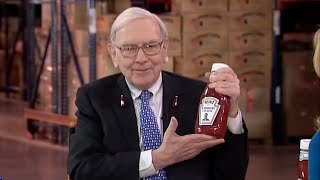
“I look at it as buying the whole company.”CNBC Squawk Box interview, Economic Club of Washington, D.C., 2009 · 10:14
Start by seeing a stock as a business
Buffett’s first principle is mental, not mathematical: stop thinking of stocks as symbols on a screen and think of them as ownership interests in actual businesses. His test is whether you would still be comfortable owning the company if the market were unavailable for a long stretch, because the investment case should rest on the business, not on constant trading.123
That owner’s mindset changes the central question. Instead of asking what the market or the chart will do next, Buffett asks whether the company is worth more or less than the price being discussed. That is the foundation of value investing as he practices it.456
“I look at it as buying the whole company.”CNBC Squawk Box interview, Economic Club of Washington, D.C., 2009 · full transcript →
Price matters only in relation to intrinsic value
Buffett’s version of value investing is not about buying whatever looks statistically cheap. It is about comparing price with business value and future earning power over many years, then acting only when the gap is favorable. He repeatedly shifts attention away from market predictions and back to what the business will earn over 10, 20, or 30 years.478
That is why he treats the market as a tool rather than a guide. The market can offer opportunities, but it should not tell you what something is worth. If you let price action instruct you, you have left value investing and moved into speculation.91011
Stay inside what you can understand
Buffett does not think the key advantage is forecasting brilliance. He prefers to avoid businesses he cannot analyze and to focus on simple, understandable situations where he can make a sound judgment. The size of the circle matters less than discipline about remaining within it.121314
This is also why he values temperament so highly. You do not need to have an opinion on everything, and you do not need constant action. A few understandable, high-conviction decisions can matter far more than endless activity.1516
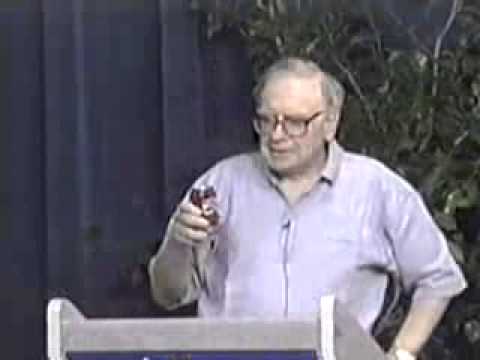
“The important thing is not how big the circle is. The important thing is staying inside the circle.”University of Florida lecture, 1998 · full transcript →
Prefer wonderful businesses to mediocre bargains
Buffett’s value investing evolved away from buying merely cheap, troubled companies toward buying strong businesses at sensible prices. He wants businesses with durable advantages, the ability to earn high returns on capital, and economics that are likely to be as good or better a decade from now.181920
This is a crucial distinction. A low-quality business can stay low quality, which makes time your enemy, while a great business can keep compounding and make time your friend. That is why he says the best course with a truly great business is often simply to hold on.212022
Demand a margin of safety and wait patiently
Buffett’s protection against error is the margin of safety. Because you never know everything, you leave room for mistakes, bad luck, and surprises by refusing to pay a price that assumes perfection. In his framing, value investing is not precision without uncertainty; it is sensible decision-making under uncertainty.232425
Patience is therefore part of the method, not a personality quirk. He does not feel compelled to swing at every opportunity; he waits until the price, the business, and his understanding line up. Value investing, as he describes it, is often a process of inaction followed by decisive action when the right pitch arrives.261527

“…we keep waiting for the right pitch…”Charlie Rose interview, 2006 · full transcript →
Ignore noise, avoid leverage, and let compounding work
Buffett does not tie value investing to short-term macro calls. He explicitly avoids letting discussions about the Fed, government, or day-to-day market moves drive his decisions, because the real work is understanding the business. Trying to predict market moves is both unreliable and unnecessary for the investor he has in mind.281129
He also warns against borrowed money. If your thesis depends on leverage or on a quick market move, you are vulnerable to being right eventually but ruined before eventually arrives. The better path is to own good businesses bought at sensible prices and give retained earnings and business performance time to compound.30318
Buffett on value investing, in his own words
“…we keep waiting for the right pitch…”
“The important thing is not how big the circle is. The important thing is staying inside the circle.”
Where to watch
 Warren Buffett on Value Investing: Wait for the Right Pitch2006 · 52 min · full transcriptBest single overview of Buffett’s core framework: business value, margin of safety, and patience.
 Warren Buffett on Value Investing: Think Like an Owner2008 · 243 min · full transcriptClear explanation of the Graham ideas Buffett thinks every investor should internalize.
 Warren Buffett on Value Investing: Keep It Simple1998 · 332 min · full transcriptShows how Buffett applies value investing in practice, especially his preference for great businesses over cheap weak ones.
 Warren Buffett on Value Investing: Lessons from the Financial Crisis2009 · 43 min · full transcriptConnects Buffett’s philosophy to how he actually learned to analyze businesses and think like an owner.
 Warren Buffett on Value Investing: Buy Businesses, Not Stocks1999 · 27 min · full transcriptConcise statement of buying businesses, not stocks, plus Buffett’s warnings about speculation and leverage.
Questions people ask
- What did Warren Buffett say about buying good businesses at a reasonable price?
- What did Warren Buffett say about having a reason to buy a stock?
- What did Warren Buffett say about his cigar butt investing approach?
- What did Warren Buffett say about how long you should hold stocks?
- What did Warren Buffett say about knowing what will happen?
- Why did Warren Buffett say time is the enemy of a poor business?
Sources
Every quote above, word for word from the transcripts. Numbers match the text.
“I look at it as buying the whole company.”
“…look at a stock not as some thing that wiggles around…”
“If the stock exchange closed for a year or two, it would... For for a real investor, it wouldn't make any difference.”
“The real question is whether the company's worth more or less than $100 billion.”
“All I'm trying to do is buy a piece of a business at an attractive price…”
“Well, when I buy 100 shares of XYZ company, I look at it as buying the whole company. And so I've always looked at buying stocks as buying businesses. So it really wasn't a different situation. Now, I couldn't resell it, and I couldn't, if I own the stock, I couldn't change management, which I could if I own the whole company, but it was basically the same approach.”
“Price takes care of the future.”
“If you get your money's worth in terms of future earning power over the next 10 or 20 or 30 years, you're going to have made a good investment. And you can't pick them from day to day. If you can do that, you can. Well, I haven't met anybody yet that knows how to do it.”
“The stock market is there to serve you, not to instruct you.”
“…you use it to serve you and not to instruct you;…”
“I don't think anybody knows what the market's going to do.”
“The important thing is not how big the circle is. The important thing is staying inside the circle.”
“I don't worry about things I don't understand.”
“We want things that we can understand.”
“I'm looking for one good idea a year.”
“I mean, you really want your decision making to be by looking in the mirror and saying yourself, I'm buying a 100 shares of General Motors at 55 because... And, I mean, it's your responsibility if you're buying it, and there's gotta be a reason. And if you can't state the reason, you shouldn't buy it. If it's because somebody told you about it at cocktail party, not good enough. You know? Mean, there's just... It's got to be something, you know, can't be because of the volume. You know, the chart looks good on it or anything like that. So there's got to be a reason you'd buy the business.”
“I want a business with a moat around it.”
“You know, we we always look at what a business does in terms of what it earns on capital. We wanna be in good businesses. What what we really wanna be is in businesses that are gonna be good businesses and better businesses ten years from now. And we wanna buy them at a reasonable price. But many years ago, we gave up what I've labeled the cigar butt approach to investing, which is where you try and find a a really kind of pathetic company, but it sells so cheap that you think there's one good free puff left in it. And and we used to pick up a lot of soggy cigar butts, you know.”
“Those are the companies that have low returns on equity. And if you have a business that's earning five or 6% on equity and you hold it for a long time, you are not going to do well in investing even if you buy it cheap to start with. Time is the enemy of the of the poor business and it's the it's the friend of the great business. I mean, if you have a business that's earning 20 or 25% on equity and it does that for a long time, time is your friend. But time is your enemy if you if you have your money in a low return business. And you may be lucky enough to pick the exact moment when it gets taken over by someone else, but we like to think when we buy a stock, we're gonna own it for a very long time and therefore we have to stay away from businesses that have low returns on equity.”
“The real thing to do with a great business is just hang on for dear life.”
“I mean, I wouldn't be able to raise the price on December 26 of the Seas Candy if we had price controls. And we've had them in this country, but that doesn't make it a lousy business if that happens to happen because you're not going have price controls forever. We had them in the early the early seventies. So it it... The wonderful business, you know, you can figure out what will happen. You can't figure out when it will happen. You don't wanna focus too much on when. You wanna focus on what. If you're right about what, you don't have to worry about one very much.”
“…always have a margin of safety…”
“…the idea of a margin of safety, of always leaving some extra room in things.”
“The surest way to buy, make money, is to buy your own dollar bills for 80 cents or 90 cents.”
“…we keep waiting for the right pitch…”
“Heinz makes sense because we've got a business we like, and we've got a partner we like, and we've got a price that I barely like.”
“Charlie and I will talk about the business. We will not get into discussions about the Fed or government or whatever.”
“I would leave the capital allocation to Greg. And he understands businesses extremely well. And if you understand businesses, you understand you understand common stocks. I mean, if you really know how business works, you are you are an investment manager. What what... How much you manage, just your own funds or maybe other people. If you really are primarily interested in in getting assets under management, which is where the money is, you know, you don't really have to understand that sort of thing.”
“The one piece of advice I'd give them is don't do it on borrowed money.”
“Stocks are way better than 30-year bonds.”
How this guide was made: drafted with AI from the full transcripts of the recordings cited, then checked: every quotation must match a transcript word for word and be the speaker's own words, and an independent review gates accuracy. Methodology and corrections.