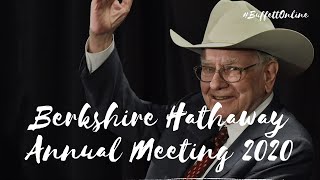
Warren Buffett on Capital Allocation
Buffett treats capital allocation as the disciplined job of putting money only where expected long-term value is clearly highest, while keeping enough strength and liquidity to act when rare opportunities appear.
- Capital allocation is choosing the best use of money, not staying busy for its own sake.
- Price and intrinsic value drive the decision, whether buying a business, a stock, or Berkshire shares.
- Cash is a tool for flexibility: Buffett dislikes idle cash, but keeps plenty so Berkshire can act in a crisis or when opportunities suddenly appear.
- He avoids forecasts and forced moves, preferring patience, simplicity, and resilience over constant activity.
- The culture matters because good capital allocation depends on managers and successors who think like owners.

“Well, the the answer is that Greg... I'm gonna turn it over to him. But the answer is Greg understands capital allocation as well as I do, and that's lucky for us. And he will make those decisions, I think, very much in the same framework as I would make them. And we've laid out that framework now for thirty years or something like that. People make it way more complicated than... I mean, particularly if you're working on a doctorate or something. It's just a great subject to have lots of footnotes and, you know, 50 pages or a 100 pages. But it is... It's no more simple... It's no more complicated than if you and I and Charlie had a business and Mhmm. You want to sell yours... Your interest, and we could buy it for less than we thought it was worth and and and without misleading you in any way about what was going on, and we'd buy it then.”Berkshire Hathaway annual meeting, Omaha, 2023 · 2:36:45
Capital allocation is Berkshire’s central job
Buffett sees Berkshire’s role less as predicting markets and more as deciding where each dollar should go for the best long-term result. That means comparing very different uses of capital: buying whole businesses, buying common stocks, repurchasing Berkshire shares, holding cash, or doing nothing. He frames the task simply, as an owner deciding among alternatives rather than as an academic exercise.13
That owner mindset starts with looking through the ticker symbol to the underlying business. He repeatedly treats stocks as businesses, not pieces of paper, and he wants capital decisions made on business value rather than on market chatter.5
“Well, the the answer is that Greg... I'm gonna turn it over to him. But the answer is Greg understands capital allocation as well as I do, and that's lucky for us. And he will make those decisions, I think, very much in the same framework as I would make them. And we've laid out that framework now for thirty years or something like that. People make it way more complicated than... I mean, particularly if you're working on a doctorate or something. It's just a great subject to have lots of footnotes and, you know, 50 pages or a 100 pages. But it is... It's no more simple... It's no more complicated than if you and I and Charlie had a business and Mhmm. You want to sell yours... Your interest, and we could buy it for less than we thought it was worth and and and without misleading you in any way about what was going on, and we'd buy it then.”Berkshire Hathaway annual meeting, Omaha, 2023 · full transcript →
The best use of capital is the option with the highest value at the right price
Buffett does not separate investing in outside businesses from repurchasing Berkshire stock. He compares them as competing uses of the same dollar and wants whichever choice offers more value. If Berkshire shares are materially below intrinsic value, buybacks can be exceptionally attractive because the company is effectively purchasing its own value at a discount.6
The same logic applies to acquisitions and stock purchases. A good business is not enough by itself; the price has to make sense. His explanation of Heinz shows the formula clearly: quality of business, quality of partner, and a price he can accept.78
This is why margin of safety matters so much in his capital allocation framework. Since no one knows the future precisely, the price paid must leave room for error.98

“The surest way to buy, make money, is to buy your own dollar bills for 80 cents or 90 cents.”CNBC Squawk Box interview, 2013 · full transcript →
Patience is a capital allocation advantage
Buffett’s style is defined by waiting rather than forcing action. He wants the freedom to pass on mediocre choices and move only when the odds are clearly favorable. That is why he talks about waiting for the right pitch instead of swinging at everything.10
He is skeptical of market forecasts and macro discussion because they do not tell him what to buy at an attractive price. He and Charlie focus on the business, not on trying to predict the Fed, government actions, or short-term market moves.1112
This patience includes a willingness to be irregular. He explicitly rejects the idea that capital must always be fully invested or deployed on a schedule, because that would push money into inferior opportunities.14
Cash is not a failure if it preserves flexibility and safety
Buffett would rather own good businesses than sit on cash, so cash is not his desired end state. But he still accepts large cash balances when attractive alternatives are scarce, because holding liquidity is better than making dumb investments.1514
The deeper reason is optionality. Big mistakes and big surprises happen suddenly, and Berkshire wants to be able to act when unusual bargains appear. Cash lets Berkshire move fast without depending on fragile financing or on favorable market conditions.1617
This is tied to a rule even more basic than return maximization: never risk what has already been built. Berkshire’s capital allocation is designed so the company can always keep playing the next day, even during crisis conditions.17

“You know, you can't even dream all the dreams that you could have about a place like Berkshire, but big thing you have to do, though, is always is to be sure you can play the next day. I mean, in terms of in terms of financial activities on a meaningful scale, you know, you you don't wanna go... You don't... There was a a book about... What was the name of that book? You only have to get rich once. I mean, you don't you don't wanna do anything that risks what's been created.”Berkshire Hathaway annual meeting, Omaha, 2025 · full transcript →
Retained earnings, float, and taxes all shape the allocation decision
Buffett prefers retaining capital when Berkshire can reinvest it intelligently. He points to retained earnings as a major source of Berkshire’s growth and even calls Berkshire’s one dividend a mistake, because keeping the money allowed far more value creation over time.19
Insurance float also expands Berkshire’s opportunity set. Because Berkshire receives money in advance and has unusual balance-sheet strength, Buffett sees float as funds that can be used with discretion in ways most insurers cannot match.20
Taxes are part of capital allocation too. Buffett is willing to trim positions, size exposures sensibly, and hold Treasury bills when there is no clearly better use, and he is explicit that paying taxes is not something Berkshire resents if the decision improves overall allocation.215
“And, basically, this is money that represents unpaid losses at this time. You get paid in advance in insurance. So what shows up as a net liability on our balance sheet is... Gives us funds to exercise with an amount of discretion that no other insurance company that I know of in the world enjoys just because we have so much net worth. And our float now comes to a 165,000,000,000, and the man sitting on the far left is responsible for moving that number up from a pittance in 1986 to this incredible figure, which in most years, practically all years, hasn't cost us anything.”Berkshire Hathaway annual meeting, Omaha, 2023 · full transcript →
Good capital allocation depends on culture and the right successor
Buffett does not treat capital allocation as a formula that can be separated from character and governance. Berkshire’s culture is built around shareholder-minded decision-making, low bureaucracy, and trust in capable managers, all of which reduce the odds of capital being wasted on empire-building or make-work.222324
He also makes clear that this framework should outlast him. Greg Abel, in Buffett’s view, understands capital allocation in the same owner-oriented way, which matters because Berkshire’s future returns will still depend heavily on where large sums of money are directed.1325
That continuity matters especially because size makes the job harder. As Berkshire grows, opportunities that can move the needle become rarer, so judgment, patience, and discipline become even more important.2614

“I would leave the capital allocation to Greg. And he understands businesses extremely well. And if you understand businesses, you understand you understand common stocks. I mean, if you really know how business works, you are you are an investment manager. What what... How much you manage, just your own funds or maybe other people. If you really are primarily interested in in getting assets under management, which is where the money is, you know, you don't really have to understand that sort of thing.”Berkshire Hathaway annual meeting, 2024 · full transcript →
Buffett on capital allocation, in his own words
“The surest way to buy, make money, is to buy your own dollar bills for 80 cents or 90 cents.”
“Price takes care of the future.”
“The world makes big, big, big mistakes and surprises happen in dramatic ways.”
“You know, you can't even dream all the dreams that you could have about a place like Berkshire, but big thing you have to do, though, is always is to be sure you can play the next day. I mean, in terms of in terms of financial activities on a meaningful scale, you know, you you don't wanna go... You don't... There was a a book about... What was the name of that book? You only have to get rich once. I mean, you don't you don't wanna do anything that risks what's been created.”
Where to watch
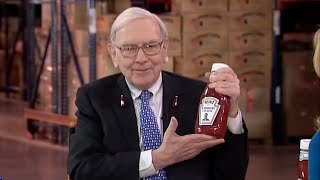 Warren Buffett on Capital Allocation: Buybacks, Heinz, and Cash2013 · 115 min · full transcriptBest short statement of how Buffett compares buybacks, acquisitions, and price in one capital-allocation framework.
 Warren Buffett on CEO Succession: Greg Abel to Take Over2025 · 383 min · full transcriptShows why Berkshire keeps huge liquidity and how Buffett thinks about flexibility, rare opportunities, and not risking the franchise.
 Warren Buffett on Succession and Capital Allocation: Berkshire's Next Era2023 · 165 min · full transcriptExplains how retained earnings, float, and succession fit into Berkshire’s long-term capital allocation engine.
 Warren Buffett on Value Investing: Wait for the Right Pitch2006 · 52 min · full transcriptGives the simplest version of Buffett’s owner mindset: value businesses, demand a margin of safety, and wait for the right pitch.
 Warren Buffett on Apple, Taxes, and Succession2024 · 436 min · full transcriptUseful for understanding taxes, position sizing, and why holding cash and T-bills can be the right choice.
 Warren Buffett on Berkshire Culture: Size, Talent, and Shareholders2016 · 177 min · full transcriptBest on how buybacks and Berkshire’s culture connect to disciplined, shareholder-oriented capital allocation.
Questions people ask
- How does Warren Buffett think about capital allocation?
- What did Warren Buffett say about Berkshire Hathaway paying dividends?
- What did Warren Buffett say about float at Berkshire Hathaway?
- What did Warren Buffett say about keeping cash instead of being fully invested?
- What did Warren Buffett say about selling Apple stock in 2024?
- What did Warren Buffett say about understanding businesses and stocks?
Sources
Every quote above, word for word from the transcripts. Numbers match the text.
“Well, the the answer is that Greg... I'm gonna turn it over to him. But the answer is Greg understands capital allocation as well as I do, and that's lucky for us. And he will make those decisions, I think, very much in the same framework as I would make them. And we've laid out that framework now for thirty years or something like that. People make it way more complicated than... I mean, particularly if you're working on a doctorate or something. It's just a great subject to have lots of footnotes and, you know, 50 pages or a 100 pages. But it is... It's no more simple... It's no more complicated than if you and I and Charlie had a business and Mhmm. You want to sell yours... Your interest, and we could buy it for less than we thought it was worth and and and without misleading you in any way about what was going on, and we'd buy it then.”
“I would leave the capital allocation to Greg. And he understands businesses extremely well. And if you understand businesses, you understand you understand common stocks. I mean, if you really know how business works, you are you are an investment manager. What what... How much you manage, just your own funds or maybe other people. If you really are primarily interested in in getting assets under management, which is where the money is, you know, you don't really have to understand that sort of thing.”
“No. I would... The... But we have sold shares. And I would say that at the end of the year, I would think it's extremely likely that that that Apple is the largest common stock holding we have. Now one interesting thing is that Charlie and I looked at common stocks or marketable equities or the things that people love to look at as being businesses. And so when we when we own a Dairy Queen or we own whatever it may be, we look at that as a business. And when we look... Own Coca Cola or American Express or Apple, we look at that as a business.”
“The surest way to buy, make money, is to buy your own dollar bills for 80 cents or 90 cents.”
“Heinz makes sense because we've got a business we like, and we've got a partner we like, and we've got a price that I barely like.”
“Price takes care of the future.”
“…always have a margin of safety…”
“…we keep waiting for the right pitch…”
“Charlie and I will talk about the business. We will not get into discussions about the Fed or government or whatever.”
“…we don't pay much attention to markets or forecasts…”
“If you told me I had to invest 50,000,000,000 every year till we got down to 50,000,000,000, that would be the dumbest thing in the world to invest in that manner. Things get extraordinarily attractive very occasionally. The long term trend is up. Nobody knows. And I certainly don't know. Greg doesn't know. Ajit doesn't know. Nobody knows what the market is going to do tomorrow, next week, next month. Nobody knows what business is gonna do tomorrow, next week, or next month, but they spend all their time talking about it because it's it's easy to talk about. And... But it it it has no value. I've I've never found anybody I wanted to listen to on the subject.”
“But anytime we have surplus cash around, I’m unhappy. I mean, I would much rather have good businesses than cash. And we found a chance in the last year thereabouts to deploy. We came in with something over 40 billion of cash, and we’ve got about 20 billion now. And we’ve had some earnings, so we put a lot of cash to work. And I like that. No, I’d much rather own a good business than have cash.”
“The world makes big, big, big mistakes and surprises happen in dramatic ways.”
“You know, you can't even dream all the dreams that you could have about a place like Berkshire, but big thing you have to do, though, is always is to be sure you can play the next day. I mean, in terms of in terms of financial activities on a meaningful scale, you know, you you don't wanna go... You don't... There was a a book about... What was the name of that book? You only have to get rich once. I mean, you don't you don't wanna do anything that risks what's been created.”
“Now you're laying out the the alternative which you could receive in dividends, but the reason we've gotten to where we are is because we we kept the money. We did pay a dividend in 1967, 10¢ a share. It was a terrible mistake. And I I always tell people that I I left for the men's room and the directors voted while I was gone, but that isn't true. I was there. I confess. They... But we've reinvested and has produced the 500,000,000,000 plus of shareholders' equity and the 30,000,000,000 plus of operating earnings. And and we'll continue to follow that policy because it makes a great deal of sense.”
“And, basically, this is money that represents unpaid losses at this time. You get paid in advance in insurance. So what shows up as a net liability on our balance sheet is... Gives us funds to exercise with an amount of discretion that no other insurance company that I know of in the world enjoys just because we have so much net worth. And our float now comes to a 165,000,000,000, and the man sitting on the far left is responsible for moving that number up from a pittance in 1986 to this incredible figure, which in most years, practically all years, hasn't cost us anything.”
“We don't mind paying taxes at Berkshire…”
“…the main, by far, the main factor in keeping Berkshire's culture is that you have a board…”
“We want our shareholders to walk in the shoes and the directors to walk in the shoes of shareholders.”
“We just don't do... we don't have make-work activities…”
“Greg should become the chief executive officer of the company at year end…”
“…size is the enemy of performance to a significant degree…”
How this guide was made: drafted with AI from the full transcripts of the recordings cited, then checked: every quotation must match a transcript word for word and be the speaker's own words, and an independent review gates accuracy. Methodology and corrections.