Warren Buffett on Capital Allocation: Buybacks, Heinz, and Cash
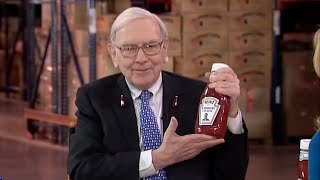

What Buffett talks about
Warren Buffett gave this CNBC Squawk Box interview in 2013, discussing Berkshire Hathaway’s capital allocation, stock buybacks, the Heinz deal, cash, deficits, and why he avoids macro forecasts.
Also known as: Warren Buffett | Heinz-Deal | March 4, 2013; Warren Buffett: We Had A Record Year | May 6, 2013.
Buffett says Berkshire’s job is to allocate capital by buying wonderful businesses at sensible prices or repurchasing its own stock when it trades below intrinsic value. He argues that one opportunity does not rule out the other, and that the key is long-term value, not short-term headlines.
He also defends the Heinz acquisition, saying Berkshire has a business it likes, partners it likes, and a price it “barely” likes. He frames the deal as a long-term ownership partnership, not a private-equity-style flip.
Beyond Berkshire, Buffett discusses the sequester, deficits, the Fed’s balance sheet, stock buybacks, and why he and Charlie Munger avoid macro forecasts when making investment decisions. His recurring theme is to focus on price, quality, and patience.
Becky Quick and Joe Kernen host the CNBC interview; John also asks a question. Buffett speaks throughout most of the segment.
In his words
“The surest way to buy, make money, is to buy your own dollar bills for 80 cents or 90 cents.”
“Heinz makes sense because we've got a business we like, and we've got a partner we like, and we've got a price that I barely like.”
“Charlie and I will talk about the business. We will not get into discussions about the Fed or government or whatever.”
“Price takes care of the future.”
“We live in the best country in the world and we will solve our problems.”
Key points
- Berkshire measures performance mainly by book value versus the S&P 500 over time.
- Heinz made sense because it is a great business with strong partners and a price he accepted.
- Berkshire can both buy Heinz and buy back its own stock if the price is right.
- He thinks the sequester is a clumsy way to cut spending, but reducing deficits is still necessary.
- Buffett is skeptical of trying to time markets or make investment decisions based on macro forecasts.
- He says investors should prefer low-cost index funds if they don’t want to do the work themselves.
- He stresses that buying great businesses at good prices matters more than reacting to day-to-day market moves.
Full transcript: Warren Buffett, CNBC Squawk Box interview (2013)
Good morning, everyone, and welcome to a special edition of Squawk Box here on CNBC. I'm Becky Quick, and this morning I am in a suburb of Omaha, Nebraska, called La Vista. Joe Kernen is back at CNBC headquarters on the East Coast. Our special guest this morning is Berkshire Hathaway Chairman and CEO Warren Buffett. We are coming to you this morning from the warehouse of Oriental Trading. Berkshire bought this catalog-based seller of arts and crafts last November. We've been soliciting your questions for Mr. Buffett over the last several days, and as always, you didn't disappoint. You have emailed, tweeted, Facebooked, and shared your thoughts on LinkedIn. Mr. Buffett is ready to answer many, many questions, as many as we can get to. But before we get to that, Joe is going to give us a quick rundown of the morning's top headlines. And Joe, good morning.
Hey, Becky. See, I know the sequester is hitting everybody hard, but this is your new set out there with the boxes and the... Usually, we can splurge a little bit more. This is affecting everyone, I think, at this point. It is, but this was a purchase. Berkshire never gave any numbers on this, but it was reported that this was a purchase of about half a billion dollars. It was what we thought was the company's most recent acquisition when we were planning and trying to figure out where we were going to do the show this time around. Of course, he surprised us with another purchase since then, but yeah, when we were planning on this, when we were putting everything together, this was what we thought was his most recent acquisition. I was thinking about that sequester. I mean, Buffett could take care of it himself if he really, you know, if he...
Wanted to, right? I mean, does he, does he have his checkbook with him? I mean, Warren, why let this happen? Just, just, you know, loosen up. Loosen up the pocketbook. Yeah, I've never been known for that joke. Again, our special guest today is Warren Buffett. And Warren, thank you very much for joining us this morning. We really appreciate it. Thanks for having me. Again, we are here at Oriental Trading, and we come out as we have every year, I believe, for this is the sixth or seventh year we've been doing this, to come out and talk to you after you put out your annual letter to shareholders. You did that on Friday. People have gotten a chance to take a look at that and come up with a lot of questions that we have for you. But why don't we start off how you started your annual report this year? You said it was a disappointing year for you even though the value of the company increased by...
Over $24 billion. Kind of hard to match that all up. Yeah, well, if it was going to be a disappointing year, I like the fact we made 24 billion. But I've regularly measured the performance of Berkshire by the change in book value versus the S&P 500 with dividends added back. I mean, you can buy a very low-cost index fund and get those results. So unless we're delivering something better than those results over the years, we aren't doing anything. And it's true now that the real value of Berkshire is considerably greater than book value, but year to year, book value is not a bad tracking measure of how our...
Intrinsic business value is. And so some years we, well, generally speaking, if the S&P has a big up year, we're going to fall short because they're 100% in stocks, we're a third in stocks, and then we tax-effect our gains. So we take 35% off those gains as they occur. So we would expect to beat the S&P in a so-so year or a down year; we expect them to beat us in an up year. But our job is to beat them over time. The S&P was up by just over 16% last year. Berkshire's book value was up by over 14%, so it was very close. 14.4%, yeah, for me to be rounding there.
Is that a reflection, you think, of... I mean, this has now been four years running that Berkshire has underperformed the S&P on that? Is that a reflection of the massive gains that we've seen in the stock market, or do you think this is a reflection of how big Berkshire has gotten at this point? Both. But it's been three out of four. We had one down year there. Yeah, and of course, we still never had a five-year period when we fallen short. We've had 43 consecutive five-year periods where we've won. But if the market is up in any significant amount this year, then our five-year record will get broken. But it's a function of the fact that four years...
And it is a function of size, too. What you've been doing along the way over the last several years is making bigger and bigger acquisitions as part of all this. You said you were disappointed in 2012 you didn't make a major acquisition, but you followed up very rapidly with the recent announcement of the Heinz acquisition. How do you get to these acquisitions? Why does Heinz make sense? Well, Heinz makes sense because we've got a business we like, and we've got a partner we like, and we've got a price that I barely like. But we've got a great business. Mhm. And that's the most important thing. Then we have these terrific partners; Georgie, Paulo Lemann — I've known for a dozen years. You couldn't, you can't find better.
Business people, and they are—they will do the work. We are a financing partner, and, you know, we hope to own Heinz 100 years from now. I mean, if you own great brands and you take care of them, they're terrific assets. We have a question that came in, and we've been soliciting questions. This is question number 62. We've had questions that have been coming in all along, and this comes from someone named Wilco Schützendorf. He says, as an investor, I think Berkshire was a better value than Heinz. Question is, would it have been better for Berkshire to buy back its own stock at current prices than to buy Heinz at a 20% premium to its market value? Well, buying—buying Berkshire up to 120% of book, we feel we're making
significant money. In other words, we feel the value of Berkshire is well over 120% of book. How much? Nobody knows. We can't get chances to buy $12 billion worth of Berkshire. We had that one piece from an estate that was 1.2 billion, but that's a big piece. But one doesn't preclude the other. We could buy Heinz, and we could buy our stock if it was in that 120% range. The surest way to buy, make money, is to buy your own dollar bills for 80 cents or 90 cents. Now, it's not precise what that dollar bill is. I mean, whether our stock is worth 138% or 135% of book or some number, I don't know. I just know it's worth more than 120%.
But, you know, if somebody walks in here, I don't have to know whether they weigh 300 lbs or 350 lbs to know that they're fat, you know. So, I mean, you—you don't have to be precise on these numbers. And we did—if we get chances to buy our stock at 120% of book or less, we will be buying. But if we get a chance to buy another Heinz, we will do that too. One does not preclude the other. Okay. Why don't we talk a little bit about the sequester? Joe was just talking about it. This is the first business day back since the sequester took place. I flew over the weekend, and I was a little worried you'd be facing long lines as you got out. It wasn't the case. How big of a deal is the sequester, and what do you think eventually should happen? Well, I—I—I think it could go on for quite a
while. The sequester, in effect, reduces the amount of stimulus to the economy. I mean, they talk about stimulus, and they say, well, this is a stimulus bill, you know, and they vote 800 million or something, 800 billion, and say, well, this is stimulus. Stimulus is when the government operates at a significant deficit. That—that—that is stimulus by Keynes’s definition. We're operating at a trillion-dollar deficit roughly. Uh, this—the sequester reduces that a little bit. Raising the taxes at the start of the year reduces that somewhat. But we're—we're still operating at a deficit that is 6% of GDP. And by Keynes’s definition in the fourth year of a recovery,
that's a pretty fair amount of stimulus. So it—it just—it—it has the effect of reducing stimulus. But it sounds like you think that's a good thing at this point. Well, I think it—well, I think at some point reducing stimulus is good. And I—I don't think a 6% stimulus in the fourth year, third to fourth year of a recovery—that is recovering. Uh, I—I think that's still giving the economy quite a—quite a juice. So you're not worried about the sequester and about this pulling back in the economy because there have been a lot of scare tactics out there. There have been a lot of people who have said this is the end of days if we get to this point. You don't think that's the case. We're going to bring down spending, and we're going to bring up revenues. And we may get there in fits and starts, and everybody may scream each time we do it.
But the deficit is going to come down, and it—it needs to come down, and it will come down. And, and we may be doing it in a meat-axe way—in this particular move. We did it in kind of a meat-axe way in terms of the revenue is going up, but at—the start of the year, when we increased the payroll tax by a couple percent, that just—that hit all across the board, you know, on poor people and—and people of moderate means. It was a lot of money. It was a roughly equal amount to the sequester, incidentally. Uh, so we have cut the stimulus from these two factors, but it's still 6% of GDP. And, and if you'd asked me three or four years ago whether having running deficits of
6% after a recovery that's been going on for three years was appropriate, I would—I would say that—that's a fair amount of stimulus. So is—is getting there in a meat-axe way better than not getting there at all? That's—that's a good question. And, and it probably leads you to getting there at all. You may have to use the first, and then people kind of look at their handiwork and say, we have to do better than this. Uh, but, you know, we still are talking about spending 3.6 trillion and taking in 2.6 trillion, and that's a lot of stimulus. Okay. Joe, I know you have some questions as well. Well, yeah. I mean, I—that just when Warren talks about where we are and—and that we are recovering, I—I mean, you'd have to
Extrapolate what you said to Ben Bernanke and the Fed, I guess, too, Warren. I mean, that awfully stimulative at the Federal Reserve, and I guess I would just, reading between the lines of what you said, I, I, I guess you'd wonder whether they need to be quite as free and easy right now, too. Yeah, it, it's an interesting thing, Joe, because, uh, we're running, we'll say very roughly a trillion-dollar deficit, and the Fed is buying roughly a trillion dollars worth of, uh, and not necessarily government bonds, but mortgages, but, but government-issued paper, or let's regard it as government paper. And so in effect, they are picking up our deficit and creating bank reserves.
with the money. And you might say, uh, you look at that and you say, well, this is wonderful. Uh, you might say, why don't you have them buy 3.6 trillion of government paper every year, and, and then there wouldn't be any necessary, you wouldn't have to have any taxes. And the Treasury would be running a—or the Fed would be running a huge profit then. They're running about 80 billion a year now, but now they'd have this wonderful carry. Uh, you know, that 3 trillion of assets that they have are financed about a little over a trillion by currency in circulation. Well, that doesn't cost them anything except the cost of the paper. And then they've got a couple trillion or close to it, a bank reserves which cost them a quarter of a percent. So basically, you know, I'm jealous of the Fed. I'd like to have a machine like that myself, but they
they they it, it doesn't cost them anything. So if if they can do a trillion this way, why not do three, three and a half trillion, and then we wouldn't have to have any taxes at all. For anybody who may not be picking up on this. Yeah, no, I, I'm being facetious, believe me. But, uh, it's, it, it's something that can't go on. And, uh, if if it was this easy, you know, we, we would have doing it centuries ago, and, uh, I've got enormous respect for Chairman Bernanke. I think what he did in the fall of 2008 is save this country. Uh, but I, I think it'll be interesting when they get to the unwinding stage of a a balance sheet. It's, it's usually a lot easier to buy things than to sell things. I've found that in my own job. I guess Warren, you say I, I think Oh, go ahead, John.
Oh, oh, sorry about that. The I just have one follow-up on the, uh, on the sequester. I, I don't know whether you, you agree with me on this or not, Warren, but I guess the worst thing is that we feel like we've done something, and we may be less willing to do more, and we didn't do anything about, you know, the lion's share of what we're spending all our money on. Uh, this came out of the discretionary side. It did nothing for the mandatory side. So those huge issues in, in the demographics of our population and the all those things are still there, and it's only 2.3% of the total, but if you take it as 2.3 of the discretionary, it actually is a pretty big cut for discretionary, and it, it, it doesn't even get to—it doesn't even get to the core
of our problem. So it's, you know, in that way, it's, it's, it's kind of, uh, it misses the mark. It may cause some, some unnecessary, you know, uh, furloughs and pain and and it doesn't even help our situation. No, it, it's, it's a very dumb way of, of, uh, attacking a very serious problem. Uh, the problem is particularly serious if you think about it. Uh, you have people on both sides rushing to television cameras on Sundays and other days to lock in positions to say, I won't do anything but this. And if you had a negotiation, if you had a labor negotiation and you had a number
of managers, people on management side going on television saying, I won't budge an inch from this, and then you had a whole bunch of people from labor going on and saying, I won't budge an inch from that, does not set the stage for negotiation. Then on top of that, if you have somebody negotiating for management, say me, and one labor union leader out there and I negotiate with him, finally we get in private instead of on television, and then he can't go back to his membership and get his position ratified. It's a terrible, it's just a, you couldn't negotiate under more difficult conditions, and I think there's strong evidence that one or even perhaps both parties, but
certainly one party is in a position where you can't make a deal in private that you know is going to get ratified by the membership, and they can't control their base? Yeah, well and they don't speak for it. Yeah, and if, if you, if you're negotiating with somebody and you don't know whether they're speaking for their base, you've got a problem. Even in negotiating for businesses, I always feel I'm at a disadvantage because when I say, well, we'll pay $10 billion, we'll pay $10 billion, but the other fellow says I got to go back to my directors and I got to get opinions from investment bankers and everything. So there's an, there's an imbalance of commitment and who wants to lay out their best offer if you, if the other fellow when he says yes doesn't really mean yes.
The real key to making a deal is to have two people who can absolutely speak for their constituencies and who when they say something you can count on them delivering. And and as you start moving away from that and we've moved away from that enormously, television accentuates or just speaking out accentuates because somebody says, you know I won't give a dime on taxes and and then their constituencies hear, and those are the people who vote in the next primary. So now they, they, they get locked into positions. But if you had gone back to the, the Continental Congress, and they, they, they negotiated in private, and they were not out there staking positions and saying, I won't do this or I will do that. And I think it was, I don't think, I'm not sure we'd have a constitution if we'd
Had a bunch of television cameras out on the side and a whole bunch of people that couldn't speak for their constituencies. I mean, you have the same players in place that probably lost trust in each other after 2011. Is there a way to get it back? Have you ever seen a situation where things have gotten out of control, but those same activists, those same people in charge could get back to a position of trusting each other? Well, the way that you'd get a deal made is if Obama and Boehner and presumably Reed and McConnell too, but if they could actually go into a room, you know, go up to Camp David, you know, wherever it may be, and hammer something out with the knowledge that once they hammered it out, they could deliver their constituency. That's the way deals are made, whether it's in
labor negotiations, whether it's buying companies, or it just isn't made by dealing with people who can't speak for their constituency. Okay. Warren, if you'll bear with us for a moment, we're going to slip in a quick break here. Becky, we have viewer questions. I know how you operate, and you've got probably 14 hours' worth of questions for your 3 hours. So I know you don't need me, but I am ready when you are. I have so many things I even want — you know, I even want to ask Buffett about Herbalife. I swear. I mean, there's so many things I want to ask. You know what? You would not be the only one, Joe. We actually got some other viewers who wrote in questions about that too. Yeah, because it's a big brand name. It's a big brand name, and you know, he
loves brand names. Involved who are kind of very vocal about where they're taking it down with this. Warren, since we brought it up, why don't you weigh in? Well, I do not have a position in Herbalife, but both Carl Icahn and Bill Ackman are members of the Giving Pledge, so I would like to see both of them make a lot of money because they're going to give at least half of it away to charity. So you wouldn't say one way or the other? Have you ever read through Herbalife's filings or had any thoughts about it? I haven't. No. All right. Understand you want to be politic and stay out of this. So instead, why don't we jump right back into another controversial subject? You were just talking about Bernanke and what you thought about what the Fed's been doing recently. Joe just mentioned in his headlines that Bernanke has warned about the risks of pulling back too soon, how that could damage the
economy. And I want to go back to something you just told us in the last break. You said, "I think it will be interesting when they get to the unwinding stage of the Fed's balance sheet." When you say interesting, what do you mean? And I say that because you called 2008 interesting, too. Yeah, that's a euphemism. It's very easy to buy. You've got the Treasury issuing securities like crazy, and you just sop them up, you know. If you buy 85 billion a month, you just credit bank reserves. The Fed has about trillion one or something like that of currency in circulation. You could just put more currency in circulation, but basically you credit bank
reserves so that if you're going to have 3 trillion of assets, you need to create a trillion eight or a trillion nine of bank reserves. And they pile up, and the banks get a quarter of a percent on it, and they don't like it because they're losing money, but they don't have good places to put out a lot of money now. Now, when you start selling, you know, at that point you start sopping up reserves, and that's a much different action than buying. You saw just the whiff about, I don't know, two or three weeks ago, just the whiff of the fact they might start tightening up and the effect that has on the stock market. All over the world, everybody that manages money is waiting to catch the signal
that the Fed will reverse course. And that, you know, I think they're on a hair trigger. So I think the Fed will try to give little signals here and all of that, but in the end there are a lot of people that want to get out of a lot of assets if they think the Fed is going to tighten a lot. And we've never quite had, at least to my knowledge, we've never had the degree of disgorgement that might be called for down the line and, you know, who knows how it will play out. But it'll be noticeable. I'll put it that way. It'll be very noticeable. Have you done anything differently at Berkshire to prepare for that?
No, it's interesting. Becky, nobody believes this, but Charlie Munger and I have been buying stocks and businesses for 50 years. In that entire time, we've never had a discussion of macroeconomic factors in making a decision as to whether to buy or sell a business or buy a business or buy or sell securities. It just doesn't get into our consideration. And if I were buying a farm, I would not be thinking about what the Fed was going to do. If I were buying an apartment house, if I were buying a business outright, I wouldn't. So when I buy a piece of a wonderful business, say Coca-Cola or American Express, it is not a matter of consideration. So Charlie and I will talk about the business. We will not get into discussions about the Fed or government or whatever.
May also be because you run Berkshire so conservatively. I mean, you are constantly making sure you have a huge amount of cash on hand in case the 100-year problem comes along. So, I mean, you've already guaranteed against this anyway, I suppose. Well, we don't, we don't know when the 100-year problem's going to come. It can come tomorrow. It can come 100 years from now. We want to be prepared for it. So we always are going to deal from strength, but in terms of making the decision as to whether to buy or handle trading today or pass, whether to buy Heinz today or say Wal-Mart, we do not get into macroeconomic discussions at all. Everybody thinks we do. They think we sit there and decide what emerging countries are going to be better or something. That just doesn't get into our decision making. to differentiate from what you do versus
what everybody else does, that may not enter your conversation ever because you've already guarded against it. It's, yeah, and because we think the important thing is to be in the right business at the right price. Right? Price is all important, and if you read cheery headlines and you're willing to pay a much higher price, you're making a mistake. And if you read depressing headlines and you say, I won't buy it at any price, you're making a mistake. That's why I wrote that op-ed in 2008. Right? Price takes care of the future. And it may be that you read terrible headlines for six months or a year, whatever it is. I refer in the annual report, I bought my first stock in the spring of 1942 when we were losing the war in the Pacific.
But I bought a very cheap stock and I felt we were going to win the war eventually, you know, but I didn't... If I'd waited three months, as my sister pointed out to me, I could have bought it a lot cheaper. But that isn't the question. The real question is whether I got a lot for my money and whether I've got the staying power to wait till things change. All right. I know you don't look at the macro issues. I know you don't pay attention normally to where stock prices are, but you did write that op-ed back when you thought stock prices were very low. When you look at where the indices are now, which is right near all-time highs, does it make you nervous? Does it make you less likely to go out and say buy, buy, buy in terms of the stocks that you're adding to your portfolio? Anything I bought at 80, I don't like as well at 100. But if you ask me
whether stocks are cheaper than other forms of investment, in my view the answer is yes. We are buying stocks now because... But we're buying them not because we expect them to go up. We're buying them because we think we're getting good value for them. All right. Joe, I know you have question too. I had a quick follow-up, Becky, since we got such a non-answer about Herbalife. So, hey, wait a second. So, I'm just... There is an expert on Herbalife. His name is Herb Greenberg. And he messages he it: Warren, you own a multi-level marketing company called Pampered Chef. Did you know that? Well,
it does not make money by selling to the people who represent us. Right, but it's a multi-level... I mean, is there a problem with the whole notion? I mean, I guess they're all different. But you have some experience at least with that business model or something similar, right? Not exactly like... Well, actually, yeah, no. I think where you look for problems is where you actually make your money by loading up the salesperson, whether they make any sales or not. But Wall Street has multi-levels. I mean, you have sales managers who get a portion of the commissions on these sales representatives that work beneath them. You have that in the mutual fund industry. You have tiered layers of supervision where people get overrides on those below
that. You have that in life insurance. The real question is whether you have it so that if you just sell the guy a kit of something and he never makes another sale, whether that's satisfactory for the business—that you've made your money on selling the kit. Well, it sounds like talking about the accounting. Yeah, and it sounds like you're saying that's what you're saying: that Pampered Chef is different than Herbalife, and Herbalife might sell a bunch of stuff to people that never sell it to anyone. I don't know whether that's... I know it is not the case at Pampered Chef. I do not know what the situation is at Herbalife. I've read assertions about that, but I really don't know what takes place at Herbalife. All right. All right. So you don't know enough to... 'Cause it did sound like you were almost calling it a pyramid scheme, too, which is what happens there. Their 10K, and I've never, I've never asked anybody that's in our direct
selling operation what their techniques are. You know, Icon can crush Ackman, but you could crush Icon. I mean, if you just want to get into it—I mean, yeah. That money Icon can, you know, there's not enough. Ackman doesn't have enough to withstand this, but I think you could do the same. I mean, if—Jump in here, Warren, this could, you know, this could be fun. No? Shall we split the profit or loss, Joe? I've already tried to get, you know, what have I... You're setting... Now I'm getting a bottle of ketchup as the latest thing, and I'm waiting for it, by the way. Uh, you just be patient. You may wish you hadn't gotten it when you didn't get it. If you're good, you may get ketchup. Yeah. Yeah. Guys, we're, we're going to slip in
Another quick break. Warren Buffett is with us all morning long. Warren, we did receive a lot of questions this year related to Berkshire and just some of the things that are going on there. Let me start with one that comes from J. Chef. He asks, you've been critical of LBOs, in private equity in the past, leverage buyouts in private equity in the past. Yet you are partnering with 3G and leveraging Heinz. Does this indicate a change in your view on LBOs and on private equity? Yeah, this is a partnership that's buying a business to keep. And our partners like the idea of some leverage in it. We don't like leverage as much. So in effect, our preferred stock is providing some leverage to their common.
So instead of having loads of debt providing the leverage, uh, we have our preferred stock, which is equity and carries no threat to the capital structure. But it is not a private equity deal. This is a business to own. Berkshire will own Heinz 100 years from now. And there's no thought on Berkshire's part of selling a share. There may be a few people in the 3G group that decide that they want to sell at some point. And if they do, I hope we get a chance to buy more of it. But Heinz is forever as far as we're concerned. In your letter, you pointed out that the preferred shares have more than just the higher yield that they're bringing in. I mean, this is also something that brings you warrants to buy more of the stock.
Yeah, we get, we have a 9% preferred, an $8 billion issue. Uh, we have, uh, a call price on that preferred, and eventually it will get called. And that provides extra yield because the call is at a premium. Probably provides another point a year. And then on top of that, we get 5% of the fully diluted common basically for nothing for buying the preferred. It's a deal that, it's a very fair preferred, but it does create extra leverage for our partners 3G, meaning they only have to put up 4 billion for their half of the equity and they get more play. If Kinds works out as we expect, they will get a return higher on that.
Common than we get on the preferred, but we'll do very well on the preferred. And by having that preferred in there, we minimize the amount of debt leverage. So this is not something that's where there's debt to the ceiling on it. Several people had written in about how this is different than your usual acquisition by partnering up with someone. Normally, you look at a business where you want to keep the management that's there, and you look at that, and it's a long time add-in. Why do this with 3G? Well, with 3G, I've known Jorge Paulo Lemann for a dozen years. I know his associates. I think they may be the best managers in the world. So, and incidentally, they're getting no extra ride from managing it. So
There's a 3% carve out for management if they meet certain, certain performance targets, but I would love to have that group manage any business that we have. And so they are the managing partners. We're the financing partners. And to me, it's a dream. I mean, we get terrific management with them, management I couldn't buy. And they get somebody that can finance it with a phone call, which makes it very easy from their standpoint. Is the 3% of annual net income or something? No, it's the ability to buy 3% of the common if certain performance levels are met. Okay. Let's get to another question. This one is from Jeff Ferdon. He writes in with the recent purchase of Heinz,
Are you worried that Berkshire will ever become too diversified and will end up having to sell off companies like other former diversified companies, including Coca-Cola and General Electric, because they strayed too far off of their core business? They—what was the last part? They strayed too far off of their core business. I guess we have managers that are running their core businesses. At the railroad, we have Matt Rose. That is his core business. We have Greg Abel with the energy business. That is his core business. So before this deal, we had eight different companies, each of which would be a Fortune 500 company if owned separately, and they have Fortune 500-type managements. And those people are managing the businesses they want to manage. That's the same situation we're going to have at Heinz. Uh, so we
We couldn't run, uh, Berkshire from the top. That, that, it's not designed that way. It's designed to have a group of businesses that are run by people that love them and that know how to run them. And it's, it's their goal in life to run those businesses. Their goal is not to run Berkshire. Their goal is to run the railroad or whatever it may be. Uh, so it's, it's an ideal situation. I just stay out of the way. Okay. Let's get to another question. This one comes in from Bill Breach, who writes in, regarding the unusual Heinz options activity prior to the announcement of the acquisition, can Mr. Buffett describe Berkshire's procedures to try and prevent premature leaks of insider information regarding prospective acquisitions? There have been a lot of questions about that. Well, we try to minimize who knows about it. And and, uh, but you're always going
To have, uh, your lawyers know about it. Uh, our auditors don't know about it. Uh, we don't, we don't consult them. Uh, our CFO is going to know about it. My assistant's going to know about it. So, uh, and that's true with the other parties as well. In this particular case, you had four investment banking firms. You had two commercial bankers. Uh, and you had people at our place at 3G, and so a lot of people end up knowing that. That's about it. That's why I like to push these things through as fast as possible. And obviously, I will guarantee you that that person that bought it on Wednesday, those options—I mean, that is, that is inside trading. I mean, they're going to
Nail that guy at, uh, and they should. Uh, we were doing great up to that point. If you looked at the Heinz stock behavior, it did not outperform the market or anything. I thought we were going to get there. Uh, and even on that Wednesday, the day before we announced, the stock, I believe, was actually down. But that options trading clearly reflected somebody that knew something, and it would be very interesting to see who it is. We've never had a big problem. We had, you know, we had the situation in Lubrizol, but that was a different sort of situation. We've never had anybody, uh, at Berkshire that, all the deals we've had, that, uh, has been involved in insider trading. You know, very quickly on that point, let me bring in another question from a viewer. This is from Harvey Cohen. It's
number 13 control room. He asked, what was the total legal bill to close the Socal affair? Well, that's a good question and I can't tell him the answer, but it is more than I would like. Uh, uh, 'cause we had our own legal bills, we had his legal bills, and it's not totally done yet in terms of legal bills, but if I had to guess, and I'm really guessing here, just, uh, I would, I would guess, um, maybe $4 million or something like that. Have you spoken with Dave Socal since the affair? I have not spoken to Dave Socal for a couple of years. Okay. Joe, I know you had some questions, too. Uh, yeah, I did. I, I was just watching Warren with that answer. I mean, $4 million is, uh, you know, is, is not a lot obviously for
Buffett or for Warren, not a lot of money, but I, I saw the pain on his face 'cause $4 million to him, as he, as he has mentioned, uh, I mean, $500,000 would have—he's like, I can just see him just... Anyway, Warren. So you're getting closer. You're getting closer, Joe. Keep going. In the past, you have made the point that it's better to buy a great business for a fair price than a fair business for, for a great price. And, and I, I know that Heinz probably fits into that again, but you know, Warren, Heinz been—when was it founded? Like 1870 or something? 1869. 1869. Yeah, they went broke and then that company, but the successor, that was
kind of great business for a long, long time. And I don't know about your price. I, I guess you probably paid a fair price, but I'm just wondering, you know, sooner or later you have so much money at Berkshire that you have to deploy, and you find companies like Heinz, but you could have made this acquisition anytime in the last 20 or 30 years and probably gotten a fair price. I think that your Brazilian, your, your partner definitely made a big difference here. Yeah, he did, he did. There's no question about that. No, we would not have done the deal if we hadn't been in partnership with Georgie Paulo. And, and it made sense just in terms of, of being a global, a brand that you can just leverage globally, and he's the guy that can then leverage it globally. So it doesn't—it makes sense that way to me. Okay, I got it now, 'cause it
doesn't seem that profound to me to buy a, you know, to buy a brand name ketchup. There's a—I can give you like probably 10 or 15. You might as well buy Twinkies too while you're at it. Get in the auction bidding for that too, but you know, just as far as a brand name company at a fair price there's, you know, you got a whole shopping list. Yeah, they're not—there's not too many that are big, but, but you're right. You know, we've, we've owned Coca-Cola, but we've only owned 9% of it now for, I don't know how, what, 25 years or so. But you're right, we would not have—we would not have done this. We would not have done this at this price without being partners with Georgie Paulo. All right. Can you, will you throw Bloomberg under the bus once and for all? You mentioned Coke again. I mean,
for that ridiculous. I mean, you can't even order a pizza with a party and get, get a Coke in a, in a 2 L bottle. I mean, it's just if that is not, you know, an any state run amok, if you won't say that for me, I'm—I'm, I don't know if I'm going to ask any more questions. Well, there's two, there's 200 calories in that 16 oz bottle that he will tolerate, but he doesn't want to tolerate more than 200 calories. I, I, I have seen certain people, unnamed but public officials, who have eaten more than 200 calories of dessert at one time without having to order a second serving. I The real question—you know, I can eat 2,700 or 2,800 calories a day, and I've been picking
those 2,700 or 800 all my life, and it seems to work reasonably well. And, and I, if I'd eaten broccoli all my life, you know, I'd probably be in some mental institution. Andy, Andy loves salt. Andy loves salt. Andy flies around, you know, with a big carbon footprint, and it just, it just looks like, let them eat cake. It looks like I'm here, you know, like a king, and I'm looking at my subject. What? Yeah, I'm a king, and my subjects have to live differently than I live 'cause they're too stupid to make their own decisions. It, it galls me, Warren. I think I, I think you should pick 20—whatever your metabolism rate is, and you should pick 2,700 or 2,800 calories, and you ought to have the—yeah, and
I'll eat filet of fish if I want. I'll, I'll eat, I'll eat 2,800 calories worth of McNuggets if I want or Twinkies. Or ice cream. I, I do that. Some days I just go through a whole gallon. Warren, what are you eating for breakfast this morning? Here, yeah, I'm having a Cherry Coke here. There's, there are about 200 calories in this. But, but if... Oh, I got some Oreo cookies here, too. What size is that bottle, Warren? What size is that bottle, Warren? Uh, this bottle looks like 16 oz. I'd, I'd guess. It's bigger. No, I think that's a 20. I think that's a 20 oz. It's a 20 oz bottle, it's 200. You can't have that. Put that back. You can... You know where you can have it? Myanmar. But you can't have that in Manhattan. Yeah. Well, we can have it in Omaha. And we'll continue to have it in Omaha.
We're going to jump right back in with Warren Buffett, the chairman and CEO of Berkshire Hathaway. Warren, we've talked about a lot of things this morning, but we have not gotten your take on the economy right now. We, we like to talk to you about this because your businesses give you a really good idea about what's happening across a broad sector of the economy. So, you laid out some of these things in the annual report, but why don't you talk to us about the Powerhouse Five? These are the five divisions of the company outside of the insurance holdings that are, are the big, big, biggies in terms of what they bring in. Burlington Northern Santa Fe, probably. That's the biggest by far. And, and it's the car loadings were up in January. Car loadings are up in February, but our car loadings have been behaving
somewhat better than the other three big railroads. So, car loadings for the four largest railroads have been fairly flat. They've been, they've been up in the intermodal. They've been down in the traditional coal, continues to be down. In our case, coal is pretty flat. But I think you'll see a small increase in car loadings this year. And I think, I think Burlington's going to do quite well on it because we're well situated in respect to where oil has been found. So, we are carrying more and more oil. We're carrying about 10% of all the oil that's
moving in the lower 48 continental United States. That's kind of unbelievable. 10% of everything produced in the lower 48? Yeah. And, and we've got seven unit trains a day and a unit train is about 100 cars. And there's six or 700 barrels per car. And we have seven of those a day moving, but that number of unit trains is going to increase as production comes on further in the Bakken, particularly. Rail, rail has turned out to be a very good way of, of, of moving oil in this economy because there's such differences in what oil is worth at given refineries.
And oil is obviously far, rail is far more flexible than, than pipeline in terms of moving oil around. You know, you, you bring that up and I'm looking quickly to try and find some of the questions that came in from our viewers, but the whole idea that rail is more efficient, that's something a lot of our viewers kind of caught on to and keyed in and wondered what your thoughts are on the XL pipeline and if you were opposed to it because you'd like to see more traveling on Burlington Northern on your own railroad. No, the, the Keystone pipeline, yeah, it's coming, that'll be bringing heavy oil down from Canada and, and there's plenty of places for pipelines and, and we're not anti-pipeline at all. Uh, yeah. But the oil producers are going to figure out what is in their
best interest. There's these huge differences in what crude is worth in different places and, and with rail you're more flexible on that rate. Incidentally, oil moves faster on trains than it does in pipelines. That may be a little counterintuitive, but, uh, and it certainly moves in a more flexible manner. So I think if you talk to the oil producers that they're quite happy with the rail service they're getting and we've spent a lot of money on infrastructure to make sure that in terms of loading and all of that sort of thing that, uh, it's done very efficiently. But just to clarify what you said a moment ago, you are not anti-pipeline, you are not anti-Keystone, the Keystone XL? No. I can't imagine, you know, I, I'm not an environmentalist in terms of knowing
what, but it just seems to me that an awful lot of pipelines in this country and there hasn't been a lot of damage done. And the, the, the heavy crude up there, the tar sands, it's going to move someplace. So I, I, I, I do not have any objection to the Keystone pipeline. All right, beyond what you're watching in terms of the rail car loadings and what's been happening, what's your general sense of the economy based on what you see from housing, based on what you see from manufacturing, based on what you see from retailing? Yeah, well housing is, is getting better. I mean, our brick business is better, our carpet business is better. I was just talking to people at USG. Wallboard business is better. Now, this is from a very low base and it's, and it's, it's not galloping back, but it's moving back. And, and what we see with our real estate brokerage firms
is that houses are moving. Uh, so we're, we continue to have a slow recovery that started in the fall of 2009. I mean, it's, it's, it's three and a half years old now. It continues to be slow and certain parts come on faster than others, but, uh, it hasn't taken off, but it hasn't stopped either. You know, we, we spoke with Sam Zell recently and talked with him about it and he's in an interesting perspective because he's been putting money into rental properties and thinks that in some ways this resurgence in housing may have been overplayed by the media a bit. That when he really looks at it, he still believes rentals are a great place to be for some time to come and he is investing in that manner. Um, is there a
Way that both sides of this coin can be correct? I think they both can be correct. Yeah. I know you, you have had the situation where, uh, five years ago, 69% of people were in single-family homes, and that's dropped down to 65. So a fraction, I believe. So the rental properties have gotten a disproportionate amount of the new household formation in terms of, uh, people going into them. But you're, you're seeing it in single-family homes now, and, and I, I still think for your viewers, anybody that's going, knows where they're going to live for the next 10 or so years and finds the house that they like, I think they should buy it today, and they, I think they should mortgage it out for 30 years today. I think they will do very well. So that has not changed. There, there are several people who wrote in questions about that. We'll get to some of those a
little bit later this morning. Um, if you look at the other areas, Iscar, Marmon, again some of the big businesses that you've been following, what are you seeing in terms of manufacturing, let's say, on a worldwide basis, which is what Iscar does? Well, worldwide, the United States is doing better than many parts of the world. Uh, so if you look at Iscar, which sells to manufacturers all over the world, the United States is one of the stronger places, uh, uh, for an Iscar. And, and, uh, the United States, it's not galloping at all. But we are making progress bit by bit. And, and, uh, everybody would love to see it faster. It is. But it's not gone into reverse, and I do not think the sequester will cause it to go into reverse.
MidAmerican Energy. I mean, you, you talked to us back in 2008, 2009 when you really saw the downturn. It was energy usage, energy demand was down. Where do things stand right now? In MidAmerican, is what? Nine, nine of the different states? I think it's 10 states. Yeah. Yeah, we're, I think maybe second in that in terms of number of states. Uh-huh. Electricity use has not come back like you might think. I mean, there's no resurgence in the use of electricity. Uh, this is a slow recovery. Is that from the consumer or from the business? From the—you would think with the growth of population and all of that that you'd be seeing a, a little bit better trend in kilowatt hours for, for residential than you have. But residential
and commercial, none of it's been that vibrant. Okay. So it, you're talking about a returning economy, not generally stronger. And is that different than you think Ben Bernanke's view of the economy is? Well, I think that's why he's doing what he's doing. I think he's seeing the same thing, and he feels it's his job to juice it a little. And, uh, and he's doing it. He, I, I think he would feel—I shouldn't speak for him, but I think he would feel that absent his juice, we would be might be dead in the water. Would you agree with him? I think there's some chance he's right on that. Yeah. No, I think very cheap money makes things happen. It makes asset values higher. And when asset values are higher, people do have a greater propensity to spend. So there's these
second-order effects and third-order effects. But no, I think Bernanke has sort of carried the load himself during this period. And, uh, there's no question that stocks are higher because interest rates are essentially zero than they would be otherwise. Uh, there's no question that there's even more activity on buying companies because you can borrow money so cheap. Junk bonds are ridiculously cheap. Uh, so he's having an effect. But even though you agree potentially with his assessment of the economy and even though you think that he is probably holding up the lion's share of all of this, you don't necessarily think that he should continue expanding the Fed's balance sheet? Well, he's expanding his balance sheet right now.
Right. But I would say that there are, everybody that's involved in managing money is waiting for the moment when they think that he's going to go the other direction. And so I'm sure he's going to try to do various things to sort of ease that in and be a little, a little confusing maybe as to whether he has done it. But there are all kinds of people with portfolios, not Berkshire, but there are all kinds of people with portfolios who will take a signal from him that he's going to go to the other direction as a signal to them to do a lot of things with bonds and stocks. And, and you, you can see a big, a big reaction. You saw this, you know, you saw this the other day when they
they, they sort of coughed a little at the, at the Fed minutes, right? They, yeah, they just, you know, and all of a sudden, you know, a couple of hundred points. It, it will be a very interesting day when it becomes crystal clear that the Fed has reversed direction. Okay. Um, we're going to have more from Warren in just a little bit. Well, let's get back, Warren, to some of the questions we've gotten from our viewers. There were again a lot of questions that come in and probably the types of questions we try and put them into categories. What we've gotten over the years more than any other type of question are those that fall into the investing category because people really want to know your views on the stock market, your views on what stocks you're looking at. We just mentioned in the headlines about the HSBC CEO saying that the bank is facing a really challenging operating
Environment in 2012. And one of our viewers, David Perkins, wrote in and he wants to know if you could please comment on the bank, specifically those trading below book value like Bank of America and Citigroup. What's it going to take for these large banks to get above book value like their peers at Wells Fargo, USB, and JP Morgan? Well, a bank that earns 1.3 or 1.4% on assets is going to end up selling above tangible book value. If it's earning 6/10 of a percent or 5/10 of a percent on assets, it's not going to sell well. Book value is not key to valuing banks. Earnings are key to valuing banks. And you earn on assets. Now,
it translates to book value because, to some extent, you're required to hold a certain amount of tangible equity compared to the assets you have. But you've got banks like Wells Fargo and USB that earn very high returns on assets and they sell at a good price to tangible book. You've got other banks, like maybe the two you mentioned, that are earning lower returns on tangible assets and they're going to sell below book. James Arnie Ots. Guys, this is 103. I'm throwing you a curve ball on this. He wrote in and he wanted to know what do you think of Bank of America? Does the stock still have room to run? You noticed that you picked that stock a couple years ago with the preferred that you got into.
Yeah. Well, we have warrants that run for 9 years. We're going to hold the warrants till the end of that period, 8 and 1/2 years. And you know, we expect Bank of America in 8 and 1/2 years to be worth significantly more than it is now. I have no idea whether it's going to go up or down tomorrow or next week or next month or next year. But they are making progress in getting rid of a lot of things that they shouldn't have been in. They're making progress on cleaning up mortgage problems from the past, most of which came from Countrywide with their acquisition of Countrywide. They're doing the right things and they've got a terrific low-cost deposit base. So over time, they will do well. But no one knows whether that stock, in my view, knows whether it's going to go up, down, or sideways in the next 6 months. So we
we just don't try to pick or do that sort of thing. Okay. Let me ask you about another stock. This is one that we got a lot of variations of this question. It comes from Matt Kocak of Muskegon, Michigan. And Matt, I hope you're pronouncing your last name right, but he writes in, if you could give any advice to Tim Cook of Apple and its shareholders, what would it be? Should they give more in terms of a dividend? Should they split the stock? Is Apple now a long-term growth stock that you would consider purchasing at its current levels? I don't own any Apple stock and I haven't. I did talk to Steve Jobs a few years ago about what they did with the cash, as we've talked about earlier, but the best thing you can do with a business is run it well. And if you run it well, the stock behaves fine over time. You know, Berkshire has gone from
$15 a share to 150,000. Now, there've been times, four times, when it's gone down 50%, and there's been all kinds of times when people have criticized doing this thing or that thing. But basically, we've just focused on running the business. And if you run the business, never had to deal with a hostile activist investor like David Einhorn who's going after Apple right now. Well, I would ignore him. I mean, I would run the business in such a manner as to create the most value over the next five or 10 years. And you can't run a business to try and run the stock up every day. But if you're looking at Apple, I mean, it has faced some massive fluctuations. Tech stocks tend to be a lot more volatile than some other stocks, including Berkshire shares. It has gone down 50%, though, four times.
Wow. Yeah. Four times in its history it's gone down 50%. And at that point, again, just focus on what you're doing. Yeah, if you've got money, you buy it and you just keep working on building the value. But four times, and I heard from people at those times that said, you know, why don't you do this or that? Usually pay a dividend. They think it might go up because of that. Would have gone down, actually. No, we just kept focusing on building value. And I think Apple's done a pretty good job of building value. They may have too much cash around now. One of the reasons they have that cash around is because two-thirds of it hasn't been taxed yet. And they don't want to bring it in because they don't want to pay the tax. You know, that when Steve called me, that was a few years ago, you know, I said
Is your stock cheap? And he said, yes. And I said if you got more cash than you need, he said a little bit. And I said then you buy in your stock, but he didn't do it. But okay, you just said what you told Steve Jobs a couple of years ago and you just said yourself when Berkshire went down, if you have cash, buy the stock. So you're basically suggesting a stock buyback if you don't have uses for the money in the business. Yeah. Now, we're always looking to buy businesses. So but when our stock went from 90 thousand or thereabouts to 40 or 45,000, I wrote about it 10 years ago to buy the stock and we just didn't have any luck buying it. But if you can buy dollar bills for 80 cents, you know, that's a very good
Thing to do unless you have some needs in the business. Mhm. All right, let's talk about another stock. This is one of your big four investments, Coca-Cola. And Chris Croller writes in, why do you not increase the Coke stake? The name is near eternity and this company seems to be a never-ending cash cow. You own 9% of the shares outstanding. Yeah, we own 200,400 million shares and we haven't bought or sold any stock for 20 years. There are other things that I think are cheaper. You know, we bought Wells Fargo this year. I think Wells Fargo is cheaper than Coke. I may be wrong. I think they're both wonderful companies. But now I'm giving some money to the two other managers. In fact, I'm going to — I'll make news for you today. Last week, I told them I was going to give another billion each.
You're talking about Todd and Ted? Ted. I'm giving them that on March 31st. Yeah. Yeah, they're making me look bad, so I'm going to give another billion so they don't talk about it. How big are their portfolios right now? Well, they're just under 5 billion right now and they'll be around 6 billion on March 31st when I give them the next billion. Let's talk about what you said about Ted and Todd in the report. You talked a little bit about their performance, which you said outpaced the S&P's performance last year by double digits for each of them. Right. Why don't we bring up — I think we have a full screen in the control room that tells exactly what you said in the report, because it was pretty interesting the way you laid this out. It says Todd Combs and Ted Weschler, our
new investment managers, have proved to be smart models of integrity, helpful to Berkshire in many ways beyond portfolio management, and a perfect cultural fit. You go on to say that each of them have outperformed. We hit the jackpot with these two. In 2012, each outperformed the S&P 500 by double-digit margins. And then in much smaller print again, this is what you did in the annual report, they left me in the dust as well. I can barely read it from across the room. That you can read it, actually. I kept trying to make it smaller. They did a terrific job. And it's sort of interesting because here these two fellows are. They ran hedge funds before, but they want to work for Berkshire. And, you know, the standard arrangement in hedge funds is two and 20.
Well, with them managing now 6 billion, they'd get 120 million dollars each just for the two. Now, look at their expenses. We have one woman, Stacy Gottschalk. She takes care of three people there in terms of their clerical stuff here in Omaha. Ted has one assistant in Charlottesville, Virginia. Todd has two people working in New York for channel checks and things like that. Believe me, you can cover that for a lot less than 120 million. They would have made last year 400 plus million if under the standard two and 20 arrangement. And they would have gotten carried interest treatment on it, you know. But instead, they get a very decent payment from us based on beating the S&P. And it's all ordinary income to them. So it's
it's an interesting example of how the chips fall in this business. And they love — they love working for Berkshire. And they'll be working for Berkshire 20 years from now. Let me ask you another question that came in. This one came in on Twitter from at my s t c r i s c my stretch, I guess is how you say that, who wants to know what's the likelihood of Berkshire adding another investment manager to the two already on board? It's quite unlikely 'cause I'm so happy with the two. I mean, I'd rather just give them more money. And I know, you know, it's like getting married. I mean, it, you know, more a month afterwards than you do 10 minutes before. And this has worked out terrifically. We, in fact, there's a third — there's Tracy who does not manage money but manages
businesses. So we've got the three T's: Ted, Todd, and Tracy. And they're all home runs. And they're not just smart. They are devoted to Berkshire. They like — they like being part of it. And they'll all be with us, in my view, 20 years from now. And they couldn't be better. One of the other changes you noted in the annual report was that of the stocks that you break out in the investment holdings, there was a new one added to the list. That was DirecTV. And you only put stocks on this list that you have over a billion dollars invested in. This is the first time that someone besides you has invested enough money to make it onto that list. DirecTV was the biggie again. And that was because both Todd and Ted are putting money in this? They both — they both had put money in
there. And I do not include the pension fund monies they manage. And there'd be another one on there if that was included. In fact, there would be more DirecTV because they had some of that in pensions too. They concentrate their investments just like I do. One of them has, I think, only five stocks. The other may have 11 or 12. And they don't check them with me ahead of time. I look at some reports at the end of the month and so I know what they buy or sell. But we just make sure the things that where we'd have to file a 13D or something, that we would make sure that that's coordinated. But other than that, they have total carte blanche. They could put it all in one stock. Was it just a coincidence that they both invested in DirecTV? They didn't check with each other first? I think they're both smart. No, I don't think they checked.
They don't balance it off each other. It just happened that way. And as you know, a small part of their compensation is based on what the other fellow does. So they've got every reason to be cooperative. But they do not; they work quite independently. We all go to lunch on Tuesday and, and, and, uh, but, uh, they each have their own portfolio just like I've got my own portfolio. Okay, you tried to slip this through. You mentioned that there would be another stock that would have made the list of over a billion dollars if you were looking at the pension fund money they run as well. What was that stock? Davita. What, I'm sorry, it was? Davita. Davita. Yeah. Yeah. Wow. Okay. There's a little bit of news for us as well. Warren, if you'll stand by, we're going to slip in another quick break. Right. Okay. And Joe, we'll send it back over to you.
What is that dialysis stuff, Warren? Adam, what is Davita? It is dialysis, right? Good. Mhm. Who pays for lunch? Yeah, I think I, I think, I think we actually own maybe 13% of the company or something like that. Well, who, who pays for lunch on Tuesday? Those other guys pay, don't they? I, I—No, I, I pay for lunch and, and, and Berkshire does not pay for lunch. I pay out of my own pocket. Whoa. Whoa. Can they get an appetizer? It depends how they performed. We have more from uh What is it about really wealth? It's just fun to call them cheap, isn't it? Really wealthy people and they, and they like it. They, they do. It's like, yeah, they don't, you know, they, they, they relish it. Anyway, more from Becky and
Warren Buffett in just a moment. Good morning again, everyone, and welcome back to this special edition of Squawk Box. We are in La Vista, Nebraska, which is a suburb of Omaha and home to Warren Buffett's Oriental Trading Company. This is a company that he acquired in the fourth quarter back in November relatively quietly. Berkshire never put out a share or never put out a price for this acquisition, but it was reported to be around half a billion dollars. This is a company that you probably know from catalogs. If you have kids at home, this is a company that does arts and crafts and again it is an Omaha company that has been here for a long time. Warren Buffett is our special guest this morning and we've been fielding a lot of your questions for him all morning long, things that have been coming through. And Warren, for the people who are just tuning in, we talked in the 6:00 a.m. hour, 6:00 a.m. Eastern hour, about your
thoughts on the sequester and where we stand right now. This is the first business day after the official sequester process. People may have not noticed a lot of changes yet, but there could become some coming as soon as April 1st when things really kind of kick down. In your opinion, is the sequester a good idea? Well, it, it's probably a, it's a terrible way to go in terms of cutting expenses, but that doesn't mean that cutting expenses isn't a good idea. We've done two things this year to reduce the deficit, which means reducing stimulus. We've had huge stimulus in this country. We had a bill we called stimulus, but then anytime the government runs at a big deficit, that is stimulus. Keynes would be proud of
us. And we have increased taxes. The payroll tax went up a lot, 80 to 100 billion, and we've increased taxes on the very rich. And then now we are cutting expenses. So we've, we've taken a shot of a couple hundred billion in terms of reducing the deficit, but we still will have a deficit of a trillion or a little less. It's a terrible way to go about it. I mean, this, the idea that a year and a half ago you, you create some monster and then you say this monster is going to be so scary that we'll, we're bound to be able to work together with that hovering over us, and then you let the monster—you cut them loose. I mean, it, it is, it is crazy, but the whole
the whole negotiating situation really is out of control when you've, when you've got people negotiating in public and when you've got at least one side unable to deliver for, for any commitment he might make. There was a question that came in from LinkedIn, Joe Guevara Jr. This is number 180 Control Room. He wrote in, if you could explain the explosive atmosphere in politics today as to what it was 10 to 15 years ago. Is it really worse than, than it was 10 or 15 years ago? It's probably worse. It's, you know, my dad was in Congress, you know, if you go back 60, 70 years, it's always contentious. I mean, you've got, you've got people that believe strongly and very different things. But now you've seemed to have gotten to a position
where the real goal of almost each side, and certainly one side in my view, is to block what the other guy wants to do. And you have, you may have four political parties. I mean, you may have the extreme right and the regular Republicans, you may have the extreme left and the regular Democrats. And when contests are being fought in primaries and when people are playing to those primary audiences throughout the entire two years that they're there, it makes it very hard for leadership to deliver their entire party. And, I mean, that is—it seems to me that's the real part problem in the House, is that you don't
Have two parties. You have three parties and, and, uh, John Boehner, who I admire, what you know, what he's done, but I, I, I, I do not think he can deliver his, uh, his, his group. And we, we saw that when we got to plan B and all of that, uh, at year end. Mhm. Joe, I know you have a question, too. Oh, yeah. We got a lot, Becky. As many as we have time for. Warren, um, I think in the latest, um, in the latest results, your puts, the puts that you sold here, you just got to be feeling like, uh, what a great move that was, uh, not just on you, not just on the S&P's, but you've done that around the world just betting on higher, higher stock prices over time, I guess. And it, it, it ended up boosting
Your billions of dollars, didn't it? Yeah, but net to this point, uh, Joe, it's actually hurt them by a couple billion. If you take the cost of undoing those puts, if they'd come due on December 31st, they would have cost us three and a fraction billion, but we put the liability up, I think it's six and a fraction billion. So, so we still show a liability on our books that's far higher than... What is that? But what your strike on those? You're, you're, you're... No. What? The strike on the strike, we would have, we would have a profit if they were settled today. Yeah, you know what you're doing. And they're just marking it. You probably did that for tax reasons or something. I
I know how you operate. Would you write, would you add to your positions around the world in terms of just staying long the equity markets around the world using that strategy, using derivatives? We would except for the fact that now you have to post collateral. And Berkshire will never get itself in a position where if the Federal Reserve is closed tomorrow and the whole world is paralyzed and the stock exchange isn't open and then there's been some kind of a nuclear or biological or chemical attack, we have to be able to operate the next day. And, and, and you saw on October 19th and 20th of 1987. On October 20th, the specialist firms were all broke.
We just are never going to get in a position where we have to post a lot of money on 24 hours' notice. So, we will not. We just won't engage in those kinds of transactions no matter how profitable they may appear. Think you need to add, add, add asteroids now too. I mean, you got to add asteroids. Yeah. Well, we can take an asteroid or two. Not a big one. Sinkholes. No. I mean, I'm, I'm afraid to go, I'm afraid to go to bed. I'm afraid to, to get in. Yeah. Well, listen, you live up there where we had Sandy. We had 46,000 cars we paid off on. That was, that was five or 600 million dollars. My heart bleeds for you with your insurance operations, Warren. I want, I want to talk about that too. I don't know how you're doing that with insurance. I, you know, you got to be charging too much because you're not paying out
Enough because you're making so much money with your insurance operations, right? Well, let, let me ask you this then. People are calling us up at Geico and we're now getting the highest closure rates. They've, they've improved dramatically lately. Now nobody is calling us up and taking out insurance with us if their prices go up. So we are selling it below whomever they're insured with now, and probably by an appreciable amount, because if we're going to save them 10 bucks, they're not going to shift. Yeah. Well, we're great at advertising. Yeah, great. You've said that. You've, you've done this with, with a great ad agency and buying more commercials, and it's paid off. It's like printing money. And low overhead in your offices, all right. Can get them to call us, but the only reason you buy is to save money. And, and
Our closure rate right now is the highest. Geico is shooting the lights out now, and we, in February, uh, we added net close to... We're right at 165 or 170,000 policies, and, uh, you know, nobody else is doing that. But that's our, our pricing is what does that. Geico was profitable even with what you paid out for Sandy, correct? Which was by... How much bigger was that than Katrina? Three times as big as Katrina. We have, we, we are number one in market share in the metropolitan New York area. We were not number one in market share, uh, in Louisiana. I want to see, I want to see you in the commercial like adding up the results and then dancing and then have those two guys playing that saying, "Well, happier
Than Warren Buffett getting Geico." You know the commercials that I'm talking about? I want... Why won't you be part of the... Be in one of your commercials, adding up the results. He is. Wait a second. He does do a commercial with Geico. You just take one. I, I, I, I've done some things, but they seem to never make it past the cutting room floor. All right. We will have much more with Warren Buffett right after the break. People have been looking back at what's happened since the beginning of the year. We have faced some changes. As you mentioned, there's about $700 billion that have been coming in, are, are expected to start coming in in new revenue because of changes to the tax code that took place after the end of the year last year. Some people have pointed out with all that you've done and said about what needs to change with taxes, with the Buffett rule that had been proposed,
There was one question that came in, which is a question we got a lot of different variations on. This one's from Terry Daller, number 32 control room. He said, with the end of the 2012 federal income tax changes, will you now be paying a higher percentage in taxes than your secretary or your administrative assistant? Yeah, I probably will. I'll make a—I’ll make a study as when we get the taxes calculated throughout the office, but my capital gains rate will go from 15 to 23 and a fraction, because of the 20% plus the three and a fraction percent in Medicare. But if you look at Social Security tax, payroll taxes, plus income taxes, I'll be a fair amount higher, say eight or nine points higher. But the
differential between me and the rest of the office, not just my secretary but the rest of the office, was greater than that. Now, the payroll tax you're talking 15 and a fraction percent and then start adding the income tax onto that. So I'll be glad to give you a report after we get all the income tax returns done, but it will be closer, but I'll probably be the lowest paying, counting payroll taxes. I'll probably be the lowest paying taxpayer in the office. So what happened? We raised marginal tax rate on the top 2%, and yet it still doesn't fix the problem of the various wealthiest, very wealthiest Americans getting to a position where they're paying more of their fair share, if you want to use that phrase. You will still have
when the figures come in a few years from now, you'll probably have the 400 largest people who might be making 200 or 250 million a year. You'll probably have a quarter of those at least and probably half of them paying less than 25%. And of course with the payroll tax 15%, you get up over 25—I mean, you're way over 25%. And that's why I suggested a minimum tax to get to those. It wouldn't affect somebody making a lot of money and paying normal tax rates on it, but it would affect the carried interest people and that sort of thing. And it would affect me. Was this a stupid change in the tax legislation? Well, I think it was good. It was better than no change. And the minimum tax is still out there as a proposal in the Senate, and I think it makes sense. I, you know, I think that
I don't want to name some of my friends that are in these similar low rates, but I think they should be paying at the rates that the people who work in, you know, in this warehouse pay. And they still have a big break. The big break is they don't pay payroll taxes. And payroll taxes are, you know, if we take in $2.6 trillion this year, payroll taxes will be a third of that roughly. They're not quite as much as individual income tax. There shouldn't be a limit on the amount of income where the payroll tax ends. What is it? $115,000 or something like that? It's around $100,000. So it catches many of the people in our office who have spouses that work and they get paid—they get the payroll tax too. So on the first $200,000
for many families, 15.3 percent, you know. I mean, that is the unfairness—that they shouldn't be paying that high of a rate. Or you think there should be no limit on that? I just think that it depends whether you change the whole code in some way, but I think under the code as it presently stands, a minimum tax on very high incomes is a start in getting more equity in the tax code. Did we mess up though by doing this in partway steps? Does it make it much less likely that we get to some sort of a grand bargain like a Simpson-Bowles type plan because we are doing this in increments? I'm not sure we get there arrangement. There should be a grand bargain. I think there was very close to a grand bargain 18 months ago. I just
think the problem was that when John Boehner went back to his group, he cannot get—he misses—he cannot get his 200. And 18 months ago, though, it wasn't just Boehner who couldn't get his side. The president changed what he was asking for because he couldn't get his base to go along with it too. Yeah. You've got two people, as we said earlier. I mean, when you have negotiations, the way to get things done is to have somebody on each side that can deliver. If I'm in a labor negotiation, I want somebody from the labor union there, and when he says, "This is what my group will take," then I know that that's good. And when I say, "This is what I can deliver," he knows I'm not going to get overrun by a board of directors. You can make a deal that way, and you do it in private, and you don't go out and make speeches, you know,
about "I won't do less than this" and all that sort of thing. When you've got tough negotiations, you really need to get it down to a couple of people, and that requires being able to speak for your constituency, and both of them have trouble on that. Joe? Thanks. Um, Warren, a lot of people aren't buying newspapers, and I'm trying to figure this out. You bought 28 newspapers in the last 15 months, 28 dailies. And it wasn't a lot of money. And, you know, it's not a huge business, but you seem to really be into it. Is that you doing that? Is this personal to one of your interests? Yeah? Yeah. It is? Okay.
Do you want to—are you going to be like, uh, Randolph Hearst or some—are you going to sway public opinion? Or is it suddenly, are dailies, local dailies, that much better than the big, uh, nationwide papers? Which have—so I don't know whether you'd be long-term investors in those or not. I know you—you know, Washington Post, you're a longtime investor, but I didn't think you liked newspapers that much. And, and there must be a difference between the business model for these local papers. Yeah, the business model for both is not good, but the, the business model for the big metro paper, in my view, is far worse than for the local community paper. The local community paper that really is indispensable to the people of the community, or many of the people in
the community, and that has a sensible internet strategy, I think has a much better future than the, the big, the big metropolitan paper. Just to get to your—the William Randolph Hearst approach, I, uh, we had 12 papers that endorsed in the presidential campaign last year. I voted for Obama. Ten of our papers endorsed Romney, two of them endorsed Obama. So, if, if, if I sent out a letter, nobody paid any attention. All those editors have been fired, but no, no, I, I will tell you actually I, I make a point of this in the annual report. I really do, Joe. I make a point of this in the annual report because I don't want my successor to start thinking he's William Randolph Hearst. So, I want to establish a pattern where
our editorial people, you know, whether they're in, in Virginia or, or in Omaha for that matter. The Omaha paper endorsed, uh, Romney. Uh, they, they endorsed, in the Senate race, a candidate and I was for the other candidate. I mean, I want to—I want to establish a pattern because, no. I, I've never, I've never, I've never seen Rupert Murdoch or, or Pinch Ponch or whatever his name, I've never seen them take any editorial license either, uh, Warren. Oh, well, okay, well then you haven't been reading very carefully. But if, if you read our papers, uh, the, the idea—Berkshire Hathaway owns those papers. We've got 600,000 or so shareholders. Probably more of those shareholders
voted for Romney than voted for, for Obama. Right. So, it is not up to me. If I owned 100% of Berkshire I would, I would, I would control editorial policy, but nobody's going to own 100%, so they should not take this. It's not just a, a crappy business at a great price that you're buying. You actually think that this is a good business at a fair price. It's your same mantra. I think it's a declining—I think it's a good business currently. It's declining. The rate of decline will depend on, right, how indispensable we make ourselves, but it's, it's not something—it's, it's not like buying the Burlington Northern. All right. Great. Thanks, Warren. We'll have more. Warren, we've spoken an awful lot about your thoughts on the economy this morning. Yellen is just making this speech. Probably not a surprise to hear
many of the things that she's saying—that she doesn't see any costs right now to what the Fed's doing. Do you worry about future costs? Well, it, it, it—there's never a problem when you're buying. I mean, the Hunt brothers were doing great on silver while they were buying it. It's, it's the selling that could be a problem, you know, to whom. And, uh, it's got to be some kind of a problem when they unwind. Now, how big a problem, I don't know, but, but you do know that that throughout the world, decisions are being made on the basis that money is basically free. And when the signal comes that that's going to change in a major way, uh, you're going to see a lot of activity a lot of places and it, it—how, you know, how extreme it gets, I
don't know. It doesn't have anything to do with what we do. I mean, we if we if we buy Heinz, you know, we know that's coming at some point. We're buying Heinz owned at 100 years, so but it, this, this will be the biggest, this will be the biggest economic event for market participants, uh, that they have seen in quite a while when they get a strong signal that, that the Fed is reversing in a, in a significant way. You've made it very clear that you are a fan of Ben Bernanke. You think that he saved the global financial system back in 2008, but you've also been saying, I think for over a year at this point, that you've been concerned about how much the Fed is doing. Are you growing increasingly concerned another $85 billion every month just in QE Infinity? It's easy to do
on the upside and like I say, you know, you could—we're running a—we're having three and a half, 3.6 billion of expenditures a trillion and let's just say he bought the whole issue and we had no taxes. Well, we know that doesn't work over time, right? But the Fed could do it. They could buy 3.6 trillion and they could just—they could set up deposits for banks and so on. That would have enormous problems. We're doing a small variation of that, not so small at 1 trillion. And, uh, it's, it's an act—the Bernanke—Bernanke has said out he doesn't want to carry the whole load himself. I think the guy has been just absolutely terrific as the Fed chairman. But I don't think it—and I'm sure he's taught a lot about how
he unwinds this and all of that. But I don't think it's totally predictable what will happen when it does happen. Let's talk about the euro very quickly. It has come under some pressure recently. People including members of the ECB have told us on Squawk Box that they are concerned about what's happening in Italy. This fellow Grillo who won 20— that he'd like to see a vote from the Italian voters whether or not they want to still be in the euro. Where do you think we stand with the euro, which is right at 130 right now versus the dollar? We haven't—we still haven't worked out a, a sustainable system for the euro. We have stemmed the fear. One, Draghi said that he would do whatever it takes. Whenever a central banker who can print money says I'll do whatever it takes
That's very reassuring, but it doesn't solve the problem. I mean, the inconsistency of the fiscal policies of people who are trying to hook themselves to a common monetary unit has to be solved in some form, and we haven't gotten there yet. On the other hand, Europe is not going down the drain or anything. Europe 10 years from now will be producing more goods than it is today, but there are a lot to work through. Draghi headed off the immediate problem when he said, "I'll do whatever it takes." All right, let's get to some questions real quickly. One from—or actually, go ahead Joe, why don't we let you ask this question? I don't—yeah, it's great to go to viewer questions. I had a big, huge philosophical question for Warren and how it's going to work.
Its way out because just seeing what we've been through for the past couple of months with the prospect of the sequester. But I don't know how we should do it, Warren. You look at the deficits we're running—a trillion dollars—and you see how hard it was just to raise taxes, you know, as we did at the end of the year, and then to do the 85 billion, which this year isn't even going to be 85 billion. I just wonder whether we're going to get to the point where we decide we want this much government and we just need to pay for it, and that means rich people don't have enough, so we would have to raise taxes on the middle class, I guess. I mean, do you see a way out of it? As hard as it was just to cut 85 billion, we've got another 900 billion a year that we somehow have to—
Deal with, and it can't all be revenue. We can't raise taxes. Do you see a way to do this politically? Joe, there's a way out of it. We—and, you know, we find a way out of a civil war and a country half slave and half free. We found a way out of two world wars. We found a way out of the Great Depression. This country has a lot going for it. You don't see it. You read about the headlines about what government is doing, but we have an economy that works very, very well. I mentioned in the annual report that I bought my first stock when we were losing the war in the Pacific. And since that time, the Dow has gone from 92 to 14,000 or so. I mean, and all the headlines were—
Terrible. This country goes through all kinds of problems. And we like to talk about them when they appear and they're in the headlines. But we've got such a basically strong and good country that we will overcome what 535 people do. And it will work over time. You still sometimes I think you're a Democrat, and other times I think you're a closet Republican. You think that the size of government shouldn't be above 21, 20 and a half, 21% of GDP. You're not arguing that we should go to 25, 'cause maybe we should be at 25% to make it more fair and to give more entitlements and to take care of our citizenry sort of the way Europe does. Maybe we should go to 25. But you don't—that's not—you're not a—
Not—I'm not, I'm not. No, I'm not there, Joe. I'm a 21 and a half and 18 and a half on revenue. And incidentally, that three points of gap will work out fine over time. I mean, that will not take debt as a percentage of GDP up. So it's very workable. It doesn't seem like a day by day, perhaps, but it's very workable. Well, maybe in a good economy we don't need to cut. Maybe we come down and people need less assistance. So maybe we won't stay at 25 or whatever. Maybe we get back down and then maybe the revenue goes up in a good economy and both sides shrink. Is that what you think finally? And we do something with means testing or—I don't know. Maybe we solve our—Yeah, well, means testing, yeah, but we aren't at 25 right now. I mean, if you—
Look at 3.6 trillion of spending and 16 trillion of GDP, that is not 25. It'd be 4 trillion if it was 25. It's about 22 and a half. So we're getting there. All right. Yeah, we'll we'll get there. Let's bring in that question from a viewer, Charlie Silver, which kind of plays into what Joe was just talking about. He wants to know if you are still as optimistic about the American economy and the stock market as you were when you wrote the op-ed piece in the New York Times in November 2008. Maybe you were more positive about the stock market then. Well, stocks were cheaper. Stocks were cheaper then. And maybe you're more positive about the economy now. Well, I'm always positive about the economy long range. I mean, this country works. All we have to do is look at, you know, just in my lifetime six—
Times six for one on real GDP per capita. We have—you can't see it, but we have millions and millions of people out there trying to figure out how to make their lives better tomorrow. They create companies like Oriental Trading. This was created by a young fellow here that had a couple of parents that had come over from Asia. And, you know, so look at it, 750,000 square feet, you know. It's—we create things. Geico was created by a fellow and his wife back in 1936 that had $100,000. I mean, so the dynamism of America is not lost. We're always looking for the next big thing. And Jim Cramer wrote in. He's got a question about whether we're at the golden age of oil and gas and how—
Burlington is cashing in on it in terms of the train to the refinery. Will BNSF switch to natural gas engines on its locomotives? He also asks. We've got a couple of locomotives we're experimenting with this year on it. Yeah. I think—and we're probably not the only one—the railroads are definitely experimenting with converting to natural gas. It's not a simple matter, and I can't tell you the technicalities of it, but it's real enough, so we're spending real money. In fact, I think we ordered a couple of units that we're working with. So, when you get natural gas, you know, three and a half dollars, and you look at where oil is, you've got to look at converting any kind of an engine to natural gas. But Jim brings up a point that we've heard from Jack Welch and others.
Who have come on the show. I mean, Jack Welch has said he thinks oil and gas is going to be one of the next big renaissances for America and that may be where we get a huge number of jobs from down the road. Yeah, well, it's huge. The job, the job factor is significant. It is—it's not like I don't look at it primarily in terms of jobs, although that's important, but it's certainly important in terms of the balance of payments, which, you know, I mean, we could save hundreds of billions of dollars annually as we get more self-sufficient in oil and gas. So it's got big, big consequences. And you did mention a little earlier what this means for Burlington Northern, but it's been a big boon for them too.
Be coming from the Bakken to have so much around the Bakken oil formation to be able to bring that oil out. Fortunately, they discovered oil where our railroad was. Now, it's still only about 5% of our shipments. We ship a couple hundred, 190,000 cars a week, and it's about 5% of shipments, and coal's 20 percent. So what we've lost in coal, we've more or less made up in oil, but it's a growth factor. There's no question about it. You know, real quickly, Warren, I've been getting some questions via email and on Twitter about some comments you were making in the last hour with Joe talking about some of the newspapers. Someone had written in, Steve Williams, this is number 55, who says, "Is buying newspapers like collecting cars for you, or is there a real profit motive?" Oh,
It has to pencil out, or we wouldn't be doing it. It's smaller than the things we do normally, but we spent the 350 or so million. We will get a decent return on that unless the business is way worse than I think it is. And I would say this, in the year or so that we've operated, we are meeting all the projections and that and a little some. We will never get super rich on it, but I can almost guarantee you that we will get a decent return on them, but we're buying them very, very, very cheap. Another viewer, Robert Cunningham, wants to know if you'd ever consider the Chicago Tribune or the Los Angeles Times because it's been reported they're up for sale. No thanks. They're too tough, you know. It's very hard to edit a paper like the Los Angeles Times or the Chicago Tribune. If you have a paper in Grand Island, Nebraska
Like we do, everybody there is interested in how the high school teams are doing, whether it's in wrestling or basketball or the state tournament or anything else. If you've got the Chicago Tribune or the Los Angeles Times, you can't talk to the people about what's happening with their high schools. It just doesn't work. You need a tight community. Okay. We are going to take a quick break right now. When we come back, we'll have more from Warren Buffett. That's in just a few minutes. Welcome back to this special edition of Squawk Box, live with Warren Buffett. Here now, Becky Quick. Welcome back everybody. We are coming to you live this morning from La Vista, Nebraska. That is just outside of Omaha. And this morning, we're live from a
Warehouse for Oriental Trading. That is a catalog-based seller of arts and crafts that Berkshire Hathaway bought last November. I'm here again this morning with Berkshire Hathaway Chairman and CEO Warren Buffett. And, Warren, we mentioned to people earlier that we were here because this was the most recent acquisition, we thought, when we were trying to figure out for the show. Since then, you've mentioned the Heinz acquisition. But Oriental Trading's a really interesting company. Berkshire did not disclose the terms of that deal. It's been reported that it was a deal for about half a billion dollars. We did have a—you're exactly right. We are? Okay, so that's official then. We did have a question that came in from Seth Frieden, who I don't know if this came in on the email or on Twitter, but he says, as a Berkshire shareholder, I'm curious as to why you purchased Oriental Trading. He thought it was a business that was below the size requirement and
Wondered if you did it to save in Omaha. No, it, it would have continued no matter what. It's a profitable business, so somebody would have owned it. But I got an email, I think on a Wednesday, and I was generally familiar with the business. And I got some figures, and we made a deal on Thursday. And I had a little insight into it. When I did the Bank of America deal, you may remember I did that deal in the bathtub, right? And after I announced that, I got all kinds of rubber ducks, and I decided that rubber ducks were a totally missed trend that people were—we could cash in on. So we now have some rubber ducks. We're going to have them at the annual meeting. I don't know whether you can.
See, we're having a rubber duck of myself and Charlie. Charlie's is not selling very well. Mine, mine, mine we've been able to maintain price on, but Charlie's has gone from $2 to $1 to 50 cents, and if you just make us an offer, we'd appreciate that on those. But, uh, this is what Charlie gets for not being here in the morning. We've got some rubber ducks also that we thought Joe might like. Some of those are sort of evil geniuses there. We collect, we collect those. I swear, Warren, and you did send me some, and I, and I, and I love those. Well, there'll be more coming, Joe. And, incidentally, here's a Fruit of the Loom tie with underwear. I thought that since you've been knocking my Ned Jets tie that we could—I’m trying to figure out—you got a couple of Ever Ready batteries on your
collars. I mean, is that tie going to light up or something? Ever Ready batteries? No, those are Heinz ketchup bottles. I am going to pull a Marco Rubio here. Now, just have to maintain eye contact with you while I do this. Here we go. Here we have your personalized ketchup. Oh no. Kahuna’s ketchup. And we have "Preferred by Hot Dogs." I wonder what that means. Oh no. That's great. Get these off to you. Oh, thank you. You know what? And we will accept, we will accept orders for these too. And we’ll see—we’ll just see how big a fan base you have out there with my brick, and I’ve got—you know, that’s pretty cool. That is—Thank you. That is awesome. That’s going on the—and it's the Kahuna's ketchup. Kai, do you have a preference between these
two? Kahuna's ketchup or Preferred by Hot Dogs, Joe? Um, you know, can I have them both? Oh, absolutely. Absolutely. I knew you'd say that. I have to be the courier? Am I—Am I carrying these back? You won’t be able to take them on the plane. All right, so I can’t see those pins. So those are Heinz—Those are Heinz bottles. I—I thought that that—I’ll throw in a few pins, too, Joe. Keep the rubber duckies coming. They’ll be—they’ll be in the mail today. Are we done? There have been a—Oh, okay. No, no, no, wait, wait, wait. No, no. Let’s not go away yet. Okay. You know, but Warren, since we’re talking about acquisitions and since we’re here at Oriental Trading and since we’re talking about Heinz, there have been a lot of people who have been speculating that maybe you’re interested in another consumer products company. You’ve talked about how you’re on the hunt already once again, that you’ve got
plenty of money to go. Are there other consumer products companies that you’re looking at right now as potential acquisitions? Not right now. I mean, I’m aware of all the consumer products companies, always have been. We owned a big chunk of General Foods 30-some years ago. Uh, and we’ve been in Coca-Cola and See’s Candy and things like that. So I like the business. And if something comes along and it looks like we can make a deal and the price is right, we’re ready to go. Uh, there’s nothing right now that we would, uh, that’s—you know, that’s on my plate, but, uh, it’s our kind of business and, uh, at the right price, uh, we’d be ready to buy more. I’d be very surprised if 20 years from now we haven’t. We don’t have more, but whether it’s going to be 20 months from now, who knows? But nothing on your plate in terms of
consumer products companies that you’re eyeing right now? Is there any other potential acquisition that you have your eye on? Uh, there’s one that has been mentioned to me that, that, uh, I’ll be looking further at, but, but, you know, that’s always a low probability, whether it’s a 5% probability or a 10%, who knows, but, but I get excited when I hear about possibilities. You want to tell us what sector it’s in—it’s not in consumer products? Uh, it’s in business. Okay, we tried. Joe, your turn. I started worrying again. Um, Warren, after I was happy we’re getting down to 22 and 1/2% of GDP. And then I started thinking about, um, Obamacare. And I—I wonder if you thought about
how much that’s actually going to cost. That’s a huge entitlement that we’re not even dealing with at this point. We—we all of our problems are with our—the entitlements that we already have. And I’m wondering, as everyone gets healthier and the number of people over 100 is going to double by 2020. I mean, there’s going to be so many people that are in the healthcare system that I don’t see how we keep coming down from 22 and 1/2. You still think we can do it even with Obamacare? Joe, I think the real problem, even stepping back further than that, uh, the number one problem, uh, economic problem of the United States is the rising cost of healthcare. If you go back to—there were about six countries in the world and they were all at five and a fraction percent. The United States was one of them, of six leading countries.
Now we’re at 17 and a fraction and nobody else is above 11. So that’s a 6-percentage point— as a percentage of GDP—6-percentage point, uh, cost we’re bearing that our competitors around the world aren’t bearing. People—People say that the corporate tax is a terrible, uh, a competitive disadvantage. Well, the corporate tax last year was like 1.6% of GDP, but here’s 6 percentage points. And we really have to do something about it. And I—I’m not smart enough to know how to do it myself. What I would like to do is get the heads of the Cleveland Clinic and—and—and Kaiser, and—and—and the Mayo Clinic and—and just give them the task and—Mhm. Tell them they got a couple of months to do it to lay out a plan where we can get
To 15% of GDP, uh, as a sustainable, uh, cost of healthcare or why we can't do it. But, uh, you know, this is a tapeworm of the American economy. And Obamacare or anything that the government has to do with it reflects that underlying trend. But the real problem is the overall cost of healthcare. Yeah, you say that. I mean, Andrew brought one of those back from Africa and I just, I, I don't even like to hear the, yeah, tapeworm. Uh, anyway, we got to go again. We'll be back with much more from the Oracle of Omaha. Warren, let's talk a little bit more about your letter and some of the things you put out this year. You mentioned that you're going to be doing things a little bit differently this year at the annual meeting.
Last year you added a panel of analysts who asked a lot of questions at the annual meeting, along with the three journalists who asked questions and all the questions that come from the audience. This year you say you're still going to have one insurance analyst, but you've added another analyst who will be looking at the other Berkshire companies, the other Berkshire subsidiaries or units or businesses, whatever you want to call these. And you're also looking, actively looking for a bear on Berkshire Hathaway. Why did you add that? Well, I just thought it would make it more interesting. You know, the crowd can hear somebody that thinks the stock's overpriced or that it's all a house of cards or whatever it may be. And we want the, we want the meeting to be interesting. So that person will get six questions and, and we now have that.
Person because I, I said it had to be a credentialed bear, preferably one who was short the stock. And Doug Cass is certainly a credentialed investor and he says he's short the stock and he'd like to do it. So Doug, you're on. Does he know this? No, he just knows it now. Doug, Doug actually wrote in, I think on Friday or Saturday after he wrote the note and we kind of forwarded that on. So Doug, if you're watching this morning, you're it, buddy. Make your plans for that weekend. Think of tough questions. See if you can drive the stock down 10% when you show up. Why? So you can buy back more shares? Yeah, that would be okay. All right. So let's talk about some other areas of things that you really brought up in the annual meeting. You talked about accounting, a long section on accounting, and you admitted
At the end you'd be putting down the dentist drill. But why did you get into accounting this time around? Well, accounting is I, I've done it before, too. And accounting is the language of investment in business. And, and to some extent, uh, it's not well explained in certain cases. And, and sometimes people draw the wrong conclusion. So I, I like to stick in a little essay occasionally on where I think accounting falls short and how an investor or a business person has to think differently about it than going strictly by GAAP accounting. And then when I have an example that fits that, uh, I'll write about it. And I know that isn't of interest to all of the shareholders. There's plenty of people that skip over that part. But, but I also think it's important that people understand it. We have some peculiarities in our own accounting. And
I, I, I want the shareholders to understand it. And your problem with the, the, the, the thing that brought it up this time around was the purchase of additional shares of Marmon? Well, we had a situation where we actually, we, we bought originally 64% of Marmon. Then we bought some more. This is all pursuant to contract. And we had to immediately write it down. If we had just bought that amount by itself, we wouldn't have had to write it down. But because there was a transition between two rules, we actually had to charge off this year $700 million immediately upon the purchase of something that did not shrink in value, $700 million. And we just, we want to explain that. I would want that explained to me if I was a shareholder and my management did it. So I, I, I want the facts to be there. And admittedly it can get kind of tough sledding, sledding there for a while for some people. And
But it's there. It's, it's there to explain what goes on. And we get into it in terms of amortization of intangibles and, and in the end I, I, you know, I've got two very smart sisters that have most of their money in Berkshire. And I want them to understand things and, and that affect the value of it. And, and I'm talking to them. Okay. Warren, if, if you were to look around, a question we got again and again, and I know we've talked about this a little bit, but for people who are just tuning in, there have been people who have been writing in who want to know if you look at the S&P 500 right now, do you think that stocks are undervalued or overvalued? Well, I think they're undervalued relative to other assets. In other words, if I had a lot of money today, I'd rather own equities than own
Fixed dollars, long-term government bonds, junk bonds, farmland, uh, you know, REITs, uh, uh, they will be affected. If interest rates go up dramatically, all assets will go down in value, uh, because, uh, interest rates to investments are like gravity is, you know, basically the physics. I mean that everything goes off of interest rates. But the cheapest thing around I, I wrote that a year ago. I've, I've been writing it for a year after a year. They're not as cheap as they were 4 years ago, but you get more for your money. And that's why we like buying businesses and we like buying stocks. You get more for your money there than you will get. The one thing that the dumbest investment, you know,
In my view, it is a long-term government bond. Uh, I think a single-family house is a good investment for people where it fits their living pattern and what they're going to do. I think that makes a—and you can finance it extraordinarily, uh, favorably, uh, and I think that makes sense for people. Okay, great. We're going to continue this conversation in just a moment. Welcome back to this special edition of Squawk Box Live with Warren Buffett. Here now, Becky Quick. Welcome back again, everyone. We are here this morning with Berkshire Hathaway Chairman and CEO Warren Buffett. We are live in La Vista, Nebraska, which is just outside of Omaha at the headquarters of Oriental Trading—trading—I should say, at the warehouse of Oriental Trading. And Warren, I want
to ask you a question that comes from Andrew. He's on assignment today, but he's been speaking with a lot of private equity people this morning and they actually had a question that they wanted to pass on to you. He says that over the years you've been critical of private equity and the dangers of adding leverage to companies. Your partner in the Heinz transaction, 3G, is a private equity firm, and the transaction includes considerable leverage funded in part by Berkshire. Have you changed your views on private equity, and would you consider partnering with other firms like KKR in the future? Well, we are partnering with—it is a partnership. It's a partnership. We, we, we have—we will not sell our interest. So it, it, it, it has no connection with the private equity people that essentially buy and then resell businesses. So we are not in the buying and reselling of businesses, which private equity is. We are not charging
anybody a fee of any kind. There's no 2%, there's no 20%, there's no nothing. So there's no—we are getting no cut on anybody else's investment. The people at 3G, most of the most of that money is probably their own money, so they are not—it is not primarily designed to get a return on other people's money. It's designed as a place to put their own money, and if you know Jorge Paulo Lemann, you know he's got plenty of, plenty of money to put in, put it in. So it, it is a partnership, and we put 18 billion of equity in, and there's 12 billion of, of, of debt basically. It has no relationship to the
kind of enterprises where people take funds, have to get the money out, are getting two and 20. Imagine if we were getting 2%—you know, on our 12 billion, you know, that we're investing 240 million dollars a year just for staring at ketchup bottles. I mean, that is not what we're doing. We've got our own money up. We're getting no carry on anybody else's money. It is not a private equity deal in any way, shape or form. Okay, we've got some other questions that have come in from viewers. Some of these are general business questions, just some of the things we've seen happening in the headlines. David from Puerto Rico writes in. He says, "I'm a big fan and a regular attendee to your shareholder meeting in Omaha. Last year I made an investment in J.C. Penney stock and bonds despite being aware that you once said when a management with a reputation for brilliance tackles a
business with a reputation for bad economics, it's the reputation of the business that remains intact." What's your take on J.C. Penney and their new CEO Ron Johnson? Is this a turnaround or a failure? Well, I've got a rooting interest in J.C. Penney. I worked for J.C. Penney. I sold men's clothing. I sold men's furnishing. I sold children's. I worked there in high school. I worked there in college. Got the minimum wage, 75 cents an hour, but, uh, uh, you know, when you, when you start arguing with your customers about what they want, uh, it's not a good idea, and, and, uh, you know, it's, it's they've got a very, very tough game to play from this point forward. I mean, you, they've obviously turned away a very significant percentage of their
customers, and, and, uh, uh, the thing about retailing is your competitor is always moving. So it isn't enough to just catch up from, you know, some distance behind because he's, he's, he's moving all the time. Amazon is—they are, they are moving all the time. And so I, uh, I think it's a very, very tough game ahead of them. And that quotation, incidentally, when I met the fellow—that CEO of Bill—Bill Johnson runs, uh, uh, Heinz; that's the one quote he remembers from what I wrote that 30 years ago. Every business person remembers that quote because it just gets demonstrated time and time again. Okay. Another question came in on Twitter from @MattSolan, who says, "What are your thoughts on the decision
by Yahoo CEO Marissa Mayer to end telecommuting?" I'm not sure if you've been paying attention in the news with the Heinz. I've read about it and about how she's got her own nursery there right next to her. I, you know, I, I don't know the specifics of how Yahoo operates. Almost all of our people would work in the office. I mean, we've got 24 in our home office, and, uh, but on the other hand, Ted Weschler could operate from, uh, Charlottesville. He's there three days a week or two to three days a week and two to three days a week with us. I, I do not care, uh, whether Charlie's in the office or not. He's thinking about Berkshire all the time. How often do you talk to Charlie, by the way? Not, not as often anymore. About once a week. I mean, we've, we've been married
So long that we, we know each other's thoughts. We used to talk every day for hours, but now we just grunt at each other, and that takes care of things. All right, let's get to another question that came in. This one came from Camilo Ramirez, who asks, if you could travel in time to when you were 20 again, starting to build your partnership, and you could meet yourself and tell him that you would be successful in business as you dreamed at some cost, what aspects or decisions of your personal and professional life would you advise young Buffett to change? I wouldn't change much. No. It worked pretty well, and it worked well for the family. I feel very good about my three children, and so I certainly worked fine for me. So I do not think I would change. Okay. Another viewer on Twitter wrote
In, this is R at Ourbridge for. When I worked for Graham Newman, they were closing down the place to some extent. But I quit there ahead of time. I wanted to come back to Nebraska. And I mainly worked for myself, and I don't fire myself. You're pretty good at staying in with that. I really like my boss. All right. Well, Warren, we're going to take a quick break. Welcome back, everybody. Let's get some parting shots from our special guest today, Berkshire Hathaway's Warren Buffett. Warren, we are here again today because of the annual letter to shareholders that you put out. Reading
Through that report or that letter over the weekend, one of the things that really jumped out was what you said about insurers. Obviously, Berkshire has several insurance businesses, but what you pointed out are the low interest rates that we're in right now. Those could pose a serious problem for insurers down the road. They do. Will you talk a little bit more about that? Well, insurers make their money two ways. They either make an underwriting profit, and most of the time they don't. And they make money from the investments they hold, which are partly float and partly their own capital. And when interest rates go down and they own a lot of bonds like most of them do, they may be getting decent rates from the bonds that they bought a few years ago, but those keep rolling over. And generally speaking, the insurance companies don't own really long-term bonds so that they get them rolled over
Fairly fast. And when you roll over bonds now, whether you're a life insurer or a property casualty insurer, you're getting a lot lower rate than you anticipated a few years ago you'd be getting. So it's, you know, that, in effect, the profitability will go down because of that. You think investors have figured that out yet in the evaluations for these insurance companies? I think the professionals in the insurance field probably are pretty cognizant of it. It affects us less because we do less conventional things with our money, but it still affects us. I mean, the 47 billion we had around at year-end was earning nothing. And six or seven years ago, it would have been earning 5%. That's a couple billion dollars a year just in terms of that money that we have as a reserve fund. Okay, let's get some more questions from
Viewers because we are getting towards the end of our three hours. This is a question that comes from Connor Kehoe in Ireland, who writes in: If you could keep one company that Berkshire owns, either a wholly owned subsidiary or a company that Berkshire owns common equity in, which company would you keep and why? Well, I would keep, for sentimental reasons, I keep Geico because it goes back the furthest, 62 years ago. It changed my life. It's also a wonderful company, so I would have both things going for me, but that, if I hadn't have gone to Geico when I was 20 years old, and had a fellow there explain the insurance business to me, my life would be vastly different. So I just have to, I'd have to choose Geico. Okay, let's get another question. This
Is number 200. This is from Steven Trojanek in Lakeway, Texas, who's writing about, with all the continuing airline industry consolidation, do you ever see the potential for a Berkshire acquisition of one of the US major passenger air carriers? Well, I have this number I call. If I wake up at midnight with the urge to buy an airline, I call up this airline's anonymous and then they talk me down. And now the airline business has been a terrible business over time. If they ever got down to where there was one airline, it would be a very good business, and maybe if they get down to where it's two. But it's got all the ingredients of a bad business. Okay, we have another question that came in. This is number 42. It's from someone named C. Fisher and
Warren, there's been a lot of talk about average investors, average retail investors feeling like they can't get a share — fake, a fair shake, I should say. Part of that comes from concerns about the flash crash. Fisher writes in and says, please comment on the high-frequency trading in the flash crash. In particular, what are the implications for Main Street investors? It doesn't mean a thing. I mean, if you own a, if you owned a McDonald's stand, you know, I mean, would you be worried that somebody came along for five seconds and said the value of the stand is going down 50%? No, no business was affected by that at all. Every business we own, it didn't make any difference. Now, if you own things on margin, then you've got a different problem. But if you own things outright, if the stock market closed for three, three or four years, it wouldn't make any difference. When you buy a farm, you don't get a quote every day. You buy an apartment house, you don't get a quote.
Every day. The fact that you can get quotes should be an advantage, but people turn it to a disadvantage because they think it's telling them to do something all the time. And so, you know, they can have a flash crash every day and I'll just put some orders in below the market to buy and we'll see what happens. But do you think— and I ask this because there have been so many scandals that people think about LIBOR and they think about a lot of the deals behind the scenes that have been dragged out and a lot of Main Street investors think that they can't get a fair shake on Wall Street. Can they? Well, they pay a lot of expenses in many cases. They don't need to. They can buy a low-cost index fund and they can participate in the growth of America over the next 20 or 30 or 40 years and they'll do fine. But if they're paying high fees to achieve that same result,
you know, they're going to get hurt. And they should look very carefully at costs, but they should own a diversified group of really high-class companies, which you can do by buying an index fund. And then they should forget it. They should just pretend the stock market closes for five years and they shouldn't look at prices every day. Did you see a story over the weekend from the New York Times that focused on JPMorgan and their wealth management business? It took a look at, or at least it talked to some disgruntled former wealth asset management bankers who said that JPMorgan was kind of pushing them into their own products instead of maybe looking at a more diversified bunch. I know you probably don't know any of the specifics about this, but when you
look at Wall Street in general, are there still big conflicts of interest? Sure there are, but I'm not speaking to that one specifically. But the people selling you securities are often selling you things they make a lot of money in. I mean, the first question you should ask of anybody selling you securities is, how are you getting paid and how much are you getting paid? And the truth is, you can own index funds with a very, very low cost and you will end up getting the same performance that you get from people who charge you a lot more. So you'll always want to look at costs and when somebody comes around to you and says, "I'm going to sell you this wonderful security, but there's this big chunk in it for me," you know, you get suspicious. You know, as they say, when a person with experience
meets a person with money, the person with the money gets the experience and the person with the experience gets the money. Okay. Warren, any last thoughts very quickly? We just have about a minute left. Anything else you'd like to really reach out? I think that, you know, we live in the best country in the world and we will solve our problems and the people that own equities purchased over time, not just when they get all excited about it, in a low-cost manner are going to do fine. Hey, hey Warren, have you noticed that that ketchup bottle is kind of already shaped like a ukulele? Have you thought about it like a custom-made, um, I mean, you could have one easily made and then you can just, like, when you're playing the ukulele, you can be pushing your products, like, you know, with the pins and you—what are we going to—We're going to see how this one sells.
And if it, if it, if it performs like I anticipate, they probably will put me in charge of new product development. We're ready made for hot. That's—That is my favorite. I decided when I looked at both of them, the Kahuna Ketchup. I do like the—What? What's it say? Perfect for a hot dog. Preferred? Preferred by hot dogs, and then it has your picture. That I like. I think—Okay. We're in business, Joe. Warren and Becky, great job. Warren, thanks so much for all your time. Phenomenal as usual. We appreciate it. Becky, get home safe. Um, we'll see you tomorrow. Make sure you join us tomorrow, but for now, Squawk on the Street is next.
From YouTube captions, lightly punctuated for readability. Timestamps link to the video above. Errors are possible.
Cite this recording
Warren Buffett, “CNBC Squawk Box interview (2013)”, 2013. Transcript and video: Thinkers Archive, https://thinkersarchive.com/warren-buffett/capital-allocation-squawk-box-2013/
Quoting a passage? Link to its exact moment: every timestamp above has its own anchor (for example https://thinkersarchive.com/warren-buffett/capital-allocation-squawk-box-2013/#t-164).