Warren Buffett on Taxes
Buffett treats taxes as a real cost in capital allocation, a civic obligation to be accepted, and in the case of estate taxes, a tool to protect opportunity against dynastic wealth.
- Taxes matter in investing decisions, but they should not override long-term business judgment.
- Buffett is comfortable paying corporate taxes and does not frame tax payment as something shameful or avoidable at all costs.
- He expects taxes to be part of rational capital allocation, including when trimming large winners.
- On estate taxes, he argues the issue is fairness and opportunity, not slogans.
- He sees a meaningful estate tax as a check on plutocracy and inherited economic power.
Buffett sees taxes as a normal cost of successful investing
Buffett’s starting point is unusually plain: if Berkshire earns a lot and realizes gains, paying taxes comes with that success. He does not present taxes as a scandal or a failure of management. Instead, he says directly that Berkshire does not mind paying them, which signals a pragmatic attitude rather than an adversarial one1.
That matters because many investors talk as if any taxable gain is automatically bad. Buffett’s view is different. A tax bill can be the byproduct of a good decision, a strong business, or a long period of successful ownership, so the presence of taxes alone does not make the decision wrong1.

“We don't mind paying taxes at Berkshire…”Berkshire Hathaway annual meeting, 2024 · full transcript →
Taxes affect when Berkshire sells, especially big winners
Buffett makes clear that taxes belong inside capital-allocation decisions. In 2024, Berkshire reduced its Apple stake, and he framed that move partly around taxes and portfolio size rather than around a collapse in conviction about the business1.
The practical lesson is simple: when you own a great asset with a very large unrealized gain, selling is not just an investing decision but also a tax decision. Buffett still treats common stocks as businesses, so the question is not whether a quote went up or down, but whether changing the position after taxes leaves Berkshire better off overall.
That approach helps explain why he often holds for very long periods. Taxes create friction, so a company or investor should not trade casually. But if the position becomes too large or the capital can be better deployed, Buffett will still act and accept the tax consequences1.
He wants tax thinking to serve value, not replace it
Buffett’s broader investing framework is that capital should go where it creates the most value over time. He talks about buying good businesses at sensible prices and repurchasing Berkshire stock when it is meaningfully below intrinsic value, which shows that the core decision is economic value first.
Applied to taxes, that means minimizing taxes is not the ultimate goal. The ultimate goal is after-tax value. Sometimes that means holding because selling would trigger taxes and produce no better use of capital. Other times it means doing the deal, buying back stock, or trimming a position because the long-term economics still win after accounting for taxes1.
On estate taxes, Buffett rejects slogans and argues from fairness
Buffett is especially forceful on estate taxes. He objects to calling the estate tax by a loaded nickname and says that framing is meant to mislead rather than clarify. His point is that tax debates should begin with accurate language, because distorted labels push people toward emotional reactions instead of serious thinking.
For Buffett, the real question is not whether wealthy families dislike the tax. The question is what kind of society preserves broad opportunity. He argues that a meaningful estate tax is one way to prevent extreme inherited concentrations of wealth from compounding across generations.
Why Buffett thinks estate taxes protect democracy
Buffett’s deepest argument is political and moral as much as economic. He warns that when very large fortunes pass forward with too little restraint, a democracy can drift toward plutocracy. That is why he supports a progressive and meaningful estate tax rather than repeal.
He also frames the issue through unequal economic trajectories, contrasting the experience of ordinary workers with that of the super-rich. In his view, tax policy should not simply ratify whatever advantages giant fortunes have already accumulated. It should help preserve a system where merit and opportunity matter more than lineage.
Buffett on taxes, in his own words
“We don't mind paying taxes at Berkshire…”
Where to watch
 Warren Buffett on Estate Tax Reform: 'death present' and fairness1991 · 122 min · full transcriptBest for Buffett’s clearest moral and political case for the estate tax, fairness, and the danger of dynastic wealth.
 Warren Buffett on Apple, Taxes, and Succession2024 · 436 min · full transcriptBest for how taxes actually enter Berkshire’s real-world capital-allocation decisions, including trimming Apple.
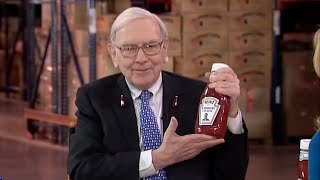 Warren Buffett on Capital Allocation: Buybacks, Heinz, and Cash2013 · 115 min · full transcriptBest for understanding Buffett’s larger after-tax mindset: capital goes where long-term value is highest.
 Warren Buffett on Succession and Investing: Hands-Off Moat2018 · 450 min · full transcriptUseful for seeing how Buffett prefers retained capital to be used productively inside Berkshire rather than discussed abstractly.
Questions people ask
Sources
Every quote above, word for word from the transcripts. Numbers match the text.
“We don't mind paying taxes at Berkshire…”
How this guide was made: drafted with AI from the full transcripts of the recordings cited, then checked: every quotation must match a transcript word for word and be the speaker's own words, and an independent review gates accuracy. Methodology and corrections.
