Warren Buffett on The Stock Market
Warren Buffett sees the stock market as a place to buy pieces of real businesses, not a machine to predict, follow, or fear.
- Think of stocks as ownership in businesses, not moving tickers.
- Do not try to predict the market, interest rates, or short-term moves.
- Use the market to serve you: lower prices help long-term buyers when value is intact.
- Panic, bubbles, and headlines create mispricing, so patience and discipline matter more than activity.
- Stay within your circle of competence and insist on understandable businesses and a margin of safety.
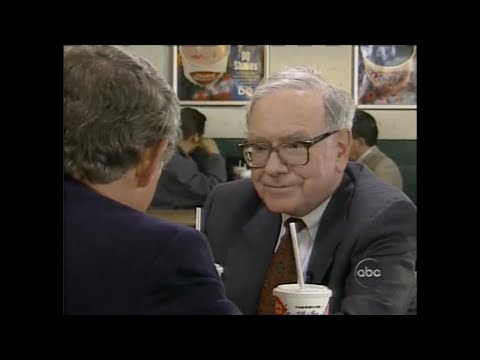
“If the stock exchange closed for a year or two, it would... For for a real investor, it wouldn't make any difference.”Nightline interview, 1999 · 14:54
A stock is a business, not a bet on price
Buffett starts with a simple shift in mindset: when you buy a stock, you are buying part of a business. That means the key question is not what the market will do next week, but what the business is worth and how its earning power develops over many years.1234
This owner mindset changes how you react to market noise. If the market shut for a long stretch, a real investor could still judge whether they own a good business bought at an attractive price.56
That is why Buffett resists treating stocks as symbols on a screen. He wants understandable businesses, good economics, and managers he can trust, rather than price action or excitement.74
“If the stock exchange closed for a year or two, it would... For for a real investor, it wouldn't make any difference.”Nightline interview, 1999 · full transcript →
The market is not there to instruct you
Buffett's most famous market idea is that the market should work for you, not tell you what to think. Daily price swings are useful only when they offer a chance to buy value or avoid foolishness; they are not guidance about intrinsic worth.82
That leads to a counterintuitive conclusion: if you are a long-term net buyer, lower prices are often good news. Cheaper markets can improve future returns, provided the underlying business value remains sound.910
He therefore prefers to focus on value when it appears rather than on whether the overall market feels optimistic or pessimistic. Opportunities come from mispricing, not from having a market forecast.1112

“…you use it to serve you and not to instruct you;…”Berkshire Hathaway annual meeting, 2008 · full transcript →
Forecasting the market is a distraction
Buffett is blunt that he does not know where the market is going, and he does not believe others know either. He extends that humility to interest rates and other macro variables, which he treats as outside his circle of competence.131415
Because of that, he and Charlie Munger do not build decisions around macro calls. Even when the economy presents real reasons for worry, they do not pass on a business they like because of a broad market view.101611
His practical rule is to spend time on what is knowable and important: the business, the price, and whether the economics make sense. If something requires excessive complexity or depends on prediction, he is less interested.15

“I have never been able to predict interest rates, and I've never tried…”CNBC special interview, 2021 · full transcript →
Volatility, panic, and bubbles are features of the market
Buffett treats market panic as normal. Fear can spread instantly through markets, while confidence returns slowly, which is why prices can move far more violently than the underlying long-term earning power of businesses.192021
That is true in crashes and in booms. In euphoric markets, bargains can disappear, cash can build up, and speculation can outrun business reality. In those moments, doing less can be more intelligent than forcing money into overpriced assets.222312
The lesson is not to become fearless or hyperactive. It is to stay rational when others are emotional, and to remember that long-run progress can continue through frightening interruptions.242025
“Confidence comes back one at a time, but fear is instantaneous…”Berkshire Hathaway annual meeting, Omaha, 2008 · full transcript →
How Buffett applies this in practice
In practice, Buffett looks for understandable businesses within his circle of competence and ignores areas where change or complexity make value too hard to judge. Knowing the edge of your circle matters more than sounding informed about everything.262715
He also insists on a margin of safety. That means leaving room for error, avoiding dependence on leverage, and refusing investments that only work under fragile assumptions.282930
His market view is therefore patient and selective. He does not need constant action, he does not read the tape for guidance, and he does not chase every new issue or fad. He waits for situations where value is clear and the odds are favorable.313212
“…the idea of a margin of safety, of always leaving some extra room in things.”Berkshire Hathaway annual meeting, 2008 · full transcript →
Buffett on the stock market, in his own words
“…you use it to serve you and not to instruct you;…”
“You think of them as parts of a business;…”
“I don't think anybody knows what the market's going to do.”
“Confidence comes back one at a time, but fear is instantaneous…”
Where to watch
 Warren Buffett on Value Investing: Think Like an Owner2008 · 243 min · full transcriptBest single explanation of Buffett's core stock-market framework: ownership, market as servant, and margin of safety.
 Warren Buffett on Macro Forecasting: Focus on Value, Not Predictions2005 · 260 min · full transcriptShows why Buffett ignores macro forecasts and often welcomes lower prices as a long-term buyer.
 Warren Buffett on Value Investing: Buy Businesses, Not Stocks1999 · 27 min · full transcriptA concise, clear version of buying businesses rather than stock quotes, with practical warnings about speculation.
 Warren Buffett on Markets in Crisis: Buying Through Panic2021 · 150 min · full transcriptUseful for understanding how Buffett thinks during crisis conditions and why he avoids forecasting rates and markets.
 Warren Buffett on Tech Bubble Skepticism: Why They Avoided Big Tech1999 · 324 min · full transcriptBest illustration of Buffett's resistance to bubble thinking and his preference for understandable, durable businesses.
 Warren Buffett on the 2008 Financial Crisis: How Panic Spread2008 · 40 min · full transcriptExplains how panic spreads through markets and why emotional selling can create extreme dislocations.
Questions people ask
- What did Warren Buffett say about betting against America?
- What did Warren Buffett say about forecasting the stock market?
- What did Warren Buffett say about his circle of competence?
- What did Warren Buffett say about how long you should hold stocks?
- Why does Warren Buffett think market forecasts are useless?
- What did Warren Buffett say about Apple?
Sources
Every quote above, word for word from the transcripts. Numbers match the text.
“I bought a business today, not a stock today.”
“The real question is whether the company's worth more or less than $100 billion.”
“You think of them as parts of a business;…”
“All I'm trying to do is buy a piece of a business at an attractive price…”
“If the stock exchange closed for a year or two, it would... For for a real investor, it wouldn't make any difference.”
“If you get your money's worth in terms of future earning power over the next 10 or 20 or 30 years, you're going to have made a good investment. And you can't pick them from day to day. If you can do that, you can. Well, I haven't met anybody yet that knows how to do it.”
“We don't think of stocks as as little items that wiggle around in the paper and that have charts attached to them.”
“…you use it to serve you and not to instruct you;…”
“…if I'm a net buyer, I will do better if prices are lower.”
“We've never decided not to buy a business we like because of a macro view.”
“We have no—we're not good at forecasting market, so I mean, we knew that we were getting enormous bargains in the mid-'70s. We knew that the market went crazy to some extent in the late '90s, but we don't have much—we don't spend any time. Charlie and I spend no time thinking or talking about what the stock market is gonna do because we don't know. We do know sometimes that we're getting very good value for our money when we buy some stocks or some bonds, as it may be, but we are not operating on the basis of any kind of macro forecasts about stocks.”
“If you told me I had to invest 50,000,000,000 every year till we got down to 50,000,000,000, that would be the dumbest thing in the world to invest in that manner. Things get extraordinarily attractive very occasionally. The long term trend is up. Nobody knows. And I certainly don't know. Greg doesn't know. Ajit doesn't know. Nobody knows what the market is going to do tomorrow, next week, next month. Nobody knows what business is gonna do tomorrow, next week, or next month, but they spend all their time talking about it because it's it's easy to talk about. And... But it it it has no value. I've I've never found anybody I wanted to listen to on the subject.”
“I don't think anybody knows what the market's going to do.”
“I have never been able to predict interest rates, and I've never tried…”
“The the question is, is the box that says knowns and important... Knowable and important Mhmm. Is there anything in that box? And can you tell what's in that box and what isn't in that box? And it's what I call knowing your circle of competence. And my circle of competence doesn't include the ability to predict interest rates a day from now or a year from now or five years from now. So I say, can I function without knowing that? Same way as predicting what business is going to do or the stock market's going to do. I can't do any of those things, But that doesn't mean that I can't do well investing over time.”
“There's always a list of reasons why the country will have problems tomorrow, but there's always a list of opportunities which don't get mentioned quite as often. So we don't sit down and make a list of the bad things that are happening in the economy and the good things that are happening and therefore expecting the stock market—it might not—it doesn't behave that way. Even if you, if you could correctly forecast some of the bad things or good things overall, I'm an enormous bull on the country. I mean, over time, I mean, this is the most remarkable success story in the history of the world, if you think about it.”
“…people are afraid, they are afraid…”
“Confidence comes back one at a time, but fear is instantaneous…”
“What we really learned in that particular panic was the fact that we're all dominoes and we're all very close together now…”
“We do not find bargains in this market among the larger companies that are that are our universe.”
“We do not necessarily regard the Internet with... There's no question. If you... If you're in the early stages of promotion and you... Particularly, you've got a six... Reputation as a successful in that, but in this case, it wouldn't make much difference because the whole field has gone wild. You will make a lot of money selling to the next stage and the next stage and the next stage. But in terms of picking out businesses that are going to do wonderfully as businesses, not as stocks for a while, but as businesses, I don't think it's necessarily so easy in in the Internet world. And I I would say that if you were to ask some very top names in the field to name the next five companies out of the chute or the next 10 companies out of the chute and predict that one of them will earn, say, the $200,000,000 I use as a threshold six or seven years from now.”
“…we'll come out better on the other end…”
“It does not make sense to bet against America.”
“We view change as more of a threat into the investment process than an opportunity.”
“Well, you look at everything and relate one to another. I mean, that's the nature of market. So you're always trying to think about, a, what's in my circle of confidence, and then what makes the most sense that's within that circle. But the important thing is know where the perimeter of the circle is. I mean, that's way more important than how big the circle is or a whole bunch of other factors. So I think Apple is within my circle of commerce. I think it's an incredible business run by a fellow who's one of the great managers of all time, and he was underrated for a while, but now he's being seen for what he really is. It's it's an assound... You you could almost... You know, if we had…”
“…the idea of a margin of safety, of always leaving some extra room in things.”
“The one piece of advice I'd give them is don't do it on borrowed money.”
“We would not buy them at any price.”
“No. Well, I mean, I may read it accidentally, but I I don't seek it out to read. I'll put it that way. But they're they're... It it just doesn't make any difference at all. I mean, if I spent time reading that, I wouldn't have a time to read 10 k's. And we're not gonna do anything different. I don't know what we're gonna earn. As I put in the annual report, and I really think this is unique. I mean, we do not prepare financial statements monthly for Berkshire. And there's just no other company would do it. There's no sense doing it. I I know I know where the money is, and I know what... I know how the companies are doing generally, but what difference does it make? Because I'm not gonna try and hit any number for the quarter by, you know, having a sale on insurance or doing something even worse.”
“I don't like it. I like it when I'm picking the time to buy. In 2008, rather than having them pick the time when they've decided this is the time we can cash in by selling to you. We're going to do you a big favor and let you buy in. So I have never been a big fan of IPOs, and the valuations—they're kind of staggering now on some.”
How this guide was made: drafted with AI from the full transcripts of the recordings cited, then checked: every quotation must match a transcript word for word and be the speaker's own words, and an independent review gates accuracy. Methodology and corrections.


