Warren Buffett on Decision Making
Buffett makes decisions by staying within what he understands, demanding a clear reason and a margin of safety, ignoring macro noise, and waiting patiently for the right opportunity.
- Decide only when you can clearly explain why you are acting.
- Stay inside your circle of competence; simplicity beats forced complexity.
- Ignore market and macro forecasts when judging a specific opportunity.
- Use patience and a margin of safety instead of constant action.
- Temperament, integrity, and habits matter more than brilliance.
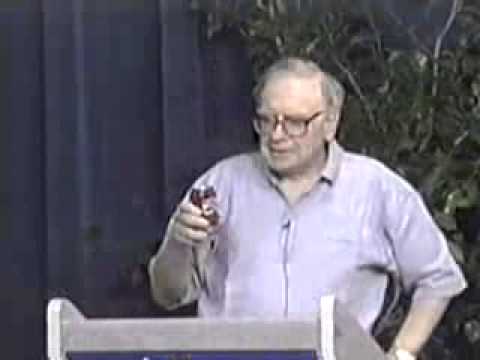
“I mean, you really want your decision making to be by looking in the mirror and saying yourself, I'm buying a 100 shares of General Motors at 55 because... And, I mean, it's your responsibility if you're buying it, and there's gotta be a reason. And if you can't state the reason, you shouldn't buy it. If it's because somebody told you about it at cocktail party, not good enough. You know? Mean, there's just... It's got to be something, you know, can't be because of the volume. You know, the chart looks good on it or anything like that. So there's got to be a reason you'd buy the business.”University of Florida lecture, 1998 · 52:42
A good decision starts with a reason you can state plainly
Buffett wants decisions to be explicit, personal, and grounded in a simple explanation. If you cannot say exactly why you are buying, choosing, or committing, then you probably do not understand the decision well enough. He is especially skeptical of acting because of tips, charts, momentum, or social pressure rather than a business reason.1
That same preference for clarity explains why he resists needless complexity. He favors opportunities that are understandable enough that the core judgment does not depend on elaborate calculation. For Buffett, a decision should become clearer as you strip away noise, not more attractive because it is hard to understand.23
“I mean, you really want your decision making to be by looking in the mirror and saying yourself, I'm buying a 100 shares of General Motors at 55 because... And, I mean, it's your responsibility if you're buying it, and there's gotta be a reason. And if you can't state the reason, you shouldn't buy it. If it's because somebody told you about it at cocktail party, not good enough. You know? Mean, there's just... It's got to be something, you know, can't be because of the volume. You know, the chart looks good on it or anything like that. So there's got to be a reason you'd buy the business.”University of Florida lecture, 1998 · full transcript →
Stay inside your circle of competence
Buffett does not think the goal is to know everything. The goal is to know where your knowledge is reliable and to act only there. He repeatedly emphasizes that the size of the circle matters less than the discipline to remain within it.4
This is why he prefers businesses he can understand and avoid industries where he cannot judge the competitive outcome better than others. Even when prices look cheap, he would rather pass than pretend expertise. Good decision making, in his view, includes knowing when not to decide.256
Inside that circle, he looks for businesses with durable advantages rather than temporary excitement. He wants a business protected by a moat, because that makes the future easier to judge and the decision less fragile.7
Temperament beats IQ when the stakes are real
Buffett treats decision making as a character test as much as an intelligence test. Integrity comes first, because intelligence and energy are dangerous in the wrong person. That principle applies to partners, managers, and your own conduct.8
He also thinks habits quietly shape future decisions. Small patterns of behavior become harder to change over time, so rationality and self-control need to be built early. In practice, this means choosing admirable behaviors on purpose and avoiding people and situations that pull you toward bad decisions.910
His people decisions follow the same logic. He wants to work with people he likes and respects, and he will turn down attractive economics if the human fit is wrong. That shows how strongly he ties decision quality to temperament, trust, and emotional ease.1112
“If they don't have integrity, you want them dumb and lazy.”University of Florida lecture, 1998 · full transcript →
Ignore forecasts and let price serve you, not guide you
Buffett separates a decision about value from predictions about the economy or the market. He and Munger do not organize their choices around macro forecasts, and he says they have never passed on a business they liked because of a macro view.1314
He also reframes falling prices. If you are a long-term buyer, lower prices can help rather than hurt. That mindset keeps him from reacting emotionally to market declines and helps him treat volatility as an opportunity instead of an instruction.1516
More broadly, he remains anchored in long-term optimism even when short-term conditions are ugly. That outlook supports steadier decisions because it keeps fear from dominating judgment.171819
Patience and margin of safety are decision tools
Buffett does not believe you need to swing at every opportunity. He prefers to wait until the odds are clearly favorable, which means both understanding what something is worth and refusing to act before the right pitch arrives.2021
That patience is paired with protection against error. Because you never know everything, he wants a margin of safety in the decision itself. This is how he makes room for uncertainty without needing perfect foresight.22
His preference for great businesses also reflects this long-game thinking. Over time, a strong business can bail you out of timing imperfections, while a weak business makes time your enemy. That is why he would rather hold a high-quality business for a long time than chase cheap but mediocre situations.232425
Review decisions honestly and design your life backward
Buffett believes better decisions come from honest postmortems. He compares what worked, what failed, and whether a purchase was actually better than the alternative use of capital. This kind of review counters the human tendency to avoid uncomfortable feedback.26
He also likes starting from the end state you want and reasoning backward. That approach works beyond investing: choose the kind of life, work, and people you want around you, then make decisions that build toward that outcome.2711
Seen together, this makes his method unusually practical. Decide with clarity, act within your competence, protect against error, and then learn from the result without self-deception.142226

“We we we believe in postmortems at Berkshire. I mean, we really do believe... One of the things I used to do when I ran the partnership is I I I contrasted all sale decisions versus all purchase decisions. It wasn't enough that the purchase decisions worked out well. They had to work out better than the sale decisions. And managers tend to be reluctant to look at the results of the capital projects or the acquisitions that they propose with great detail a year or two earlier to a board, and they don't wanna actually stick the figures up there as to how the reality worked out against the projections. And that's human nature. But I think you're a better doctor if you drop by the pathology department occasionally, and I think you're a better manager or investor if you if you look at every one of the decisions you've made of importance and see which ones worked out and which ones didn't and and and, you know, what is your batting average?”Berkshire Hathaway annual meeting, 1999 · full transcript →
Buffett on decision making, in his own words
“I mean, you really want your decision making to be by looking in the mirror and saying yourself, I'm buying a 100 shares of General Motors at 55 because... And, I mean, it's your responsibility if you're buying it, and there's gotta be a reason. And if you can't state the reason, you shouldn't buy it. If it's because somebody told you about it at cocktail party, not good enough. You know? Mean, there's just... It's got to be something, you know, can't be because of the volume. You know, the chart looks good on it or anything like that. So there's got to be a reason you'd buy the business.”
Where to watch
 Warren Buffett on Circle of Competence: Temperament Beats IQ1998 · 88 min · full transcriptBest single talk on how temperament, integrity, and circle of competence drive sound decisions.
 Warren Buffett on Value Investing: Wait for the Right Pitch2006 · 52 min · full transcriptExplains waiting for the right pitch, thinking like a business owner, and insisting on a margin of safety.
 Warren Buffett on Macro Forecasting: Focus on Value, Not Predictions2005 · 260 min · full transcriptShows how Buffett avoids macro forecasting and keeps decisions tied to value instead.
 Warren Buffett on Value Investing: Keep It Simple1998 · 332 min · full transcriptClarifies why simple, understandable businesses lead to better long-term choices.
 Warren Buffett on Success and Happiness: Do What You Enjoy2021 · 57 min · full transcriptConnects decision quality to habits, rationality, and choosing work and people you genuinely like.
 Warren Buffett on Journalism and Business: Read, Think, Report2022 · 34 min · full transcriptUseful for seeing Buffett's emphasis on abandoning bad hypotheses and protecting reputation.
Questions people ask
- What did Warren Buffett say about betting against America?
- What did Warren Buffett say about buying good businesses at a reasonable price?
- What did Warren Buffett say about forecasting the stock market?
- What did Warren Buffett say about having a reason to buy a stock?
- What did Warren Buffett say about postmortems and learning from bad decisions?
- What does Warren Buffett mean by reverse engineering your life?
Sources
Every quote above, word for word from the transcripts. Numbers match the text.
“I mean, you really want your decision making to be by looking in the mirror and saying yourself, I'm buying a 100 shares of General Motors at 55 because... And, I mean, it's your responsibility if you're buying it, and there's gotta be a reason. And if you can't state the reason, you shouldn't buy it. If it's because somebody told you about it at cocktail party, not good enough. You know? Mean, there's just... It's got to be something, you know, can't be because of the volume. You know, the chart looks good on it or anything like that. So there's got to be a reason you'd buy the business.”
“We want things that we can understand.”
“If you need to use a computer or calculator to make the calculation, you shouldn't buy it.”
“The important thing is not how big the circle is. The important thing is staying inside the circle.”
“It's interesting for us to follow. I mean, it it... Many years ago, it was the dominant factor in in in... Or overwhelming factor in the economy. It's diminished a fair amount, but it's still a very important industry. And it's it's the kind of industry that anyone can follow. I mean, you you have experience with the product and and competing products, and and you you... Everyone in this room understands in a general way the economic nature of the industry, but we've never felt that we understood it better than other people. So we've seen auto companies at very low multiples sometimes and and with prices that in hindsight look very attractive, but we never really felt that we knew who among the auto companies five years from now would have gained the most ground relative to where they are now or the gain the most ground relative to what the market might expect.”
“We would not buy them at any price.”
“I want a business with a moat around it.”
“If they don't have integrity, you want them dumb and lazy.”
“The chains of habit are too light to be felt until they're too heavy to be broken.”
“It's not the ability to throw a football 60 yards. It's not it's it's not the ability to run the 100 yard dash in nine three. It's not being the best looking person in the class. They're all qualities that if you really wanna have the ones on the left hand side, you can have them. I mean, they are they are qualities of behavior, temperament, character that that are achievable. They're not forbidden to anybody in this group. And if you look at the qualities on the right hand side, the ones that you find turn you off in other people, there's not a there's not a quality there that you have to have.”
“I get to do what I like to do every single day of the year, and I get to do it with people I like.”
“I only work with people I like. You know, I I don't I don't... If I can make it a $100,000,000 by buying a business with some guy that caused my stomach to churn, I'd say no. Because I say that's just like marrying for money, probably isn't a very good idea in any circumstances, but if you're already rich, it's crazy, right? I am not going to marry for money. So I would do it. I would I would really do almost exactly, what I've done except I don't think I bought the US Air. Thanks.”
“We've never decided not to buy a business we like because of a macro view.”
“We have no—we're not good at forecasting market, so I mean, we knew that we were getting enormous bargains in the mid-'70s. We knew that the market went crazy to some extent in the late '90s, but we don't have much—we don't spend any time. Charlie and I spend no time thinking or talking about what the stock market is gonna do because we don't know. We do know sometimes that we're getting very good value for our money when we buy some stocks or some bonds, as it may be, but we are not operating on the basis of any kind of macro forecasts about stocks.”
“…if I'm a net buyer, I will do better if prices are lower.”
“The stock market is there to serve you, not to instruct you.”
“It does not make sense to bet against America.”
“No one has ever been a success betting against America since 1776, and they're not going to be a success in the future doing it either.”
“There's always a list of reasons why the country will have problems tomorrow, but there's always a list of opportunities which don't get mentioned quite as often. So we don't sit down and make a list of the bad things that are happening in the economy and the good things that are happening and therefore expecting the stock market—it might not—it doesn't behave that way. Even if you, if you could correctly forecast some of the bad things or good things overall, I'm an enormous bull on the country. I mean, over time, I mean, this is the most remarkable success story in the history of the world, if you think about it.”
“…we keep waiting for the right pitch…”
“…look at a stock not as some thing that wiggles around…”
“…always have a margin of safety…”
“The real thing to do with a great business is just hang on for dear life.”
“Those are the companies that have low returns on equity. And if you have a business that's earning five or 6% on equity and you hold it for a long time, you are not going to do well in investing even if you buy it cheap to start with. Time is the enemy of the of the poor business and it's the it's the friend of the great business. I mean, if you have a business that's earning 20 or 25% on equity and it does that for a long time, time is your friend. But time is your enemy if you if you have your money in a low return business. And you may be lucky enough to pick the exact moment when it gets taken over by someone else, but we like to think when we buy a stock, we're gonna own it for a very long time and therefore we have to stay away from businesses that have low returns on equity.”
“You know, we we always look at what a business does in terms of what it earns on capital. We wanna be in good businesses. What what we really wanna be is in businesses that are gonna be good businesses and better businesses ten years from now. And we wanna buy them at a reasonable price. But many years ago, we gave up what I've labeled the cigar butt approach to investing, which is where you try and find a a really kind of pathetic company, but it sells so cheap that you think there's one good free puff left in it. And and we used to pick up a lot of soggy cigar butts, you know.”
“We we we believe in postmortems at Berkshire. I mean, we really do believe... One of the things I used to do when I ran the partnership is I I I contrasted all sale decisions versus all purchase decisions. It wasn't enough that the purchase decisions worked out well. They had to work out better than the sale decisions. And managers tend to be reluctant to look at the results of the capital projects or the acquisitions that they propose with great detail a year or two earlier to a board, and they don't wanna actually stick the figures up there as to how the reality worked out against the projections. And that's human nature. But I think you're a better doctor if you drop by the pathology department occasionally, and I think you're a better manager or investor if you if you look at every one of the decisions you've made of importance and see which ones worked out and which ones didn't and and and, you know, what is your batting average?”
“I mean, I want them to reverse engineer their life, you know, basically to look at what you would like for it to be at the end and ask yourself backwards. How do I work? Sure. Buffett also tells students about the inherent advantages of where you were born. Let's imagine that it's 24 hours before you're born and a genie comes and he says, "Charlie, you really look like you've got good judgment," you know, and so I'm going to give you an enormously important task. I'm going to let you design the world into which you're going to be born in 24 hours.”
How this guide was made: drafted with AI from the full transcripts of the recordings cited, then checked: every quotation must match a transcript word for word and be the speaker's own words, and an independent review gates accuracy. Methodology and corrections.