Warren Buffett on Journalism and Business: Read, Think, Report

What Buffett talks about
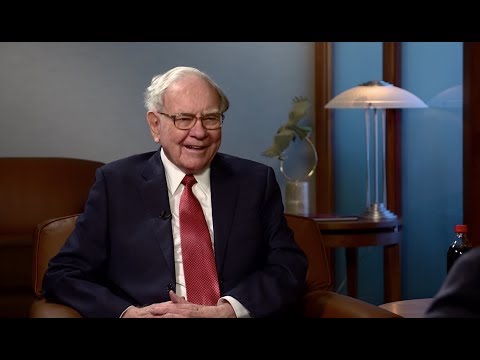
Warren Buffett gave this interview for Charlie Rose in 2022, discussing journalism, Berkshire Hathaway, reputation, mortality, and how careful reporting helps explain business and the broader economy.
Also known as: Conversation with Warren Buffett.
Buffett spends most of this conversation arguing that good journalism requires humility, accounting knowledge, and a willingness to abandon a bad working hypothesis. He says reporters should avoid quote-shopping and remember that headlines shape what people keep in mind long after the story is read.
He also uses Berkshire, Coca-Cola, JPMorgan, and the Solomon episode to show how reputation, timeliness, and fair judgment matter in business reporting. For Buffett, the best stories come from careful fact-finding, not from forcing a dramatic narrative.
The interview closes with his advice to journalism students: stay curious, learn business, learn accounting, and let the facts lead. He frames journalism as one of the most interesting professions because it helps explain how business and the broader economy really work.
Jeff Cunningham interviews Buffett throughout; Buffett answers at length.
In his words
“We are certain, for example, that the economy will be in shambles throughout this year.”
“Buy stocks.”
“No one has ever been a success betting against America since 1776, and they're not going to be a success in the future doing it either.”
“We never will trade reputation away for money.”
“You can't write about business without understanding accounting.”
Key points
- Good reporters start with a hypothesis but must abandon it if the facts contradict it.
- Headline writers can distort reality, so reporters should stand behind the headline their story implies.
- Business journalists need accounting knowledge and a real understanding of boardrooms and corporate behavior.
- Buffett says reputation is Berkshire’s most valuable asset and must never be traded for money.
- When bad news appears, the right response is to correct it quickly, report it promptly, and get it over with.
- He believes Berkshire communicates best through direct, long-form writing rather than social media.
- He remains strongly optimistic about America and says no one succeeds by betting against it.
Full transcript: Warren Buffett, Charlie Rose interview (2022)
Hi, I'm Jeff Cunningham, professor at Arizona State University, and I'm here this morning with legendary investor, philosopher, and CEO of Berkshire Hathaway, Warren Buffett. Good morning, Warren. Good morning. My first question for you: I don't know if you've had a chance to Google yourself, but if you Google Warren Buffett, you get 25 million hits. And my question is, you're a sitting CEO, you're wealthier than Midas, but everybody thinks you're a champ. How do you do that? Well, I don't know about that. I think when you get older, they forgive a lot of things. So I think if I ever make it up to, you know, George Burns's age or something and I just have a cigar in my mouth, people will really love me. That you're arguably the most interviewed CEO in history—is it your ability to
communicate that comes from instinct, or is it something you've learned over the years? Well, I certainly learned to speak in public. At one time, I was terrified of speaking in public. When I was in high school, I avoided any class that would require it and in college. And then I finally signed up for a Dale Carnegie course. When I got out of school, I realized I had to talk to people, and I spent 100 bucks. I got this little diploma. I proposed to my wife during the, during the term of the course, so I really got my money's worth there. But in terms of public speaking, I really had to force myself on that. In terms of talking privately, they couldn't stop me from the moment I started in school, or I think I've always really liked to talk. How do you keep up
with all the media and information that goes on in our crazy world and in your world of Berkshire Hathaway? What's your media routine? I just read and read and read. I probably read five to six hours a day. I don't read as fast now as when I was younger, but I read five daily newspapers. I read a fair number of magazines, I read 10-Ks, I read annual reports, and I read a lot of other things too. So I've always enjoyed reading. I love reading biographies, for example. You process information very quickly? Well, I have some filters in my mind, so if somebody calls me about an investment in the business or an investment in securities, I usually know in two or three minutes whether I have an interest, and I don't waste any time with the ones I don't, in which I don't have an interest. I
I always worry a little bit about even appearing rude because I can tell very, very, very quickly whether it's going to be something that will lead to something or whether it's, you know, it's just a half an hour, an hour, or two hours of chatter. When, I think he wrote in an annual report—it was in 2009—speaking about the country, about the economy: "We are certain, for example, that the economy will be in shambles throughout this year." The problem was that wasn't the complete quote. It led the impression that you were unduly pessimistic about the country. How did you respond to that? Yeah, well, I wasn't at all pessimistic about the country. In fact, I wrote an op-ed piece for the New York Times in October of 2008, just when the world was kind of falling apart, and I said the world is going to fall apart for a while, but
don't worry about it. We're going to come out fine on the other side, and I said, "Buy stocks." And I have never been pessimistic about the United States. I bought my first stock in the spring of 1942; I was 11. And if you remember—you wouldn't, no one watching this will remember—but we were losing the war at that time, and we were getting, we were getting totally creamed in the South Pacific. The Philippines fell, and the death march at Bataan and all that sort of thing. It was not until the Battle of Midway, which was a little later, that things started turning around. But I was optimistic on the country then, and I've been optimistic on the country ever since. And incidentally, the Dow
Jones Average then was 17,700. No, no, no — it was 117. No one has ever been a success betting against America since 1776, and they're not going to be a success in the future doing it either. I know when the Dow hit a thousand, it was a moment of euphoria. Yet, if I'm not mistaken, you plowed in and you even raised more funds. Has the Dow ever felt to you like it was way too frothy? There were a couple of times when it looked too frothy to me, but that's in 50 years. And, you know, I wrote—I gave a talk in 1999, and that's gotten reprinted in Fortune subsequently—and there have been a couple of times when it really looked to me like people have
gotten too excited. But even then, I knew that the country would, you know, any market that we'd established, we were going to surpass later on. And that continues true today. I mean, this country's just getting started. I was reading a Lincoln quote the other day: "With public sentiment, nothing can fail; without it, nothing can succeed." And, of course, he was talking about what led to the immense Emancipation Proclamation. When I think about your world—330,000 people who are employees of Berkshire Hathaway or subsidiaries—how do you send the message that they are being scrutinized under the microscope by the media at all times? Well, I send a message to their managers. Those 330,000 people work for maybe 70 or so CEOs, and in turn work for me. So I... I my
Job is to have those 7, 70 CEOs sending out the right message. So every two years, I write them a very simple letter. It's a page and a half. I don't believe in 200-page manuals because when they put out a 200-page manual, everybody's looking for loopholes, basically. But a page and a half, it's very hard for them to argue about what I'm talking about. So I tell them, you know, that my reputation, Berkshire's reputation is in their hands. And not only, and we've got all the money we need. We'd like to make more money—we got all the money we need. We don't have an ounce of reputation beyond what we need, and we can't afford to lose it. So we never will trade reputation away for money. And they're the ones that are the guardians of that, and I want them to not only do what's legal.
Obviously, but I want them to judge every action by how it would appear on the front page of their local paper, written by a smart but semi-unfriendly reporter and who really understood it, to be read by their family, their neighbors, their friends. And it has to pass that test as well. And I tell them I don't want anything around the lines—I tell them there's plenty of money to be made in the center of the court. And I'm 84, and my eyes aren't that good anymore; I can't quite see the lines that well. So just keep it in the center of the court. And if they have any questions, call me. You know, even the occasional dust-up at Berkshire there will be is big news. Yeah. And I'll—I’ll pick on Solomon only because it's history now; it's got a lot, a lot of time to reflect on that. Um, when you think about what you went.
Through there, what advice do you have for a CEO who's on the media hot seat because of a similar situation? Well, there's a couple pieces of advice on that. The first is that when you find out about bad news, correct it. And if it's necessary to report it, then the authorities, report it immediately. The big problem with Solomon was not what a fellow named Mosher did, which was to defy the US government, not ever a very good idea. But that could have been handled. But he didn't report it. John Merriwether, his supervisor, picked up on it in late April of 1991 and went to the president and the chairman and the chief legal counsel of Solomon and said, here's what this fellow Mosher has been doing. And they all agreed it was wrong. They all agreed it was reportable to the
Federal Reserve promptly, and unfortunately nobody did anything. And then in the middle of May, Moser went out and did it again. And now you've got a terrible problem because you knew the guy was a bad actor a few weeks earlier, and you hadn't reported it. And now that compounded there, and then you're in a real pickle. So when you, when you find bad news— you know, my, I say get it right, get it fast, get it out, get it over, and get it right is important. There wasn't any question that Moser had done it there, but to get it fast and get it out, they missed on. And so deal with bad—you're going to get bad news. I mean, I got 330,000 people. I mean, I will guarantee you that probably dozens of them are doing something wrong right now, and I just
Hope I find out about it early, and the person below me finds out and lets me know if it's bad enough, and that they stop it. So, you can't have a city of 330,000 without an occasional crime of some sort, so it's going to happen, and you've got to do something about it fast. Uh, when it does happen, I know you're acquainted with the concept that journalists write the headlines before they do the story. What's your advice for this situation? For instance, Walmart pays fewer than 6,000 of its 1.3 million employees the minimum wage, but the headline is "Unions Decry Minimum Wage Policies at Walmart." How do you solve that? It's very tough.
Because it's a better story from the standpoint of the writer, and particularly the headline writer, the second story is a better story than the first story. And, uh, the biggest sin in journalism that I see—and I think, incidentally, I probably as a CEO have spent more time talking to journalists than perhaps any CEO in the country—partly that's because I'm 84, but partly because I like to talk to journalists too. But the greatest sin they commit: you've got to start a story with a hypothesis. I mean, you're looking into something because you have a working hypothesis, but you have to give up that hypothesis if it turns out not to be correct or if it's misleading in a major way. So I always worry.
About the journalist that calls me, they've decided what story they're working on and all they're looking for is confirmatory evidence. So I call it quote shopping. They'll talk to me for 45 minutes hoping they get one quote that confirms their story, and ignoring the other 43 minutes when I tell them things that should limit the story. So it's very natural. You know, you get time invested in it, you've got this working hypothesis — you know, terrible what Walmart does with their employees or whatever it may be — and you may have some people who have an interest in it feeding you a lot of material along that line. And once you've invested a lot of hours, and your editor knows you've invested a lot of hours — maybe it was the editor's working hypothesis to start with — now, you know, you've got to go back and tell him he's wrong, or her. I mean, there's there's
A lot of—there's a lot of momentum, uh, toward a bad story. There's a lot of momentum toward a good story, too. But you have to, you have to be able as a writer to say, "My hypothesis is no longer correct," and all it was was a hypothesis. That's no sin to say that, but it's hard to do. You're referring to what almost feels like ego on the part of the journalist. But there's also the question of an anti-business bias, and I'll just pick on a headline: "Billions of penalties later, Dimon, the chairman of JPMorgan, gets a raise." But the truth was that there were billions of penalties, there were fines, there were cuts in salary, the company was turned around, and
the salary was restored. Is that too much to ask of a headline? Right? Well, I always worry about the headline writers, of course. The report always says, "Well, I don't write the headlines," and I ask reporters occasionally, I say, "You may not write the headline, but before the story runs, you should at least be okay with the headline. I want you to be able to tell me after the story runs that you were okay with that line, because the headline is what 10 times as many people are going to carry around in their mind later on as the story." So don't tell me you're absolved of everything because you don't write the headlines. And good reporters will do that. Incidentally, uh, they don't write the headlines, I, you know, I know that. But if they feel the headline misrepresents their story, then they've got an obligation to complain to the editor.
But going back to the Dimon example, I mean, you know, most of the things that JPMorgan got penalized for were acts at WaMu, which they took over, or Bear Stearns, which they took over. At the time they took over those two institutions, the United States government was on their knees begging them to do it, basically through the various agencies. I mean, they were doing something as a public service. That doesn't mean they didn't think they'd benefit by it, but they were totally following through on something that the government wanted to have happen very badly. And they picked up—unfortunately, they wrote those contracts very fast and they picked up the sins of those organizations, which they had nothing to do with. Now, that doesn't mean that JPMorgan hasn't gotten fined for some things they did as
well, but overwhelmingly those were huge fines from the past. And when a fine—once the government wants to levy a fine, you just salute and smile and say, "Do it again." You know, basically, uh, "We gotta find $290 million at Solomon." If the figure had been 100 million, if that had been 500, there was nothing I could do about it. I had to agree to it, and that's just the way it is. Uh, so it could be a little tough. And I would—Jamie Dimon runs a—has done a terrific job of running JPMorgan. It was very fortunate for the United States, uh, citizens that Jamie Dimon was running JPMorgan during the financial panic. It is true that one reason—we won't necessarily call it haste—but one reason for urgency was the companies they were buying were melting down. They were gone.
They'd already melted down. They may not have known it, but they were gone. And they were important institutions. And WaMu came along right after Wachovia, after Freddie Mac and Fannie Mae, and all the dominoes were toppling. And here was another very big domino. And the FDIC could have taken it on, but that would have—there were a lot of problems connected with that. And JPMorgan stepped up. The FDIC did get involved, but believe me, the panic of 2008 would have been far worse if JPMorgan hadn't been there and Jamie Dimon hadn't been running it. There's a media example that hits a little closer to home. You were quoted as being very interested in dramatically changing your opinion
on a compensation issue, but that you didn't divulge it to the board. I'm wondering if that was just a misquote or bad fact-checking. I disagreed with the level of options being authorized, which The Coca-Cola Company stated in the proxy material would likely be issued within four years. I thought it was excessive. I abstained from voting. I announced my abstention after the vote. I did not want to be leading a proxy contest or anything of sort. I think the management of Coca-Cola is first-class. I think they've got some difficult problems to take on, but I think they've got some tremendous assets working for them as well. And I thought that
uh, I thought they’re very decent people. And I thought if they were reasoned with and talked to, that they might well change things. And they have. I mean, they've dramatically changed that plan so that instead of over four years it'll be over 12 years. That's cutting it by two-thirds. The chairman of the compensation committee is a very first-class person, very smart. She picked up on all the points on it, and they made the changes. So the abstention accomplished something very significant for Coca-Cola shareholders. Uh, the board of the board of Berkshire wasn't involved with it. I mean, basically, uh, we talked about it afterwards and they approved of both the abstention and
my suggestions to the Coca-Cola board. There was criticism that you only abstained in the media. Yeah, yours was what I would call the abstention heard around the world. That reflects a lack of understanding of the boardroom on the part of many journalists. Does it not? It really does. I mean, look at what we've accomplished by the abstention. You know, we still have the largest share of Coca-Cola. We want to be the largest shareholder. We want to be helpful to Coca-Cola. They want to do the right thing. There is no basic conflict at all between us and The Coca-Cola Company. In fact, there's admiration on my part for the Coca-Cola management. I thought they made a mistake in doing what they were doing, and the abstention has worked out.
In terms of vastly changing the plan and voting though, and creating a ruckus, it would have been a very dumb thing. It would accomplish nothing. They would have dug in their heels and all. Likely, that's human nature. It might have been more fun for the press, but it wouldn't have accomplished the goal. People, they like, they don't really understand—I mean, you're dealing with a human institution. These are decent, high-grade human beings as directors, and I hadn't talked with them about the plan. I was not a director; my son was the director, but I wasn't the director. I did not know they were going to say that they were authorizing those shares to be issued over four years. When I read it, I thought—
It was a mistake. And what should I do? Should I start condemning all these people to Coca-Cola, telling the world they're troubled people? They're not terrible people. What I should do is convey my feelings to them, and I'm not going to vote for it, and then talk to them afterwards. I mean, this was shortly before the annual meeting, but I did abstain, and then I talked to them. And now we've got a very sensible plan, and no personal relationships have been damaged. People do not feel they've got an enemy out there, which they don't have. It just makes sense in terms of human behavior. But it would have been a better story if, you know, if I'd taken out hands or something and said this is the worst thing that's happened in history. The journalist pet peeve, of course, is the banks, as we've been discussing.
They see headlines where Bank of America has to pay 18 billion dollars in penalties, and the follow-up is, why isn't anyone going to jail? Why is it that journalists look at business results as a crime to be punished? Well, I think that there have been individuals who do things in business that they should go to jail for, and they have. And they have. And sometimes they should, and they haven't gone to jail. But there's two different—there are corporate sins. I mean, take the Solomon situation. The fellow that committed the original act, I think he went to jail for four months. I mean, he's the guy that caused our problems. But the second problem was not reporting it. Now, you send somebody to jail for that or something? I don't think so. You—
Penalize the company big time. I don't think you put them out of business or anything of the sort. We paid a big price for the fact that Moser's actions were not reported to the Fed in a timely manner. It was important that the company pay that fine, and that we acknowledge the fact that that was a very wrong thing to do. You don't go around selling the United States government on its regulations for selling U.S. bonds, but for an action, I think Moser probably should have gone away for a lot longer period. But I may be biased on that. But I don't think other people should have, and you just have to make a determination about when the activity of some individual is criminal. I think, you know, they should be—they—
Should be prosecuted. But every time something goes wrong at the corporate level—we've had things go wrong at the corporate level there—I will promise you that in the next five years, something will happen at Berkshire that is the wrong thing for somebody at the corporate corporation to do. I mean, you know, and we'll correct it. But it's going to happen from time to time. And I don't think I should go to jail if one of our 330,000 people does something they shouldn't do. But we're, in a sense, speaking of two sides of the same coin. The first one was the abstention, where journalists don't understand the boardroom in a sense and how it works. They don't participate in it. The second one is a misunderstanding of civil versus criminal law. It's not only a journalist issue; it's—
A country issue. Is there something we can do to better educate journalists? Should they be taking sabbaticals and working for Berkshire for six months or a year? Wouldn't be a bad idea. It is very tough that, you know, that I quoted Mickey Mantle one time saying, "It's amazing how easy this game is once you get up in the press box." I mean, you know, and there is that problem. Of course, at the Washington Post, they used to say, "You don't have to be dead to write an obituary." So it isn't necessary that you have experience and everything to write about it. But, if you're going—particularly if you're going to be a business journalist or a political journalist, you really should understand business. And going back to our boardroom example—
Boardrooms are social organizations as well as having business responsibilities. But it's very important to understand how human beings act, and I've been on 19 boards. I mean, I can tell you that most journalists probably, and most Americans, and maybe many, you know, many people are right about business, they really don't understand the dynamics within a boardroom. And it's a little hard for journalists to be planted in boardrooms around the country. But I do think that business journalists, they have to understand accounting. You can't write about business without understanding accounting, and I run into a lot of journalists who really don't understand accounting, and that's—that's—
Too bad. It's just that's the language of business, and that's important to understand. The best business journalist I've known has been Carol Loomis, and she didn't start out knowing anything about business, but she wanted to learn. And she is smarter at the end of every day than she is at the start of the day. Not very many people you can say that about. But she just wanted—she learned about accounting. She learned about all aspects of business, and as a result, she became the best business writer in the United States, or maybe the world. You know, Jim Michaels, my former editor at Forbes, and I were talking one day about Carol Loomis. I will say this for Carol: I've seen her start stories and find out that she was wrong in her working hypothesis, and she wrote according to the facts that—
She found out, and she was very good at finding out facts, very diligent, and that's why she wrote relatively few per year. But any story she wrote, you were going to learn something by reading. A lot, by reading. The world of journalism and media has changed, and it is reflective of the world that Carol represented. The detailed, long-form story content today is a commodity. And I'd first like to ask if the fact that it's a commodity had something to do with—I'll qualify it as—your change of heart about the Washington Post and your interest in media in general. I wouldn't say change it too much. I mean, the Washington Post was selling, uh—
The newspaper, basically, and that changed my forever commitment to it. And I also felt that I wouldn't be running Berkshire someday, and this would be a smaller commitment than they usually make to marketable securities. And there was a very logical deal that could be worked out to redeem our shares that would be good for both the company and for Berkshire. So it was not really my feeling about newspaper journalism. Washington Post was getting out of the newspaper business, and we were getting into it more at about the same time. The newsstand is becoming social media in some respects. If you look at these numbers, they sound like a Berkshire deal.
1.1 billion, that's the number of visitors Facebook gets per month. 900 million is the number of visitors Google gets per month. So news is seen now through the filter of what our friends think is interesting. Everybody's a reporter. How does that play out for us? Well, it's really changed the world big time, and you can see it, you know, in newspaper daily newspaper circulation in the United States. I guess there's maybe 1,400 or so daily papers left. There were 1,700 not so long ago, and their numbers are going to go down, and their circulation is going to get down, and then the earnings are going to go down. So the print daily newspaper is, you know, it's been in decline for some period. It's going to continue in decline, and people—
People with their computers, you know, their mobile phones, whatever it is, they get things instantly. I mean, I used to have to wait till the next day to look at the box score of, you know, what the Cardinals did the night before and, you know, find out how Musial hit and everything. And now I can go to ESPN.com and, you know, get it play-by-play. So the world has really changed, and people are, you know, they have—they're used to and demand instant, instant reporting basically. And that means that they get a lot of stuff before the facts are out, but it means they get the facts very quickly too. They can get their financial news much faster now than when they waited the next day to see where their stocks had closed. There's a silver lining you may not be aware of.
Social media, the big play right now is Twitter for news organizations. Warren Buffett and Berkshire Hathaway alone are 39 characters in a 140-character tweet, but your partner Charlie Munger is primarily grunting, and so he only takes up two or three characters. He's a valuable asset in a social media world, essential, the key to our communication strategy. I still love long-form journalism. You can argue that a 10-K is a, you know, really long-form journalism, and that's how I get my information. How does Berkshire deal with social media, or do you ignore it? We pretty much ignore it. If you look at our webpage, for example, and we didn't—
Came up with it 20 years ago, it's the same thing. It actually represents what we are now. We communicate with our shareholders more than any other company that I know. I mean, I've just gotten through writing the 2014 annual report, 20,000 words, and those are my words. They're not some investor relations department or public relations department. They're not part of a sales document. We fell on our face in one respect last year, and I talk about it. I try to write that as exactly as I would write it to my sisters, assuming that they had virtually all of their net worth in Berkshire. They were interested in it, but they didn't follow it day by day, and they want to know what I think and what went wrong and what's going right and how I think the world will—
Develop and a whole bunch of things. So we want to communicate directly with people, and I really feel that if you want to talk to people honestly about a subject in which they care about—certainly they care about their money—they'll listen. I mean, I do not worry about the number of words when I write that report. I worry about telling them the things I'd want to know if our positions were reversed and they were telling me about my investment. In some respects, you anticipated the social media world. You mentioned earlier in our conversation the page-and-a-half memo that you send to your leadership every two years. The operative term today is TL;DR, too long; didn't read. And you understood that if things were too long, people wouldn't read it a long—
Time ago. So in some respects, you've seen where social media is going, and you anticipated it. Well, perhaps, but I also want to make it short because there's really only a few fundamental ideas I want to give those managers, and I want to make sure that they don't get lost on page 83 or something of the sort. People usually can't absorb 15 or 20 messages. But in terms of writing about Berkshire or talking about it, I feel we want to get people every bit of information that I would like to receive if I were on the other end. It reminds me, I spent some time with Mark McCormick, who's the founder of IMG, the sure famous sports manager. But she didn't learn at the Harvard Business
School, exactly. Yeah, law school. Though he put a contract together, and his legal team got back to him, and he sent back a note with crayon at the top: "This is too over-lawyered. Get it back to me in one page." And this is coming from a lawyer. Do you find that we're over-lawyered these days in communications? I'm in closing in our annual report this year. The one-and-a-half-page contract we used to buy National Indemnity for $8.6 million. National Indemnity now is the largest insurance company in the world by net worth, and it was one and a half pages. We've had one-page contracts for other companies. I can't seem to pull this off anymore. I mean, I send these one-pagers out to
our lawyers and say, "Let's get it down to this, and let's get it done by next week." But the world seems to change on that. I still would go for the one-page contract. You know, I like to deal with people where I feel a one-page contract will do the job. If I have to have 50 pages in there to protect me against the guy I'm dealing with, I'll always wonder whether I needed 51. Just as an aside, I think National Indemnity was your first foray into the insurance business. It's a deal that you chased, and I believe you overpaid for it. Well, I hope the seller feels that way. Who were the greatest business editors you feel, in the time that you've been observing the scene and in their passing, have we lost
something? Jim Michaels was an incredible editor. I mean, he could put out the whole magazine, and he proofed every story he edited, and he edited them all. It was improved by his touch. Barney Kilgore was a sensational leader. He envisioned a world defined by interest rather than by geography. So he took a daily newspaper and said, "I'm not trying to make this interesting because you live in Omaha or you live in Peoria. I'm going to make it interesting because you live in the City of Business," and he created, you know, a fantastic paper. Ben Bradley was a great—not a business editor, but he was a great editor, but
I think you'll see other great editors in the future. You know, the talent required for being a great editor has not been extinguished now. So maybe the formats have been reduced to which that editor can apply his talents or her talents, but I think you'll see other great ones. Do you think in terms of the media, we're going through a transitional era, and we'll end up in a rational place? Or will we see pictures of movie star selfies and cats on the front page of The New York Times? I don't think we'll see them on the front page of The New York Times, but we'll see it everywhere else. People, you know, that's why People magazine became the most profitable magazine in the
United States and by quite a margin. Fortune magazine was still turning out things that I loved to read, but it was People that sold. No, unfortunately, I think the great majority of people are going to like things very, very brief. They're going to like personalities, and you know that's—it will be, but there will be people also that care about more in-depth journalism. I was reading Robert Redford was quoted that he created Sundance because the studios were doing things for the young kids—Transformers and science fiction—and he wanted a place to do independent movies. Do you think the same thing applies to the media and the examples that you just gave, that there will be an independent flourishing? Why, there will
be first-class journalism in institutions devoted to that or publications devoted to that, and there is a big enough market for that. It's not where most of the money will be, and money will drive what the public sees. Any parting advice before the end of our interview for the journalism student? I think it's wonderful. If I didn't do what I do in my life, I would want to be a journalist. I mean, I consider myself a journalist to some extent. I assign myself a story: I say, "Is The Washington Post Company worth $22 a share in 1973?" I say, "Is the BNSF railroad worth us paying $34
billion?" I assign myself the story. It's my working hypothesis that it is, but then I go and look for the facts, and I try not to be selective about the facts that I use as input. So journalism is fascinating, and that, you know, I love it. I would say that a—you should always observe that rule about not letting the hypothesis determine the story. B—you've got to learn, you've got to learn about accounting; you've got to learn about how business works if we're talking about business journalism. And you can always get smarter, and if you do the right kind of job, you will attract the right kind of sources. I mean, I am a source for certain journalists, and the
reason I am is because I admire their work, and the others get no place with me. So it's very important to, if you want to become a great journalist, to behave like one as you go along, and then all the other pieces will fall into place. You want to have a curiosity about business. There are so many good stories that haven't been written yet—a few of them which I know. And so it is: you couldn't be working in a better area, and there's always going to be business. Business is always going to be important to the body politic as well as be interesting to a lot of readers. And if there are so few that are good, you're going to stand out if you really work at it. One last question?
You're expecting 40,000 at this year's annual meeting. I wouldn't be surprised if we topped that. Yeah, this is your own social media gathering. You know that the annual meetings have become a media frenzy, yet you've managed to maintain a common touch. Do you attribute that secretly to your ukulele, plane? No, I think I attribute the fact I promised the crowd I won't play the ukulele. That's why they come. (music)
From YouTube captions, lightly punctuated for readability. Timestamps link to the video above. Errors are possible.
Cite this recording
Warren Buffett, “Charlie Rose interview (2022)”, Charlie Rose (independent production), 2022. Transcript and video: Thinkers Archive, https://thinkersarchive.com/warren-buffett/journalism-business-conversation-2022/
Quoting a passage? Link to its exact moment: every timestamp above has its own anchor (for example https://thinkersarchive.com/warren-buffett/journalism-business-conversation-2022/#t-132).