Warren Buffett: University of Florida lecture
On Circle of Competence: Temperament Beats IQ

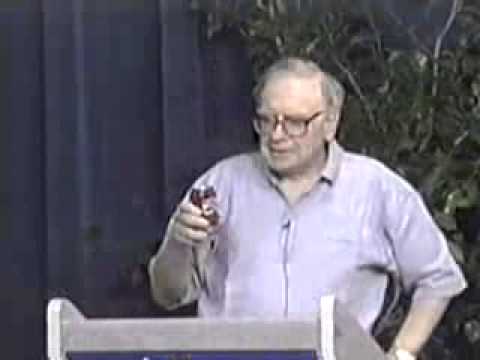
What Buffett talks about
Warren Buffett gave this lecture at the University of Florida's Warrington College of Business on October 15, 1998, discussing temperament, circle of competence, business quality, managers, leverage, and long-term investing.
Also known as: University of Florida 1998 lecture; Florida University speech; Graham-Buffett lecture series talk.
Buffett tells the University of Florida audience that success depends less on IQ than on character, temperament, and habits. He uses a vivid “buy 10% of a classmate” thought experiment to show why integrity, honesty, and emotional steadiness matter most.
He then moves into investing: why he prefers businesses he can understand, why he wants a durable moat, and why simple companies like Coca-Cola can be extraordinary long-term holdings. He argues that time helps wonderful businesses and hurts lousy ones.
Buffett also discusses Long-Term Capital Management, leverage, and the danger of risking what matters for what doesn’t. He closes by stressing his circle of competence, the importance of loving your work, and the role of luck in life.
Mason Hawkins introduces Buffett and the audience asks questions; Buffett speaks throughout the main lecture and Q&A.
In his words
“If they don't have integrity, you want them dumb and lazy.”
“It's simply a question of which you decide.”
“I want a business with a moat around it.”
“The important thing is not how big the circle is. The important thing is staying inside the circle.”
Key points
- Integrity, intelligence, and energy matter — but without integrity, the other two can be dangerous.
- Temperament and character are habits you can choose and change, especially when you're young.
- The best investments are usually in businesses you can understand and stay inside your circle of competence.
- Wonderful businesses have moats that protect them from competition and widen over time.
- Time is the friend of the wonderful business and the enemy of the lousy business.
- Leverage can be fatal; smart people can still do foolish things when they overreach.
- Buffett says to choose work you love, not jobs that merely look good on a resume.
Full transcript: Warren Buffett, University of Florida lecture (1998)
University of Florida host / introducerThat allowed us to set up the Graham Buffett concentration in security analysis at the University of Florida College of Business, and we're honored that mister Buffett has agreed to come and lend his name to this concentration. The Graham Buffett course sequence is important to this college because it enables us to attract students who want this perspective on investing and the managing of corporations, a perspective that has been successfully employed by mister Buffett, mister Hawkins, and before them, Benjamin Graham. This perspective is quite simple but sometimes lost in the complexity of our university analysis. The perspective is that you have to understand the underlying economics of the businesses you invest in work in. You have to be clear eyed and not be swayed by the crowds or the passing fancies of the moment, and you have to learn and stick to disciplined principles of business valuation.
In the long run, this disciplined approach will more often than not bring success or perhaps just as important avoid spectacular failures. Hopefully, here at the University of Florida, we can successfully convey those principles to our students and create a program that attracts the very best people and in time, the very best employers as well. So we thank mister Hawkins for his gift and for creating this environment that makes it possible for a man like Warren Buffett to come to our university and share his thoughts with us today. So without any more conversation, let me introduce to you Mason Hawkins.\
Mason HawkinsThanks a lot, doctor Mabore. I've got a prepared thing or two to say, but before I started, I wanted to just say that looking around this audience, it's a huge improvement from when Dan Connell and Dwight Storm and some of the rest of us were here. This this group has been greatly upgraded. As a Florida graduate living in the state of Tennessee, it's it's been a... It's been quite an experience. And so I can say without without any exaggeration, it's great to be back in gator country, especially after our
University of Florida host / introducerlittle sojourn to the city
Mason Hawkinsof Knoxville not too long ago. If I ever hear Rocky Top again, it's gonna be one time too many. These are exciting times for value investors. They're very exciting times to be University of Florida graduate business student. Today, we're extremely fortunate and grateful to have a very special guest to share his many, many insights with us. He's someone I've I've admired tremendously for the last thirty years. And additionally, he is a person I think each of us could pattern our lives after as a role model, even if he... Even though he happens to be, an avid Nebraska Cornhusker, and we've got our scars for that too. It's my honor as well as my privilege to welcome our lifetime's best long term investor, mister Warren Buffett.
Warren Buffett1,000,000, 2,000,000, 3,000,000. Seems to be working. I'd like to just say a few words, preliminarily, and then, the highlight for me will be getting your questions in in in in a few minutes because, that's... I wanna talk about what's on your mind. I urge you to throw hard balls. It's it's it's more fun for me if you if you put a little put a little speed out of pitches as they come in. You can ask about anything except for last week's Texas A and M game, that's off limits. We have a couple of men here from SunTrust. I was just up at the Coke meeting, and I sat next to Jimmy Williams there who ran SunTrust for many years. And he wanted to be sure that I wore this SunTrust shirt down here. I've tried to get sponsorship on the senior golf store. I haven't had much luck.
But now on the banker store, I'm doing a little bit better. And he said I got a percentage of the increase in deposits in Gainesville. So I'll go out for SunTrust, dear old SunTrust. I would like to talk for just one minute up to the students about your about your future when you leave here because there's... You're gonna learn a tremendous amount about investments, and you'll learn you'll learn enough to do well. You've you've all got the IQ to do well. You've all got the initiative and energy to do well or you wouldn't be you wouldn't be here. And most of you will succeed in in in in in meeting your aspirations. But in in determining whether you succeed, there's more to it than intellect and energy, and I'd like to talk for just a second about that. In fact, there was a fellow that Pete Keywood in Omaha used to say that he looked for three things in hiring people.
Looked for integrity, intelligence, and energy. And he said if the... If that person didn't have the first two, that the latter two would kill them. Because if they don't have integrity, you want them dumb and lazy. You don't want them smart and energetic. And I'd I'd really like to talk about that first one because we we know you've got the two. And and I did... Play along with me a little game for just a second
University of Florida host / introducerin in in
Warren Buffettterms of thinking about that question. You've all been here, I I guess, almost all of your second year MBAs, and you've gotten to know your classmates. And think for a moment that I granted you the right to buy 10% of one of your classmates for the rest of his or her lifetime. Now you can't pick one with a rich father. That doesn't count. I mean, you've got to, you've got to pick them, pick somebody who's going to do it on their own merit. And and I gave you an hour to think about it. Which one are you gonna pick among all your classmates is for the one you wanna own 10% of for the rest of their lifetime? Are you gonna give them an IQ test? Pick the one with the highest IQ? I doubt it. Are you gonna pick the one with the best grades? I doubt it. You're not even gonna pick the most energetic one necessarily. You're the one that displays the most initiative.
But you're going to start looking for qualitative factors in addition to... Because everybody's got enough right here and and and enough energy. And I would say that if you thought about it for an hour and decided who you're gonna place that bet on, you'd probably pick the one who you responded the best to because, the one that was going to have the leadership qualities, the ones who's going to be able to get other people to carry out, their interest. And that would be the person who was generous and honest and who gave credit to other people even for their own ideas, all kinds of qualities like that. And you could write down those qualities that you admire in this other person, whoever you admire most in the class. And then I would throw in a hooker. I would say as part of owning 10% of this person, you had to agree to go short 10% of somebody else in the class. That's more fun, isn't it? And you think, well, now who do I wanna go short of? And, again, you wouldn't pick the person with the lowest IQ or the...
Or... You you would you would start thinking about the person really who turned you off for one reason or another. I mean, they had very... Had various qualities quite apart from their academic achievement, but they had various qualities. And the industry didn't really wanna be around them, and other people didn't wanna be around them. And what were the qualities that lead to that? Well, there'd be a whole bunch of things. You know? But it's the person who's egotistical, the person who's greedy, the person who slightly dishonest, cuts corners, all of these qualities. And you could write those down on the right hand side of the page. And when you look at that... We'll just... I don't know which one I'm using. Can you hear me okay with this? Have to have fine.
Audience memberJust go Yeah.
You might come on
Warren Buffettto the side. So just come back up. What do I do with it? It just came loose. Oh, it just came loose. Okay. You can see why I avoid technology. Chewing gum is about as far as I get. As you looked at those qualities on the left and right hand side, there's one interesting thing about them. It's not the ability to throw a football 60 yards. It's not it's it's not the ability to run the 100 yard dash in nine three. It's not being the best looking person in the class. They're all qualities that if you really wanna have the ones on the left hand side, you can have them. I mean, they are they are qualities of behavior, temperament, character that that are achievable. They're not forbidden to anybody in this group. And if you look at the qualities on the right hand side, the ones that you find turn you off in other people, there's not a there's not a quality there that you have to have.
If you have it, you can you can you can you can get rid of it. And you can get rid of it a lot easier at your age than you can at my age because, most behavior is is is habitual. And they say the chains of habit are too light to be felt until they're too heavy to be broken. And there's no question about it. I see people with these self destructive behavior patterns at my age or even ten or twenty years younger and they really are entrapped by them. They they go around and they do things that turn off other people, right and left. And, they don't need to be that way, but by a certain point, get so they can hardly change it. But at your age, you can have any any any habits, any any patterns of behavior that you wish. It's simply a question of which you decide. And when I decide the ones that... I mean, if you like, Ben Graham did this, and Ben Franklin did it before him. But Ben Ben Graham in his low in his low teens looked around, and he looked at the people he admired.
And he said, you know, I wanna be admired, so why don't I just behave like them? And he found there was nothing impossible about behaving like them. And similarly, he he did the same thing on on the reverse side in terms of getting rid of those qualities. So I would suggest that if you write those qualities down and think about them a little while and make them habitual, you will be the one that you wanna buy 10% of when you get all through. And the beauty of it is you already own a 100%, you're stuck with it. So you might as you might as well be that person, somebody else. Well, that's that's a short little sermon. So let's get on to what, what you're interested in. And, like I say, you can you can go all over the lot. So I don't know exactly how we're gonna handle this, but, but, let's start with a hand here someplace or other. Where do we go with the first one? Yeah. Right here. Your thoughts about Japan. My thoughts about Japan? I'm I'm I'm not a macro guy. Now I say to myself, Berkshire Hathaway can borrow money for ten years at 1% in Japan now.
1%. And I say to myself, gee, I took Graham's class forty five years ago, and I've been working hard at this thing all my life. Maybe I can earn more than 1%. You know? I really work hard at it. 1% annually. It doesn't seem impossible, does it? So I wouldn't wanna get involved in currency risk, so I'd have to do it in something that was yen denominated. So I have to get it... I have to be in Japanese real estate or a Japanese business or something of the sort and be... And all I have to do is beat 1%, and that's all the money's gonna cost me. And I can get it for 10 years. So far, haven't found anything. It's it's it's kind of interesting. The the Japanese companies earn very low returns on equity, and and, they have a bunch of businesses that earn four, five, 6% on equity. And it's very hard to earn a lot as an investor when the business you're in doesn't earn very much money. Now now some people do it.
In fact, I've got a friend, Walter Schloss, who worked with Graham at the same time I did. And and it was the first way I went at stocks to buy stocks selling way below working capital, very cheap quantitative stocks. I call it the cigar butt approach to investing. Is it... You walk down the street, you look around for a cigar butt someplace. And you finally you see one, and it's soggy and kind of repulsive, but there's one puff left in it. So you pick it up, and the puff is free. I mean, it's a cigar butt stock. I mean, you get one free puff out of it, and then you throw it away and you walk down the street trying to find another one. And, I mean, it's not elegant. But it work... You know, if if you're looking for a free puff, it works. Those are low return businesses. But time is the friend of the wonderful business. It's the enemy of of the lousy business. If you're in a lousy business for a long time, you're gonna get a lousy result even if you buy it cheap.
If you're in a wonderful business for a long time, even if you pay a little too much going in, gonna get a wonderful result if you stay in a long time. I find very few wonderful businesses in Japan at at present now. They may change the culture in some way so that that that management's getting more stockholder responsive over there and returns are higher. But at the present time, you'll find a very lot of low return businesses. And that was true even when the Japanese economy was booming. I mean, it's it's amazing. They had a incredible market without incredible companies. They were incredible in terms of doing a lot of business, but they weren't incredible in terms of the return on equity that they achieved. And that finally caught up with them. So we have so far done nothing there. But as long as money is 1%, I'll keep looking. I mean, that's... Yeah.
University of Florida host / introducerYou were rumored to be one of the rescue buyers of long term capital. What what was the play there? What did you see?
Warren BuffettWell, there's a story in the current Fortune magazine. One has Rupert Murdoch's picture on the cover that tells the whole story of our involvement. It's kind of an interesting story because I I... Well, I... It's a it's a long story, so I won't go into all the background of it. But I got the really serious call about long term capital, about about four weeks ago this Friday, whenever it was. It was my granddaughter. I got it in mid afternoon, and my granddaughter was having her birthday party that evening. And then I was flying that night to Seattle to go on a twelve day trip with Gates on a... To Alaska in a private train, all kinds of things where I was really out of communication. But I got this call on a Friday afternoon saying that things were really getting serious there. I had some other calls before that the article gets into a few weeks earlier. I know those people, most of them pretty well. A lot them were Solomon when I was there. And, the place was imploding, and the Fed was sending people up that weekend.
And so between that Friday and the following Wednesday when the New York Fed, in effect, orchestrated a a rescue effort, but without any federal money involved. I was quite active, but I was having this terrible time because we were sailing up through these, through these canyons, which held no interest for me whatsoever in Alaska. And and the captain would say, you know, if we just steer over here, we might see some bears and whales. And I said, where you got a good satellite connection because I want... So so it was... In fact, there's a picture, of course, where I've got my... Old faithful is going off behind me, and I got my back to it. I'm on the phone, which was the people in the group thought was kinda funny the way I was working the phone. But we put it a bid on on on Wednesday morning. I was... By then, I was in Bozeman, Montana, and I talked to, Bill McDonough, the head of the New York Fed.
About about 10:00. They were having a meeting of the bankers at 10:00 that morning in in in New York, and I caught him. Right. We actually delivered a message to him. He called me out there in Wyoming a little bit before ten New York time. And we made a bid. It was a... It was, because it was being done at a long distance and everything. It was really the outline of a bid. But, in the end, it was a bid for 250,000,000 essentially for the net assets of, but we would have put in 3,750,000,000 on top of that, and it would have been 3,000,000,000 from Berkshire Hathaway, 700,000,000 from AIG, and 300,000,000 from Goldman Sachs. And we submitted that, but we put a very short time fuse on it because when you're bidding on a $100,000,000,000 worth of securities that are moving around, you don't wanna leave a fixed price bid out there very long, plus we were worried about it getting shopped. In the end, they...
The the bankers made the deal. And, but it was an it was an interesting period. The whole long term capital management, and I hope most of you are familiar with it, but the but the whole story is really fascinating because if you take John Merriweather and Eric Rosenfeld, Larry Hillenbrand, Greg Hawkins, Victor Agani, the two Nobel Prize winners, Merton Shoals, if you take the 16 of them, that... They probably have as high an average IQ as any 16 people working together in one business in the country, including at Microsoft or or wherever you wanna name. So that incredible amount of intellect in that room. Now you combine that with the fact that those 16 had had extensive experience in the field they were operating. I mean, this this this one was not a bunch of guys who had made their money, you know, selling men's clothing and then all of a sudden went into the securities business or anything.
They'd had they'd they'd had, in aggregate, the 16 that probably had three hundred and fifty or four hundred years of experience doing exactly what they were doing. And then you throw in the third factor that most of them had virtually all of their very substantial net worths in the business. So they had their own money up, hundreds and hundreds of millions of dollars of their own money up, super high intellect, working in a field they knew, and essentially, they went broke. And that to me is absolutely fascinating. I mean, I I... If if I ever write a book, it's gonna be called why smart people do dumb things. My partner says that it should be autobiographical, but I... But but this might be an interesting illustration. And these are perfectly decent guys. I, you know, I I I respect them, and they helped me out when I was had problems with Solomon. And so they they are they are not bad people at all. But to make money they didn't have and didn't need, they risked what they did have and did need.
And that's foolish. That is just plain foolish. Don't make any sense what your IQ is. If you if you risk something that is important to you for something that is unimportant to you, it just does not make any sense. I don't care whether the odds are a 100 to one that you succeed or a thousand to one that you succeed. If you hand me a gun with a thousand chambers... A million chambers in it, there's a bullet in one chamber, and you said, it up your temple, how much do you want to be paid to pull it once? I'm not gonna pull it. You know? You can name any sum you want, but it doesn't do anything for me on the upside. And I think the downside is fairly clear. So I'm not interested in that kind of a game. And yet people do it financially then without thinking about it very much. There was a great book. It wasn't a great book. It was a great title. It was a lousy book written once with a great title, by Walter Gutman. The title was You Only Have to Get Rich Once.
Now that seems pretty fundamental, doesn't it? What is... What different... If you've got a $100,000,000 at the start of the year and you're gonna you're gonna make 10% if you're unleveraged and 20% if you're leveraged 99 times out of a 100. What difference does it make at the end of year whether you got a 110,000,000 or a 120,000,000? Makes no difference at all. I mean, if you if you die at the end of the year, you know, the guy who writes up the story may make a typo. He may say a 110 even if you had a 120. So you've got nothing at all. You know, what... It can't... It makes absolutely no difference. Makes no difference to your family. It makes no difference to anything. And yet the downside, particularly managing other people's money, is not only losing all your money, but it's it's disgrace and humiliation and and facing friends whose money you've lost. I I just I just can't imagine an equation that that makes sense for. And yet 16 guys with very high IQs who are very decent people entered into that game.
And, you know, I think it's madness, and it's it's it's produced by an overreliance to some extent on things. You know? Those guys would tell me back when I was at Solomon, you know, that a six sigma event wouldn't, you know, wouldn't wouldn't touch us or a seven sigma event, but they were wrong. I mean, their history does not tell you the probabilities of future financial things happening. And they had a great reliance on mathematics, and they felt that that the beta of the stock told you something about the risk of the stock. It doesn't tell you a damn thing about the risk of the stock in my view. And and Sigmas do not tell you about the risk of going broke in in my view. And maybe in their view now too. But but I, you know, I I I don't I don't like to even use them as an example because they are, I mean, the same thing in a different way could happen to any of us probably, where we where we really have a blind spot about something that's crucial because we know a whole lot about something else.
It's like Henry Kaufman said the other day, so the people that are going broke in this situation are just two... Of two types, the ones who knew nothing and the ones that knew everything. And, it's it's it's it's sad in a way. I urge you in anything. We never basically borrow money. I mean, we we get flow through our insurance business and to do things, but I I never borrowed money. I never borrowed money when I had $10,000, basically, because what difference did it make? I was having fun as I went along, it and didn't make errors whether I had $10,000 or a million dollars or $10,000,000, you know, except if I had a medical emergency or something that come along like that. But I was gonna I was gonna do the same things when I had a lot of money as when I had very little money. You know? The... If you think about the difference between me and you in terms of how we live, you know, we wear the we wear the same clothes, basically. SunTrust gives me mine, but you...
I mean, what... We... So we wear the same clothes. We we we eat, you know, we we all have a chance to drink the juice of the gods here. Yeah. But we we all go to McDonald's or better yet Dairy Queen. And and we we live in a house that's that's that's warm in winter and cool in summer, and and and we watch, Nebraska, Texas, a... And I'm on a big screen. You know? You you see it the same way I see it. We do everything. Our lives aren't that different. You know? You'll you'll get decent medical care if something happens to you, and I'll get decent medical care. The only thing we do is we travel differently.
Audience memberYou
Warren Buffettknow? I ride around this little plane, I love it. Yeah. And that takes money. But if you leave if you leave that aside, if you leave that as... We travel differently. But other than travel, you know, I would... I... Think about it. Think what what can I do that you can't do? Now I get to work in a job that I love, but I've always worked in a job I love. I loved it when I... And I loved it just as much when I when I... When it was a big deal if I made a thousand bucks. And I urge you to work in jobs you love. I mean, I think you're out of your mind if you take... Keep taking jobs that you don't like because you think it'll look good on your resume. I was with a fellow at Harvard the other day who was taking me over to talk, and he was 28. He was telling me what he'd done in life and... Which was terrific. And and then I said, what are you gonna do next? And he said, well, I said, after I get out of my my MBA, he said, I think maybe I ought go work for a management consulting firm because it looked good on my resume.
I said, wait a second. You've been 28. You've doing all these things. I mean, you got a resume that's 10 times as good as anybody I've ever seen in. I said, if you take another job you don't like just for you. I said, isn't that like a little like saving up sex for your old age? You know, I mean, there comes a time when you ought to just start doing what, you know, you never got... So I I think I got the point across to him. But I... You ought to take a... When you get out here, take a job you love. Don't take a job that, you know, you think is gonna look good on your resume. Take take a job you love. You you may change it later on, but you'll jump out of bed in the morning. I mean, I got out of when I got out of Columbia, the first thing I tried to go to work for Graham immediately. I offered to go to work for him for nothing. He said I was overpriced. But but I but I kept pestering him. I went out to Omaha, and I sold securities for three years, I kept writing him and giving him ideas and doing all this. And finally, I went to work for him for a couple of years, and it was a great experience. But I always really worked in a job.
Worked in a job that that I would... That I've I've, you know, loved doing. And you should really take a job that if you were independently wealthy, you would take. That's the that's the job to take because that's the one that you're gonna have great fun in. You'll learn something. You'll be excited about it, and you can't miss. You may go do something else later on, but but you'll get way more out of it. And I don't care what the starting salary is or anything of the sort. I don't know how I got off on that, but I... There I am. So I I I do think that that if you think you're going to be a lot happier if you've got two x instead of x, You're probably making a mistake. Mean, it it... You ought to you ought to find something you like that's... That works with that. And if... And you'll get in trouble if if you think that making 10 x or 20 x is the answer to everything in life because then you will do things like borrow money when you shouldn't or or maybe cut corners on on things that your employer wants you to cut corners on.
It just doesn't make any sense. You won't like it when you look back on it. Yep. You talk to the students about the companies that you like, I don't mean names. I mean, what makes the company Yeah.
Audience memberSomething that
Warren Buffettyou like. I like I like businesses I can understand. We'll start with that. That narrows it down about 90%. And, I mean, see, I... There are all kinds of things I don't understand. But, fortunately, there's enough I do understand. And you got this big wide world out there. Almost every company is publicly owned. So you got you got all American business practically available to you. Now to start with, it doesn't make sense to go with things that you think you can understand, but you can understand some things. I can understand this. I mean, you can understand this. Anybody can understand this. I mean, this is a product that basically hasn't been changed much they've added the cherry. But, you know, since 1886 or whatever it was, and it's a simple business. It's it's not an easy business. I don't want a business that's easy for competitors. So I want a business with a moat around it. I want a very valuable castle in the middle. And then I wanna I wanna... I I I want the duke who's in charge of that castle to be honest and hardworking and able.
And then I want a big moat around the castle, and that moat can be various things. The moat in a business like our auto insurance business at GEICO is low cost. I mean, people have to buy auto insurance. So everybody's gonna have one auto insurance policy per per car, basically, or per driver. And and I can't sell them 20, you know, but but they have to buy one. When are gonna buy it on? They're gonna buy it on based on service and cost. Most people will assume the service is fairly, identical among companies or close enough. So they're do it on cost. So I gotta be the low cost producer. That's my moat. To the extent I... My costs get further lower than the other guy, I've thrown a couple of sharks into the moat. You know? But all the time, if you've got a wonderful castle, there are people out there who are gonna try and attack it and take it away from you. And I want a castle that I can understand, but I want a castle with a moat around it. Thirty years ago, Eastman Kodak's moat was was just as wide as Coca Cola's moat.
I mean, if you were gonna take a picture of your six month old baby, and you're gonna wanna look at that picture twenty years from now, and you're gonna look at it fifty years from now, and you're never gonna get a chance. I mean, you're not a professional photographer so that you can evaluate what's gonna look good twenty or fifty years ago. What is in your mind about that about that photography company is what counts because they are promising you that the picture you take today is going to be terrific to look at twenty or thirty or fifty years from now about something that's very important to you, maybe your own child or whatever it may be. Well, Kodak had that in spades thirty years ago. They owned that. They had what I call share of mind. Forget about share of market, share of mind. They had something in everybody's mind around the country, around the world with a little yellow box and everything that said Kodak is the best. That's priceless. They've lost some of that. They haven't lost it all, and and it's not due to George Fisher who runs. George is doing a great job. But they let that moat narrow.
They let Fuji come and start narrowing the moat in various ways. They let them get into the Olympics and take away that special aspect that only only Kodak was fit to photograph the Olympics. So Fuji gets there and immediately in people's minds, Fuji becomes more on a parody with with Kodak. You haven't seen that with Coke. Coke's moat is wider now than it was thirty years ago. You can't see the moat day by day, but every time, you know, the infrastructure gets built in some country that isn't yet profitable for Coke, but will be twenty years from now, the mode is widening a little bit. The things are all the time changing that mode in one direction or the other. Ten years from now, you can see the difference. Our managers are the businesses we run. I've I've got one message to them, you know, which is to widen the mode. And we wanna we wanna throw crocodiles and sharks and everything else, gators, I guess, into the the moat to keep away competitors.
And that that comes about through service. It comes about through quality of product. It comes about through cost. It comes about sometimes through patents. It comes about through real estate location. So that's the business I'm looking for. Now what kind of businesses am I gonna find like that? Well, I'm gonna find them I'm gonna find them in simple products because I'm not going to be able to figure out what the moat's gonna look like for Oracle or Lotus or Microsoft ten years from now. I mean, I... Gates is the best businessman I've ever run into, and, you know, they've got a hell of a position. But I really don't know what that business is gonna look like ten years from now. And I certainly don't know what his competitors' businesses are gonna look like ten years from now. Now I'll name one I don't own. I know what the chewing gum business is gonna look like from ten years from now. I mean, the Internet is not gonna change how we chew gum. It's... And and nothing much else is gonna change how we chew gum. And then are there gonna be lots of new products that really... You know, our spearmint and juicy fruit and all those gonna evaporate.
So it's gonna happen. You give me a billion dollars and tell me to go in the chewing gum business and try and make it real dent in Wrigley's, I can't do it. And that's the way I think about business. I say to myself, give me a billion dollars, and how much gonna hurt the guy? Give me $10,000,000,000. Give me $10,000,000,000, and how much gonna hurt Coca Cola around the world? I can't do it. Well, those are good businesses. Now give me some money and tell me to hurt somebody in in some other fields, and I can figure out how to do it. But, so I want a simple business, easy to understand, great economics now, honest and able management. And and, then I can see about in a general way where they're gonna be ten years from now. And if I can't see where they're gonna be ten years from now, don't wanna buy it. Basically, I don't wanna buy any stock where if they close the New York Stock Exchange tomorrow for five years, I won't be happy owning it. I buy a farm, and I don't get a quote on it for five years, and I'm happy if the farm does okay.
You know, I buy an apartment house, don't get a quote on it for five years. I'm happy if the apartment house produces the returns that I expect. But people buy a stock, and they look at the price the next morning, and they decide whether they're doing well or not doing well. It's it's crazy because they're buying a piece of a business. That's what Graham... The most fundamental part of of what he taught me. You know? You're not buying a stock. You're buying a you're buying a part ownership in a business. You will do well if the business does well and if you didn't pay a totally silly price. And that's what it's all about. And you ought to buy businesses you understand. Just like if you're buying farms, you ought to buy farms, you understand. It's it's not complicated. And so in calling this Graham Buffett, I mean, it's just pure Graham. I I I was very fortunate because I I picked up a book when I was 19. I got interest in stocks when I was about six or seven, and I bought my first stock when I was 11. But I was playing around with all this stuff, and I had charts and volume, and I'm making all kinds of technical calculations, everything.
And then I picked up a little book, and it just said that you're not buying some little timber symbol that bounces around every day. You're buying you're buying a part of the business. And as soon as I started thinking about it that way, everything else swallowed. Very simple. So we buy businesses we think we can understand. There's no one here that can understand the Coca Cola Company. I would say there's no one here that can understand some new Internet company. And I said I said at the annual meeting this year that if I were teaching a class in business school on the final exam, I would pass out the information on the Internet company and ask each student to value it. And anybody that gave me an answer, I'd flunk. I don't know how to do it. But people do it every day. I mean, it's more exciting. I mean, if if you look at it like going to the races or something, you know, that's that's a different thing. But if you're investing... I mean, investing is putting out money to be sure of getting more money back later, you know, at an appropriate rate.
And And to do that, you have to understand what you're doing it in. I mean, you have to understand the business. And you can understand some businesses, but not all businesses. Yes.
Audience memberWarren, so you covered half of it, which is trying to understand the business and buying the business, but you also alluded to getting a return on the amount of capital you invest in the business as an investor. And, you know, that comes back to to what are you paying for the business. How do you determine, you know, what you think is a fair price to pay for the business?
Warren BuffettIt's a tough thing to decide, but I don't want to buy into any business I'm not terribly sure of. So if I'm terribly sure of it, it probably doesn't... It probably isn't gonna offer incredible returns. I mean, why should something that's... Is essentially a cinch to do well offer you 40% a year or something like that? So we we don't have huge returns in mind, but we do have in mind never losing anything. And, I mean, we we bought C's Candy in 1972. C's Candy was then selling 16,000,000 pounds of candy at a dollar 95 a pound, and it was making 2 bits a pound or 4,000,000 pretax. We paid $25,000,000 for it. Took no capital to speak of. When we look at that business, basically, my partner, Charlie, and I really decided whether there was a little uncapped pricing power there. In other words, whether that dollar 95 box of candy could just as easily sell for 2 or 2.25. If you could sell for 2.25, another 30¢ a pound was was 4,000,008 on £16,000,000, which which on a 25,000,000 purchase price was fine.
We didn't do any... You know, we... We've never hired a consultant in our lives. We... Well, I mean, we... Our idea of consulting is gone and buy a box of candy, you know, and eat it. But what we did know was there was... That they had share of mind in California. I mean, there was something special. Every person in California has something in their mind about C's candy, and overwhelmingly was favorable. They had taken a box, you know, Valentine's Day and given it to some girl, she'd kiss them. If she'd slap them, know, we'd have no business. But but if... As long as she kisses them, you know, that's that's that's what we want in their mind. Sees candy getting kissed. And if we can get that in the minds of people, we can raise prices. And and I bought that in... I bought it in 1972. We've raised... Every year, I raised the price on December 26. Raised it the day after Christmas so that everybody... Because we sell a lot at Christmas. In fact, we'll make $60,000,000 this year. We'll sell £30,000,000, make $2 a pound. Same business, same formulas, same everything. $60,000,000 still doesn't take any capital, and we'll make more money ten years from now.
But of that 60,000,000, we make about 55,000,000 in the three weeks before Christmas. And our company song is What a Friend We Have in Jesus. I mean, it is a good business. But the important thing about that business is to think about it a little. People don't buy... Most people don't buy boxed chocolates to consume themselves. They buy them as gifts. You know, somebody... Somebody's birthday. More likely, it's a holiday. Valentine's Day is single biggest day of the year. Christmas is the biggest season by far. But women buy for Christmas, and they plan ahead and buy over two or three week period. Men buy on Valentine's Day. They're driving home. We run ads on the radio. You know? Guilt. Guilt. Guilt. Guilt. You know, the guys are veering off the freeway right and left. And they won't dare go home without a box of candy when we get through with them on our radio ads. So that Valentine's Day is the biggest day. But can you imagine going home on Valentine's Day, and our C's candy is now $11 a pound, thanks to my brilliance.
And and let's say there's there's candy available at $6 a pound. But do you really wanna walk in on Valentine's Day and hand... I mean, this... Your wife's got all these favorable images of the seized candy over the years, she sees you, and that's the way she thinks of you during the rest of the year when you really behave kinda badly. And you walk in and and say, honey, this year, I took the low bid and then hand her a box of candy. I mean, it just isn't our work. So in a sense, it is... It's it's... If there's untapped price, it's price... It's it's not price dependent, basically. Think of Disney. I mean, Disney is selling, we'll say, home videos for, I don't know, what, $16.95, $18.95 or whatever. All over the world, people, and we'll say particularly mothers in this case, have something in their mind about Disney. I mean, every person in this room, when you say Disney, has something in their mind about it.
If I say Universal Pictures, you don't have anything in your mind. You know? If I say twentieth Century Fox, you don't have anything special in your mind. If I say Disney, you got something in your mind. And that's true around the world. Now picture yourself with a couple young kids, you know, who you wanna put away for a couple hours every day. You get a little peace of mind. And you and you know if you get them one video, they'll watch it 20 times. So you go to the video store or wherever you buy the video, are you gonna sit there and premier, you know, 10 different videos and watch them each for an hour and a half to decide which one your kids should watch? No. I mean, let's say there's one there for $16.95 and the Disney's there for $17.95. You know if you take the Disney video, you're gonna be okay. So you buy it. And you don't have to make a quality decision on something that you don't wanna spend the time to do. And so you can get a little bit more money if you're if you're Disney, and you'll sell a lot more videos. Makes it a wonderful business. Makes it very tough for the other guy. How would you try to create a brand? DreamWorks is trying, but how would you try to create a brand that competes with Disney around the world and to replace the concept that people have in their minds about Disney with something that says Universal Pictures, you know, so that the mother's gonna walk in and pick out a Universal Pictures video in preference to a Disney.
It's not gonna happen. Now Coca Cola is associated with people being happy around the world. We're every place they're happy, where Disney World or Disneyland, where the World Cup will be at the Olympics. We're every place where people are happy. Happiness and cocoa together. Now you give me, I don't care how much money, and tell me that I'm gonna do that with RC Cola around the world and have 5,000,000,000 people that have a favorable image in their mind about RC Cola can't get done. You know, and you can fool around with the... You can do anything you wanna do. You know, I have price discounts on weekends and everything, but you're not gonna touch it. And that's what you want to have in a business. That... That's the moat, and you want that moat to widen. And if your C's candy, you want to do everything in the world to make sure that the experience, basically, of giving that gift leads to a favorable reaction. That means means what's in the box. It means the person that sells it to you because all our business is done when we're terribly busy.
I mean, people come in in those weeks before Christmas or on Valentine's Day, they have long lines. So at 05:00 in the afternoon, some woman is selling the last person, the last box of candy, and that person has been waiting in line for maybe twenty or thirty customers. And if the salesperson smiles at that last customer, our mode is widened. And if she snarls at them, our mode is narrowed. We can't see it. It's going on every day, but that's the key to it. I mean, it's a total part of the product delivery is having everything associated with, let's say, C's candy and something pleasant happening. And that's what business is all about. Yep.
Audience memberWhat person in the company, how much qualitative analysis do you do versus quantitative analysis? And have you ever bought a company where the numbers told me not to?
Warren BuffettThose are... The best buys... The question is whether... Have I ever bought a company where the numbers told me not to and how much is qualitative and how much is quantitative? The best buys have been when the numbers almost tell you not to. I mean, because then you then you feel so strongly about the product and not just the fact that you're getting a used cigar but cheap that it it... It's compelling. I mean, I owned a windmill company at one time. And so I've I've... You know, windmills are cigar butts, believe me. Bought it very cheap. I bought it at a third of working capital, and and we made money out of it. But there's no repetitive money to be earned. I mean, there's a onetime profit in something like that. And and it... It's just not... It's not the thing to be doing. I went through that phase. I mean, I bought street card companies and all kinds of things. But in terms of
Audience memberthe
Warren Buffettqualitative, I probably understand the qualitative the moment I get the phone call. I mean, every business we bought has taken five or ten minutes, I mean, in terms of analysis. And we bought two businesses this year. General Re is $18,000,000,000 or some deal. I've never been to their home office. I hope it's there. There could be just a few guys and say, well, what numbers should we send Buffett this month? Can see it, you coming in once a once a month. We'll just tell them we've got 20,000,000,000 in the bank this month instead of 18,000,000,000 or something. But I've never been there. I've never... And and before, I bought Executive Jet, which is fractional ownership of of of of jets. And before I bought it, I'd never been there. I I bought my family a quarter interest in the program three years earlier, and I'd seen the service and seen it develop well.
And I got the numbers. But if you don't know enough to know about the business instantly, you won't know enough in a month or two months. I mean, you have to have sort of the background of of understanding and and knowing what you do understand and don't understand. And that that is the key. It's it's defining what I call your circle of competence. And everybody's got a different circle of competence. The important thing is not how big the circle is. The important thing is staying inside the circle. And if that circle has only got 30 companies in it out of thousands on the big board, as long as you know which 30 they are, you're okay. And you should know those businesses well enough so that you don't need to read, do lots of work. Now I I did a lot of work in the earlier years just in getting familiar with businesses. And and the way I would do that is I would go out and use what Phil Fisher called the scuttlebutt approach. I'd go out, I'd talk to customers. I'd talk to I'd talk to to maybe ex employees in some cases.
I'd talk to suppliers, everybody. Every time I'd see somebody in an industry, let's say I was interested in the coal industry. I'd go around and see every coal company, and I'd ask every every CEO, if you can only buy stock in one coal company that wasn't your own, which one would it be and why? And you piece those things together, and you learn a lot about the business after a while. And funny thing is you get very similar answers as long as you ask about competitors. That the... You know, I would I'd say if you got a silver bullet, you know, and you put it through the head of one competitor, which competitor and why? You know, you'll find out who the best guy in the industry is that... In in that case or the one that's coming up. And there's a... So there's a lot of things you can learn about a business. I've I've done that in the past, on the businesses that I feel I could understand. So I don't have to do much of that anymore. It's a nice thing about investing is you don't have to learn anything very new. I mean, you can do it if you want to. But if you learn about Wrigley's chewing gum forty years ago, you you still understand Wrigley's chewing gum.
It is not that... There's not a lot of great insights to get or anything of the sort as you go along. So you you do get a database in your head. I had a guy, Frank Rooney, who ran Melville for many years. His father-in-law died on a company called HH Brown, a shoe company. And and he put it up with Goldman Sachs, but he was playing golf with a friend of mine here in Florida and mentioned to this friend. The guy said, why don't you call Warren? He called me at the end of the golf match. And in five minutes, I basically had a deal. And... But I I knew Frank, and I knew the kind of business. I sort of knew the basic economics of a shoe business, and so I could buy it. And quantitatively, I gotta decide what the price is. But, you know, that's either yes or no. I mean, I don't I don't fool around a lot with negotiations. So if they if they name a price that makes sense to me, I buy it. And if they don't, I... You know, I was happy the day before, so I'll be happy the day after without owning it.
Yeah.
Audience memberThe Asian crisis, so to speak, is gonna
Mason Hawkinsaffect Coke for that metaverse?
Warren BuffettQuestion is about the Asian crisis and how it affects a company like Coke that recently announced that the earnings... Actually, they just announced their third quarter earnings, but a few weeks ago, they tipped people off that they were going be lower in the fourth quarter. Basically, I love it, but because the market for Coca Cola products is going to grow far faster over the next twenty years internationally than it will in The United States. It will grow in The United States on a per capita basis, but it's going to grow faster elsewhere. So the fact that it's going to be a tough period for, who knows, three months or three years, but it won't be tough for twenty years. I mean, people are still going to they're going to work productively around the world, and they're going to find that this is a bargain product in terms of the portion of their working day that they have to give up in order to have one of these or better yet, five of them a day like I do.
It's a... You know, this is a product... In 1936, when I first bought six of those for 0.25 and sold them for a nickel each, and it was in a six and a half ounce bottle and you paid a 2 purse... 2¢ deposit on the bottle, that was a six and a half ounce bottle for a nickel at that time. It's now a 12 ounce can, which if you buy it on on weekends or if you buy in bigger quantities, so so much money doesn't go to the packaging. I mean, you essentially can buy the 12 ounces for not much more than $0.20 So you're paying not much more than twice the per ounce price of $19.36 dollars And it is a product that's gotten cheaper and cheaper and cheaper relative to people's earning power over the years and which people love. In 200 countries, you have the per capita use going up every year for products over 100 years old, and that dominates the market.
I mean, that is unbelievable. One thing that people don't understand is one thing that makes this product is worth tens and tens of billions of dollars. There's one simple fact about about really all Colas, but we'll call it Coca Cola for the moment. It happened to be a name I like. Cola has no taste memory. You can drink one of these at 09:00, 11:00, 03:00 in the afternoon, 05:00. The one at 05:00 will taste just as good to you as the one you drank early in the morning. You can't do that with cream soda, root beer, orange, grape, you name it. All of those things accumulate on you. Most foods and and and beverages are... Accumulate on you. You get sick of them after a while. And if you if you eat... I mean, we get these people go to work for us to seize candy, and we tell them need all the candy they want. And the first day, they go crazy. But after a week, they're eating about the same amount they'd eat if if they're buying it because chocolate accumulates on...
Everything accumulates on. There is no taste memory to cola. And that means that you get people around the world that are heavy users that will drink five a day or Diet Coke maybe seven or eight a day or something of the sort. They'll never do that with other products. So you get this incredible per capita consumption. The average person in in this part of the world, well, maybe a little north of here, drinks about 64 ounces of liquid a day. And you can have all 64 ounces of that be Coke, and you will not get fed up with Coke if you like it to start with in the least. But if you do that with almost anything else, if you eat just one product all day, you'll you'll you'll tend... You'll get a little sick of it after a while. And and and it's it's a huge factor. That today, over 1,000,000,008 ounce servings of Coca Cola products will be sold in the world.
And that will grow year by year. It will grow in every country virtually, and it will grow on a per capita basis. And twenty years from now, it will grow in a lot faster internationally than in The U. S. So I really like that market better because there is more growth there over time. But it will hurt them in the it is hurting them in the short term right now. And but that doesn't mean anything. I mean, Coca Cola went public in... I think it's 1919. Stock sold for $40 a share. It went back before that as a candor family. I mean, they they went back. They bought it for $2,000, the whole business. He's a Candler back in the late eighteen eighties and a couple of purchases. So now he goes public in $1,959 a share. One year later, it's selling for $19, going down 50% in one year. Now you might think that's some kind of disaster.
And you might think that sugar prices increased and the bottlers were rebellious and a whole bunch of things. You could always find a few reasons why that wasn't the ideal moment to buy it. Years later, you'd have seen the Great Depression, and you'd have seen World War two, and you'd seen sugar rationing, and you've seen thermonuclear weapons and the whole thing. There's always a reason. But in the end, if you bought one share for $40 and reinvest the dividends, it'd be worth about 5,000,000 now. And that factor so overrides anything else. I mean, you're right about the business, you'll make a lot of money. And the timing part of it is very is a very tricky thing. So I don't worry about any given event if I've got a wonderful business, you know, whether what it does to next year or something of this sort. Know, their price controls have been in this country at various times, and that's that's followed up even the rest of businesses.
I mean, I wouldn't be able to raise the price on December 26 of the Seas Candy if we had price controls. And we've had them in this country, but that doesn't make it a lousy business if that happens to happen because you're not going have price controls forever. We had them in the early the early seventies. So it it... The wonderful business, you know, you can figure out what will happen. You can't figure out when it will happen. You don't wanna focus too much on when. You wanna focus on what. If you're right about what, you don't have to worry about one very much. Is there an area I'm missing back there any place? To make sure I'm not focusing all of them on one place? Let me get this gentleman over here. The question is about my business mistakes.
How much time do you have? Well, the interesting thing about the mistakes is that in investments, at least for me and for my partner, Charlie Munger, the biggest mistakes have not been mistakes of of commission. They've been mistakes of omission. They're where we knew enough about the business to do something, and for one reason or another, we sat there sucking our thumbs instead of doing something. And so we've we've passed up things where we could have made billions and billions of dollars from things we understood. Forget about things we don't understand. We don't. In fact, I could make billions out of Microsoft doesn't mean anything because I never understand Microsoft. But if I can make billions out of health care stocks, then I shouldn't make it, and I didn't. You know, when when when the Clinton health care program was proposed and they all went in the tank, We should have made a ton of money out of that, because I could understand it. I I didn't make it. I should have made a ton of money out of Fannie Mae back in the mid eighties, because I understood it, and I didn't do it.
Those are billion dollar mistakes or multibillion dollar mistakes that that generally accepted accounting principles don't pick up. The mistakes you see the mistakes you see... We we made a... Isn't we. I made a mistake buying US Air Preferred some years ago. I mean, that... I had a lot of money around. I I make mistakes when I get cash. Charlie tells me to go to a bar instead. You know? Don't hang around the office. But I I hang around the office, and I got money in my pocket. I do something dumb, and and it happens every time. And and so I I bought this thing. Nobody made made me buy it. I now have a 100 number I call every time I think about buying stock in an airline, and they talk me down. They say, you know, I say, I'm worn. I'm an airholic. And then the guy says, you know, keep talking. Don't hang up. You know? Don't do anything rash. And finally, I get over it. But I but I I I bought it, you know? And it looked like we were going to lose all our money in that.
And we came very close to losing all our money. And can say we deserve to lose all our money. And we bought it because it was an attractive security, but it was not an attractive business. I did the same thing with Solomon. Bought an attractive security in a in a business that I wouldn't have bought the equity in. So you can say that that's one form of mistake, buying something because you like the terms when you don't like the business that well. And I've I've I've done that in the past and probably do it again. The bigger mistakes though were the ones of omission. I did back when I had the $10,000, put $2,000 of it into a Sinclair service station, which I lost. So my opportunity cost now is about $6,000,000,000 right now. Fairly big mistake. Yeah. It makes me feel good when Berkshire goes down then because the cost of my Singular station goes down too. My 20% opportunity cost.
But I will say this, you talk about learning from mistakes. I really believe it's better to learn from other people's mistakes as much as possible. But but we don't spend any time looking back at Berkshire. I've got a partner, Charlie Munger. We've been pals for forty years. Never had an argument. We disagree on things a lot, but we but we but we don't we don't have arguments about it, and we never look back. We just... You know, we just figured there's so much to look forward to that there's just no sense thinking about what we might... It it it just doesn't make any difference. I mean, you you can only live life forward, and you can learn something perhaps from the mistakes. But the the big thing to do is stick with the businesses you understand. And, so if there's a generic mistake of of getting outside of your circle of competence and, you know, buying something because somebody tips you on it or something of the sort in in an area you don't know anything about, I mean, that you should learn something from that, which is that you stay with what you can figure out yourself.
I mean, you really want your decision making to be by looking in the mirror and saying yourself, I'm buying a 100 shares of General Motors at 55 because... And, I mean, it's your responsibility if you're buying it, and there's gotta be a reason. And if you can't state the reason, you shouldn't buy it. If it's because somebody told you about it at cocktail party, not good enough. You know? Mean, there's just... It's got to be something, you know, can't be because of the volume. You know, the chart looks good on it or anything like that. So there's got to be a reason you'd buy the business. And we... That we stick to pretty, pretty carefully. That's one of the things Ben Graham taught me.
Audience memberYep. But with the
current, economic situation The
Warren Buffettquestion about what's gonna happen to interest rates and where we go in the world. I don't think about the macro stuff. You know? I I just... Important... What you really wanna do in investments is figure out what's important and knowable. If it's unimportant or unknowable, you you forget about it. What you talk about is important, but in my view, it's not knowable. Understanding Coca Cola is knowable or Wrigley or Eastman Kodak or anything. I mean, you can understand those business. That's knowable. And whether it turns out to be important depends on where your valuation leads you and the current price and all of that. But we have never either bought a business or not bought a business because of any macro feeling of any kind. We don't read things about... Predictions about interest rates or business or anything like that because it doesn't make any difference. I mean, let's say in 1972 when we bought C's Candy, I think maybe Nixon put on the price controls a little bit later.
Let's say we'd seen that. But so what? We'd have missed a chance to buy something for $25,000,000 that's earning $60,000,000 pretax now. I mean, we we don't want to pass up the chance to do something intelligent because of some prediction about something that we're no good on anyway. So we we just don't... We don't read or listen to or do anything in relation to to macro factors at all. Zero. And the typical investment counseling organization goes out, and they give you the... They bring out their economists. They trot them out, and he gives this big macro picture, and then they start working from there on down. In our view, that's nonsense. That... And if if, you know, if Alan Greenspan was on one side of me and Bob Rubin on their side, they're both whispering in my ear exactly what they're gonna do the next twelve months. Wouldn't make any difference to me in what I pay for executive jet or general reinsurance or anything else I do.
Audience memberYep. What's the benefit
of being an out of
Warren Buffettas opposed to being in Wall Street? I I worked in Wall Street for a couple of years, and and I like... I've got I've got my best friends actually in... And I'm on both coasts, and I like seeing them, and I get ideas when I go there. But the best way to get it... To think about investments is to be in a room with no one else and just think. And if that doesn't work, nothing else is gonna work. And the disadvantage of being in any kind of a market type environment on Wall Street would be the extremes that you get overstimulated. You think you have to do something every day. I mean, the Camber family paid $2,000 for this company, and that... You don't have to do much else if you pick one of those. And the trick then is not to do anything else, even not to sell it in 1919, which they... The family did later on. And, so what you're looking for is some way to get one good idea a year, you know, and then and then write it to its full potential.
And that's very hard to do in an environment where people are shouting prices back and forth every five minutes and shoving reports under your nose and all that. Because Wall Street makes its money on activity. You make your money on inactivity. You know? I mean, if everybody in this room trades their portfolio around every day with every other person, you know, you're all gonna end up broke, and and and and the intermediary is gonna end up with all the money. On the other hand, if you all own stock in a in a group of average businesses and just sit here for the next fifty years, you'll end up with a fair amount of money and your broker will be broke. So his act... His activity is is... He's like a doctor who gets paid on how often he gets you to change pills, I mean, basically. I mean, he gives you one pill and it cures you the rest of your life, He's got one sale, one transaction, and and that's it. But if he can convince you that changing pills every day is the way to great health, it'll be great for him and the prescriptionist, and and you'll be out a lot of money, and you won't be any healthier.
You'll be lot worse off financially. So you want to stay away from any environment that stimulates activity and Wall Street would have the effective of doing that. I would... I I use... When I when I go home, I go back about once every six months, and I go back with a whole list of things I want to check out one way or another, companies I want to see. And and I would I would get my money's worth out of those trips. But then I'd go back to home and think about it. Yep.
University of Florida host / introducerHow should an investor evaluate owning shares of Berkshire Hathaway or Microsoft if you don't pay dividends for your investors?
Warren BuffettYeah. Well, the the question with Berkshire Hathaway, the question was about evaluating Berkshire one doesn't pay any dividends. And and, it won't pay any dividends either. It's a promise I can keep. The... All you get with Berkshire, you stick it in your safe deposit box, and then every year, you're gonna fondle it. You know, you take it out and fondle it, then you put it back. And, I mean, there's enormous psychic reward in that. You don't underestimate it. But the the real question is whether we can keep retaining dollar bills and turning them into more than a dollar at at a decent rate. And and that's what we try to do, and and and Charlie Munger and I have our our money in it to do that. That's all we'll get paid for doing. We won't take any options. We won't take any salaries to pick up or anything. We'll ride around in the plane. But the, that's what we're trying to do. It gets harder all the time. The the more money we manage, the harder it is to do that.
And we would do way better percentage wise with Berkshire if it was one one hundredth the present size. But it is it is run for its owners, but it isn't run to give them dividends because so far, every dollar that we've earned and could have paid out, we've turned into more than a dollar. It's worth more than a dollar to keep it. And therefore, it'd be silly to pay it out. Even if everybody was tax free that owned it, it would have been a mistake to pay dividends at Berkshire because so far, the dollar bills retained have turned into more than a dollar. But there's no guarantee that that happens in the future, and at some point, the game runs out on that. But it it is the goal of... I mean, that is what the business is about. We're not... Nothing else about the business do we judge ourselves by. We don't judge it by the size of its home office building or, you know, anything of the number of people working around it. We got 12 people at headquarters. We got 45,000 employees at Berkshire and 12 people at headquarters, 3,500 square feet, and we won't change it.
So it we will judge ourselves by the performance of the company, and that's the only way we'll get paid. But believe me, it's a lot harder than than it used to be. But anyway in the back because I I wanna make sure I'm not missing people back there that haven't called. Okay. Then we'll go to the... Well, how about way over there on the on the aisle? Yeah. What made
Audience memberyou decide investments to be full potential?
Warren BuffettI missed this. What made you decide to invest what?
Mason HawkinsInvestment... One of your investments has reached its full potential. As you said earlier that you
Warren BuffettI missed the last part. Reach full potential. What? When do
Mason Hawkinsyou decide to
Audience memberinvest in the future?
Warren BuffettOh, reach its full potential. Well, ideally, you buy in businesses where you feel that will never happen in terms of... I mean, I I don't think I don't buy Coke with the idea that it's gonna be out of gas in ten years, you know, or fifteen years. It... I mean, there could be something happen, but I I I would think the chances of that are almost nil. So what we really wanna do is buy businesses that we would be happy to own forever. It's the same way I feel about people buy Berkshire. I want people to buy Berkshire to plan to hold it forever. They may not for one reason or another, but I want them at the time they buy it to think they are buying a business that they're gonna own forever. And I don't say that's the only way to buy things. It's just that that's the group I wanna have join me because I don't wanna have a changing group all the time. I measure Berkshire by how little activity there is in it. If I if I had a church and I was the preacher and half the congregation left every Sunday, I wouldn't say, oh, is marvelous because I have all this liquidity among my members.
You know? You know? Just terrific turnover. You know? I would I would I would rather get a church where all the seats are filled, you know, every Sunday by the same people. Well, that's the way we look at the as we buy. We wanna buy something that we're really happy to own, virtually forever, we can't find a lot of those. And back when I started, I had way more ideas than money. So I was just constantly having to sell what I thought was the least attractive stock in order to buy something that I just discovered that looked even cheaper. But that's not our problem really now. And so we hope we're buying businesses that we're just as happy with five years from now as now. And if we ever found some huge acquisition, then we'd have to sell something, maybe to make that acquisition. But that be a very pleasant problem to have. We never buy something with a price target in mind.
I mean, we never buy something at 30, saying if it goes to 40, we'll sell it at 50 or 60 or 100. We just don't do it that way any more than when we buy a private business like See's Candy for 25,000,000. We don't say to ourselves, if ever... If we ever got an offer of 50,000,000 for this business, we'd sell it. That... That's just not the way to look at a business. The way to look at a business is is this going to keep producing more and more and more money over time? And if the answer to that is yes, you don't need to ask any more questions. There is yes, way back there.
Audience memberWhat was the motivation
University of Florida host / introducerfor taking the use of Solomon and, similarly long term capital?
Audience memberAnd how did you go up in valuation?
Warren BuffettWell, Solomon, like I said, I was... I I went into that because it was a 9% security in 1987, September 1987. The Dow was up 35% that year. We'd sold a lot of stuff, and I had a lot of money around. I'd... I I... It looked to me like we were never getting the chance to do anything. So I took an attractive security form in a business I would never buy the common stock of. And I went in because of that, and I I think that's generally a mistake. It worked out okay finally on that, but, but it it... It's not what I should have been doing. I should've... I either should've waited, in which case I could've bought more Coca Cola a year later or thereabouts, or I should've even bought Coke at the prices it was selling at then even though it was selling at a pretty good price at the time. So that was a mistake. On long term, capital, that's... We have learned other businesses that are associated with securities over the years. And I mean, one of them is arbitrage.
I I I... I've done arbitrage for forty five years, Graham did it for probably, thirty years before that. And that's a business, unfortunately, I have to be near a phone for, and I have to I have to really run out of them or the office myself because it it requires being more sort of market attuned, and I don't wanna do that anymore. So I I... Unless a really big arbitrage situation came along that I understood, I won't be doing much of that. But we've... I've probably been in 300 arbitrage situations at least in my life, maybe more. And it's been... It was a good business, perfectly good business. Long term capital has a bunch of positions. They got tons of positions, but the top 10 are probably 90% of the money that's at risk. And I I know something about those 10 positions. I don't know everything about them by a long shot. But I know enough where I would feel okay at a big discount going in, and we would have the staying power to to to hold it out.
We might lose money on something like that, but the odds are with us. That's a game that I understand. There's a there's a few other positions we have that aren't that big because they can't get that big, but they involve... They could involve yield curve relationships or or on the run, off the run governments or things like that, that are just things you learn over time if you're around securities markets. They're not the base of our business. Probably on average, they've accounted for a half a percentage point of our return a year or three quarters of a percentage point a year of our return. They're little pluses that you get for for actually having just been around a long time and learning a little bit about. First arbitrage... Not the first arbitrage I did, but one of the first arbitrages I did involved a company where you... They were offering cocoa beans in exchange for their stock. That was in 1955. And I bought the stock, turned to the stock, got warehouse certificates for cocoa beans, and and they happen to be a different type.
They were trading there at Coke Exchange, but there was a basis differential in my favor, and I sold them. I mean, that's just something that I was around at the time, so I learned about. Hasn't that a cocoa bean deal since? Yeah. Forty odd years. I've been waiting for another cocoa bean deal. I haven't seen it, but but it's it's there in my memory if it ever comes along. And that long term capital is that on a big
Audience memberscale. Yep. The
Warren Buffettquestion is about diversification, and I've got a dual answer to that. If you are not a professional investor, if your if your goal is not to manage money in such a way as to get a significantly better return than the world, then I believe in extreme diversification. I mean, if it... So I believe 98 or 99%, maybe more than 99% of people who invest should extensively diversify and not trade. So that leads them to an index fund type of decision with very low cost. Because all they're gonna do is own a part of America, and they made a decision that owning a part of America is worthwhile. I don't quarrel with that at all. That is the way they should approach it unless they want to bring an intensity to the game to make a decision and start evaluating businesses. But once you're in the business of evaluating businesses and you decide that you're going to bring the effort and intensity time involved to get that job done, then I think that diversification is a terrible mistake and to any degree.
And I got asked that question when was at SunTrust the other day. And if you really know businesses, you probably shouldn't know more than six of them. I mean, if you can identify six wonderful businesses, that is all the diversification you need, and you're gonna make a lot of money. And I will guarantee you that going into a seventh one is going to... Rather than putting more money in your first one, it's gotta be a terrible mistake. Very few people have gotten rich on their seventh best idea. You know? But a lot of people gotten rich on their best idea. Yeah. So I I would I would say that for anybody working with normal capital who really knows the businesses they've gone into, a six is plenty. And and I probably have half of it in what I like the best. I don't diversify personally. Mean, and all the people I know that have done well, with the exception of what we mentioned, Walter Schloss here.
Walter diversifies a lot. He owns a little of everything. I call him Noah. He's got two of everything.
Audience memberYes? How do differentiate the Coca Cola
Warren Buffettfrom the big Procter and Gamble as well? Well, Procter and Gamble is a good, very, very good, strong distribution capability, lots of brand names and everything. But if you ask me, are gonna go away for twenty years and put all my family's net worth in one business. But I read that Procter and Gamble or Coke. Actually, Procter and Gamble is a little more it'd be more diversified among product line, but I would feel sure of Coke than Procter and Gamble. I wouldn't be unhappy if somebody told me I had to own Procter and Gamble during that twenty year period. I mean, that would be in my top 5% because they they are not gonna get killed. You know? But but I would feel better about the unit growth and the pricing power of a Coke over twenty or thirty years than I would about a Procter and Gamble. Right now, the pricing power might be tough. But you think a billion billion servings a day, you know, an extra penny, $10,000,000 a day. You know, we own 8% of it.
That's that's $800,000 a day for Berkshire Hathaway. You get another penny out of the stuff. Doesn't seem impossible, does it? I mean, it... It's worth another penny. It doesn't... Right now, it'd be a mistake to try and get it in most markets. But over time, Coke will make more per serving than it does now. Twenty years from now, I guarantee it'll make more per serving. They'll be selling a whole lot more servings. I don't know how many. I don't know how much more, but I know that. P and G's main products, I don't think they have the kind of dominance, and they don't have the kind of unit growth, but they're but they're good businesses. You know, I I would not be unhappy, if you told me that I had to put my family's net worth in P and G, and that was the only stock I could own. I would... You know, there... I might prefer some other names, but there aren't a 100 other names I would prefer.
Audience memberYep. On that
same model with McDonald's. Can you go to the next twenty years on that?
Warren BuffettMcDonald's... The question is about McDonald's and going away for twenty years. McDonald's has got a lot of things going for it and particularly abroad again. I mean, their their position in abroad in many countries is stronger relatively than here. It's a tougher business over time. People do not want to eat exception to the kids when they're giving my beanie baggies or something. People do not want to eat at McDonald's every day. I mean, if people are drinking Coke today, they drink five of them today, they'll probably drink five tomorrow. The fast food business is tougher than that. At... But if you had to pick one hand to have in the fast food business, which is gonna be a huge business worldwide, you pick McDonald's. I mean, it has the the strongest position. It doesn't win taste test, you know, with adults. And, I mean, it does very well with children, and it does fine with adults.
But it... I mean, it is not it is not like it's a clear winner. And and and it's gotten into the game in recent years of being more price promotional and and and, you know, you remember the experiment a year ago or so. And, so it's gotten more dependent on that rather than just selling the product by itself. I like the product by itself. So I I feel better about Gillette if people buy the Mach three because they like the Mach three than if they get a Beanie Baby with it. You know? I mean... And and so I I just think it's fundamentally just stronger product if that's the case. And and, you know, it probably is. We own we own a lot of Gillette, and and you can sleep pretty well at night if you think of couple billion men with their hair growing on their faces, go to, you know, they're it's growing all night while you sleep, you know. And women have two legs.
It's even better. So it's it beats counting sheep. And those are the kind of business. But if you're going think, what promotion am I going to put out there against Burger King next month? And what if they sign up Disney and I don't get Disney? And I mean, that is I like the products as stand alone absent promotional or price appeals, although you can build a very good business based on that. And McDonald's is a terrific business. It's not as good a business as Coke, but there are really hardly any. It's a very good business. And if you bet on one company in that field aside from Dairy Queen, of course, might have been on McDonald's. We bought Dairy Queen here a while back, that's why plugging it shamelessly here. Yeah. Way back there. What do I think of what? Electric utility.
Electric utility industry. Well, I've I've I've thought about that a lot because you can put big money in it. And and I've even thought of buying the entire businesses. There's a fellow in Omaha actually that's that's that's done a little of that through Cal Energy. But I don't quite understand the game in terms of how it's going to develop with deregulation. I mean, it's... It... It's got a... I can see how it destroys a lot of value, for the high cost producer, you know, once they're not protected by a monopoly territory. And I don't for sure see how who benefits and how much. I mean, obviously, the guy with very low cost power, some guy's got hydropower, you know, at 2¢ a kilowatt or something like that. He's got a huge advantage. But how much of that he's gonna get to keep and everything or how extensively he can he can send that outside his natural territory? I haven't been able to figure that out with a...
So that I really think I know what the industry is gonna look like in ten years. But it is something I think about, and if I ever develop any insights, you know, that... The call for action, I'll... You know, I I will act on it. But it... Because I think I can understand the attractiveness of the product and it's it's all of that... All the aspects of certainty of of user need and and and the fact there's a bargain and all of that. I understand. I just don't understand who's gonna make the money in it, ten years from now, and and that keeps me away.
Audience memberYep. What do you think
that the market is paid with the large cap blue chip stock over the small cap stock?
Warren BuffettQuestion is large caps versus small caps and why large caps over perform. I I don't know the answer to that. We we don't think, we don't we don't care whether it's company's large cap, giant cap, middle cap, small cap, micro cap. It doesn't make any difference. I mean, the only question to us is can we understand the business? Do we like the people running it? And does it sell for a price that is attractive? From our... My personal standpoint, running Berkshire now because we've got pro form a for January, I don't know what we have, maybe 75,000,000,000 or $80,000,000,000 to invest, and I only want to invest in about five things. I'm really limited to very big companies. But if I were investing $100,000 I wouldn't care whether something was large cap or small cap or anything. I would just look for businesses I understood. Now I think that on balance, large cap companies as businesses have done extraordinarily well over the last ten years and way better than people anticipated they would do.
I mean, you really have American business earning close to 20% on equity, and that's something nobody dreamed of, and that's being produced by very large companies in aggregate. So you've had this huge revaluation upward of... Because of lower interest rates and then much higher returns on capital. And, you know, if if American business is really a bond... Disguised bond that earns 20%, has a 20% coupon, it's much better if it's a bond with a 13% coupon. And and that's that's happened with big companies in recent years. Whether it's permanent or not is another question. I'm I'm skeptical of that. But, but I don't... I I I it... I wouldn't even think about, except for questions of how much money we run, I wouldn't even think about the size of the business. Good small... Seas Candy was a $25,000,000 business when we bought it.
I mean, if I could find one just like it now, even as big as we are, I'd love to buy it. Just... It... It's a certainty of it that counts. Yeah. Way over there.
Audience memberYou mentioned earlier in buying stock on the survey company publicly. One thing is over the last five years, real estate has been primarily private, and we're now seeing great securitization of real estate. And what is your insight into the industry?
Warren BuffettYeah. You know, I'm about real estate equity. I mean, securitization, enormous securitization of of of of of the debt too of real estate. And that is one of the items right now that is really clogging up the the capital markets. I mean, the the mortgage backed securities are... They're just not moving in in commercial mortgage backed, not residential mortgage backed. And so that's... But I think you're you're directing your question at equities probably. And and the equities, if you leave out the corporate form has been a lousy way to own equities. I mean, you... You've interjected a corporate income tax into something that people individually have been able to own with with a single tax. And by having the normal corporate form, you get a double taxation in there. You really don't need with real estate, and it takes away too much of the return. REITs, have, in effect, created a conduit so that you don't get the double taxation, but they also generally have fairly high operating expenses.
And if you if you get real estate, let's just say you can buy fairly simple types of real estate on an 8% yield or thereabouts, and you take away maybe close to one or one and maybe even one and a half percent by the time you count stock options and everything, It's not a terribly attractive way to own it. Maybe the only way a guy with a thousand bucks or $5,000 can own it. But if you have a million dollar or $10,000,000, you're better off owning a real estate properties yourself and seeking some intermediary in between that will get a sizable piece of of the return for himself. So we have found very little in that field. You'll see an announcement in the next couple of weeks that may be lie what I'm telling you here, want to think. So I wanna... I don't want you to think I was double crossing you up here, Adam. But generally speaking, we... We've seen very, very little in that field that gets us excited.
There are people sometimes get very very confused about... They'll they'll look at, some huge land company. Take the... I'll take one that's... That won't evoke any emotional reactions on the part of anybody like Texas Pacific Land Trust, which has been around over a hundred years and got a couple of million acres in Texas. And they'll take the... You know, they'll sell 1% of their land every year, and they'll take that as applying everything and come up with some huge value compared to the market value. But that's nonsense if you really own the property. I mean, you know, you you can't move can't move 50 of the properties or 20% of the properties. It's way worse than an illiquid stock. So you get these, I think you get some very silly valuations placed on a lot of real estate companies by people that don't really understand what it's like to own one and try to move large quantities of property. REITs have behaved terribly in the market this year, as you know, and it's not at all inconceivable they would become a class that would get so unpopular that they would sell at significant discounts, from which you could sell the properties for.
And they could they could get interesting as a class then. And then the question is whether the management would fight you in that process because they would be giving up their income stream, for managing things, and their interest might run counter to the shareholders on that. I've always wondered about the REITs to say, you know, our our assets are so wonderful, and they're so cheap, and then they go out and sell stock. I mean, there's a there's a contradiction in that. If they say our stock at 28 is very cheap and then they sell a lot of stock at 28 less than underwriting commission, it doesn't... You know, they're either... They're just... There's a disconnect there. And so... But it's a field we look at. I mean, Charlie and I can understand real estate, and and we would be open for very big transactions periodically. And if there was a long term capital management situation and translate it to real estate, you know, we would be open to that trouble to so many other people would be too, that it would be unlikely to go at a price that would that would really get us excited.
Way back there. Well, I... Yeah. I've got no idea where the market's gonna go. I I prefer it going down, but I but I haven't... And, you know, my preferences have nothing to do with it. The the market knows nothing about my feelings. Yeah. That's one of the first things you have to learn with the stock. You know, you buy a 100 shares of General Motors. Now all of a sudden, have this feeling about General Motors. I mean, if it goes down, you may be mad at it. You may say, well, if it just go up to what I paid for it, you know, my life will be wonderful again. Or if it goes up, you may say how smart you were and you and General Motors have this love affair and everything. You've got all these feelings. Stock doesn't know you own it. Stock just sits there. It doesn't care what you paid. It doesn't care that you owned it or anything. So any feeling I have about the market is not reciprocated.
I mean, it is the ultimate. Yeah. It is it is very cold shoulder we're talking about here. And anybody that is going to be a net seller, practically everybody in this room is more likely to be a net buyer of stocks over the next ten years than they are a net seller. So every one of you should prefer lower prices. I mean, you're gonna be a net eater of hamburger in the next ten years. You want hamburger to go down unless you're a cattle cattle producer. And if you're gonna be a buyer of Coca Cola and you don't own Coke stock, you hope Coke... Price of Coke goes down. I mean, you're looking for it to be on sale this weekend at your supermarket. You want it to be down on the weekends, not up on weekends when you're gonna attend the supermarket. Your stock exchange is a big supermarket of companies, and you're gonna be buying stocks. What do you wanna have happen? You want those stocks to go down, way down. And, you know, you will make better buys then. And later on, twenty years from now, thirty years from now, when you're in a period when you're dissaving or when your air is dissaving for you, after you're gone.
I mean, that that then you may care about higher prices, but I I find people... That that was one of the... There's a chapter eight in Ben Graham's Intelligent Investor about the attitude towards stock market fluctuations. And that and the chapter 20 on the margin of safety are the two most important essays ever ever written on investing as far as I'm concerned. Because when I read chapter eight, when I was 19, I I figured, you know, mean, what I what I just figured out what I just said, but it was it's obvious. I didn't figure out myself, though. It was it was explained to me. I've probably gone another hundred years if I had still thought it was good when my stocks were going up. The... Now we want we want things to go down, but I have no idea what the stock market is gonna do. I never do. Never will. It... It's not something that that I think about at all. When it goes down, I feel... I look harder at what I might buy that day, because I know there's more likely to be some merchandise there that I can use my money effectively in.
Warren, we'll take one more question from the audience. Okay. I'll let you pick who gets it. You can be the guy.
Audience memberOne second question. Be right back there. Yeah.
Warren BuffettI would say... And and this is gonna sound disgusting. Question is what would I do if I can live over again and have a happier life? Well, I I... The only thing I might do is select a gene pool where people live to be a 120 or something that I came from. But I've I've been I've been extraordinarily lucky. I mean, it it, I use this example. I'll take a minute or two because I think it's worth thinking about a little bit. Let's just assume that it was twenty four hours before you were born and a genie came to you and he said, he said, Herb, you look very promising, and I've got a big problem. I've I've gotta design the world in which you're going to live. And he said, I decided hell with it. It's too tough. You design it. So you got twenty four hours. You figure out what the social rules should be, the economic rules, the governmental rules, and you're gonna live under those, and your kids are gonna live under them.
They could... Their kids are gonna live under. And you say, I can design anything? And Jenny says, yeah. You can do it. And you say, well, there must be a catch. He says, well, there is a catch. You don't know whether you're gonna be born black or white, rich or poor, male or female, infirm or able-bodied, brighter, retarded. All you know is you're going to take one ball out of a barrel that's got 5,800,000,000. You're gonna participate in what I call the ovarian moderate. You're gonna get one ball out of there. And that's... And that is the most important things that are gonna happen to you in your life because that is going to control whether you're born here or in Afghanistan or whether you're born with an IQ of a 130 or an IQ of 70. It's gonna determine a whole lot. And you're gonna go out of the world, and you're gonna have that ball. What kind of a world do you want to design? Well, I think that's a good way to look at social question because not knowing which ball you're going to get, you're going to want a ball that...
You're gonna want a system... Design a system that's gonna produce lots of goods and services because you're gonna want people on balance to live well. You're gonna want it that produces more and more so your kids live better than you do and your your grandchildren live better than the kids. But you're also gonna want a system that if it does produce lots of goods and services, does not leave behind a person that accidentally got the wrong ball and is not well wired for this particular system. See, I'm I'm ideally wired for the system I fell into here. I mean, I came out and I got into something that enables me to allocate capital. You know? Nothing so wonderful about that. If all of us were stranded on a desert island, you know, we all landed and we're never gonna get off of it, you know, the most valuable person would be the one that could raise the most rice, you know, over time. And and, you know, I could say, why can I allocate capital here? I'm a paying meal. And you you wouldn't get very excited about that. So I am in the right place. I mean, Gates says if I've been born, know, a few million years ago, I'd do some animals lunch.
You know, he says you can't run very fast. You can't climb trees. You can't do anything. You just been, you know, you've been chewed up in the first day. So he says you're lucky you were born today, and I and I am. But the question... Getting back... The the one question you're gonna ask yourself incidentally is here is this barrel with 5,800,000,000 balls, everybody in the world. If you could put your ball back and they gave you... And then they took out at random a 100 other balls, and you had to pick one of those. Would you put your ball back in? Now those 100 balls that you're gonna get out, roughly, five of them will be American. So there's 95 versus five. So you're only gonna have five ball. If you wanna be in this country, you're only gonna have five balls now left. You know? Half of them are gonna be one, then half of them are gonna be mad. I'll let you all decide how you vote on that one. Half of them are gonna be below average intelligence, half are gonna be above.
But do wanna put your ball back? Most of me, I think, will not wanna put that ball back to get a 100. And so what you're saying is I'm in the luckiest 1% of the world right now, right now, sitting in this room, top 1% of the world. Well, that's the way I feel. I mean, I've been lucky to be born where I was because it was 50 to one against me in in The United States when I was born. Lucky with parents, lucky with all kinds of things, then lucky to be wired in a way that in a market economy pays off like crazy for me. It doesn't pay off for somebody who's absolutely as good as citizens as I am, you know, leading Boy Scout troops, teaching Sunday school, whatever, raising fine families, but it just doesn't happen to be wired in the same way I am. So I've been extremely lucky. So I would like to be lucky again. And and if I'm lucky, then the way to do it is to play out that game and and and and do something you enjoy, you know, all your life and be associated with people you like.
I only work with people I like. You know, I I don't I don't... If I can make it a $100,000,000 by buying a business with some guy that caused my stomach to churn, I'd say no. Because I say that's just like marrying for money, probably isn't a very good idea in any circumstances, but if you're already rich, it's crazy, right? I am not going to marry for money. So I would do it. I would I would really do almost exactly, what I've done except I don't think I bought the US Air. Thanks.
Transcribed from the audio by speech recognition (Deepgram); speaker labels are automatic. Timestamps link to the video above. Errors are possible.
Cite this recording
Warren Buffett, “University of Florida lecture (1998)”, University of Florida, Warrington College of Business (Graham-Buffett lecture series), October 15, 1998. Transcript and video: Thinkers Archive, https://thinkersarchive.com/warren-buffett/circle-of-competence-uf-lecture-1998/
Quoting a passage? Link to its exact moment: every timestamp above has its own anchor (for example https://thinkersarchive.com/warren-buffett/circle-of-competence-uf-lecture-1998/#t-135).