Warren Buffett on Moats
Buffett wants businesses with durable moats: understandable economics, strong returns on capital, and advantages that make time work for owners instead of competitors.
- A moat is a durable competitive advantage that protects a business from competition.
- Buffett wants businesses that will be good or better 10 years from now, not merely cheap today.
- Great businesses get stronger with time; weak businesses usually do not.
- You should only judge moats inside your circle of competence.
- Price still matters: even great businesses should be bought with a margin of safety.
A moat is what makes a business durable
Buffett’s basic idea is simple: he wants a business that has protection from competition and can keep producing strong economics over a long time. He does not start with stock-price movement; he starts with the underlying business and whether it has a durable advantage.13
That is why he talks about owning businesses, not trading symbols. A moat matters because it gives you a reason to believe the business can remain strong long after the purchase date, instead of depending on market excitement or a quick resale.345
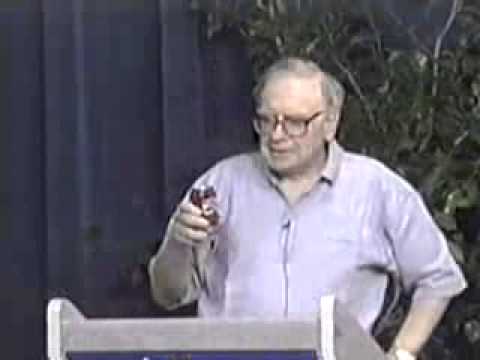
“I want a business with a moat around it.”University of Florida lecture, 1998 · full transcript →
The best moat shows up in returns and in the future, not just in a story
Buffett tests business quality by looking at what the company earns on capital and whether it is likely to be a good or better business a decade from now. He moved away from buying weak businesses just because they looked statistically cheap, because low-quality economics usually stay low-quality.67
His contrast is blunt: time helps a great business and hurts a poor one. If a company earns low returns on equity for a long period, buying it cheaply may not save the investment; if it earns high returns for a long period, time becomes an ally.89
This is a practical way to think about moats. A moat is not just a brand story or management presentation. It should show up in sustained economics that remain attractive over time.68
Moats only help if you can actually understand them
Buffett ties moats to circle of competence. He does not think the key is having the biggest circle; he thinks the key is knowing where your understanding is real and staying within it.10
That matters because some industries may be familiar to everyone yet still be too hard to predict competitively. Buffett points out that an industry can be important and easy to observe while still being a place where he does not feel he understands the long-term winners better than others.11
So the investor’s task is not to have an opinion on every business. It is to find businesses whose economics, competitive position, and likely future are understandable enough that the moat can be judged with confidence.1213
A moat lets you focus on what the business is, not on when the market agrees
Buffett’s approach to moats is tied to patience. If you are right about the nature of the business, you do not need to be precise about short-term timing. He prefers to focus on what will happen in the business rather than when the market will recognize it.1415
That is why he says the market is there to serve you, not instruct you. A real investor can think like an owner even if the exchange shuts for a while, because the business value does not depend on daily quotations.45
This is one of the biggest uses of the moat idea. It helps separate investing from speculation: investing depends on business economics; speculation depends on somebody else paying more later.316
Even a great moat does not remove the need for price, character, and culture
Buffett does not treat moats as permission to ignore valuation. He still insists on a margin of safety, which means even a wonderful business should be bought at a sensible price rather than at any price.176
He also cares about the people running the business. He emphasizes integrity in people and is unwilling to partner with managers he does not trust or like, because the long-term result depends on both business quality and human quality.1819
At Berkshire itself, he describes culture as a protective advantage. A shareholder-oriented board, low bureaucracy, and a hands-off system for strong managers create an organizational moat that helps the company endure beyond any one person.2021
Buffett on moats, in his own words
“I want a business with a moat around it.”
Where to watch
 Warren Buffett on Circle of Competence: Temperament Beats IQ1998 · 88 min · full transcriptBest single explanation of why Buffett wants a moat and how it fits with circle of competence and temperament.
 Warren Buffett on Value Investing: Keep It Simple1998 · 332 min · full transcriptShows how Buffett connects business quality, returns on equity, and long holding periods.
 Warren Buffett on Value Investing: Wait for the Right Pitch2006 · 52 min · full transcriptExplains how moat thinking fits with patience, margin of safety, and waiting for the right pitch.
 Warren Buffett on Value Investing: Buy Businesses, Not Stocks1999 · 27 min · full transcriptUseful for seeing how Buffett applies moats by treating stocks as business ownership, not market action.
 Warren Buffett on Succession and Investing: Hands-Off Moat2018 · 450 min · full transcriptBest for Buffett’s idea that Berkshire’s own culture and hands-off model function like a moat.
 Warren Buffett on Berkshire Culture: Size, Talent, and Shareholders2016 · 177 min · full transcriptAdds detail on how board quality, shareholder alignment, and low bureaucracy protect Berkshire over time.
Questions people ask
- What did Warren Buffett say about buying good businesses at a reasonable price?
- What did Warren Buffett say about having a reason to buy a stock?
- What did Warren Buffett say about his cigar butt investing approach?
- What did Warren Buffett say about investing in the auto industry?
- What did Warren Buffett say about knowing what will happen?
- Why did Warren Buffett say time is the enemy of a poor business?
Sources
Every quote above, word for word from the transcripts. Numbers match the text.
“I want a business with a moat around it.”
“All I'm trying to do is buy a piece of a business at an attractive price…”
“The stock market is there to serve you, not to instruct you.”
“If the stock exchange closed for a year or two, it would... For for a real investor, it wouldn't make any difference.”
“You know, we we always look at what a business does in terms of what it earns on capital. We wanna be in good businesses. What what we really wanna be is in businesses that are gonna be good businesses and better businesses ten years from now. And we wanna buy them at a reasonable price. But many years ago, we gave up what I've labeled the cigar butt approach to investing, which is where you try and find a a really kind of pathetic company, but it sells so cheap that you think there's one good free puff left in it. And and we used to pick up a lot of soggy cigar butts, you know.”
“In fact, I've got a friend, Walter Schloss, who worked with Graham at the same time I did. And and it was the first way I went at stocks to buy stocks selling way below working capital, very cheap quantitative stocks. I call it the cigar butt approach to investing. Is it... You walk down the street, you look around for a cigar butt someplace. And you finally you see one, and it's soggy and kind of repulsive, but there's one puff left in it. So you pick it up, and the puff is free. I mean, it's a cigar butt stock. I mean, you get one free puff out of it, and then you throw it away and you walk down the street trying to find another one. And, I mean, it's not elegant. But it work... You know, if if you're looking for a free puff, it works. Those are low return businesses. But time is the friend of the wonderful business. It's the enemy of of the lousy business. If you're in a lousy business for a long time, you're gonna get a lousy result even if you buy it cheap.”
“Those are the companies that have low returns on equity. And if you have a business that's earning five or 6% on equity and you hold it for a long time, you are not going to do well in investing even if you buy it cheap to start with. Time is the enemy of the of the poor business and it's the it's the friend of the great business. I mean, if you have a business that's earning 20 or 25% on equity and it does that for a long time, time is your friend. But time is your enemy if you if you have your money in a low return business. And you may be lucky enough to pick the exact moment when it gets taken over by someone else, but we like to think when we buy a stock, we're gonna own it for a very long time and therefore we have to stay away from businesses that have low returns on equity.”
“The real thing to do with a great business is just hang on for dear life.”
“The important thing is not how big the circle is. The important thing is staying inside the circle.”
“It's interesting for us to follow. I mean, it it... Many years ago, it was the dominant factor in in in... Or overwhelming factor in the economy. It's diminished a fair amount, but it's still a very important industry. And it's it's the kind of industry that anyone can follow. I mean, you you have experience with the product and and competing products, and and you you... Everyone in this room understands in a general way the economic nature of the industry, but we've never felt that we understood it better than other people. So we've seen auto companies at very low multiples sometimes and and with prices that in hindsight look very attractive, but we never really felt that we knew who among the auto companies five years from now would have gained the most ground relative to where they are now or the gain the most ground relative to what the market might expect.”
“We want things that we can understand.”
“I mean, you really want your decision making to be by looking in the mirror and saying yourself, I'm buying a 100 shares of General Motors at 55 because... And, I mean, it's your responsibility if you're buying it, and there's gotta be a reason. And if you can't state the reason, you shouldn't buy it. If it's because somebody told you about it at cocktail party, not good enough. You know? Mean, there's just... It's got to be something, you know, can't be because of the volume. You know, the chart looks good on it or anything like that. So there's got to be a reason you'd buy the business.”
“I mean, I wouldn't be able to raise the price on December 26 of the Seas Candy if we had price controls. And we've had them in this country, but that doesn't make it a lousy business if that happens to happen because you're not going have price controls forever. We had them in the early the early seventies. So it it... The wonderful business, you know, you can figure out what will happen. You can't figure out when it will happen. You don't wanna focus too much on when. You wanna focus on what. If you're right about what, you don't have to worry about one very much.”
“…we keep waiting for the right pitch…”
“You're just hoping the next guy pays more.”
“…always have a margin of safety…”
“If they don't have integrity, you want them dumb and lazy.”
“I only work with people I like. You know, I I don't I don't... If I can make it a $100,000,000 by buying a business with some guy that caused my stomach to churn, I'd say no. Because I say that's just like marrying for money, probably isn't a very good idea in any circumstances, but if you're already rich, it's crazy, right? I am not going to marry for money. So I would do it. I would I would really do almost exactly, what I've done except I don't think I bought the US Air. Thanks.”
“…the main, by far, the main factor in keeping Berkshire's culture is that you have a board…”
“We want our shareholders to walk in the shoes and the directors to walk in the shoes of shareholders.”
How this guide was made: drafted with AI from the full transcripts of the recordings cited, then checked: every quotation must match a transcript word for word and be the speaker's own words, and an independent review gates accuracy. Methodology and corrections.