What did Warren Buffett say about his cigar butt investing approach?
Buffett described his early style as buying very cheap stocks that were selling below working capital, what he called the cigar butt approach. He compared it to picking up a soggy cigar butt for one free puff and then throwing it away. He said it was not elegant, but it could work because time is the friend of wonderful businesses and the enemy of lousy ones.
“In fact, I've got a friend, Walter Schloss, who worked with Graham at the same time I did. And and it was the first way I went at stocks to buy stocks selling way below working capital, very cheap quantitative stocks. I call it the cigar butt approach to investing. Is it... You walk down the street, you look around for a cigar butt someplace. And you finally you see one, and it's soggy and kind of repulsive, but there's one puff left in it. So you pick it up, and the puff is free. I mean, it's a cigar butt stock. I mean, you get one free puff out of it, and then you throw it away and you walk down the street trying to find another one. And, I mean, it's not elegant. But it work... You know, if if you're looking for a free puff, it works. Those are low return businesses. But time is the friend of the wonderful business. It's the enemy of of the lousy business. If you're in a lousy business for a long time, you're gonna get a lousy result even if you buy it cheap.”
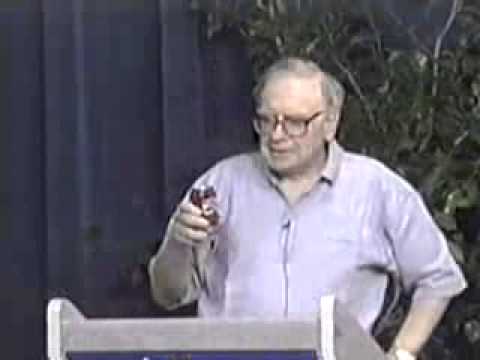
Key takeaways
- Cheap alone is not the same as great.
- Time helps strong businesses and hurts weak ones.
- Avoid relying on low-return businesses for long-term results.
Context
Buffett was answering a 1998 question about Japan and explaining how his thinking about businesses evolved. The quote above is taken word for word from the recording's transcript.
In the transcript
…I can get it for 10 years. So far, haven't found anything. It's it's it's kind of interesting. The the Japanese companies earn very low returns on equity, and and, they have a bunch of businesses that earn four, five, 6% on equity. And it's very hard to earn a lot as an investor when the business you're in doesn't earn very much money. Now now some people do it.
In fact, I've got a friend, Walter Schloss, who worked with Graham at the same time I did. And and it was the first way I went at stocks to buy stocks selling way below working capital, very cheap quantitative stocks. I call it the cigar butt approach to investing. Is it... You walk down the street, you look around for a cigar butt someplace. And you finally you see one, and it's soggy and kind of repulsive, but there's one puff left in it. So you pick it up, and the puff is free. I mean, it's a cigar butt stock. I mean, you get one free puff out of it, and then you throw it away and you walk down the street trying to find another one. And, I mean, it's not elegant. But it work... You know, if if you're looking for a free puff, it works. Those are low return businesses. But time is the friend of the wonderful business. It's the enemy of of the lousy business. If you're in a lousy business for a long time, you're gonna get a lousy result even if you buy it cheap.
If you're in a wonderful business for a long time, even if you pay a little too much going in, gonna get a wonderful result if you stay in a long time. I find very few wonderful businesses in Japan at at present now. They may change the culture in some way so that that that management's getting more stockholder responsive over there and returns are higher. But at the…
Read the full transcript of University of Florida lecture, 1998
Topics
What others said about value investing
More questions about Warren Buffett
- What did Warren Buffett say about temperament and character?
- What did Warren Buffett say about knowing what will happen?
- What did Warren Buffett say about having a reason to buy a stock?
- What did Warren Buffett say matters most when hiring or judging people?
- Why did Warren Buffett say he only works with people he likes?
- What does Warren Buffett mean when he says buying stocks is like buying businesses?
How this answer was made: the quote is checked word for word against the transcript of the recording and confirmed as the speaker's own words; the summary above it was drafted with AI from that transcript and quality-checked. Methodology and corrections.