Warren Buffett on Risk
For Buffett, risk is not day-to-day price movement but the chance of a permanent loss caused by not understanding the business, overpaying, using leverage, or being forced into bad decisions.
- Risk starts with not knowing what you own or what it is worth.
- Borrowed money and fragile financing can turn ordinary mistakes into disasters.
- Volatility is normal; panic becomes costly when investors react emotionally.
- The best defense is buying understandable businesses, at sensible prices, with staying power.
- Cash and patience reduce risk by letting you wait for rare, obvious opportunities.

“If you need to use a computer or calculator to make the calculation, you shouldn't buy it.”Berkshire Hathaway annual meeting, 2009 · 25:45
Risk is permanent loss, not a falling stock quote
Buffett’s starting point is to treat a stock as a slice of a real business. If you think like an owner, the key question is not whether the quote moves this week, but whether the business is worth more or less than the price you are paying and what its earning power will look like over many years.123
That is why he has little interest in short-term market forecasts. If nobody reliably knows where the market will go next, then making risk management depend on prediction is shaky from the start.456
This flips the usual definition of risk. A volatile price by itself is not the main danger; the main danger is buying something you do not understand, at a price that leaves no margin for error, and then confusing market noise with business reality.782
What you don't understand is risky
Buffett repeatedly ties risk to ignorance. He wants investments simple enough that you can understand the economics without elaborate modeling, because complexity often hides weak assumptions and unpleasant surprises.910
He is especially cautious in areas where change is rapid and durable economics are hard to judge. His point is not that new industries are bad, but that fast change makes it harder to know what a business will look like years from now, which raises the chance of permanent mistakes.11
That is also why he is willing to hold cash when he cannot find bargains he understands. Passing is a risk-control tool. You do not have to swing at markets that offer too little clarity or too high a price.1314
“If you need to use a computer or calculator to make the calculation, you shouldn't buy it.”Berkshire Hathaway annual meeting, 2009 · full transcript →
Leverage turns trouble into catastrophe
One of Buffett’s clearest beliefs is that borrowed money changes the nature of risk. A sound asset can become dangerous when financed in a way that leaves no room for bad timing, falling confidence, or forced selling.1516
His description of the financial crisis shows why. The damage did not come only from bad assets; it spread because many people and institutions were levered into the same belief, and once trust broke, the whole system became tightly connected and vulnerable.1718
That same logic explains his dislike of structures that can trigger collateral calls or dependency on favorable market conditions. He wants arrangements that let Berkshire survive shocks, keep operating, and avoid becoming a forced seller when fear is highest.16
Temperament matters because fear spreads faster than facts
Buffett sees emotional behavior as a major source of investor risk. If you get scared when markets fall and enthusiastic when they rise, you are likely to buy and sell at exactly the wrong times.21
In crises, this problem intensifies because fear moves instantly while confidence returns slowly. That creates market freezes, bad decisions, and prices disconnected from long-term value.221723
His antidote is a business-owner mindset and a long time horizon. If the underlying earning power remains intact, market closure or violent price swings should not force a real investor to change course.83
The practical way to reduce risk is simplicity, liquidity, and patience
Buffett manages risk by keeping decisions simple, keeping finances strong, and waiting. He does not want to be fully invested at all times if that means stretching for mediocre opportunities, because rare periods of disorder can create much better ones.146
That helps explain Berkshire’s large cash position. Cash is not just idle; it preserves the ability to act when mistakes and surprises create unusually attractive prices.246
Underlying all of this is a survival principle: always structure your affairs so you can keep playing the next day. For Buffett, avoiding ruin matters more than maximizing activity, because one reckless decision can undo years of compounding.1625
Buffett on risk, in his own words
“We view change as more of a threat into the investment process than an opportunity.”
“If you need to use a computer or calculator to make the calculation, you shouldn't buy it.”
Where to watch
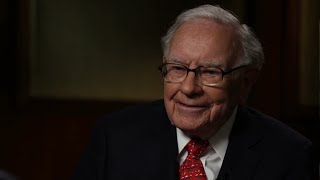 Warren Buffett on the 2008 Financial Crisis: How Panic Spread2008 · 40 min · full transcriptBest for seeing how Buffett thinks risk spreads in a panic: leverage, broken trust, and systemwide contagion.
 Warren Buffett on Value Investing: Buy Businesses, Not Stocks1999 · 27 min · full transcriptBest short statement of his risk framework: buy businesses, ignore market noise, and avoid borrowed money.
 Warren Buffett on Tech Bubble Skepticism: Why They Avoided Big Tech1999 · 324 min · full transcriptShows how he avoids risk by staying inside his circle of competence and treating change as a valuation threat.
 Warren Buffett on Market Volatility: Buy Businesses, Not Headlines2019 · 121 min · full transcriptExplains why volatility is not the real issue if you focus on long-term business value.
 Warren Buffett on CEO Succession: Greg Abel to Take Over2025 · 383 min · full transcriptUseful for Buffett’s emphasis on cash, patience, temperament, and being ready for rare big opportunities.
 Warren Buffett on Crisis Investing: Derivatives, Bailouts, and Bargains2009 · 270 min · full transcriptHelpful on complexity, derivatives, and why deal structure matters as much as headline return.
Questions people ask
- How does Warren Buffett think about capital allocation?
- What did Warren Buffett say about float at Berkshire Hathaway?
- What did Warren Buffett say about how long you should hold stocks?
- What did Warren Buffett say about keeping cash instead of being fully invested?
- What did Warren Buffett say about postmortems and learning from bad decisions?
- Why does Warren Buffett say you only have to get rich once?
Sources
Every quote above, word for word from the transcripts. Numbers match the text.
“I bought a business today, not a stock today.”
“The real question is whether the company's worth more or less than $100 billion.”
“If you get your money's worth in terms of future earning power over the next 10 or 20 or 30 years, you're going to have made a good investment. And you can't pick them from day to day. If you can do that, you can. Well, I haven't met anybody yet that knows how to do it.”
“I don't think anybody knows what the market's going to do.”
“…we don't pay much attention to markets or forecasts…”
“If you told me I had to invest 50,000,000,000 every year till we got down to 50,000,000,000, that would be the dumbest thing in the world to invest in that manner. Things get extraordinarily attractive very occasionally. The long term trend is up. Nobody knows. And I certainly don't know. Greg doesn't know. Ajit doesn't know. Nobody knows what the market is going to do tomorrow, next week, next month. Nobody knows what business is gonna do tomorrow, next week, or next month, but they spend all their time talking about it because it's it's easy to talk about. And... But it it it has no value. I've I've never found anybody I wanted to listen to on the subject.”
“We don't think of stocks as as little items that wiggle around in the paper and that have charts attached to them.”
“If the stock exchange closed for a year or two, it would... For for a real investor, it wouldn't make any difference.”
“If you need to use a computer or calculator to make the calculation, you shouldn't buy it.”
“All I'm trying to do is buy a piece of a business at an attractive price…”
“We view change as more of a threat into the investment process than an opportunity.”
“We do not find bargains in this market among the larger companies that are that are our universe.”
“And we have made a lot of money by not wanting to be fully invested at all times, and we don't think it's improper, actually, for people who are passive investors just to make a few simple investments and sit with their life... Sit for their life and them. But we've made the decision to be in the business, so we think that we can do a little better than that by behaving in a very irregular manner. But if you told me that I had to invest... Well, our... Let's say that we have a roughly 40,000,000,000 a year coming in, and we start with $3.35.”
“The one piece of advice I'd give them is don't do it on borrowed money.”
“You know, you can't even dream all the dreams that you could have about a place like Berkshire, but big thing you have to do, though, is always is to be sure you can play the next day. I mean, in terms of in terms of financial activities on a meaningful scale, you know, you you don't wanna go... You don't... There was a a book about... What was the name of that book? You only have to get rich once. I mean, you don't you don't wanna do anything that risks what's been created.”
“Confidence comes back one at a time, but fear is instantaneous…”
“What we really learned in that particular panic was the fact that we're all dominoes and we're all very close together now…”
“…if you get frightened by markets that decline and and get excited when stock markets go up…”
“…people are afraid, they are afraid…”
“I described it actually on CNBC as an economic Pearl Harbor…”
“The world makes big, big, big mistakes and surprises happen in dramatic ways.”
“Nothing is sure tomorrow, Nothing is sure next year…”
How this guide was made: drafted with AI from the full transcripts of the recordings cited, then checked: every quotation must match a transcript word for word and be the speaker's own words, and an independent review gates accuracy. Methodology and corrections.
