America and Fairness
Buffett’s long-term optimism, with a sense of civic obligation.

“The American—the American economy will come back, and it won't be tomorrow, and, you know, it won't be exactly the same, but in the end, we have not, we've not changed the American people in their capacity to innovate or their excitement about, about becoming more prosperous and coming up with new ideas. Businesses will be formed. Businesses will expand, but not, not much tomorrow.”Charlie Rose interview, 2010 · 15:18
The lesson
Buffett’s optimism about America is not a short-term market call. His argument is that the country has repeatedly come through shocks that looked overwhelming at the time, and that its deeper strengths keep reasserting themselves over long periods12. That is why he separates temporary uncertainty from long-term confidence: the near future can be rough, while the bigger picture remains favorable34.
Part of that confidence comes from what Buffett sees as the American system’s ability to unlock human potential. He points to rule of law, markets, and equality of opportunity as foundations that helped the country become unusually productive and innovative5. So his famous pro-America stance is not blind patriotism; it rests on a view about institutions and incentives that have historically supported growth67.
At the same time, Buffett is not a simple cheerleader for laissez-faire capitalism. He argues that markets are powerful and wealth-creating, but also harsh when left entirely alone, especially for people caught on the losing side of change89. In crises, that is why he can support forceful government action to prevent collapse, while still believing in markets as the main engine of prosperity10.
This balance between growth and fairness also shapes his tax views. Buffett says Berkshire does not resent paying taxes, and he treats taxes as a normal part of capital allocation and citizenship rather than something to avoid at all costs11. In the estate-tax debate, he frames the issue around equality of opportunity and the danger of inherited concentrations of wealth, arguing that a democracy should resist drifting toward plutocracy1213.
Put together, Buffett’s position is that you can believe deeply in capitalism and still insist on civic obligations. A strong economy needs room for enterprise, but it also needs guardrails, broad opportunity, and a willingness not to leave people behind145. His long-term optimism about America is therefore tied not just to business success, but to maintaining a system that is both dynamic and fair18.
5 principles from Warren Buffett
Separate short-term pain from long-term confidence
Do not confuse a bad year, recession, or crisis with permanent national decline. Buffett’s approach is to admit uncertainty now while still judging the country by its long record of recovery and adaptation.
“The American—the American economy will come back, and it won't be tomorrow, and, you know, it won't be exactly the same, but in the end, we have not, we've not changed the American people in their capacity to innovate or their excitement about, about becoming more prosperous and coming up with new ideas. Businesses will be formed. Businesses will expand, but not, not much tomorrow.”
Base optimism on institutions, not mood
His confidence in America comes from durable features like rule of law, markets, and opportunity. When evaluating a country or system, focus on whether it helps people build, innovate, and invest over time.
“Absolutely. In terms of American companies, in terms of everything. I mean, you know, if you look back a couple hundred years, we've gotten where we are not because we've gotten smarter or not because we work harder. We've got it because we found ways to unleash more of the human potential. And, and what does that, well, a rule of law helps, a market system helps, equality of opportunity helps all, all of these things that are still a fundamental part of the American system.”
Respect markets, but do not worship them
Markets create enormous prosperity, yet they can be punishing and unstable without limits. Apply this by asking where competition is productive and where policy or safety nets are needed to prevent needless damage.
“The market system works wonders, and it's also brutal if left entirely to itself.”
Treat taxes as part of stewardship
Buffett does not frame taxes as an enemy; he treats them as a real input in decision-making and as part of supporting the society businesses operate in. In your own thinking, distinguish smart tax awareness from reflexive anti-tax ideology.
“We don't mind paying taxes at Berkshire…”
Protect equality of opportunity against dynastic wealth
Buffett’s fairness argument is not mainly about punishing success. It is about keeping a society open enough that inherited wealth does not overwhelm merit, mobility, and broad participation.
“He's been on a treadmill while the super rich have been on a spaceship…”
In his own words
The quotes behind the lesson, word for word from the transcripts. Numbers match the lesson above.
“And it's been true all along. It may have been interrupted One of the scariest of scenarios when you had a war with one group of states fighting another group of states, and it may have been tested again in the Great Depression, and it may be tested now to some degree. But in the end, the answer is never bet against America. And that, in my view, is is true today as it was in 1789 and even was true at the... During the civil war and the depths of the depression.”
“You'd pick today, and you would pick America.”
“The longer term is pretty darn certain.”
“The American—the American economy will come back, and it won't be tomorrow, and, you know, it won't be exactly the same, but in the end, we have not, we've not changed the American people in their capacity to innovate or their excitement about, about becoming more prosperous and coming up with new ideas. Businesses will be formed. Businesses will expand, but not, not much tomorrow.”
“Absolutely. In terms of American companies, in terms of everything. I mean, you know, if you look back a couple hundred years, we've gotten where we are not because we've gotten smarter or not because we work harder. We've got it because we found ways to unleash more of the human potential. And, and what does that, well, a rule of law helps, a market system helps, equality of opportunity helps all, all of these things that are still a fundamental part of the American system.”
“The United States is kind of going to do well.”
“There's always a list of reasons why the country will have problems tomorrow, but there's always a list of opportunities which don't get mentioned quite as often. So we don't sit down and make a list of the bad things that are happening in the economy and the good things that are happening and therefore expecting the stock market—it might not—it doesn't behave that way. Even if you, if you could correctly forecast some of the bad things or good things overall, I'm an enormous bull on the country. I mean, over time, I mean, this is the most remarkable success story in the history of the world, if you think about it.”
“The market system works wonders, and it's also brutal if left entirely to itself.”
“Well, the market system works wonders, and it's also brutal if left entirely to itself. And we wouldn't be the country we are if the market system hadn't been allowed to function. And to some extent, you can say that other countries around the world that have improved their way of life dramatically, to some extent, have have have copied us. So the the the market system is marvelous, in many respects, but it needs government. And it it, you know, it is creative destruction. But for the ones who are destroyed, it can be it can be a very brutal game and and for the people who work in the industries and all of that sort of thing.”
“…the arteries of the financial system were freezing up…”
“We don't mind paying taxes at Berkshire…”
“A progressive and meaningful estate tax is needed to curb the movement of a democracy toward a plutocracy…”
“He's been on a treadmill while the super rich have been on a spaceship…”
“You know, they can't live like kings. I don't mean that. But that nobody should be left behind. It's like a rich family. You know, you find rich families, and if they have five heirs or six heirs, they know they try and pick maybe the most able one to run the business, and the... But they don't they don't forget about. The kid that actually may be a better citizen in some ways even than the one that does the best at business, but it just doesn't happen happen to have market value skills. So I I I do not think that a very rich company ought to totally abide by totally abide by what the market dishes out, you know, in eighteenth century style or something of the sort. So I I I welcome ideas that go in that direction. I... We've gone in that direction.”
Reflect
- When you feel pessimistic about the economy or your industry, are you reacting to short-term conditions or to long-term structural facts?
- What institutions or norms in your society or workplace actually expand opportunity, and which ones mainly protect incumbents?
- How do you personally balance admiration for market success with concern for people who are left behind by change?
Check your understanding
Go deeper
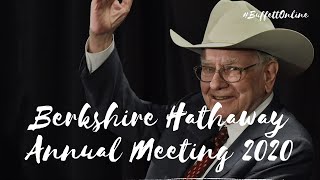 Warren Buffett on Never Bet Against America: Berkshire and Crisis2020 · 268 min · full transcript
 Warren Buffett on the American Economy: Recovery, Risk, and Opportunity2010 · 51 min · full transcript
 Warren Buffett on Estate Tax Reform: 'death present' and fairness1991 · 122 min · full transcript
 Warren Buffett on Crisis Investing: Derivatives, Bailouts, and Bargains2009 · 270 min · full transcript
 Warren Buffett on Financial Crisis: Fannie, Freddie, and TARP2010 · 52 min · full transcript
 Warren Buffett on Apple, Taxes, and Succession2024 · 436 min · full transcript
- What did Warren Buffett say about betting against America?
- Why does Warren Buffett say never bet against America?
- Why did Warren Buffett say America is still the best place to invest?
- What did Warren Buffett say about whether the American economy would recover?
- What did Warren Buffett say about capitalism and the market system?
- What did Warren Buffett say about fairness and wealth in America?