Modern Boundaries
Apply the principles to Apple, Bitcoin, airlines, tech, and reputation.

“We don't think of stocks as as little items that wiggle around in the paper and that have charts attached to them.”Berkshire Hathaway annual meeting, 1999 · 11:40
The lesson
Modern situations do not require new investing principles so much as disciplined use of old ones. Buffett keeps returning to the same base question: are you looking at a business, or just reacting to a price, a chart, or a story about what comes next? He treats stocks as pieces of businesses and judges them over time by business performance, not by short-term market movement12.
That approach explains why he can own Apple while historically avoiding much of tech. The dividing line is not whether a company is labeled “technology,” but whether it falls inside a knowable circle of competence and has understandable economics. Buffett says the key is knowing the perimeter of that circle, and he uses Apple as an example of something he believes he can understand, while also warning that rapid change usually makes valuation harder rather than easier3456.
The same framework also explains his rejection of Bitcoin and similar assets. Buffett distinguishes investing from speculation by asking whether the asset will produce anything for its owner; if not, the buyer is depending mainly on someone else paying more later. That is why he treats cryptocurrencies as outside the realm of productive investing, no matter how much excitement surrounds them789.
Applying principles to changing facts also means being willing to revise a decision when the business outlook changes. Buffett’s comments on airlines and Kraft Heinz show that discipline is not stubbornness: if the economics worsen or the original price was too high, you reassess exposure instead of defending the old thesis. At the portfolio level, he is also willing to trim even a great holding like Apple when taxes, position size, and available alternatives make that the sensible capital-allocation choice, while still treating the holding itself as a strong business1011122.
Finally, modern investing boundaries are not only about what to buy but about what never to trade away. Buffett treats reputation as a real asset, insists on postmortems, and stays comfortable holding cash when bargains are scarce rather than forcing action. The broader lesson is that patience, honesty about what you do not know, and protection of trust matter as much in new markets as they did in old ones13141512.
4 principles from Warren Buffett
Treat stocks as businesses, not moving tickers
Start by asking what the business does, how it performs, and how it compares with rivals. If your judgment would change minute by minute with the stock price, you are probably reacting to the market instead of evaluating the business.
“We don't think of stocks as as little items that wiggle around in the paper and that have charts attached to them.”
Stay inside your circle of competence
Do not confuse a popular theme with an understandable opportunity. Focus on situations where you can judge what is important and knowable, and pay special attention to where your understanding stops.
“Well, you look at everything and relate one to another. I mean, that's the nature of market. So you're always trying to think about, a, what's in my circle of confidence, and then what makes the most sense that's within that circle. But the important thing is know where the perimeter of the circle is. I mean, that's way more important than how big the circle is or a whole bunch of other factors. So I think Apple is within my circle of commerce. I think it's an incredible business run by a fellow who's one of the great managers of all time, and he was underrated for a while, but now he's being seen for what he really is. It's it's an assound... You you could almost... You know, if we had…”
Prefer productive assets over speculation
A sound investment should give you a claim on something that can produce value over time. If the thesis depends mostly on finding a later buyer at a higher price, treat it as speculation rather than investing.
“You're just hoping the next guy pays more.”
Protect reputation and patience
Do not stretch for action or profit in ways that damage trust. When attractive opportunities are missing, holding cash, reviewing mistakes, and waiting is often more intelligent than forcing a decision.
“We we we believe in postmortems at Berkshire. I mean, we really do believe... One of the things I used to do when I ran the partnership is I I I contrasted all sale decisions versus all purchase decisions. It wasn't enough that the purchase decisions worked out well. They had to work out better than the sale decisions. And managers tend to be reluctant to look at the results of the capital projects or the acquisitions that they propose with great detail a year or two earlier to a board, and they don't wanna actually stick the figures up there as to how the reality worked out against the projections. And that's human nature. But I think you're a better doctor if you drop by the pathology department occasionally, and I think you're a better manager or investor if you if you look at every one of the decisions you've made of importance and see which ones worked out and which ones didn't and and and, you know, what is your batting average?”
In his own words
The quotes behind the lesson, word for word from the transcripts. Numbers match the lesson above.
“We don't think of stocks as as little items that wiggle around in the paper and that have charts attached to them.”
“No. I would... The... But we have sold shares. And I would say that at the end of the year, I would think it's extremely likely that that that Apple is the largest common stock holding we have. Now one interesting thing is that Charlie and I looked at common stocks or marketable equities or the things that people love to look at as being businesses. And so when we when we own a Dairy Queen or we own whatever it may be, we look at that as a business. And when we look... Own Coca Cola or American Express or Apple, we look at that as a business.”
“The the question is, is the box that says knowns and important... Knowable and important Mhmm. Is there anything in that box? And can you tell what's in that box and what isn't in that box? And it's what I call knowing your circle of competence. And my circle of competence doesn't include the ability to predict interest rates a day from now or a year from now or five years from now. So I say, can I function without knowing that? Same way as predicting what business is going to do or the stock market's going to do. I can't do any of those things, But that doesn't mean that I can't do well investing over time.”
“Well, you look at everything and relate one to another. I mean, that's the nature of market. So you're always trying to think about, a, what's in my circle of confidence, and then what makes the most sense that's within that circle. But the important thing is know where the perimeter of the circle is. I mean, that's way more important than how big the circle is or a whole bunch of other factors. So I think Apple is within my circle of commerce. I think it's an incredible business run by a fellow who's one of the great managers of all time, and he was underrated for a while, but now he's being seen for what he really is. It's it's an assound... You you could almost... You know, if we had…”
“We view change as more of a threat into the investment process than an opportunity.”
“We do not necessarily regard the Internet with... There's no question. If you... If you're in the early stages of promotion and you... Particularly, you've got a six... Reputation as a successful in that, but in this case, it wouldn't make much difference because the whole field has gone wild. You will make a lot of money selling to the next stage and the next stage and the next stage. But in terms of picking out businesses that are going to do wonderfully as businesses, not as stocks for a while, but as businesses, I don't think it's necessarily so easy in in the Internet world. And I I would say that if you were to ask some very top names in the field to name the next five companies out of the chute or the next 10 companies out of the chute and predict that one of them will earn, say, the $200,000,000 I use as a threshold six or seven years from now.”
“If you buy something like Bitcoin or or some some cryptocurrency, you don't really... You don't have anything to produce anything.”
“You're just hoping the next guy pays more.”
“It's—it is a—it's a delusion, basically. So, we've gone from rat poison squared to a delusion. Who knows where we'll be next year, but I—I'm really sorry. It happens because people get their hopes up that something like that is going to change their lives. And there's a very ingenious thing to figure out how to have a limited supply and make it harder, more expensive to create them as you go along, all that sort of thing, but it doesn't function. And this is explained to me by people a lot smarter.”
“The market system works wonders, and it's also brutal if left entirely to itself.”
“I have absolutely no intention of selling…”
“We don't mind paying taxes at Berkshire…”
“We never will trade reputation away for money.”
“We we we believe in postmortems at Berkshire. I mean, we really do believe... One of the things I used to do when I ran the partnership is I I I contrasted all sale decisions versus all purchase decisions. It wasn't enough that the purchase decisions worked out well. They had to work out better than the sale decisions. And managers tend to be reluctant to look at the results of the capital projects or the acquisitions that they propose with great detail a year or two earlier to a board, and they don't wanna actually stick the figures up there as to how the reality worked out against the projections. And that's human nature. But I think you're a better doctor if you drop by the pathology department occasionally, and I think you're a better manager or investor if you if you look at every one of the decisions you've made of importance and see which ones worked out and which ones didn't and and and, you know, what is your batting average?”
“We do not find bargains in this market among the larger companies that are that are our universe.”
Reflect
- What is one opportunity you are tempted by mainly because of price excitement or social proof, and what would change if you analyzed it strictly as a business?
- Where is the actual perimeter of your circle of competence today? Name one area inside it, one area outside it, and the evidence for each.
- Have you ever held onto an idea because changing your mind felt like admitting failure? What facts would justify a fresh postmortem now?
Check your understanding
Go deeper
 Warren Buffett on Apple, Taxes, and Succession2024 · 436 min · full transcript
 Warren Buffett on Succession and Investing: Hands-Off Moat2018 · 450 min · full transcript
 Warren Buffett on Tech Bubble Skepticism: Why They Avoided Big Tech1999 · 324 min · full transcript
 Warren Buffett on Market Valuation: Buybacks, Rates, and Kraft Heinz2019 · 120 min · full transcript
 Warren Buffett on Never Bet Against America: Berkshire and Crisis2020 · 268 min · full transcript
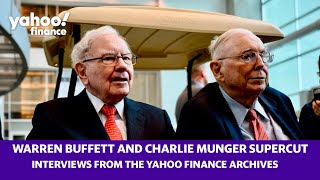 Warren Buffett on Markets in Crisis: Buying Through Panic2021 · 150 min · full transcript
 Warren Buffett on Journalism and Business: Read, Think, Report2022 · 34 min · full transcript
- What did Warren Buffett say about selling Apple stock in 2024?
- What did Warren Buffett say about Apple?
- What did Warren Buffett say about Bitcoin?
- What did Warren Buffett say about investing in the Internet in 1999?
- Why doesn't Warren Buffett like IPOs?
- What did Warren Buffett say about Berkshire Hathaway's reputation in a crisis?